The shower is where you go to get clean. So it’s important to keep the shower itself clean.
You may be used to spraying down the fixtures, the door, the curtain, and the shower floor. But what about those tiles?
We’re here to recommend the seven best shower tile cleaners on the market. So next time you step into your shower, it feels like a whole new world!
We created this list based on hours of researching expert advice, dozens of products, and genuine customer reviews. Of course, we also considered our own shower tile cleaning routine! With this in mind, we have seven terrific tile cleaners to recommend.
- Removes mold & mildew stains
- Clean fresh scent
- Works on multiple surfaces
- Non-toxic & plant-derived ingredients
- Tackles mold, mildew & rust
- Tea tree & eucalyptus scent
- Works on almost all bathroom items
- Removes discoloration
- Streak-free finish
- Tackles lime, calcium & rust
- Removes soap scum
- Works under 60 seconds

- Included brush for deep cleaning
- Brings grout back to true color
- All-in-one product
- Works on all natural stone
- Removes & prevents stains
- Works on bath & shower fixtures
- Removes grease & stains
- Non-toxic and eco-friendly formula
- Works on various surfaces
Review Methodology: At Oh So Spotless, our commitment to providing reliable information on the best shower tile cleaners is deeply rooted in thorough research, hands-on experience, and data-driven analysis. Our professional team evaluates products from a user’s perspective, compares their performance using quantitative measurements, and assesses design choices affecting users. We identify key decision-making factors, such as effectiveness, safety, ease of use, and environmental impact, to rank and review these products. By sharing our findings on the top ten shower tile cleaners, we empower you to make informed choices backed by solid evidence and our expertise in the cleaning industry.
The Best Shower Tile Cleaners of 2024
We compiled this list of the seven best shower tile cleaners based on real customer reviews, expert advice, and our own insight into cleaning our shower! We studied each product’s cleaning ability, toxicity, performance, and versatility.
Here are seven spectacular tile cleaners!
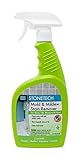
StoneTech Mold & Mildew Stain Remover
Best for Stain Removal
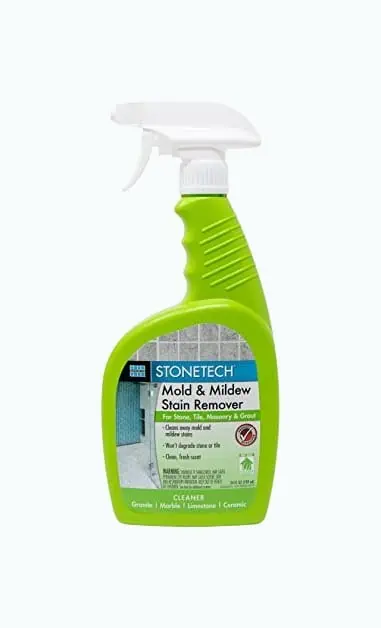
Is your shower covered in unsightly stains? The StoneTech spray is our top recommendation.
It is designed to eliminate mold and mildew stains, one of the bathroom’s most common tragedies. If you’re struggling with these types of stains, this is a must-try.
It also leaves a clean, fresh scent behind, so your bathroom will smell nice. Overall, it’s great because it doesn’t degrade stone or tile.
This product works on various surfaces: marble, granite, limestone, travertine, slate, ceramic tile, porcelain tile, and glass tile.
The brand still recommends testing in an inconspicuous area first, though. Also, wear protective gloves and eyewear because this is a strong formula!
Pros
- Removes mold and mildew stains.
- Clean, fresh scent.
- Works on a variety of surfaces.
- Doesn’t degrade stones or tiles.
- Works in the bathroom and kitchen.
- Super easy to use.
Cons
- Toxic levels are high. Brand suggests gloves and eyewear.
- Overpowering smell for some customers.
Product Specs
| Type of Tile | Marble, granite, limestone, ceramic, and more |
| Performance | Removes mold and mildew stains |
| Toxicity | Medium-high |
| Type of Cleaner | Spray liquid |
| Versatility | Works on tile only |
Our Ratings
User Experience
Better Life Natural Tub and Tile Cleaner
Best Natural Cleaner
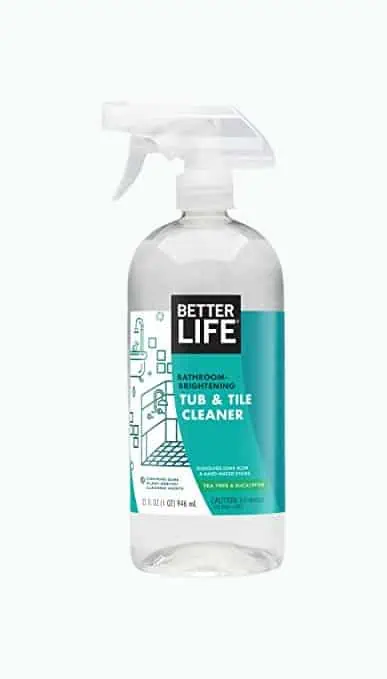
This is a great natural option if you’re trying to steer clear of toxic ingredients. This Better Life cleaner uses plant-derived ingredients to remove soap scum and hard water stains on your tiles and tub.
It’s made without alcohol, petroleum solvents, synthetic fragrances, dyes, chlorine bleach, SLS, and SLES. It’s also naturally fragranced using essential oils. Enjoy the refreshing scents of tea tree and eucalyptus in your bathroom!
Besides the other cleaning powers we’ve listed, this cleaner can also remove mold, mildew, and rust stains. So now your bathroom can be clean physically and chemically!
Customers love how clean and shiny their bathrooms looked after using this product. And without the headaches other chemical cleaners gave them.
This is an excellent stain remover that wonderfully restores your shower, bath, and tiles to a state of beauty.
Pros
- Non-toxic and plant-derived ingredients.
- Removes soap scum and hard water stains.
- Tackles mold, mildew, and rust stains.
- Tea tree and eucalyptus scent.
- Never tested on animals.
Cons
- The sprayer is annoying.
- Doesn’t remove discoloration in the tub.
Product Specs
| Type of Tile | Does not specify, but seems to be safe for all |
| Performance | Removes a variety of stains |
| Toxicity | Non-toxic |
| Type of Cleaner | Spray liquid |
| Versatility | Works on tubs and tiles |
Our Ratings
Personal Perspective
CLR Pro Multi-Purpose Daily Cleaner
Best Multipurpose Cleaner
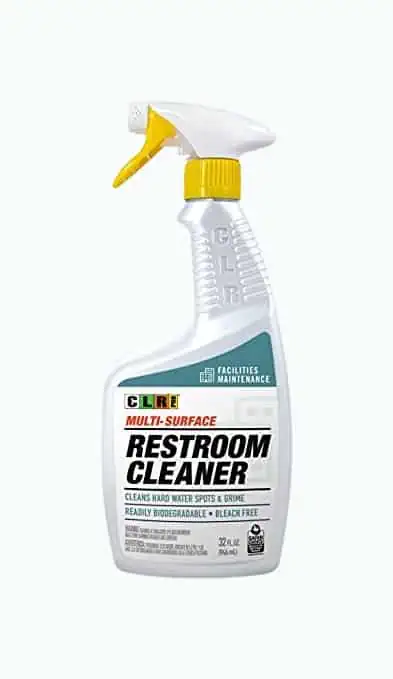
We love when one product can do a ton of different jobs! This daily cleaner is great for tiles, glass, plastic, stainless steel, fiberglass, ceramic, granite, and porcelain sinks.
It also works for toilets, shower doors, and bathtubs. So you can basically use it to clean every inch of the bathroom!
It can also remove hard water stains and mineral deposits. So if you live in a hard water area and want a one-stop product — this is it.
Besides that, it also breaks down calcium, lime, and soap scum, so you can easily wipe them away. Not only that, but it also removes discoloration. Enjoy a streak-free finish across the whole bathroom, so this room looks as good as new!
Last but not least, this is a non-toxic formula. It’s safe for septic systems and is biodegradable. It’s also made without ammonia, bleach, phosphates, and alcohol — totally safe around kids and pets.
Pros
- Non-toxic formula.
- Works on almost all bathroom items.
- Suitable for tile, glass, fiberglass, plastic, and more.
- Super easy to use.
- Removes a variety of stains.
- Streak-free finish.
Cons
- Some dislike the smell.
- Better for deep cleaning than daily cleaning.
Product Specs
| Type of Tile | Anything but natural |
| Performance | Removes a variety of stains and buildup |
| Toxicity | Non-toxic |
| Type of Cleaner | Spray liquid |
| Versatility | Works on almost all bathroom items |
Our Ratings
Community Feedback
Lime-A-Way Bathroom Cleaner
Best Budget Choice
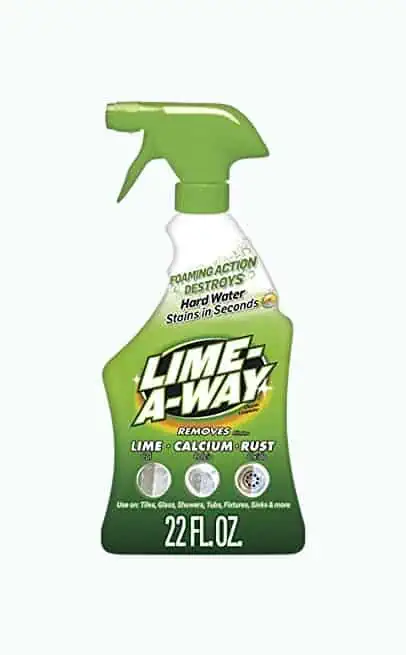
This bathroom cleaner is a terrific budget-friendly option. Use it on sinks, fixtures, tubs, tiles, showers, and glass. It’s an awesome multipurpose spray!
It cleans and destroys stains from lime, calcium, and rust. Use this in your bathroom and enjoy having a spa-like room.
It also works well on soap scum. Soap scum can be hard to remove, especially if you live in a hard water area. So if that sounds like your bathroom, this is one product to consider!
It removes stains in as little as 60 seconds, quickly bringing your bathroom from grimy to gorgeous.
Overall, this is an affordable product to keep in your bathroom for all sorts of messes.
Keep In Mind
Pros
- Affordable price point.
- Gets rid of lime, calcium, and rust stains.
- Removes soap scum.
- Works in as little as 60 seconds.
- Easy to use: simply spray and wipe.
- Works on tiles, showers, glass, fixtures, and more.
Cons
- Some customers reported a headache from the smell.
- Not recommended for stone tiles.
Product Specs
| Type of Tile | All, but stone |
| Performance | Removes rust, calcium, and lime stains |
| Toxicity | High |
| Type of Cleaner | Spray liquid |
| Versatility | Works on sinks, fixtures, tubs, tiles, showers, and glass |
Our Ratings
First-Hand Impression
Grout-Eez Tile & Grout Cleaner
Best Cleaner for Grout
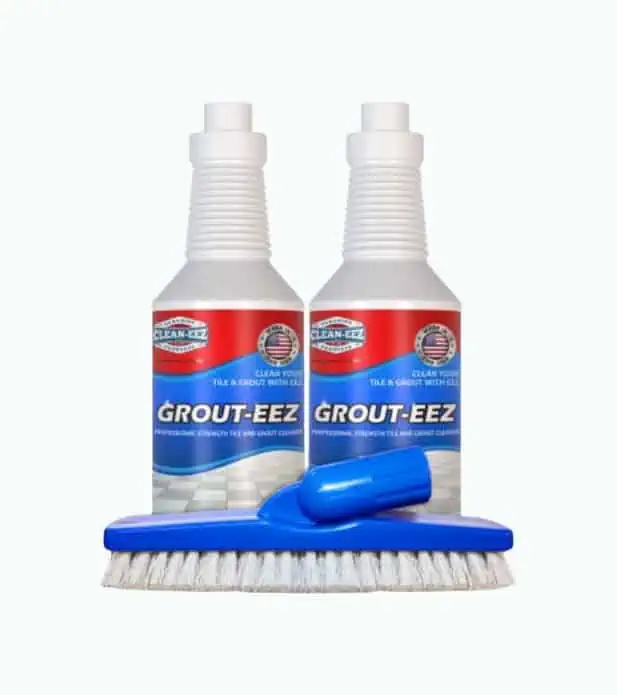
Cleaning tiles is one thing, but getting in all the grout lines is another. Grout can get really dirty really fast, and if you don’t have the right products, it seems impossible to clean.
This is our top recommendation for a tile and grout cleaner. Clean-eez grout cleaner is an all-in-one product that will transform your shower into a sparkling clean and fresh zone.
It even includes a handy brush to scrub away all the dirt and bring back the true color of your grout.
You’ll be happy to hear this works on white and colored grout! So even if you have a bold color of grout — this will spruce it up without dulling it down.
It works by deep cleaning grease, dirt, and a variety of stains. Overall, it will bust out build-up and bring your grout back to its original state.
Pros
- Included brush for deep cleaning.
- Brings grout back to true color.
- Removes tough stains.
- Cleans tiles as well as grout.
- Safe on white and colored grout.
- Works within minutes.
Cons
- Not suitable for all kinds of tiles.
- The included brush could be better.
Product Specs
| Type of Tile | Ceramic and porcelain |
| Performance | Removes stains and cleans grout |
| Toxicity | High |
| Type of Cleaner | Liquid |
| Versatility | Tile and grout |
Our Ratings
User Experience
Granite Gold Shower Cleaner Spray
Best Cleaner for Natural Stone
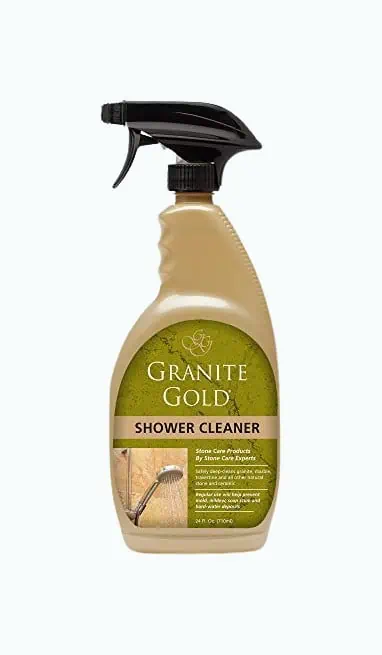
Not every tile cleaner works on natural stone — but this one does. So if you have natural stone, this will be a powerful but gentle product.
It’s designed to deep clean all types of natural stone while tackling various stains. This includes mold, mold, soap scum, and hard water deposits.
This product also helps to prevent stains. We recommend using it once a week to prevent buildup and keep your shower tiles sparkling clean. You can also use this on your bath and shower fixtures so that every inch of your showering area is fresh and stain-free.
We love that this is a non-toxic formula. It’s free from acids, phosphates, and ammonia. Plus, it’s biodegradable, so it’s kind on the environment.
Pros
- Works on all-natural stone.
- Removes and prevents stains.
- Works on bath and shower fixtures.
- Non-toxic formula.
Cons
- The spray function is poor.
- The smell is overpowering for some customers.
Product Specs
| Type of Tile | All natural stone |
| Performance | Removes and prevents stains |
| Toxicity | Non-toxic |
| Type of Cleaner | Spray liquid |
| Versatility | Works on tiles and fixtures |
Our Ratings
Personal Perspective
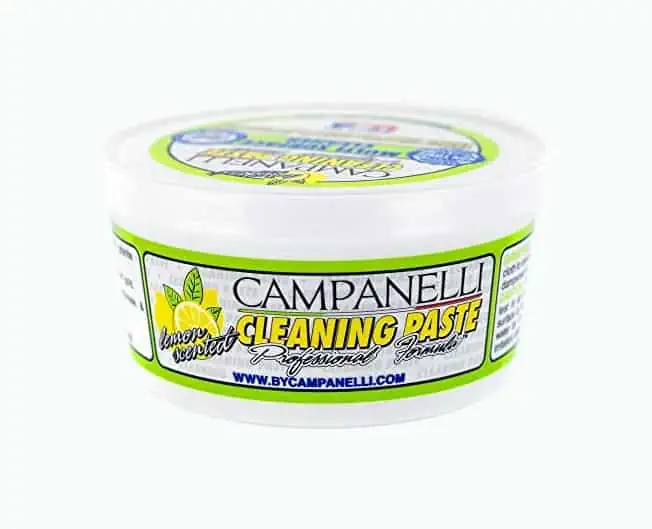
Campanelli's Cleaning Paste
Best Paste
Are you looking for a paste to clean your shower tiles? This is our top recommendation! It is a non-toxic, biodegradable, multi-purpose cleaner that is useful for a wide variety of jobs around the house.
It’s designed to remove grease and stains from virtually any surface. So if your shower tiles are looking dirty and yucky, try this.
Use this on stainless steel, copper, aluminum, tile, chrome, glass, patio furniture, cement, and much more! Try cleaning pots, pans, your stove, windows, and many more places.
We love that the formula is safe and non-toxic. It’s made without bleach and solvents. It’s completely biodegradable, and it’s also lemon-scented, so it cleans while delivering freshness!
Pros
- Works on a vast range of surfaces.
- Removes grease and stains.
- Non-toxic and eco-friendly formula.
- Doesn’t leave behind a residue.
- Lemon-scented formula.
Cons
- It’s not a heavy-duty cleaner.
- May leave streaks.
Product Specs
| Type of Tile | All |
| Performance | Removes grease and stains |
| Toxicity | Non-toxic |
| Type of Cleaner | Paste |
| Versatility | Works on almost all surfaces |
Our Ratings
Community Feedback
| Product | Best | Type of Tile | Performance | Toxicity | Type of Cleaner | Versatility |
|---|---|---|---|---|---|---|
| StoneTech Mold & Mildew Remover | For Stain Removal | Marble, granite, limestone, ceramic | Removes mold & mildew stains | Medium-high | Spray liquid | Works on tile only |
| Better Life Tub & Tile Cleaner | Natural Cleaner | N/A | Removes a variety of stains | Non-toxic | Spray liquid | Works on tubs & tiles |
| CLR Pro Multi-Purpose Cleaner | Multipurpose Cleaner | Anything but marble, mirrors, wood, colored grout, wall coverings, painted surfaces, or fabrics | Removes a variety of stains & buildup | Non-toxic | Spray liquid | Works on almost all bathroom items |
| Lime-A-Way Bathroom Cleaner | Budget Choice | All, but stone | Removes rust, calcium & lime stains | High | Spray liquid | Works on sinks, fixtures, tubs, tiles, showers & glass |
| Grout-Eez Tile & Grout Cleaner | Cleaner for Grout | Ceramic & porcelain | Removes stains & cleans grout | High | Liquid | Tile & grout |
| Granite Gold Shower Cleaner Spray | Cleaner for Natural Stone | All natural stone | Removes & prevents stains | Non-toxic | Spray liquid | Works on tiles & fixtures |
| Campanelli’s Cleaning Paste | Paste | All | Removes grease & stains | Non-toxic | Paste | Works on almost all surfaces |
Types of Shower Tile Cleaners
Depending on your preferences and your shower, you should get familiar with the different types of shower tile cleaners. This will help you find the best one for your bathroom.
Liquid
Liquid tile cleaners usually come in the form of a spray bottle, making it super easy to spritz the tiles before wiping them down.
Pros
- Easiest to use.
- Works at removing stains.
- Budget-friendly options.
- Usually works on a range of tile materials or other bathroom appliances.
- Scented options.
- Natural options.
Cons
- The liquid can drip down, meaning it doesn’t stick that long to the tiles.
- Spray nozzles can be finicky.
Paste
Pastes are a little trickier, but many prefer them since they’re often multi-purpose and natural. You will need to dissolve these beforehand to create a creamy mixture that you can apply to the tiles.
Pros
- Many natural options.
- Multi-purpose options.
- Gentle on tiles.
- It doesn’t drip down the tiles, so you can keep it on the surface for a while.
- Great for removing stains.
Cons
- A bit more challenging to use as you need to dissolve it yourself.
- Harder to evenly distribute.
- Fewer options.
Grout Cleaner
While there are options to buy a tile and grout cleaner in one, it’s important to note that you should have a product that cleans grout. Grout can get very mucky, so make sure to clean it often!
Pros
- Works specifically for cleaning grout.
- Brightens and freshens up grout.
- Removes stains.
- Comes in a variety of types, including pastes and sprays.
Cons
- Can be pricier.
- You may need to buy a brush or cloth separately.
How To Choose the Best Shower Tile Cleaners
Consider these important details when shopping to find the best tile cleaner for your shower.

Type of Tile
The most important factor is what type of tile you have. Many tile cleaners are suitable for all tile types, but you need to triple-check so you don’t end up damaging your tile. So check if you have ceramic, granite, other natural stone types, or something else.

Performance
Think about the purpose of the tile cleaner. Will it remove stains? Is it specifically for rust?
Is it suitable for weekly cleaning? Does it work on grout? It’s so important to ask yourself what you need the product for.

Toxicity
Check out the ingredients for the product. Some cleaners are more toxic than others, while many have plant-derived ingredients, making them super safe for you and your home.
If you’re worried about toxicity, try a DIY recipe.

Ease of Use
How easy is the product to use? We think that sprays are easiest, but check that the company is using a high-quality spray nozzle, as this will avoid frustration. Many prefer pastes, but some find they’re harder to use.

Versatility
Do you want a cleaner that can do more than just freshen up shower tiles? Look for a multi-purpose cleaner. Some work on a vast range of surfaces, while others are dedicated to the bathroom.
Top Tip
FAQs

How Do You Clean Shower Tiles Without Scrubbing?
There are several ways to clean the shower without scrubbing. You could try baking soda and water mixed into a paste, vinegar, and dish soap, neat hydrogen peroxide, or a diluted solution mixed with water.

Why Is the Grout in My Shower Turning Black?
The grout in your shower is turning black because you have mold spores. Mold loves damp environments like bathrooms and kitchens, and once it takes hold, it is hard to remove.

How Often Should You Clean a Tile Shower?
Knowing how often you should clean a tile shower depends on how frequently it gets used. If you use it every day, you should clean it daily.

Do Steam Cleaners Work on Showers?
Steam cleaners do work on showers. They are much safer than using chemicals to clean your shower and better for the environment.

What Is the Best Shower Cleaner for Hard Water?
The best shower cleaner for hard water is Lime-Away Cleaner. It tackles limescale, calcium, and rust, removes soap scum, and gets to work in under 60 seconds.