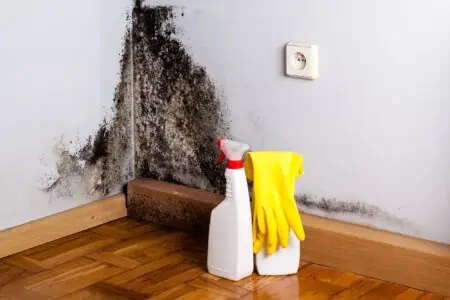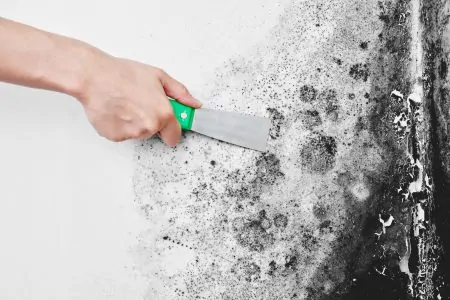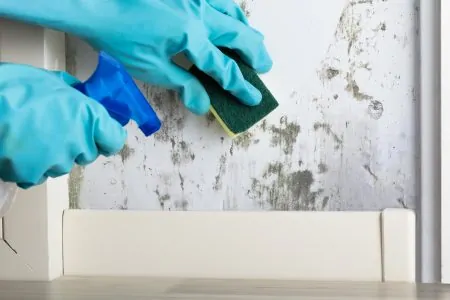
Mold can be toxic and damaging to your health. Not to mention, it can damage your home. This is why it’s crucial to get rid of it as soon as possible.
But it’s not always an easy process. Many people find treating mold challenging — often because they’re not using a sufficiently potent mold remover. But how do you find the best mold removers?
We’ve spent hours analyzing various products, expert advice, and applying our expertise. After looking at dozens of products, their efficiency, how to use them, and their value, we’ve concluded the top seven.
Ready to use one for tackling your mold issue? Let’s go.
- 15 second results
- No scrubbing needed
- Suitable for all surface types
- Eliminates 99.9 percent of mold
- Takes effect after five minutes
- Efficient spray nozzle
- Powerful professional-grade mold remover
- Non-toxic, EPA-registered formula
- Prevents mold growth
- Safe, eco-friendly ingredients
- Works on even on furniture
- Non-abrasive and scented
- Concentrated formula
- For all exterior surfaces
- Eco-friendly and non-corrosive
- Reaches mold in small areas
- Effective, overnight treatment
- Easy to control
- Fragrance free
- Spray nozzle
- Free from toxic chemicals
Review Methodology: At Oh So Spotless, we meticulously research and analyze the best mold removers to provide you with trustworthy and reliable information. Our hands-on experience and professional expertise allow us to evaluate products from a user’s perspective and identify key decision-making factors. We compare and rank mold removers based on performance, effectiveness, safety, and ease of use. Our thorough assessments draw on data, facts, and real-life results to help you make an informed decision. We also delve into design choices and their effects on users. By measuring and scoring products across these critical criteria, we ensure that our top recommendations stand out from the competition and provide the best mold-removing solutions for your needs.
The Best Mold Removers of 2024
We’ve spent hours looking for the best mold removers through recommendations, expert advice, and customer feedback. Luckily, we’ve found them, and are ready to share our thoughts on each one:
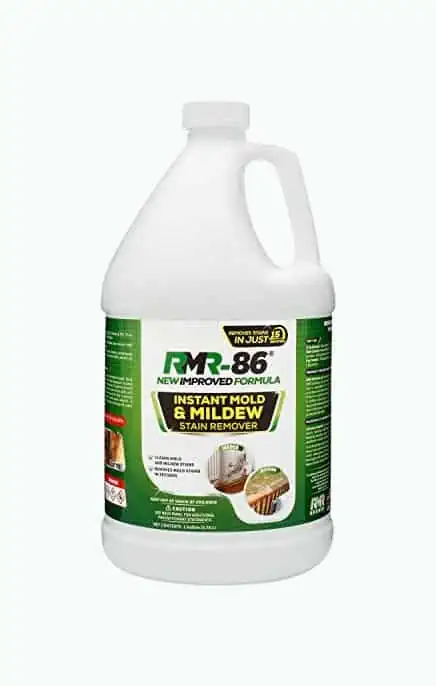
RMR-86 Instant Mold Stain Remover
Best Cleaning Performance
This is one of the market’s most powerful mold and mildew stain removers. Unsurprisingly, it’s widely popular among homeowners. RMR is a reputable brand in the industry with a variety of top-notch products.
It’s one of the few mold removers that produce results within a mere 15 seconds. The best part is that you don’t need to scrub or wipe it down; it performs its magic on its own. We also love that it’s suitable for all surface types.
This mold remover is available in a 32-ounce spray bottle and a 1-gallon and 2.5-gallon bottle at an affordable price.
What We Like
Works Within 15 Seconds
If a mold remover only takes 15 seconds to work, you know it contains some powerful antifungal ingredients. This can give you peace of mind that you’re getting your money’s worth.
You Don’t Need to Scrub
We’ve all fantasized about our house magically cleaning itself. Well, that’s sort of what this mold remover does. Just spray it onto the problem area and walk away. There’s no need for wiping or scrubbing with this one.
Suitable for All Surface Types
It almost acts as a multi-purpose cleaner. You don’t need to buy separate mold removers for each surface type in your home. This one works on wood, tiles, laminate, and fiberglass, to mention a few.
Removes Mold and Stubborn Stains
Even if you’ve killed mold, there might still be some ugly stains. Not with this mold remover. It can remove stains from even black mold and mildew so that your surfaces are spotless. It also gets rid of foul odors!
What We Don't Like
Contains Sodium Hypochlorite
This is a strong bleaching element that can compromise your health. So make sure to wear a mask, goggles, and gloves while using it. Wash your hands and face once done.
Overpowering and Lingering Scent
You might want to think twice before buying if you’re sensitive to smells. Many customers had trouble entering the room even a few days later. You might experience headaches, sore throat, and other symptoms after using this cleaner.
Product Specs
| Sizes | 32 ounces and 1 gallon |
| Dispenser | Spray nozzle and pour |
| Bulk offer | 1-gallon and 2.5-gallon bottles |
Our Ratings
User Experience
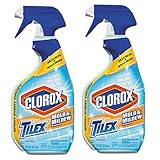
Tilex Mold & Mildew Remover
Best Mold Remover for Bathrooms
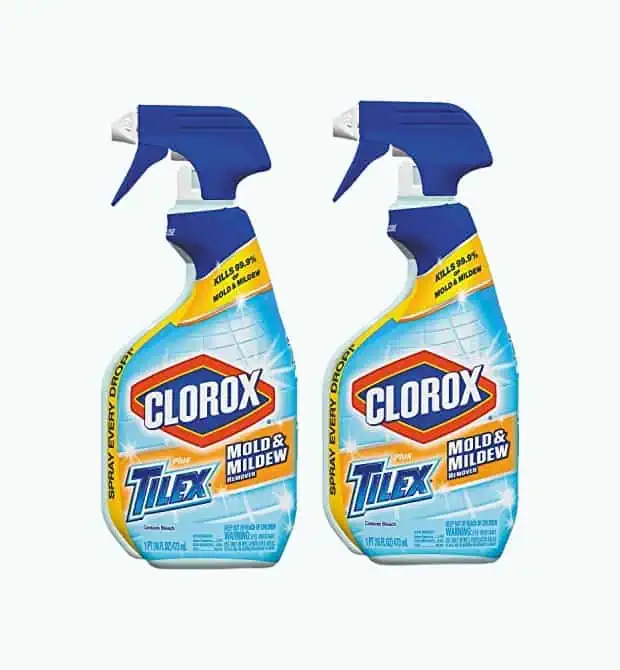
This mold remover contains a powerful bleaching agent that will kill fungus and effectively remove the stains they leave behind. It eliminates 99.9 percent of mold and mildew. Leaving it on for five minutes will eat through layers of scum, and then you can wipe it away.
Tilex is best suited for bathrooms or any affected areas on tiles, porcelain, and acrylic. The spray nozzle makes it easy to use, and it’s designed to reach the very last bit of product at the bottom of the bottle.
They’re available as two-packs of 16 ounces and 32 ounces or a four-pack of 16-ounce bottles.
What We Like
Eliminates 99.9 Percent of Mold
A mold remover that kills nearly all spores will result in a healthy, hygienic bathroom. Even better, it will also save you time scrubbing the same area clean. This is thanks to its powerful bleaching agent.
Takes Effect After Five Minutes
Who has the time or patience to sit around and wait for a product to perform? The speedy activation of the ingredients will make mold removal seem less tedious.
Efficient Spray Nozzle
Few things are as frustrating as being unable to reach the last bits when a product is running low. The design of the spray nozzle goes all the way to the bottom, ensuring that you get your value for money.
No Need to Scrub
Save yourself from arm and wrist pain with this cleaner. No need to scrub! You can apply it, wait a few minutes, then rinse clean. That also keeps you out of harm’s way: you don’t need to risk getting the cleaner on your hands.
Safe to Use On Many Surfaces
You can use this cleaner on dozens of different surfaces. That includes grout, plastic, ceramic tile, fiberglass, and vinyl. Remove mold from shower doors, shower curtains, no-wax floors, sinks, tubs, and more.
What We Don't Like
Contains Bleach
Bleach is one of the most effective ways to remove stains, but direct exposure can cause irritation and illness. Be sure to wear protective gear when using this product.
Packaging Tends to Leak
Due to the bleach it contains, you don’t want this to leak. So keep in mind that you’ll need to be super careful with this. Definitely keep it out of reach from kids.
Product Specs
| Sizes | 16 ounces and 32 ounces |
| Dispenser | Spray nozzle |
| Bulk offer | Comes in packs of two or four |
Our Ratings
Personal Perspective
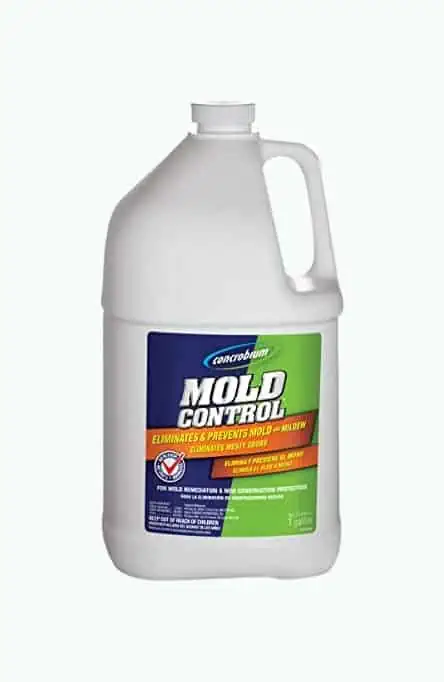
Concrobium Mold Control
Best Professional Mold Remover
This is a professional-grade mold remover suitable for multiple surfaces around the interior and exterior of your house. Use this on your drywall, tiles, wood, stone, and grout.
The formula has been EPA-registered (United States Environmental Protection Agency), which makes it very safe. It doesn’t contain toxic chemicals such as bleach or ammonia.
Not only is it a powerful mold and stain remover, but you can also use it as a preventative measure. It’s available in one, two, or four packs of 1-gallon bottles. Unfortunately, it doesn’t come with a spray dispenser.
What We Like
Powerful Professional-Grade Mold Remover
Because this remover is professional grade, you can be sure of its efficiency at killing an infestation and removing stains.
We also love that it’s suitable to tackle mold growth on any surface inside or outside your house.
Non-Toxic, EPA-Registered Formula
You can take comfort in the fact that it’s not formulated with toxic chemicals. This makes it safe to use around the house with children and pets.
Prevents Mold Growth
It can be utilized as a regular surface cleaner to prevent mold growth. Stop an infestation before it’s even occurred.
No Odor Formula
You might love this product if you can’t stand strong cleaning solution smells. It has an odorless formula, so you don’t have to struggle with headaches or sore throats after application.
Suitable for Most Areas of the Home
When you hear about versatile products, this is a prime example. You can use this on various surfaces inside and outside the home. This includes tile, wood, concrete, carpets, drywall, and more.
What We Don't Like
No Spray Dispenser
You’ll have to transfer the product into a spray bottle if you intend to use it as such. However, given it’s free of toxins, it’s safe to pour directly onto a cloth and go to town.
Not the Most Effective
Due to the lack of strong chemicals, this isn’t the most effective product on the market. It might take a few applications, or it might struggle to remove stubborn stains. We don’t recommend this for tough stains or mold infestations.
Product Specs
| Sizes | 1-gallon bottles |
| Dispenser | Pour |
| Bulk offer | Available in packs of two and four |
Our Ratings
Community Feedback
EcoClean Solutions Professional Mold Killer
Best Eco-Friendly Mold Remover
This is an EcoClean Solutions product, which means it’s formulated with safe ingredients with a reduced footprint.
It effectively removes mold and stains and disinfects multiple surfaces. You can use it on tiles, porcelain, steel, metal, and various types of furniture. It takes a while to work its magic, so remember to let the solution sit on the affected area before cleaning it off.
The formula is non-abrasive. This means you don’t need to be concerned about the product eating away at your wooden tables. And it has a lovely lemon scent!
What We Like
Safe, Eco-Friendly Ingredients
This formula is safe to use around the whole house — the chemicals are effective but not dangerous. Not only is that great for your health, but our ecosystems also.
Works on Various Surfaces, Including Furniture
We love mold removers that you can use on any surface since they save us time and money. This one is also suitable for furniture — score!
Non-Abrasive and Scented
You can use it on any surface without worrying about causing damage. Plus, it’ll end up smelling like fresh lemon.
Powerful Disinfectant
While this removes mold and mildew, it also works as a general disinfectant. It fights against various bacteria and viruses such as E. coli, Salmonella, and more. You can use it on any home surface, making it a fantastic product to keep your family and home healthy.
What We Don't Like
Doesn’t Remove All Types of Mold
If the mold infestation is severe, this product may not be strong enough to eradicate it. You may need to scrub to see results.
Not a Heavy Duty Cleaner
If you have colossal mold infestations, this isn’t going to be the most effective. It’s better for smaller patches of mold and mildew. There are more effective and potent cleaners on the market.
Product Specs
| Sizes | 1-gallon bottle |
| Dispenser | Pour |
| Bulk offer | No |
Our Ratings
First-Hand Impression
Spray & Forget Revolutionary Mold Remover
Best Value for Money
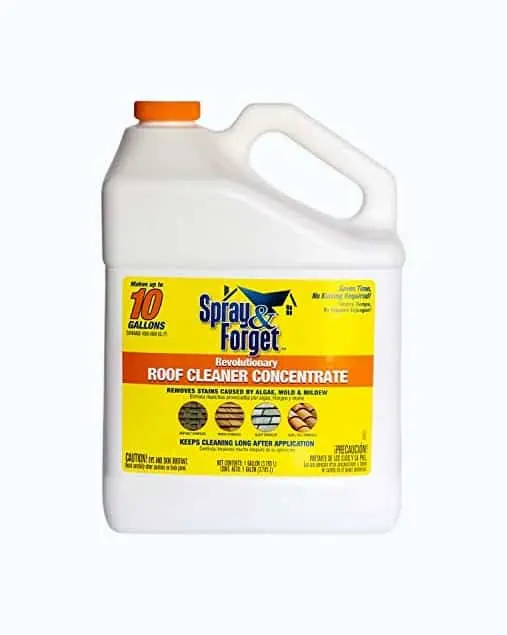
Each pack is a concentrated formula that can produce up to 10 gallons of product — making it an excellent value for money.
You can use it on any exterior surface, including tiles, wood, and roofs.
This non-corrosive remover is formulated without bleach, lye, acid, phosphates, and heavy metals. Therefore, it won’t damage the surface it’s used on. This makes it safe and eco-friendly.
You don’t need to do any scrubbing. It truly lives up to the name — spray and forget.
Unfortunately, it runs a little on the pricier side. But remember that you’ll most likely get more product after diluting it than purchasing a ready-to-use mold remover.
What We Like
Concentrated Formula Produces 10 Gallons
A product that produces 10 times as much as the amount of concentrate you’re getting is a real bargain. This could last you for years.
Not to mention, you’ll end up buying fewer plastic bottles than with every ready-to-use purchase.
Suitable for All Exterior Surfaces
A mold remover that you can only use on one type of surface won’t give you near the amount of value as a versatile one. Always opt for a product that can be used on many surfaces. This will save you money and reduce your carbon footprint.
Plus, you don’t need to rinse or scrub it. This will keep you out of harm’s way.
Eco-Friendly and Non-Corrosive
Mold removers typically rely on bleach as the active ingredient, but this one doesn’t. It also doesn’t contain any other harmful ingredients, such as lye, acid, phosphates, and heavy metals.
Due to potent chemicals, mold cleaners can be pretty abrasive and corrosive. But you don’t need to worry about causing your home any damage with this one as it’s non-corrosive.
Tackles Stubborn Stains
Once you’ve killed mold, a stain might still persist. With this solution, you can remove stains caused by mold, mildew, and even algae.
What We Don't Like
Pricey Investment
Initially, it’s an expensive purchase. But you have to keep in mind that it’s a dilutable concentrate that will end up giving you a lot of value for money.
You Might Need to Reapply a Few Times
This product doesn’t always work on the first attempt. You might need to use it two to three times on one area to see good results.
Product Specs
| Sizes | 32 ounces and 1 gallon |
| Dispenser | Hose-spray and pour |
| Bulk offer | 1-gallon concentrate that produces up to 10 gallons of product |
Our Ratings
User Experience
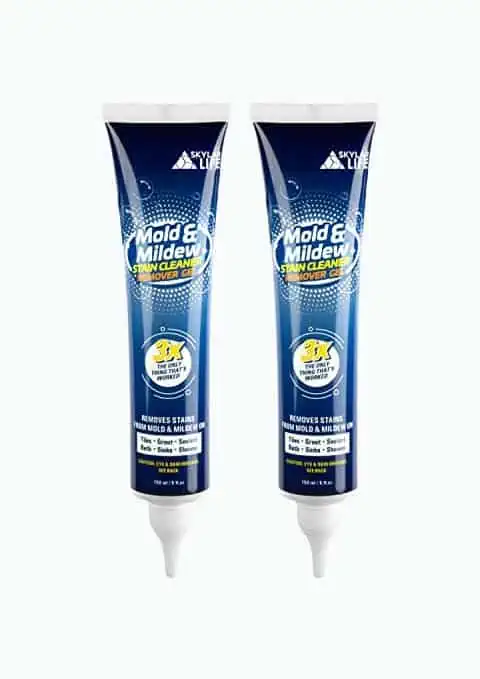
Skylarlife Mold and Mildew Remover Gel
Best Mold Remover for Tiles and Grout
We’ve all battled pesky mold clumps that collect on shower and bath tile grout. This mold remover comes with a small, pointy cap dispenser that can reach those hard-to-reach areas. It even works for silicone sealants around the windows.
All you need to do is squeeze the product onto the affected areas, leave it overnight and rinse it off in the morning. The gel formula will prevent it from dripping everywhere and making a mess.
This mold remover is highly effective because of its potent ingredients, which include bleach. Always take caution when working with this ingredient.
What We Like
Reaches Mold in Tight Areas
Scrubbing grout or other hard-to-reach places can be very time-consuming. The pointy bottle cap lets you dispense the product exactly where you need it.
Effective, Overnight Treatment
What makes it even more convenient is that you simply let the formula sit overnight. Then you can rinse it off the next day.
Gel Formula Is Easy to Control
Mold removers that need to be poured are difficult to deal with since you risk having the product run free. The Skylarlife’s gel formula will prevent that from happening. This prevents a mess and reduces your chances of touching it.
Versatile Product for Various Areas
Use this mold cleaner in your washing machine, in your toilet, on the window frames, in the bath, sink, or on tiles.
What We Don't Like
Contains Bleach
Be sure to wear a mask and gloves when handling this mold remover since it contains bleach. Inhaling the fumes or touching it can harm your health.
Small Bottle, Expensive Price
While the packaging is a big selling point, it’s expensive for the size. These small five-ounce bottles are pricey, especially when you compare them to other products.
Product Specs
| Sizes | 5-ounce bottle |
| Dispenser | Pointed cap |
| Bulk offer | No |
Our Ratings
Personal Perspective
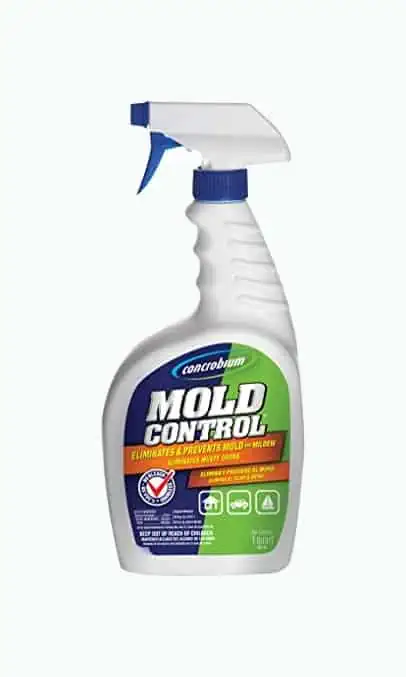
Siamons International Concrobium Mold Spray
Best Multi-Surface Mold Remover
This mold remover is ideal for all-around use inside and outside your home. It’s suitable for surfaces such as tiles, wood, laminate, brick, and stone.
It comes with a spray nozzle for quick and easy application. The formula is powerful and efficient enough to be left on for a short period and rinsed off easily.
The solution is free from ammonia and other toxic chemicals, making it safe. It gives off a fresh scent after application.
There’s a limited size option; it’s only available in a 32-ounce bottle.
What We Like
Suitable for Multiple Surfaces
A mold remover that works on various surfaces inside and outside your house is always a win. It will save you a lot of time and money.
Spray Nozzle
The easiest — and safest — way to dispense mold remover is via a spray nozzle. It’s convenient and reduces your need to touch the chemicals.
Free From Toxic Chemicals
Harsh and toxic chemicals are damaging to you and your family’s health. Furthermore, rinsing it down the drain can be very harmful to the environment as well.
What We Don't Like
No Bulk Option
You can only purchase it in a 32-ounce bottle. This size limit can cost you more money in the long run.
Might Leave Behind a Residue
Customers found that this product may leave behind a white residue. In fact, it can look like a version of the mold, which isn’t a pretty sight!
Product Specs
| Sizes | 32-ounce bottle |
| Dispenser | Spray nozzle |
| Bulk offer | No |
Our Ratings
Community Feedback
| Product | Best | Sizes | Dispenser |
|---|---|---|---|
| RMR-86 Instant Mold Stain Remover | Cleaning Performance | 32 oz and 1 gal | Spray nozzle and pour |
| Tilex Mold & Mildew Remover | Mold Remover for Bathrooms | 16 oz; 32 oz | Spray nozzle |
| Concrobium Mold Control | Professional Mold Remover | 1-gal | Pour |
| EcoClean Solutions Mold Killer | Eco-Friendly Mold Remover | 1-gal | Pour |
| Spray & Forget Mold Remover | Value for Money | 32 oz; 1 gal | Hose-spray and pour |
| Skylarlife Mold and Mildew Remover Gel | Mold Remover for Tiles and Grout | 5-oz | Pointed cap |
| Siamons Concrobium Mold Spray | Multi-Surface Mold Remover | 32-oz | Spray nozzle |
What Is Mold?
Mold is a type of multicellular fungi (1). Mold plays a vital role in nature — breaking down dead organic matter. There’s a chance that you’re exposed to mold every day, but in small amounts, it’s pretty harmless.
Mold thrives in moisture zones. They reproduce through minute spores that travel through the air (2). Once they land on a wet surface, such as bathroom tiles, it takes them only a few days to start growing into clusters visible to the naked eye.
Many American homes tend to face a mold epidemic at some point. A severe infestation can cause permanent damage to your home, eating away at the drywall, floorboards, or carpets. Even when the mold dies or is removed, it leaves behind stains.
The Effects of Mold on Your Health
Mold exposure can result in an array of health complications (3). Even the healthiest person can develop allergic symptoms to mold, including:
- Stuffed sinuses.
- Irritated or watery eyes.
- Throat irritation or soreness.
- Coughing.
- Skin irritation.
- Asthma.
In some cases, prolonged exposure to toxic mold can cause serious illness. It can also worsen symptoms in people with weak immune systems or chronic illnesses. Some of these health problems include:
- Bone marrow disease.
- Heart conditions.
- Neurotoxicity (4).
- Lung infections in those with lung diseases.
- Damage to the liver and kidneys (source).
Types of Mold in Your Home
There are 12 types of mold that tend to grow in homes (5). Let’s have a look at some of the most common and dangerous ones:
1. Alternaria
This is the most common type of allergenic mold. You can identify it by its dark green or brown “hair.” This species easily appears after water damage.
It spreads quickly, so it’s essential to treat it as soon as it’s spotted, or it could take over a home. If you experience an allergic reaction or asthmatic symptoms, check for this mold and remediate it immediately.
2. Acremonium
Acremonium is a toxigenic mold and one of the most dangerous types to have in your home. It can lead to bone marrow disease, among other immune system and organ diseases (6).
It has a fine, powdery texture and is orange, grey, pink, or white in color. You’ll find them in humidifiers, cooling coils, window sills, or drain pans. If you spot this mold, it might be best to have it professionally removed as it’s so hazardous.
3. Cladosporium
This species grows on objects and surfaces we’re constantly in touch with. The spores thrive in cold and warm conditions and make a home on moist or damp carpets, clothing, and upholstery.
It’s an allergenic mold type, which is not quite the most dangerous, but it can still be challenging to deal with. We don’t recommend touching it upon discovery since it can cause an allergic skin or throat reaction, even in someone without allergy issues (7). You can identify it by its formation of brown, green, or black spots.
4. Stachybotrys
Stachybotrys is also known as “black mold.” It’s toxigenic but can also cause allergic reactions. Easily distinguishable from other mold species by its slimy texture, this one ranges from forest green to black in color.
You’ll see this mold on wood, cardboard, paper, or wicker. If the walls of your house are composed of wood or if you have wallpaper, you might be at risk for Stachybotrys.
5. Mildew
Although not classified as mold, mildew is a type of surface fungi that can be identified by its grey or white patches. It tends to grow on surfaces like walls, bathroom corners, and cupboards.
Mildew is the least dangerous type of fungi you’ll encounter in your home and can easily be treated. However, this doesn’t mean you should let it grow wild — it can still trigger allergic symptoms.
Choosing the Best Mold Remover
Although a lot of mold removers are similar and provide matching results, there are some factors you might want to consider before buying one:

Surface Type
Check the specs of the mold remover to ensure that it will be suitable for the type of surface you want to clean.
A versatile mold remover is always a convenient bet. This will save you money from having to buy separate products.
Potent Chemicals
Strong chemicals can damage your surfaces. So when buying a mold remover, watch out for bleach. It’s an effective cleaner but can be dangerous if not used with caution (8).
Instead, keep an eye out for non-corrosive and non-abrasive products — they’re gentler.

Surface Area
Take note of the surface area that the mold is growing on. This will help you calculate how much product you’ll need. If the affected area is larger than 10 square meters, it’s best to have it professionally remediated.

Value for Money
Some brands offer bulk deals where you end up paying less for more. This can include one-gallon bottles or multi-pack offers.
A mold remover concentrate is an excellent way to get value for money. It needs to be diluted and produces a lot more product than you initially bought.
Dispenser
A spray bottle is a lot more convenient. It’s also safer than pouring out the product and risking touching it.
Some products are even formulated to be sprayed on the affected area without the need for rinsing or scrubbing.
How to Treat and Prevent Mold
We hate to break it to you, but everyone has mold in their home. It’s one of the most natural occurrences, and there’s no way to get rid of every single spore. However, there are some measures you can take to prevent mold reproduction from becoming problematic:
1. Identify the Problem
Start by inspecting any damp-prone areas in your house, including bathrooms, kitchens, basements, laundry rooms, and crawl spaces. This can also be a great way to discover any leakage you didn’t know you had.
Remember to keep an eye on things that might not seem as significant. Things such as a carpet spill or laundry left in the machine by accident can be problematic.
2. Reduce Moisture
Mold can’t grow without moisture. Naturally, this means that if you reduce the moisture in your home, you’ll reduce the reproduction process of spores. Ways to reduce in-home moisture include:
- Dry leaky pipes and seepage into the house from rainfall within 24 hours.
- Regularly clean and repair gutters.
- Remove carpets, furniture, bedding, or clothing that have sustained water damage.
- Install a hood vent above the stove to evacuate and filter steam.
- Don’t leave wet objects lying around the house.
- Dry the walls and floors after taking a shower or a bath.
- Keep indoor humidity between 30 and 50 percent.
- When renovating or building a new house, opt for mold-resistant drywall and mold-resistant paint.
3. Plants
Indoor plants help keep the air clean and fresh by reducing pollutants (9). Nonetheless, the moist soil attracts mold. In a natural setting, this would be healthy, but indoors, the spores can easily spread throughout your house.
But don’t get rid of your plants. Instead, add Taheebo tea to the water you feed them. The oil of the Taheebo tree contains powerful antibacterial and antifungal properties, strong enough to withstand mold growth in forests (10).
These properties will be absorbed through the soil and the plant, warding off a large portion of mold spores.
4. Mold Removers
A good mold remover will break down the clusters, and all you’ll have to do is scrub or wipe it away. Most contain various antibacterial substances that not only eradicate growth but clean the surface overall. It also contains ingredients that will remove stains caused by the mold.
Some are specifically formulated for tile surfaces, wood, or fabric, and others are suitable for various surfaces. You can use them regularly for general cleaning to prevent a mold breakout.
5. Safety
Before you dive right into cleaning, there are some precautions you need to take.
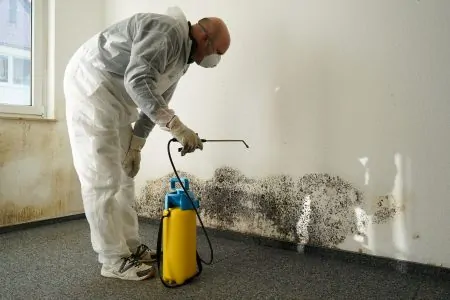
Getting up close and personal with mold can prove dangerous, even if you’re not touching it. Spores travel through the air and become denser around their colonies, increasing your likelihood of breathing it in.
Follow these steps if you’re about to come into contact with mold:
- Wear old, long-sleeved clothes and shoes you can throw away once you’re done.
- Cover your face with a surgical face mask, or in the case of a more severe infestation, invest in a respirator. This will prevent you from inhaling spores and potentially potent chemicals in the mold remover.
- Wear goggles that fit comfortably.
- Rubber gloves are ideal because they won’t allow moisture to seep through and touch your skin.
- Wear a medical hair cap or a beanie you’re willing to get rid of and ensure it covers all of your hair.
- Keep the windows open.
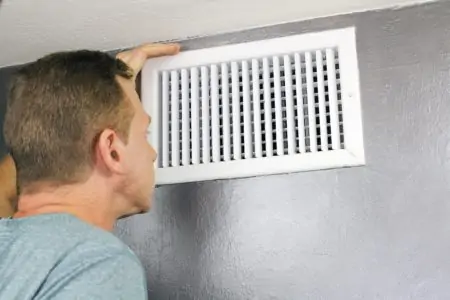
- Cover the AC and ducts before you start cleaning.
If the mold has accumulated on fabric, such as clothes, carpet, or furniture, it’s best to throw it out. We know this can be an unfortunate loss, but mold is near impossible to fully get out of these materials, increasing the risk of spreading. Double-bag it and ensure it’s tightly sealed before disposing of it.
FAQs

Can I Leave Vinegar on Mold Overnight?
You can leave vinegar on mold overnight, although it is entirely pointless. The best way to treat mold with vinegar is to spray it on and wait 20 to 30 minutes, then scrub the mold with a brush.

Will a Dehumidifier Help With Mold?
A dehumidifier will help with mold because it removes humidity in the air, which is the sole cause of damp spores feeding and growing. It replaces the wet air with dry air, making it impossible for mold to take hold.

How Long Does It Take to Get Sick From Mold Exposure?
The time it takes to get sick from mold exposure varies from person to person. Some people feel the effects within a couple of hours, while others take days for side effects to show.

How Do I Get My House Tested for Mold?
There are two ways to get your house tested for mold: call in the professionals or use a home test kit, like this MIN Mold Test Kit. Home test kits are reliable, provided you follow the instructions.

What are the Symptoms of Mold Infection?
The symptoms of mold infection include sore throat, blocked nose, red and itchy eyes, and difficulty breathing. Mold infection is also problematic for people with asthma and other lung conditions.
Call in the Big Guns
A good mold remover will come in handy for treating an infestation ASAP. But there are some things you might want to consider before purchasing one.
Take into account the affected surface type and area. This will help you determine what kind of formula you’ll need and how much of it. A spray nozzle will undoubtedly ease the remediation process, and always keep an eye out for bulk deals to save some cash.
As much as the best mold removers can improve the health of your home, the product itself could be toxic to your health or damage your home. If that’s a factor you’re concerned about, opt for toxin-free, non-corrosive, and eco-friendly mold removers.
In with the mold remover, out with the mold!