Are you tired of looking into hazy mirrors that are covered with streaks, toothpaste, and fingerprints? It’s hard to put on makeup or style your hair using a cloudy mirror. So today, we’re discussing the best way to clean mirrors so you don’t end up with hazy, streaky mirrors.
Key Takeaways
- Wipe the mirror with a clean, dry microfiber cloth before cleaning to remove residue that may cause streaks.
- Use a glass cleaner or a solution of distilled white vinegar and distilled water to clean the mirror.
- Wipe the mirror in a zig-zag pattern with a microfiber cloth, then buff with a third clean, dry cloth for a polished finish.
- Avoid using abrasive cleaners, sponges, or paper towels, as they can damage the mirror’s surface.
How to Clean Mirrors Naturally
You can clean your mirrors using a solution of distilled white vinegar and distilled water.
When using this mirror cleaning solution on your mirrors, take precautions to prevent the solution from pulling in the corners of the frame. We like to use a microfiber cloth to dab up the liquid as it gathers.
This will prevent the cleaning solution from seeping through the frame to the silver backing and potentially damaging your mirror.
- Time: 15 minutes
- Difficulty: Beginner
What You’ll Need
- Distilled white vinegar
- Distilled water
- Spray bottle
- 3 microfiber cloths
- Dish soap (optional)
- Rubbing alcohol (optional)
- Cotton balls (optional)
1. Make Cleaning Solution
Mix 1 cup of white vinegar with 1 cup of distilled water in a spray bottle. Give the bottle a good shake to mix the ingredients.
Quick Tip
To make an anti-fog solution for your bathroom mirrors, add 1 teaspoon of dish soap to the cleaning solution.
2. Wipe the Mirror
Use a clean and dry microfiber cloth to quickly wipe the mirror clean before spraying it. This removes any dirt, dust, and gunk stuck to your mirror that may cause it to streak when you clean it.
Quick Tip
If you have toothpaste, hair spray, or stains stuck to your bathroom mirror, dip a cotton ball in rubbing alcohol to remove the gunk from the mirrors.
3. Clean the Mirror
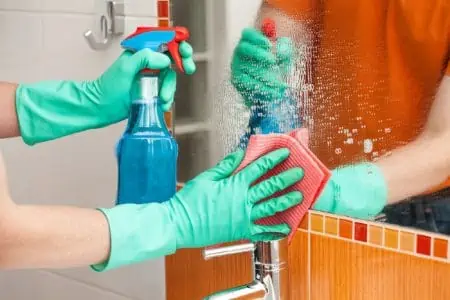
Lightly mist your mirror with the cleaning solution and use a zig-zag or S pattern to wipe the cloth back and forth over the entire length of the mirror. Another option is to mist the microfiber cloth with your glass cleaning solution before using the zig-zag motion to scrub your mirror clean.
Quick Tip
If you added dish soap to the cleaning solution, spray the solution on the mirror and let it sit for a few seconds before cleaning it. This will help to prevent your bathroom mirror from fogging.
4. Wipe the Mirror
Polish your mirror with the third clean and dry microfiber cloth. This will prevent you from needing to deal with a mirror that is hazy or streaky.
How to Clean Mirrors Without Streaks
You can use a few hacks to avoid streaks on your mirror after cleaning it.
- Before cleaning your mirror, wipe it with a clean and dry microfiber cloth. This will remove the dust and particles that are the main cause of streaking.
- Work in a zigzag or Z-shaped pattern and avoid using circular motions when cleaning your mirror.
- Buff the mirror with a clean and dry cloth after cleaning it.
- Use a squeegee quickly to clean your mirrors without streaks.
How to Clean Mirrors Without Vinegar
If you’d prefer to avoid the smell of vinegar in your house after cleaning your mirrors, here are some alternative cleaning methods you can use such as rubbing alcohol, hydrogen peroxide, and toothpaste. All these methods will clean your mirror properly without streaks.
With Rubbing Alcohol
Rubbing alcohol is a great option to use to clean and disinfect your mirrors. Not only will it kill any germs on the mirror, but it will also remove stuck-on toothpaste stains as well.
Dip a cotton ball or cotton pad into the rubbing alcohol and focus on the stuck-on stains. Scrub until they have been removed. Follow up with a mirror cleaning solution as needed.
With Glass Cleaner
A glass cleaner such as Windex is another excellent option for cleaning your mirrors at home.
First, lightly mist the mirror with Windex or your preferred glass cleaner. Next, wipe the mirror with a clean and dry microfiber cloth in a zig-zag pattern. Finish by buffing the mirror with a second clean and dry microfiber cloth.
With Ammonia
Ammonia is another excellent mirror cleaner that you can use at home.
Put 1 gallon of water in a bucket then add ⅓ cup of ammonia. Dip a sponge into the mixture and apply the solution to your mirror. Scrub any stains on your mirror with the sponge.
Use a clean and dry microfiber cloth to wipe down and dry your mirror using a Z-shaped pattern. A second microfiber cloth can be used to buff your mirror to a shine.
With Hydrogen Peroxide
Pour the hydrogen peroxide into a spray bottle. Another option is to attach a spray nozzle to the bottle itself.
Lightly mist the mirrors with the hydrogen peroxide. Finish by wiping the mirrors clean with a microfiber cloth.
With Toothpaste
Plain white toothpaste can double as a household cleaner as it’s a mild abrasive. Cover the mirror with the toothpaste and wait for it to dry. This will take about 20 minutes.
Then remove the toothpaste with a clean microfiber cloth. You will need to use circles to buff the mirror clean when you use toothpaste to clean your mirrors.
What to Avoid When Cleaning Mirrors
When you’re cleaning a mirror, you will need to avoid these tools and products.
- Avoid using abrasive sponges or cleaners as they may scratch the mirror.
- Avoid using cleaning products that produce suds. The suds can leave a haze on the glass.
- Paper towels should also be avoided as they are abrasive and may scratch or pit the surface of your mirrors.
Mirror Cleaning Hacks
If you don’t have a microfiber cloth to use when cleaning your mirror, you can try using a coffee filter or a newspaper to clean the mirrors. Another option is to cut up an old tee shirt or use a rag that you have hanging around your house.
Professionals use squeegees to clean mirrors without streaks.
You can also quickly clean your mirror with water. Dampen your clean microfiber cloth with warm water and wipe your mirror using circular motions. Buff it clean with a dry microfiber cloth to prevent streaks.
FAQs

How Often Should I Clean My Mirror?
You should clean your mirrors every week as they become covered with fingerprints, toothpaste, and other gunk.

Can I Use a Sanitizer to Clean the Mirror?
Yes, hand sanitizer can be used to clean your mirrors. It’s also a great product to use to clean hairspray off bathroom mirrors.

Can You Use Scrubbing Bubbles on Mirrors?
Some people use Scrubbing Bubbles to clean their mirrors. However, it’s not recommended. Using Scrubbing Bubbles on your mirror may leave a haze that will need to be buffed clean.

Does Vinegar Damage Mirrors?
Yes, vinegar may cause damage to mirrors. The silver backing used to produce mirrors is sensitive to acid corrosion. So if the vinegar leaks through the frame to the silver backing, the mirror may lose its shine.

Does Shaving Cream Clean Mirrors?
Shaving cream does clean mirrors. Spray some on a microfiber cloth and gently rub the mirror surface until it is clean.

What Causes Mirror Desilvering?
The main cause of mirror desilvering is moisture. Leaving mirrors covered in steam after a hot shower will eventually lead to desilvering.
How to Clean Mirrors
To properly clean a mirror, begin by wiping the mirror with a clean and dry microfiber cloth. This will remove any dirt and residue that may cause streaking.
Lightly mist the mirror with a glass cleaner. Use a microfiber cloth to wipe the mirror in a Z-shaped pattern. Finish by buffing the mirror to a shine using a second clean and dry microfiber cloth.