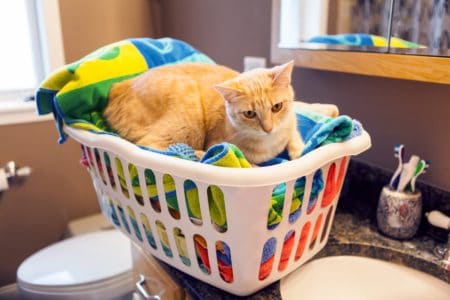
Pets definitely make a house a home. From playing to cuddling to training them, it’s a whole world of fun.
But even if you have unconditional love for your pet, nobody wants pet hair all over their clothes.
With our pointers on how to remove pet hair from laundry, you can get fresh, professional and stylish clothes again.
Key Takeaways
- Brush your pet daily and use a lint roller on clothes to reduce pet hair on clothes and in the washing machine.
- Dry clothes on a no-heat cycle with a dryer sheet or dryer ball for 10 minutes to remove pet hair before washing.
- Add one cup of distilled white vinegar to the washing machine’s rinse cycle to soften fabrics and remove excess pet hair.
- Keep your washing machine and tumble dryer clean, and empty the lint tray after every cycle to prevent fire hazards and lint build-up.
Can Pet Hair Ruin a Washing Machine?
Pet hair definitely can ruin your washing machine. It’s tempting to toss laundry that’s covered in pet hair into the washing machine. But when you mix water and hair together, it clumps up. It can then get stuck in the water filter and clog your machine or drains. From then on, your clothes will have a really hard time getting clean. Even worse, you can have huge plumbing issues.
How to Remove Pet Hair From Laundry
These tips will protect both your clothes and your machines.
1. Brush Your Pet
It all starts with your pet. We recommend brushing your pet daily to remove loose hairs. That way, they won’t fall out as much during the day and build up on clothes, furniture and floors around the house. There are lots of great pet brushes on the market, such as the Hertzko Slicker Brush. Make sure to dispose of the collected hairs immediately.
2. Lint Roll Clothes
Before you put clothes in the washing machine, use a lint roller or a pet hair remover to clean loose pet hair from clothing. This will remove excess pet hair so it doesn’t clump up in your washing machine. If you don’t have these items in the house — you can actually use wet rubber gloves or a wet sponge. Just run the gloves or sponge along the clothes to remove pet hair.
3. Dry Clothes Before Washing
Toss the hair covered clothes in a dryer on a no-heat cycle. Adding a dryer sheet or dryer ball can help pick up a lot of the hair. Then it will be deposited into the lint tray. After 10 minutes, end the cycle, empty the lint tray and wash the clothes as normal.
4. Shop Wisely
If you have a fur baby, it might be a good idea to shop with them in mind the next time you buy clothes. Fabrics such as velvet, corduroy and loose knit will attract more pet hair than others. Synthetics are pretty good at repelling pet hair, but satin, leather and other shiny clothes are, by far, the easiest to clean from pet hair.
5. Clean Your Machines
It’s so important to keep your tumble dryer and washing machine clean. Every washing machine experiences a build up of soap, germs and other nasty things. But if you have pets — it can be even worse. We recommend cleaning your washing machines once a month.
Empty Your Lint Tray
6. Cover Pet Beds
If your pet sheds a lot, you might want to cover their special spot or their bed with a removable cover. That way, when you need to wash your pet’s bed, you can just wash the removable cover. Wipe the hairs away, wash as normal and have it back on their bed in no time. Always wash separately to avoid pet hair build-up on other clothes.
7. Vacuum Like You Mean It
If your pet sheds at all, you’ll need to up your vacuuming game. That means vacuuming more often — perhaps even every day. It also means vacuuming upholstery frequently. Lastly, it means getting a vacuum that is designed to clean up pet hair, such as the Bissell Pet Hair Eraser. With less pet hair around the house, there’s less pet hair on your clothes.
8. White Vinegar
Add one cup of distilled white vinegar to your machine’s rinse cycle. This works as a fabric softener, so it softens clothes and helps to free up any pet hair that’s stuck in the fibers. If you don’t like the smell of vinegar, add a couple drops of pet-friendly essential oils.
Warning
How to Remove Pet Hair From Bedding
If your pet sleeps in your bed, or sneaks there for naps while you’re at work, follow these tips to get bedding clean again.
- Put on rubber gloves and dip your hands in water. Brush over the bedding to collect loose hairs. If you’d rather use a lint roller or pet hair remover, do that instead.
- Throw away the pet hair.
- Toss the bedding into the tumble dryer with a dryer sheet or wool balls. Set it to a no-heat cycle for 10 minutes. This loosens pet hair so it can get trapped in the lint tray.
- Remove the bedding from the dryer, shake it out and toss it into the washer.
- Add your normal detergent and one cup of distilled white vinegar. This will soften fabrics to help remove excess pet hair. But it also deodorizes clothes and helps to remove stains.
- While the cycle is running, clean out the lint tray.
- After the cycle, dry the clothes as normal.
- Wipe the inside of your washing machine with a damp cloth to pick up any loose pet hairs.
When washing your pet’s bedding, vacuum excess hair from their bedding first. Then follow the steps above.
One extra tip is to clean the lint tray halfway through the drying cycle so it can catch extra hairs.
FAQs
What Dissolves Pet Hair in the Washing Machine?
If you’re in the UK, there is a product called Vamoosh which dissolves pet hair in the washing machine.
Otherwise, adding bleach to your laundry cycle can help to dissolve hair. Put the advised amount of bleach in the machine according to the manufacturer instructions. Remember that bleach will discolor any colored items — so only use bleach on white clothes!
Do Dryer Balls Get Rid of Pet Hair?
Yes — pet hair sticks to dryer balls before going into the lint tray. If you are looking for an eco alternative to dryer sheets, we recommend dryer balls.

Does Fabric Softener Help Remove Pet Hair?
We haven’t personally seen any fabric softener brands advertise this as part of their product. But you can make your own fabric softener solution to remove pet hair from upholstery and furniture. Mix together water and one spoonful of fabric softener in a spray bottle. Spray it onto furniture and upholstery. It will loosen the fibers and help lift up pet hair so you can easily wipe it away.
However, you can also do this with distilled white vinegar for a more natural solution!

Will Washing a Blanket Remove Pet Hair?
If you have a blanket covered in pet hair, vacuum the blanket first. Then use a lint roller before tossing the blanket into the dryer on a no-heat cycle for 10 minutes to remove excess pet hair. Then wash following our instructions.

What Kind of Fabric Doesn’t Attract Pet Hair?
We’re sure you’d take your dog everywhere if you could. But that doesn’t mean you want to take their hair everywhere! So if you’re in the market for some new clothes, here are some materials that best repel pet hair:
- Leather or pleather.
- Silk and satin.
- Polyester.
- Spandex.
- Nylon.
- Viscose.
- Denim.
- Tightly woven 100% cotton.
- Micro-suede.
- Moleskin.
- Microfiber.
- Linen.
Even if you do find pet hair on these fabrics, it’s much easier to clean. This is because the fabric is tightly woven so pet hair can’t penetrate its way in.

What Can I Put in the Dryer to Remove Pet Hair?
If you need a little assistance in removing pet hair in the dryer, add a dryer sheet or wool balls. The anti-static abilities of these products can repel pet hair and move it to the lint tray where it won’t be redeposited onto your clothes.

Do Washing Machine Hair Catchers Work?
Washing machine hair catchers do work to safely collect human and pet hair from fabrics during the wash cycle.
Don’t Tear Your Hair Out
We know, pet hair everywhere can be a pain! But with a little extra effort and these top tips, your house and laundry will be cleaner than ever before. Plus, your pet will definitely enjoy the extra grooming time!
Our best tip is to put hairy clothes in the dryer before washing. If you don’t have a tumble dryer, now is a great time to invest in one.