Whether you’re living off the grid, cutting down on electricity, or wanting something portable, you still need dry clothes. If you’re air drying your garments, you can speed the process up with a hand wringer.
A clothes wringer can help remove excess water, so garments air dry quicker. This will eliminate dampness and musty smells.
To find the best hand wringers on the market, we spent hours researching dozens of products, real customer reviews, and expert advice. After analyzing each product’s purpose, construction, and usability, we have compiled a list of the top seven hand wringers.
- Removes excess water effectively
- Long-lasting & durable
- Lightweight at 13 pounds
- Great for camping or travelling
- Built-in wringer
- Can be used as mop
- Heavy duty & indestructible
- Good for delicates and thicker garments
- Clamps onto most surfaces horizontally and vertically
- Easy to use
- Quiet & little vibration
- Comes with a timer to automatically shut off
- Removes 90 percent of water
- Portable and compact
- Takes up to 22 lbs of clothes
- Made in the USA
- Heavy-duty stainless steel construction
- Removes up to 90 percent excess water
- Portable, lightweight & compact
- Versatile use
- Premium waterproof material
Review Methodology: At Oh So Spotless, our comprehensive research and hands-on experience with various hand wringers allow us to provide you with an in-depth analysis and assessment of the best products in the market. Our team of professionals evaluates each hand wringer based on key decision-making factors such as performance, durability, design, and ease of use. Our thorough comparisons and criteria-based reviews enable us to measure, rank, and identify the top hand wringers that stand out from their competitors. By sharing our findings, first-hand experiences, and data-driven results, we aim to help you make an informed decision and choose a hand wringer that best suits your needs. Trust our expertise as we guide you through the essential factors to consider while purchasing a hand wringer, ensuring you get the most value for your money.
The Best Hand Wringers of 2024
We’ve spent hours researching real customer reviews, expert advice, as well as using our own insight into each product. With this in mind, we can confidently recommend these seven best hand wringers for getting drier clothes with little effort.
Here are seven options to take your clothes from sopping wet to just damp.
The Great American Wringer Co
Best for Cloth Diapers
The Great American Wringer Co is great for clothing of all types, including cloth diapers. Cloth diapers can hold a lot of excess water, so it’s important to wring that all out.
With this product, you can clip it to a bucket or basin. So when you wring out the cloth diapers, excess water, soil, and dirt will fall into a bucket. You will be able to see how clean the diapers are before using them again.
It’s made from stainless steel and Nitrel rollers and, therefore, is heavy-duty and built to last. You’ll save a lot of time from twisting and drying. Plus, it’s kinder on your hands and wrists.
Lastly, this product weighs just over 13 pounds, so it’s a little lighter than many of our other recommendations. If you want to take this on your boat or with you camping, it’s totally possible!
Pros
- Easily clips to a bucket or basin.
- Removes excess water effectively.
- Long-lasting and durable.
- Only weighs 13 pounds.
- 12-inch wide rollers suit larger garments.
Cons
- One of the most expensive on the market.
- Some customers found that synthetic materials got jammed.
Product Specs
| Purpose | Wringing excess moisture out of most garments |
| Materials | Stainless steel and Nitrel rollers |
| Ease of Use | Easy-Medium |
| Size | 20 x 10 x 7 inches |
| Weight | 13 pounds |
Our Ratings
User Experience
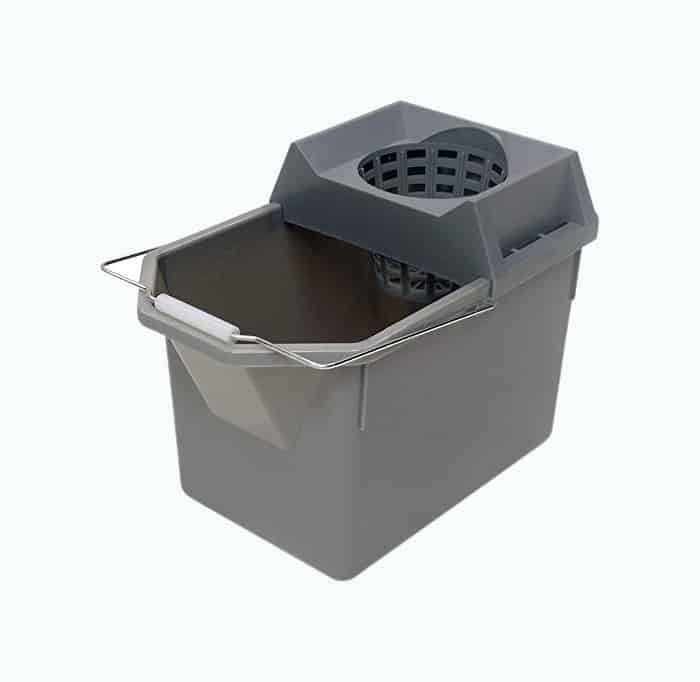
Rubbermaid Mop Bucket and Wringer
Best Mop Bucket Wringer for Clothes
Did you know you can also use a general mop bucket for wringing your clothes by hand? The Rubbermaid mop bucket and wringer is our top choice.
You can hand wash or rinse your clothes in the bucket part of this product. When you need to remove excess water before air drying, simply press the wet clothes into the wringer. Gently push down and drain excess water until the item is just damp.
This is a practical, budget-friendly way to wring clothes by hand. Plus, it comes with four lightweight buckets, so it’s awesome if you’re camping or traveling. Take this with you and gently remove excess moisture without damaging your clothes.
Pros
- Budget-friendly price point.
- Great for camping or traveling.
- Built-in wringer.
- Can also be used for a mop.
- Collects excess water so you can use it for plants.
Cons
- Still requires some elbow grease.
- May be too time-consuming for bigger families.
Product Specs
| Purpose | Hand wringing garments in a bucket |
| Materials | Plastic |
| Ease of Use | Medium |
| Size | 17 x 10 x 10 inches |
| Weight | 2 pounds |
Our Ratings
Personal Perspective
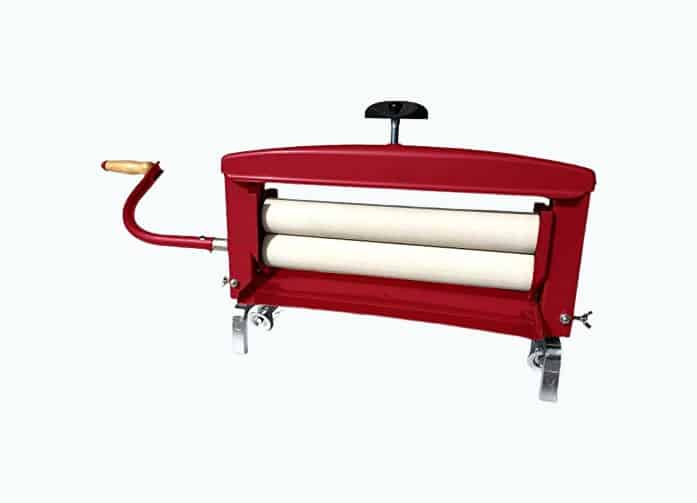
Northwood Calliger 360 Hand Crank Clothes Wringer
Best for Delicates
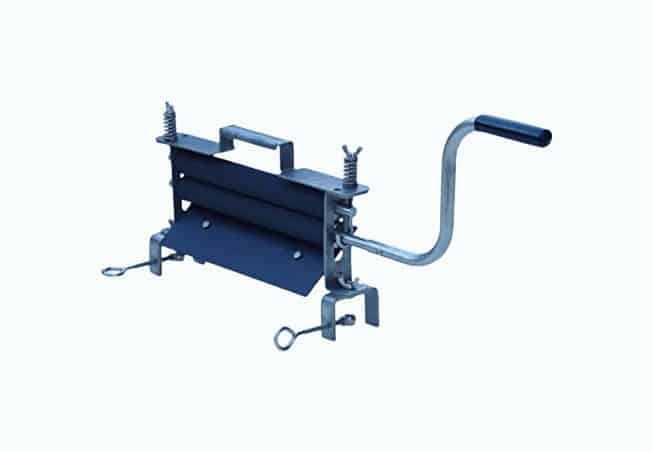
The Northwood Calliger 360 is our top recommendation for delicates. Whether you need to hand wring a sweater, lingerie, or a silk top — this will do the trick.
The rubber rollers are kind on fabric, whether thick or thin. The product is super easy to use and will relieve stress and tension in your hands and wrists. It’ll speed up drying time without you breaking a sweat.
What’s great about this is that it’s built to last. All the metal has been zinc-plated and powder-coated for maximum weather resistance. The frame and rollers are indestructible, so it should outlast all other models.
Finally, you can clamp this wringer onto virtually any surface, horizontal or vertical. So when you remove the excess water, it falls into a bucket or basin of your choice.
Pros
- Heavy-duty and indestructible construction.
- Good for delicates and thicker garments.
- Easy to use.
- Clamps onto most surfaces horizontally or vertically.
- Speeds up the drying process since it removes tons of water.
- You can adjust the roller tightness depending on the garment.
Cons
- It’s heavy, not portable, and difficult to maneuver.
- Many customers found the drip plate doesn’t fit properly.
- Extremely difficult to assemble.
Product Specs
| Purpose | Wringing excess moisture out of thick and thin garments |
| Materials | Zinc-plated metal, steel, and rubber rollers |
| Ease of Use | Easy |
| Size | 22.9 x 14.5 x 6.1 inches |
| Weight | 20.3 pounds |
Our Ratings
Community Feedback
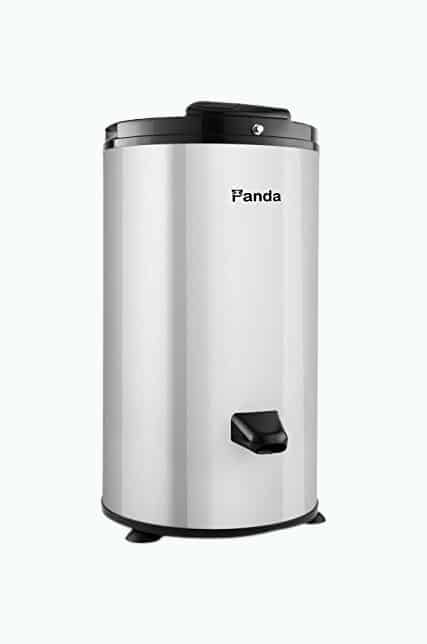
Panda 3200 RPM Portable Spin Dryer
Best for Professional Use
You know those wringers you find at swimming pools to drain out your swimwear? The Panda 3200 RPM Portable Spin Dryer is like those! So whether you need this for your small business or just want a more professional product, this is our top recommendation.
This is an electrical product. So keep that in mind if you’re living off the grid. You will need to plug this in.
But it still saves energy over time. It gets your clothes mostly dry super quickly, so they’re ready to be air-dried.
The spinning disc will remove the water — not heat. But despite no heat, customers say this is one of the best spin dryers they’ve ever used!
Pros
- Speeds up air-drying time.
- Easy to use.
- Quiet and little vibration.
- Comes with a timer, so it automatically shuts off after the set time.
- Durable stainless steel construction.
- Compact size fits in small spaces.
Cons
- Small capacity.
- Better for smaller and lighter garments.
- Expensive price point.
Product Specs
| Purpose | Spin drying clothes |
| Materials | Stainless steel and plastic disc |
| Ease of Use | Medium |
| Size | 13.5 x 13.5 x 25.5 inches |
| Weight | 26 pounds |
Our Ratings
First-Hand Impression
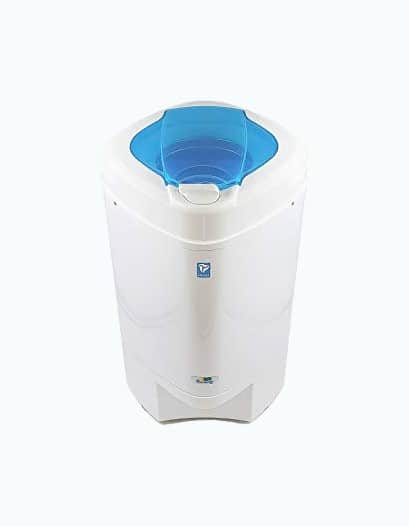
The Laundry Alternative Ninja Portable Spin Dryer
Easiest to Use
If you want to take pretty much all the work out of using a clothes wringer, the Laundry Alternative Ninja Soft Spin Dryer is the way forward. The only thing you need to do is put in the clothes and turn it on. The machine does the rest of the work for you!
This is a portable ventless electric dryer. So do keep in mind that you’ll need to be near an electricity source to use. It’s not suitable for rural camping, but if you’re on a campsite, it will work.
We love this for drying swimsuits while you shower in the communal bathrooms! Plus, it’s available in four color options!
It’s important to note that this doesn’t have a drainage tray. So the excess water just falls out of the machine. It’s best to use this outside, in a shower, tub, or sink.
Pros
- Removes 90 percent of water.
- Portable and compact.
- Takes up to 22 pounds of clothes.
- Must-have if you live in an apartment without a tumble dryer.
- Super easy to use: drop clothes and turn it on.
- Four color options.
Cons
- Requires electricity.
- Doesn’t come with a bucket for drainage.
Product Specs
| Purpose | Remove 90% of excess water easily |
| Materials | High-grade plastic |
| Ease of Use | Easy |
| Size | 14 x 14 x 24 inches |
| Weight | 22 pounds |
Our Ratings
User Experience
Wisemen Stainless Steel Industrial Model Hand Clothes Wringer
Best Hand Wringer for Towels
This one is great for towels, swimwear, and of course, clothes. It can be hard to remove excess water from a towel without straining your hands or wrists. But with this wringer, the job is a breeze.
In fact, this product will remove 90 percent of excess water! So air drying will be quick and simple after using this. The washing machine spin cycle doesn’t even remove that much water, so this is much more effective.
Made of stainless steel, this is built to last an impressively long time.
Pros
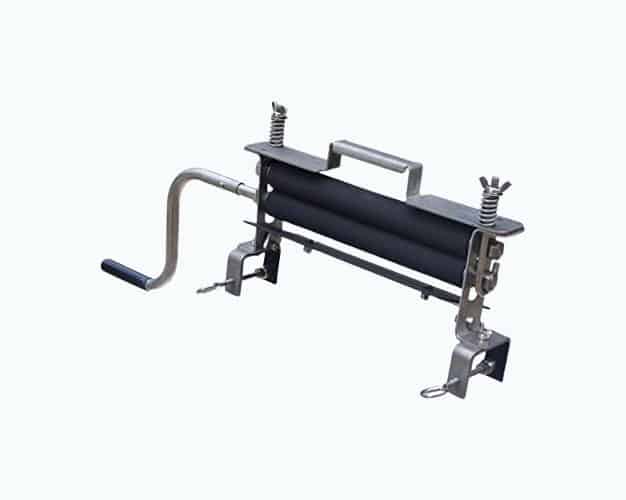
- Made in the USA.
- Heavy-duty stainless steel construction.
- Ideal for towels and chamois.
- Removes 90 percent of excess water.
- Top handle makes it easy to transport.
Cons
- May need a few people to operate: one to feed, one to twist, and one to catch garments.
- It’s not easy to use for large gamrents, like blankets.
Product Specs
| Purpose | Removes water from towels and chamois |
| Materials | Stainless steel |
| Ease of Use | Medium |
| Size | 20.1 x 10.4 x 6.5 inches |
| Weight | 10.55 pounds |
Our Ratings
Personal Perspective
Dezitrek Portable Manual Clothes Washer
Best Portable Hand Wringer
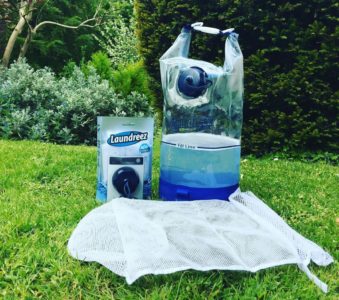
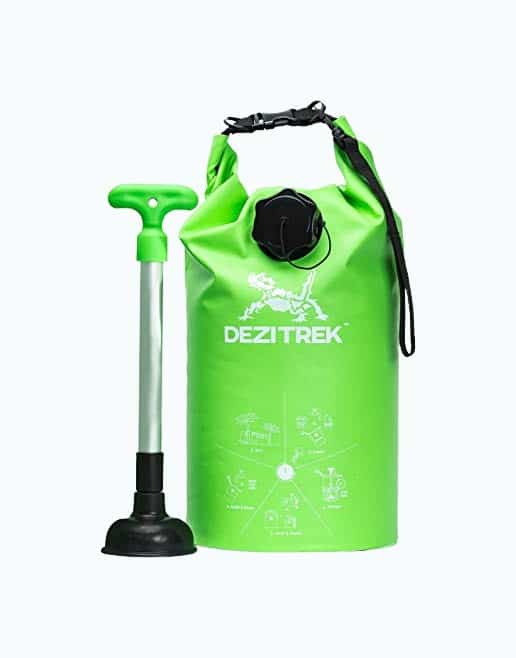
Camping, swimming, or traveling? The Dezitrek portable clothes washer is our top pick for you! Weighing only 1.5 pounds and being small enough to fit in your backpack, this is the solution for wringing clothes on the go.
It works as a dry bag, a packing bag, and a laundry bag. When you put the wet clothes in the bag, squeeze, plunge, and wring the bag to remove the excess water. Open the small hole and let the water run out. Repeat this process until there’s no excess water left.
The smooth interior makes this bag ideal for all garments, including delicates. So if you have an embellished bathing suit, toss it in! Make sure to be gentle.
Pros
- Portable, lightweight, and compact.
- Versatile use, including packing, laundry, or as a dry bag.
- Premium waterproof material.
- Great for traveling.
- Includes a telescopic plunger for deep-cleaning clothes.
Cons
- Not suitable for heavy or oversized clothes — it takes an extremely long time to wash them.
- It requires effort, strength, and time to use.
Product Specs
| Purpose | Laundry bag, removing water while traveling. |
| Materials | Plastic |
| Ease of Use | Medium-hard |
| Size | 9.5 x 9.5 x 24 inches |
| Weight | 1.5 pounds |
Our Ratings
Community Feedback
| Product | Best | Purpose | Ease of Use | Size | Weight |
|---|---|---|---|---|---|
| The Great American Wringer Co | For Cloth Diapers | Wringing excess moisture | Easy – Medium | 20 x 10 x 7″ | 13 lbs |
| Rubbermaid Mop Bucket & Wringer | Mop Bucket Wringer for Clothes | Hand wringing garments | Medium | 17 x 10 x 10″ | 2 lbs |
| Northwood Calliger Hand Crank | For Delicates | Wringing excess moisture | Easy | 22.9 x 14.5 x 6.1″ | 20.3 lbs |
| Panda Portable Spin Dryer | For Professional Use | Spin drying clothes | Medium | 13.5 x 13.5 x 25.5″ | 26 lbs |
| The Laundry Alternative Spin Dryer | Easiest to Use | Remove 90% of excess water | Easy | 14 x 14 x 24″ | 22 lbs |
| Wisemen Stainless Steel | Hand Wringer for Towels | Removes water from towels, chamois | Medium | 20.1 x 10.4 x 6.5″ | 10.55 lbs |
| Dezitrek Portable Manual Clothes Washer | Portable Hand Wringer | Great for travel | Medium – Hard | 9.5 x 9.5 x 24″ | 1.5 lbs |
Should You Hand Wring Clothes?
Wringing clothes means you twist and squeeze simultaneously to remove excess water. Some fabrics, like jeans, towels, cloths, and bedding, can handle being wrung by hand. But we generally advise against this since twisting and squeezing the fabric can stretch and damage it.
Hand wringers, despite their name, do not actually involve the dramatic twisting and squeezing motion. They are much gentler on clothes and work with delicates, too!
So instead of twisting and squeezing your clothes, get a hand wringer.
Other methods that work to remove excess water include:
- Pressing: Pressing the garment against the side of a tub or basin.
- Rolling: Rolling the fabric up in a towel and pressing gently as you go.
- Hanging: Hanging clothing over the bathtub, so the water drips down.
- Squeezing: Gently squeezing the garment without twisting it.
- Towel: Laying it to air dry on a towel in a sunny spot.
Do You Need a Hand Clothes Wringer?
You’ll find having a hand clothes wringer useful in many circumstances.
- If you have arthritis, hand wringing or squeezing clothes can be painful. With a clothes wringer, you might find it easier since the most work you’ll need to do is turn the handle.
- If you have a power outage, a hand wringer can prepare your clothes for being air dried.
- If you’re living off the grid or camping, you’ll be thankful for your clothes wringer!
- Clothes wringers will help you save energy. Air drying is a top choice for people saving energy, but this can take a while. A clothes wringer can get the maximum amount of excess water from your clothes, so clothes don’t take as long to air dry.
- It’s often quicker than hand wringing, especially for thicker garments like sweaters. A clothes wringer does the hard work for you and gets the job done quickly.
- If you like to do things by hand, including hand washing and air drying, this is a must-have product. It’s an eco-friendly way to dry your clothes as quickly as possible.
- Clothes wringers are amazing for swimsuits. If you’re on a beach holiday or camping by the lake, you’ll need one to get swimwear dry as quickly as possible.
How To Choose a Clothes Hand Wringer
With many choices on the market, shopping for a hand wringer can be overwhelming. With these top tips, you’ll find the best one for you. Look out for these important factors.

Purpose
Most clothes wringers work with all types of clothes. But they each work differently.
If you want to get the maximum amount of water out, you’ll probably want to choose a roller wringer. But if you’re looking for something more portable, we have great options for that, too.
For each product, we’ll let you know the main purpose.

Material
Clothes wringers come in a range of materials from steel to plastic. Some materials are more durable than others.
We recommend going with a steel product if you want something that will last a long time. But these will be more expensive.

Budget
First, consider your budget. Hand wringers can range from cheap (around $20) to very expensive (around $200), so you’ll most likely find something that suits your price point. However, the majority cost around $150.

Size
Lastly, look at the size of each product. These can take up a little space or quite a lot.
Of course, smaller is better if you’re looking for something portable. If you have generous storage space, size won’t be as important a factor.

Ease of Use
The easier it is to use, the better. Some do require more elbow grease than others. We’ll give you a rough idea of how easy it is to use each product, so you know what to expect when it arrives on your doorstep.
Can You Make a DIY Hand Clothes Wringer?
Yes, you can. But it isn’t easy, and it takes a while. Plus, it won’t be as effective as the ones we have listed.
However, if you want to try to make your own, follow these steps:
- Cut a few holes into the bottom of a bucket.
- Place this bucket inside another bucket (that doesn’t have holes).
- Put another bucket without holes inside the holey bucket. You’ll now have three stacked buckets inside one another, with the holey one in the middle.
- When you need to use it, put the clothes in between the top two buckets.
- Push down on the top bucket. This will press the clothes between the buckets and drain excess water.
- Empty and clean all buckets between uses.
FAQs

How Do You Get Excess Water Out of Clothes?
There are several methods of getting excess water out of clothes, including using an airer, a plunger, wringing water out by hand, and using the spin cycle on your washing machine.

Can You Use a Mop Wringer for Clothes?
You can use a mop wringer for clothes, provided the mop wringer is clean. Place the clothes in the bucket, squeeze the garment, and watch as the water fills the mop bucket.

How Do You Wring Out Wet Towels?
The best way to wring out a wet towel is to lay it flat, roll it into a long sausage shape, and twist it from one end to the other. As you work along the towel, apply maximum pressure, and the water will drain away.

How Do the Amish Wash Clothes?
The Amish use traditional wringer washers to do their laundry. They refuse to use electricity, so the wringer washer is the ideal way to clean laundry for their large families.