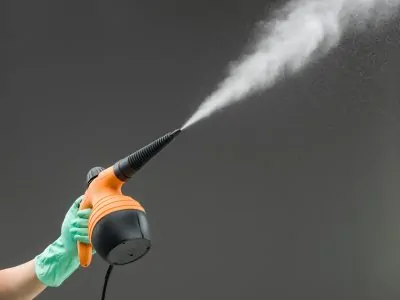
Are you quickly falling in love with your steam cleaner? You’re not alone — one of the many reasons we love steam cleaners is their endless capabilities.
Most people use steam cleaners to clean and sanitize their floors, but did you know that they can also clean grills and refrigerators?
There are many genius uses for steam cleaners. Whether you’re using a steam mop, handheld or cleaner, we’ll show you how to make the best of yours.
Key Takeaways
- Steam cleaners can be used for various tasks, such as cleaning grout, sanitizing light switches, and cleaning grills.
- They can disinfect pet cages, refresh outdoor furniture, and eliminate refrigerator gunk.
- Steam cleaners are also useful for deep cleaning mattresses, removing wallpaper, and cleaning upholstery.
- Remember to avoid unsealed surfaces, only use water in the tank, and be cautious with the amount of steam applied.
Genius Uses for Steam Cleaners
If you’re looking for new or more ways to use your steam cleaner, here are 25 genius uses you should try:
1. Cleaning Grout
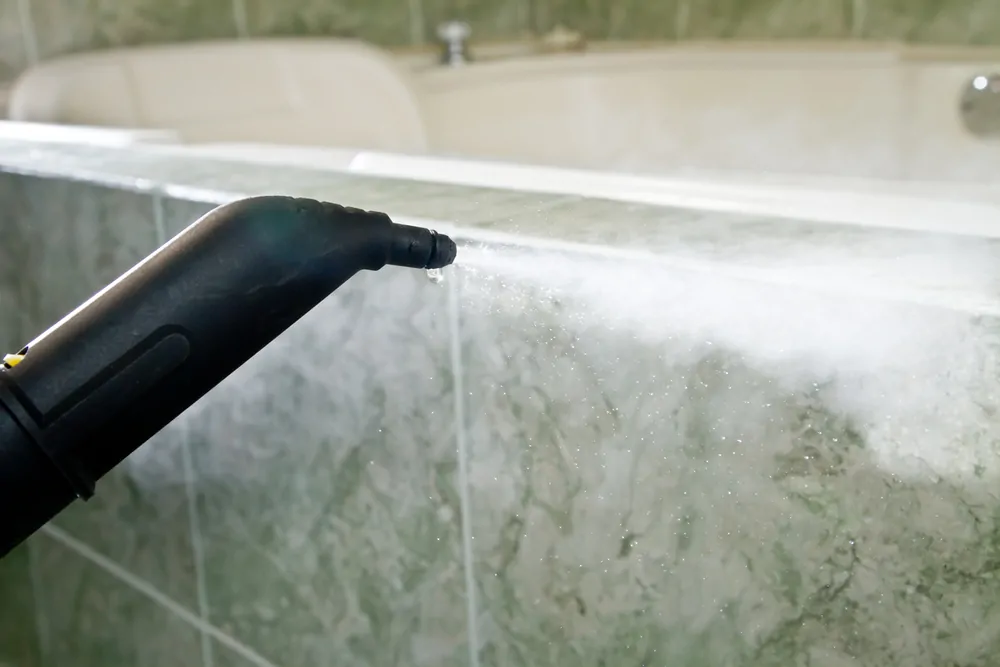
Cleaning the grout can be tedious since it often involves bending and scrubbing until your nails are loose. However, steam cleaning grout lines will help to blast away dirt, stains, and gunk. Many steam cleaners will even come with small attachments specifically made to clean grout lines.
2. Wiping Ceiling Fans
Cleaning your ceiling fans can be tricky, especially if you’re afraid of heights. Luckily though, your steam cleaner can eliminate the need for a ladder.
Most steam cleaners come with a long wand — you can use this with an appropriate attachment, such as a diamond brush. Attach a clean cloth over the brush and gently glide the steamer across the fan blades.
3. Sanitizing Light Switches and Door Knobs
Steam cleaners work at high temperatures (around 170 to 200 Fahrenheit). As a result, they’re effective at disinfecting neglected surfaces like door knobs and light switches (1). However, using your steam cleaner is an easy way to finish the job quickly.
Attach a small tool to the steamer and work your way around the tiny areas. You might want to attach a cloth or use low moisture when cleaning light switches to avoid electrical issues.
4. Cleaning Grills
Grilling out in the yard during warm summer evenings is idyllic. Unfortunately, cleaning the grill after is anything but. Removing grime often requires chemicals, scrubbing, and a few prayers to get last night’s burnt cheese and meat off the rails.
Fortunately, if you have a steam cleaner, you can do this task in no time. Use a small brush attachment to clean each wire easily. If you’re dealing with old or tough gunk, use a BBQ cleaning solution to pretreat the area.
5. Cleaning the Oven
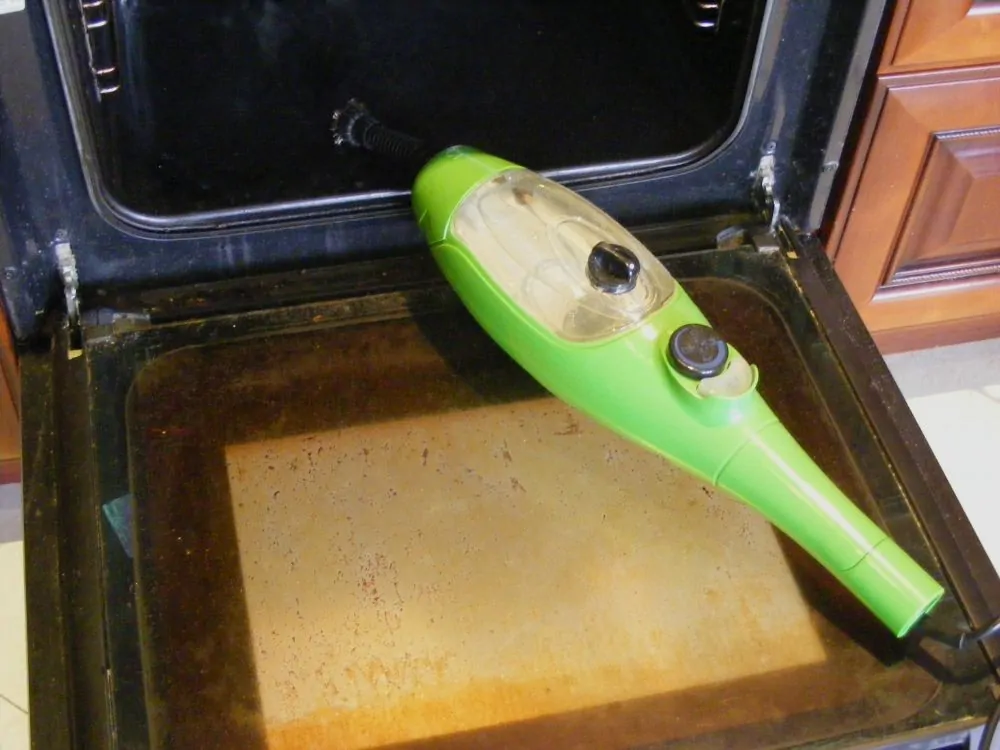
Cleaning the oven is another dreaded task for many. It can be tricky to remove stuck and burnt gunk without harsh chemicals. Most oven cleaners also contain lye which can create toxic fumes and should be handled with care (2).
Steam cleaning your oven, in comparison, is the best way to eliminate gunk without using any chemicals. Use a small brush attachment to clean the rails and a larger one to cover the bigger areas. Then attach a soft microfiber cloth to restore the oven door to a clean state.
6. Disinfecting Pet Cages
When cleaning pet cages, you often have to take them outside to wash with a hose. Unfortunately, disinfecting the cages often calls for chemicals that can harm your pet (3).
Instead, try your steamer to sanitize and clean the entire cage quickly. Use a small attachment for the wires and a larger brush for the base.
7. Refreshing Outdoor Furniture
As spring rolls around the corner, it’s time to take the outdoor furniture out of the shed. However, you might quickly realize how filthy and dusty those chairs and upholstery have gotten. You may even discover old bird poop or pest feces — which, of course, need to go.
Using your upholstery steam cleaner is a quick and easy way to do so. Use an upholstery attachment to clean fabrics and cushions. Then attach a jet nozzle to blast dirt and dust away and finish with a small brush for details.
8. Eliminating Refrigerator Gunk
Steam cleaning your refrigerator is an excellent way to sanitize and eliminate unpleasant odors. This is handy in a fridge where there are often food and beverage spills that slowly spoil over time (4).
You can use a small round brush for corners and rails. Then use a larger attachment to clean the base and sides of the fridge.
9. Easy Baseboard Cleaning
Baseboards are usually the last thing on our minds when cleaning in a hurry. However, if you’re already steam cleaning the floor, change the attachment to a small nylon brush.
Glide over the baseboards and pump the steam to blast away stains, dirt, and grime. You might be surprised at how clean your floor will look after deep cleaning the boards.
10. Sanitizing Toilets
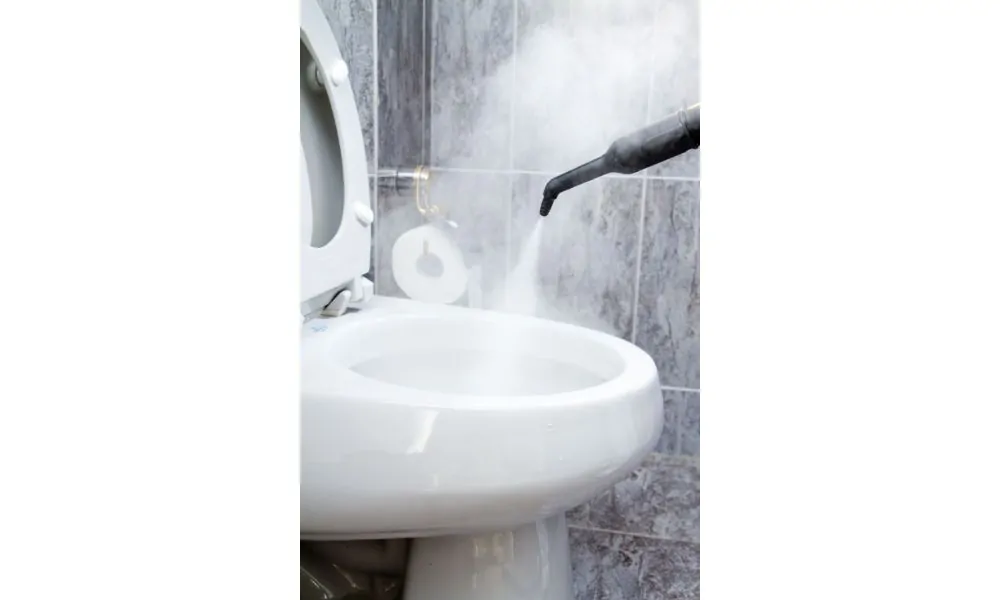
Cleaning the toilet often requires a back-breaking combo of scrubbing, manual effort, and chemicals. The harsh chemicals used to clean toilets can leave you wheezing your way out of the bathroom before you’ve finished (5).
Try to use your steam cleaner to clean and disinfect your toilet and surrounding bathroom floor. Use a small jet nozzle to focus the steam on tough stains.
11. Eliminating Hard Water Buildup
If you live in an area with hard water, you might be dealing with white stains on water fixtures. These are dried mineral deposits left behind after the water droplets have evaporated (6).
Use a small brush or jet nozzle to blast hot steam at the faucet and around it. If the stains persist, apply some vinegar before steam cleaning it.
The acid in the vinegar helps to neutralize the alkalinity of hard water. This further helps to dissolve and remove the stains (7).
12. Easy Mattress Deep-Cleaning
Steam cleaning a mattress is the most effective way to deep clean and sanitize your bed. If you’re worried about bed bugs or allergy triggers such as dust mites, a steam cleaner will remove them (8).
Start by vacuuming your mattress thoroughly to eliminate dust, dirt, and debris. Then use the upholstery attachment or a wide attachment to glide it across the mattress. The steam cleaner shouldn’t leave your bed more than a bit damp. If necessary, consider turning on a fan to help it dry.
13. Clothing Wrinkle-Eliminator
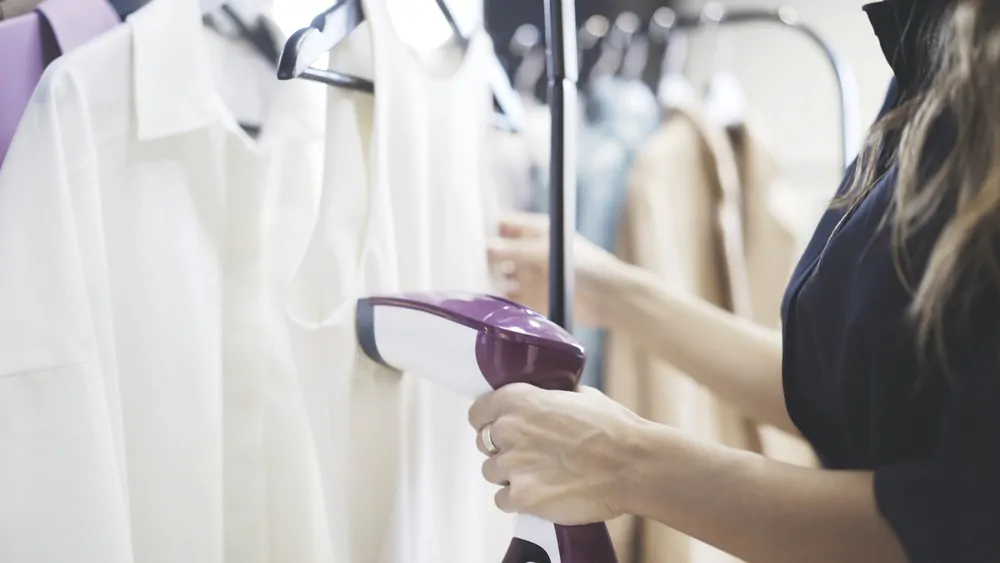
The old hot iron is becoming less popular as steam cleaners are rising in popularity. Many steam cleaners actually come with a clothes attachment. If yours doesn’t, you can use the upholstery attachment instead.
The steam will help to eliminate wrinkles on clothes and kill bacteria. It’s also easy to use since you can steam it while on the hanger.
14. Toy Disinfectant
If you have a toddler or baby, you know the importance of keeping toys sanitary. Because babies and toddlers are still developing teeth, they like to chew on everything their tiny hands can grasp.
However, using chemicals to sanitize toys is a no-go as it can leave a hazardous residue that your kiddo could ingest. Instead, use your trusted steam cleaner to kill up to 99 percent of bacteria that might be present on the various toys (9).
15. Sanitizing Baby Accessories
While we’re on the subject, you can also steam high chairs, car seats, strollers, and cribs. Again, it’s not a good idea to clean these areas where your baby spends a lot of time with chemicals due to residue (10).
Use your steam cleaner with an appropriate attachment to clean and disinfect the various areas. Choose an upholstery tool for car seats and strollers.
16. Deep Cleaning the Car
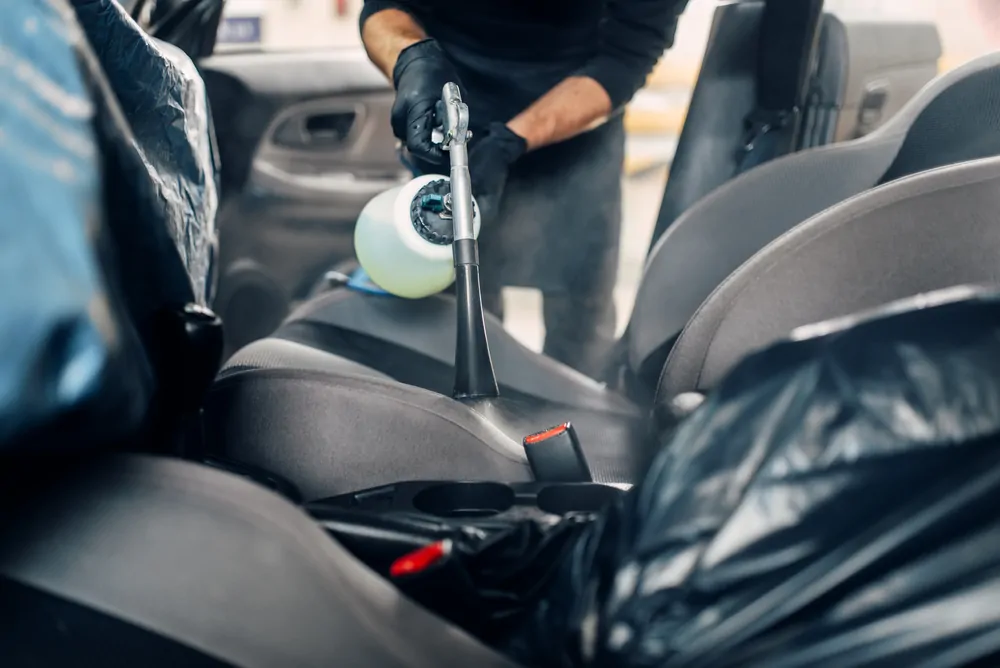
Using a steam cleaner to remove stains and grime from your car’s interior and exterior is highly efficient. Start by vacuuming to remove loose dirt and debris. Then use an appropriate attachment for the various surfaces.
Use a squeegee attachment or flat scraper to get squeaky clean car windows. The steam cleaner can remove oil spills and buildup around the engine.
17. Garbage Can Disinfectant
The garbage can will quickly become a thriving spot for mold, bacteria, and pungent odors. In many homes, cleaning the can is sometimes left to the last minute. However, if you have a steam cleaner, it can be done in no time.
Use a small attachment to get into the tight corners. Then attach a larger brush to clean and sanitize the bottom and sides of the can efficiently.
18. Steam Cleaning Curtains
Curtains add a nice touch to any home, but cleaning them is sometimes tricky because you first need to take them down. The long process is enough for anyone to leave it for another time.
Luckily, if you have a steam cleaner, you can cut the time in half. Steam the curtains the same way as you would with clothes. Leave them hanging and carefully steam using an upholstery attachment.
19. Best Way to Remove Wallpaper
Wallpaper can be difficult to remove without leaving a few stuck pieces behind. This can be very frustrating, especially because you can’t place new wallpaper on top.
You’ll need a steam pad to remove wallpaper with a steamer successfully. A steam pad is a large plate that applies steam evenly to a surface. As the steam penetrates the paper, it will soften the adhesive, and you can peel it off easily (11).
20. Squeaky Clean Windows
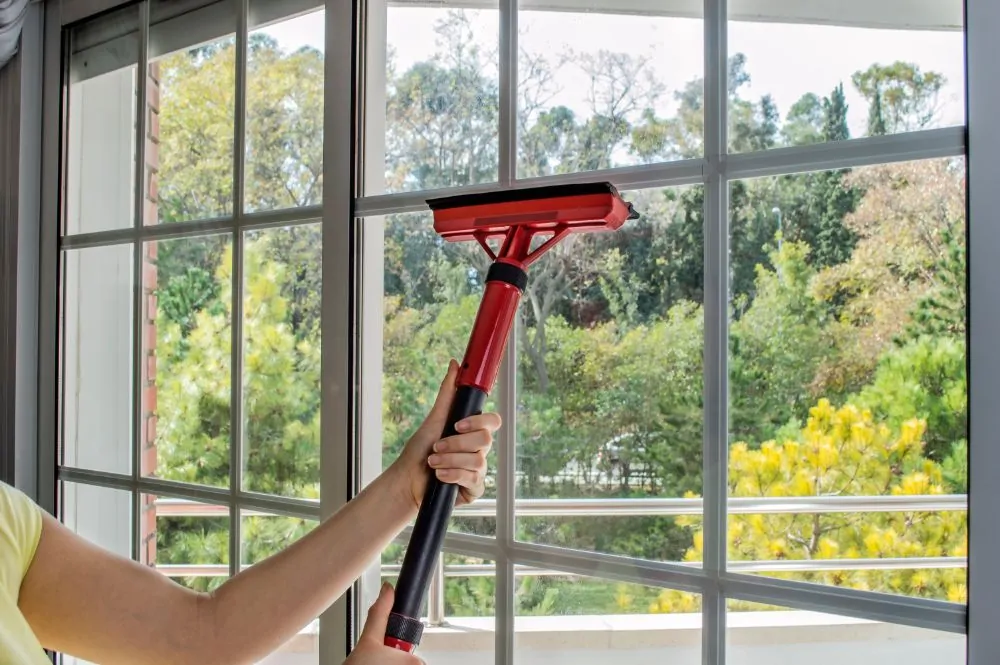
Steam cleaning windows is an efficient way to get a good result quickly and without expensive products. Some steam cleaners will come with a squeegee attachment — this is excellent for cleaning windows and easy to use.
21. Cleaning Faux Plants
Faux plants bring a nice splash of color to a home without needing maintenance such as watering. However, these plastic plants can become dust-magnets, making your home look filthy. Use your steam cleaner to quickly blast away dust while bringing some shine to the plants.
22. Defrosting Your Freezer in No Time
When it’s time to defrost your freezer, instead of unplugging it and waiting the entire day, use steam. After unplugging the freezer, place a large bowl or container at the bottom to catch the ice. Apply the steam directly into the freezer. You can then use a scraping tool to quickly remove large pieces of ice.
23. Cleaning Upholstery
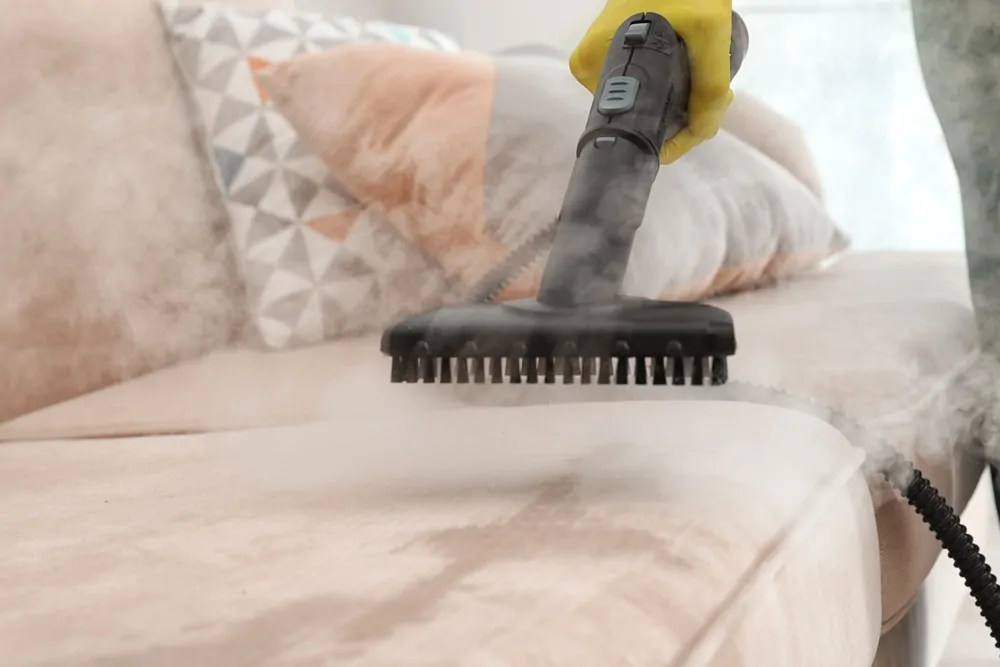
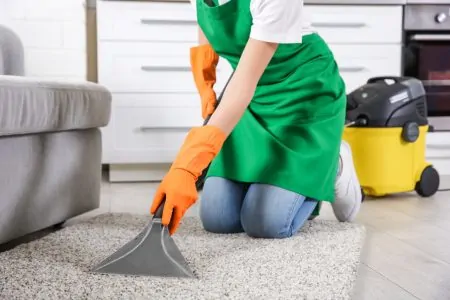
A steam cleaner is a brilliant tool when cleaning upholstery, sofas, or chairs. Low-moisture steam will deep clean the surface and remove stains without soaking the area and potentially ruining it.
24. Deep Cleaning Carpets and Rugs
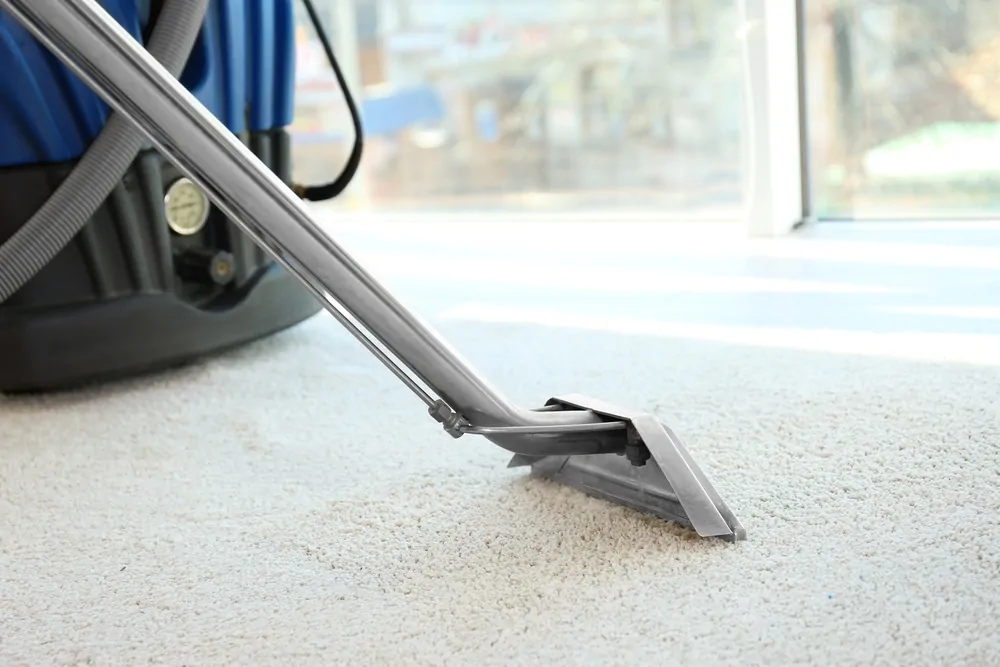
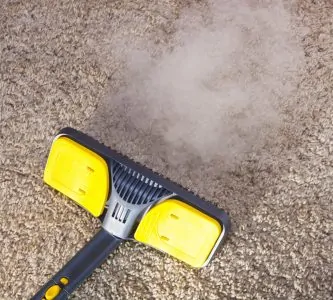
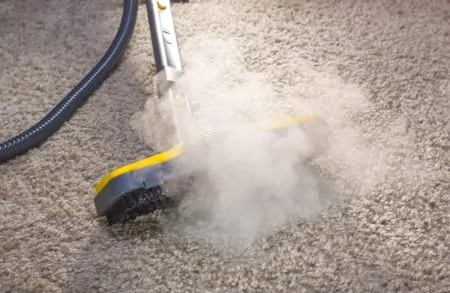
When you need to give your carpet or rug a quick clean, attach a carpet glider to the steamer. This attachment will keep the steam head at a safe distance from the fibers and keep it gliding smoothly across the surface.
Some steam cleaners will have a carpet glider included, while it’s an extra purchase for others.
25. Disinfecting Your Water and Ice Dispenser
Mold and mildew are often found growing around water and ice dispensers due to the moisture. This can severely affect your and your family’s health (12).
Cleaning the ice or water dispenser with your steam cleaner can disinfect and eliminate any mold or mildew traces.
Before Steam Cleaning
Because of the high heat and pressure from the steam, you must be cautious when steam cleaning certain areas. Follow the tips below to ensure the best results.
- Keep it light: Start by applying a small amount of steam and see how it goes. Avoid oversaturating a surface immediately as this can damage soft areas.
- Avoid unsealed surfaces: Unsealed wooden or stone floors are porous and prone to damage. A steam cleaner’s high heat and moisture can cause wooden planks to warp (13).
- Never add chemicals: Only fill the tank with water. Adding chemicals, products, or essential oils can damage the reservoir and device (14). Instead, pretreat the area with a product.
FAQs

Is It Worth Buying a Steam Cleaner?
It is worth buying a steam cleaner because they are great for multiple uses. You can clean clothes, soft furnishings, fabrics, carpets, bedding, mattresses, and just about anything else you can think of.
They use minimal chemicals and penetrate deeper than other cleaning methods to kill bacteria and bugs that cause odors and medical conditions.

What Cannot be Steam Cleaned?
Some things cannot be steam cleaned, such as velour upholstery, lace, silk, cardboard porous surfaces, water-based paints, and leather.

Can a Steam Cleaner Clean Mold?
A steam cleaner can clean mold. The heat from the steam lifts mold spores and penetrates deep into surfaces to sanitize bacteria that cause fungal growth and odors.

Can You Put Anything In a Steam Cleaner?
You cannot put anything in a steam cleaner because detergents and disinfectants contaminate the interior of the cleaner and produce harmful chemicals. You can put vinegar inside your steamer because it sanitizes and kills damaging bacteria.

Where Does the Dirt Go When You Steam Clean?
The dirt falls away from fibers when you steam clean. It then gets vacuumed as part of the clean-up process. Some steam cleaners have a vacuum feature that sucks dirty water into a storage tank to be disposed of later.

Can You Steam Clean Doors?
You can steam clean doors covered in oil-based paint. You can stream clean shower doors to remove soap scum and watermarks. Plain wooden doors will soak up the moisture and warp.
Genius Mode Activated
Steam cleaning is one of our favorite ways to deep clean a house. Due to the high heat and pressure, the steam will disinfect any surface without the need for chemicals. It’s also an eco- and an allergy-friendly way to clean.
There are countless genius uses for steam cleaners, such as disinfecting doorknobs and defrosting a freezer. However, you must consider the surface you’re cleaning to ensure no damage is done.