Carpets are a beautiful and functional addition to your home, but maintenance can be tricky. How are you cleaning yours to best preserve them?
Two popular methods include dry carpet cleaning and steam cleaning. Both have their pros and cons, making it tricky to decide which to go for.
We’re pitting the two against each other to help you figure out which method is suitable for you.
There’s much to consider in this battle of dry carpet cleaning vs. steam cleaning. Our quick and easy comparison will show you how you can keep your carpets in perfect condition.
Key Takeaways
- Dry carpet cleaning involves using chemicals and little moisture, while steam cleaning uses pressurized hot water and chemicals to deep clean carpets.
- Dry cleaning is faster, more affordable, and offers a variety of methods, but it may leave residue and involve chemical exposure.
- Steam cleaning is more effective at deep cleaning and leaves no residue, but it’s more expensive and carpets take longer to dry.
- Choose the method that best suits your needs, budget, and carpet type, and always check the manufacturer’s recommendations for cleaning.
Carpet Cleaning Explained
Before determining which of these two methods is better for your carpets, you have to know what they entail. Do you think that dry cleaning and steam cleaning are self-explanatory? You’ll be surprised to learn that their names are misleading.
What Is Dry Carpet Cleaning?
There are various ways to dry clean a carpet, and some of them actually use moisture. The difference between this and steam cleaning is that it’s only small amounts of water used to supplement or remove dry chemicals.
These are some of the popular carpet dry cleaning methods:
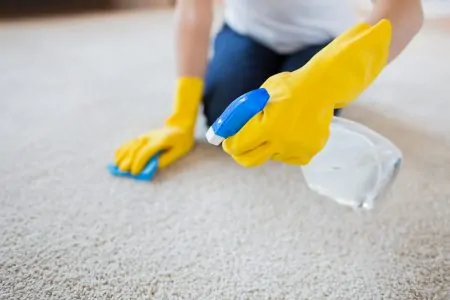
- Dry foam: You apply shampoo to the carpet before leaving it to dry out. Once the shampoo has had enough time to work through your carpet fibers, you vacuum up the dry residue it leaves behind. A standard vacuum will do, making this a common method of choice.
- Bonnet pads: Initially, this is the same as the dry foam method, but it adds a special pad — a bonnet — to your cleaning machine. As you run your machine over your carpet, the damp bonnet lifts and absorbs dirt and shampoo residue (1). The bonnet pads are reusable, so they’re a one-off cost.
- Oscillating pads: In this method, you spray a balanced pH solution onto the carpet and leave it to work until it dries. It reacts with the carpet fibers to agitate and loosen dirt. You then use an oscillating machine to deep clean the carpet.
- Dry compounds: Here, a biodegradable compound is spread over the carpet and left to absorb dirt. You then use a standard vacuum cleaner to clean this compound and the dirt it’s collected from your floor.
What Is Steam Cleaning?
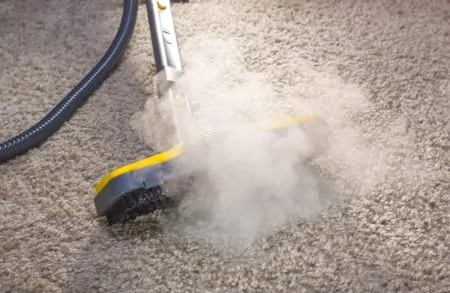
Many people assume that steam cleaning is a chemical-free method, but it’s not. It’s a misunderstanding that the steam is what works. In reality, the steam is just a byproduct of the warm water that penetrates your carpets.
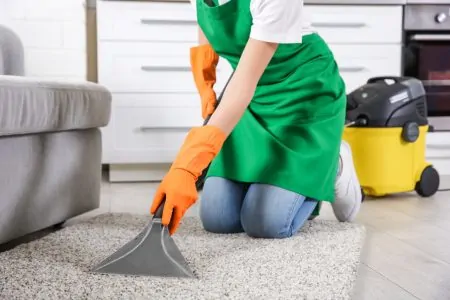
- Truck mount: Chemical carpet cleaner is added to pressurized hot water and then applied to your carpet with a machine. Like a vacuum, the machine also sucks up excess moisture and chemicals as it works. This is typically used for deep cleaning.
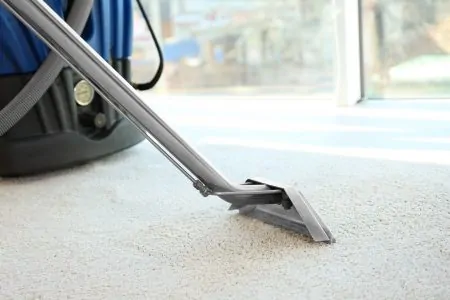
- Portable extraction: This method is almost the same as the truck mount, only it’s industrial. It’s intended for broader surface areas and is typically a heavy-duty carpet cleaning solution.
How Often Should You Clean Your Carpets?
The rule of thumb is that you should have your carpets cleaned at least once a year. But if they’re heavily stained, gather a lot of dust from pet hair, and experience high foot traffic, you should clean them more frequently.
Dirt can destroy carpet fibers, so the more you clean them, the longer your carpets will last.
Dry Carpet Cleaning Features
If you’re still unsure whether dry carpet cleaning is for you, there are a few more things to note. Here are some aspects of dry carpet cleaning to take into account:
- Quick: Dry cleaning is much quicker than steam cleaning. Even when a bit of moisture is required, your carpet will dry faster because it won’t be soaked. In dry cleaning, your carpet will be ready to walk on within an hour or so after cleaning.
- Affordable: Carpet shampoos and compounds won’t cost you too much money. They’ll last if you use them sparingly, and bonnet pads can be laundered and reused. And if you need to hire a machine to assist with the cleaning, expect to pay around $30/hour (2).
- Range of choices: You have a choice in how to dry clean your carpets. Your standard vacuum will do if you can’t afford or access specialized machinery. There’s no need to call in the professionals or hire equipment, saving you even more money.
- Highly effective: Dry carpet cleaning is also more effective at stain removal because it uses specifically designed chemicals.
- Chemical exposure: The biggest drawback to dry cleaning is that you will be more exposed to chemicals. Plus, if you are cleaning shag carpets, dry shampoo residue might get stuck in your carpet fibers, and chemicals will remain in your carpet.
Pros
- Faster than steam cleaning.
- More choice in methods.
- No equipment or personnel needed.
- Saves you money.
- Effective stain removal.
Cons
- Prolonged exposure to chemicals.
- May leave residue behind.
Steam Cleaning Simplified
Steam cleaning has fewer advantages, but to some, its greatest strength outweighs dry-cleaning in every way:
- More effective: Many people prefer steam cleaning because it deep cleans your carpets more effectively than dry cleaning.
- Less effort: It could be less effort for you too. Since you need specialized machinery to do the job, professionals can do it for you. This way, you’ll know that your carpet is cleaned efficiently, and you won’t have to lift a finger.
- Expensive: All of this comes at a frustrating price, though. Steam cleaning soaks your carpets, and it could take days to dry properly. Also, hiring a cleaning team or machine may cost a pretty penny. Costs depend on the size of the house and the depth of the problem. Expect to pay anything from $175 to $600 for an entire house clean room (3). So not everyone can afford steam cleaning.
Pros
- Deep cleans carpets with professional-level strength.
- More convenient since you don’t need to do work.
- Less exposure to harmful chemicals.
- No residue left behind.
Cons
- Carpets can take days to dry.
- Costs more than dry cleaning.
- Professional service might be required.
Which Method Should You Use?
This depends. Technically, you can use both steam and dry cleaning on all types of carpets. Regardless, it’s better to check the labels first to see what the manufacturers recommend and avoid damaging your floors.
How you clean your carpets is mostly a matter of preference. If your carpet can handle either one, you’re at full liberty to pick the most convenient method for you. Another option is to use both — when and if you can — to get the best of both worlds.
Quick Tip
FAQs

What Do Professionals Use to Clean Carpets?
Knowing what professionals use to clean carpets is crucial for the best results. They use steam and dry cleaning methods, and a bonnet machine that rotates to deep clean.

How Can I Dry Clean My Carpet At Home?
You can dry clean your carpet at home by removing stains and applying a dry cleaning compound, like this Capture Carpet and Rug Cleaner. Next, use a soft-bristled brush to work the powder deep into the fibers.
Let the powder sit for 30 minutes before vacuuming it out.

Does Steam Cleaning Shrink Carpet?
Steam cleaning does shrink carpet because moisture penetrates deep into the fibers and backing, causing it to shrink as the carpet dries.

How Long Does a Steam Cleaned Carpet Take to Dry?
Knowing how long a steam-cleaned carpet takes to dry is vital if you want to avoid mold spores and shrinkage. A typical carpet will take between four and six hours to dry thoroughly.
Which One Wins?
Dry cleaning is better if you’re looking to remove stains or if wet carpets will be too much hassle in your home. It’s the budget choice, and it saves time.
However, you should choose steam cleaning if you have thick carpets that need deep cleaning. We recommend steam cleaning if you have allergies or sensitivities to chemical cleaners. Still, this might not suit you if your entire home is carpeted or if wet floors will get in the way of daily life.
Ultimately, steam cleaning may be the more powerful of the two, but dry cleaning is just so much easier. The choice is yours.