When someone hurls on the floor, we want to immediately get rid of the stench. What’s worse is that we have to find a way to eliminate those partially digested pieces showcasing the person’s last meal. Sadly, this is easier said than done when the unfortunate target happens to be your carpet.
Getting vomit out of carpet fibers requires some work and determined elbow grease. It’s not a job for the sensitive stomach — you don’t want to barf while cleaning barf.
So today, we’re revealing how to clean vomit from carpet. Grab a scented mask, thick gloves, and hand sanitizer because we’re about to dive in.
Key Takeaways
- Act fast to remove vomit chunks using a scraper, spatula, or plastic bag to avoid deep stains.
- Dry excess moisture by using baking soda, cornstarch, or blotting with a damp cloth.
- Remove stains with cleaning methods like vinegar, club soda, hydrogen peroxide, or carpet cleaner.
- Neutralize the smell by using baking soda, vinegar solution, or a spray deodorizer like Febreeze.
How to Clean Wet Vomit from Carpet
Ready to get your hands dirty? It’s best to clean the vomit up right away, and that’s what this method is for.
- Time: 1 hour
- Difficulty: Intermediate
Before we get started, here are some things you’ll need for the job:
- Rubber or latex gloves
- A scraper
- Either paper towels, a piece of cardboard, a plastic bag, a spatula, or sand
- Broom and dustpan
- Baking soda or cornstarch
- Rag or cleaning cloth
- Spray bottle with warm water
- Club soda, dry cleaning solvent, white vinegar, or hydrogen peroxide
- Carpet or fabric cleaner
1. Remove the Vomit
Begin by putting on your gloves. This will keep your hands clean from germs and protect them from the smell.
There are several ways to remove the vomit. The important thing is that as soon as it’s safe to go near the sick, you pick up the chunks. The longer you leave it, the worse the stain will be.
Using a Scraper
If you have a scraper or spatula near you, grab it and use it to lift the vomit off the carpet. Slide it under the spew and place it into a plastic bag or dustpan. This is very easy and minimizes your contact with the sick.
If you’re using a spatula, avoid one with holes or gaps. The vomit will fall out and leave you with more work. You can also use a piece of cardboard, for example, from a cereal box — just verify that it can hold the weight.
Plastic Bag
Another way to get the job done is a la dog-poop style — a plastic bag around your hand. With your hand inside the plastic bag, pick up the vomit and turn the bag inside out. Seal it off before disposing of it.
Hand or Paper Towel
Whether fabric or paper, we all have towels at our disposal, so this is a popular method for several cleaning jobs. Grab the towel and proceed to pick up the vomit. However, don’t rub. This will only make it worse.
If you’re using a hand towel, remove all clumps from the fabric before cleaning it in the washing machine. Otherwise, chunks can get stuck in the machine.
Try Sand
An alternative method is sand. Dust the vomit with a generous amount to cover it completely. Let it clump together with the sick, and then use a broom to remove it.
If your carpet is thick, go over with a vacuum to remove all the sand.
Don’t Apply Pressure
2. Dry Excess Moisture
Once the chunks are gone, if there were any, it’s time to remove the moisture. Letting it air dry isn’t ideal, as it could lead to persistent odors or stains. There are several ways to do this, and here are a few:
Baking Soda
Probably the most popular product to use is baking soda. It’s a godsend when it comes to expelling excess moisture.
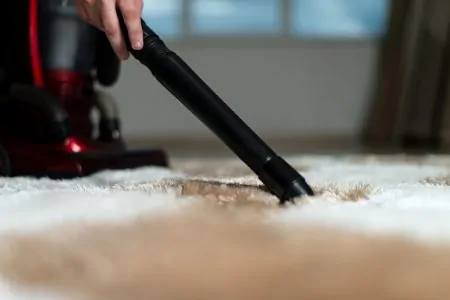
Grab your baking soda and sprinkle a generous amount onto the vomit spot to cover it. Leave it there for approximately 10 to 15 minutes or until you see dry clumps. Grab your vacuum to remove the residue, but use the tube instead of the vacuum head.
You can also apply baking soda and leave it overnight. This is especially useful if the vomit was only fluid. The powder will soak into it, leaving you free to vacuum it the next day.
Cornstarch
If you don’t have baking soda, use cornstarch — it works just as well. Use the same technique as above. Cover the moisture, let it sit, and then vacuum it.
Blot the Moisture
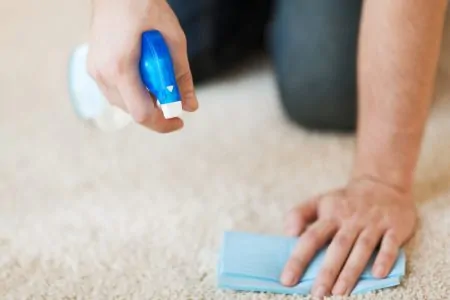
Fill a spray bottle with plain warm water, and grab a clean rag or cloth. Spray the vomit spot until wet. Then use the rag to blot out the moisture.
Avoid scrubbing, as this will cause the moisture to sink into the fibers. Instead, use firm dabbing until the rag is saturated. Grab a new one and repeat if necessary. Paper towels also work.
3. Remove the Stain
This is where the hard work begins. Stains can be persistent, so immediate action is necessary. We’ve included a few techniques you can use — or combine them if needed.
Dry Cleaning Fluid
With all the chunks gone, apply a dry cleaning solvent to a clean rag or towel. You can use any brand you like, but popular choices are Dry Cleaner’s Secret and Dryel.
Use the saturated rag to blot the stain until the solution is absorbed into the carpet and the stain is gone. You may need to repeat a few times.
Vinegar
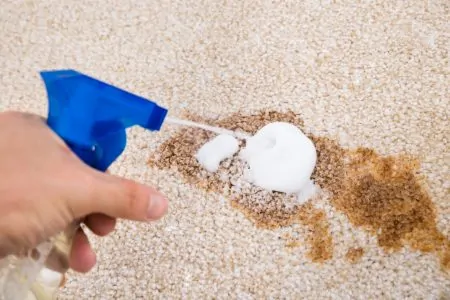
Grab a clean spray bottle and mix equal parts of cold water with vinegar, for example, one cup of each. Give it a shake to combine, and then spray the spot liberally. Let it soak for roughly 15 minutes.
Take a clean cloth and blot the area to express the solution. Be firm when dabbing, but don’t scrub.
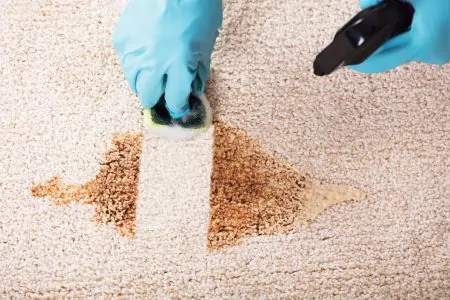
Scrub the stain with a stiff brush once you’ve soaked up most of the solution. As it begins to loosen, repeat blotting with the cloth. You can add some drops of essential oil to dampen the smell at this stage.
If the stain is persistent, you can try the iron method. Start by applying some more vinegar solution and place a white damp cloth over it.
Then set your iron to the steam setting and glide it across the cloth for about 30 seconds. This should cause the spot to transfer from the carpet to the towel. You may have to repeat it a few times.
Be Cautious
Spray Club Soda
If the stain isn’t so severe, a good weapon you can use is club soda. Put some into a spray bottle or directly onto the stain. Then repeat the dabbing with a dry, clean cloth until the stain is gone.
Hydrogen Peroxide
For tough stains, create a solution of one part hydrogen peroxide and one part dish soap or water. Distribute the concoction over the stain and let it work for approximately 30 minutes.
Gently rub the stain with a rag or cloth to create a lather. Then dab the moisture with a dry cloth to soak it up.
Proceed to pour some water over the stain to rinse the soap. If you skip this, the soap will accumulate dirt and dust, giving your carpet a dirty appearance.
Ammonia Solution
Another mixture you can try is ammonia and water. Dissolve one tablespoon of ammonia in one cup of water. Stir it and transfer it to a spray bottle.
Spray generously over the stain. Then use a towel or sponge to dab the solution into the carpet. Follow up by rinsing with some water and dry utilizing towels.
Take Note
Carpet or Fabric Cleaner
If you need something a little more powerful, try a carpet or fabric cleaner — just ensure it doesn’t contain bleach. The best ones are enzyme-based and should clear the stain right out. Follow the instructions on the product’s bottle.
Carpet Cleaning Machine
Try a carpet cleaning machine for severe stains that won’t disappear with any of the above methods. A tool such as a wet-dry vacuum can help remove the stain more effectively. Don’t worry if you don’t own one. Shops such as Home Depot rent out the machines.
4. Get Rid of the Smell
Hopefully, the vomit smell is gone after one of the above cleaning techniques. However, try applying some baking soda to the area if it persists. Sprinkle a generous amount and leave it overnight — the powder will work to neutralize the odor — then vacuum to remove it.
You can also use your vinegar and water solution, but be aware that it can leave that acidic smell behind. Another solution is to simply use a spray deodorizer, like Febreeze, on the area. Opt for a neutralizing spray instead of an air freshener as they will only mix with the smell and worsen it.

How to Clean Dry Vomit from Carpet
Cleaning up dry vomit is probably the toughest task you can face (not really, but it ain’t pleasant). First of all, there’s the now dry residue to remove. It’s hard to scrape off and requires some prepping. Then the gross stain had time to root, and the stench got comfortable in the carpet fibers.
Luckily, though, the process is similar to cleaning fresh vomit, with the addition of a few other steps.
- Time: 30 minutes
- Difficulty: Intermediate
1. Scrape the Vomit
Grab a spatula, dustpan, or other scraping device and proceed to scrape the dry vomit. Because it’s now dry, it should be fairly easy getting any large chunks out without too much effort. For now, you’re just removing the excess — don’t strain yourself with getting it all out.
2. Soak the Spot
Take a cloth and moisten it with water (warm temperatures are best). Then dab the vomit until it becomes damp and softens up. Refrain from scrubbing as it could make it worse.
3. Use an Enzyme Cleaner
Because vomit is a mixture of body enzymes, it’s good to use an enzyme-based cleaner for the process. This will eliminate bacteria and germs accumulated by the vomit.
Apply a liberal amount onto the area and leave it to work for as long as the instructions suggest. Once done, use a damp towel to blot the area. Repeat as many times as necessary until the stain is gone, then leave it to air dry.
4. Finish With the Vacuum
Once the area is dry, use your vacuum to remove residue. Then let your carpet get back into shape and regain its fluffiness.
Some Helpful Tips
1. Distract Your Nose
We all perceive smells differently, but one thing we can all agree on is that vomit stinks. So if you need a little help getting through the job, we recommend distracting your nose. You can apply some perfume, fragranced lotion, essential oil, or minty toothpaste under your nose. A face mask helps, too!
2. Don’t Wait
We mentioned this briefly earlier, but we want to stress the importance. Get a scraper and bucket to remove the vomit as soon as you can. Letting it sit can promote bacteria growth, intensify odors, and worsen the stain.
3. Dispose of All the Contents
After you’ve finished cleaning the spot, dispose of all the leftovers. Empty the vacuum and take the trash out. The odors can quickly spread throughout your home.
Depending on how you feel, use old rags or clothes you don’t need. This way, you can just throw them in the trash once finished.
4. Clean the Air
If there’s still a smell of vomit near the area, grab a medium-sized bowl. Add some white vinegar, baking soda, or coffee grounds (1). Let it sit for approximately an hour near the site, and it will soak up airborne odors.
5. Use a Brush
If you don’t have a vacuum, scrape up as much residue as possible and follow the cleaning steps above. Once the area is dry, use a brush to restore the fluffiness and texture.
6. Disinfect the Carpet
Most of the methods above work to disinfect the area, preventing bacteria from spreading. However, if the person who got sick is suffering from a contagious illness, we recommend that you sanitize the whole carpet (2).
You can mix baking soda, borax, and cornmeal — then sprinkle across the carpet. Use a cloth to rub it in and let it sit overnight.
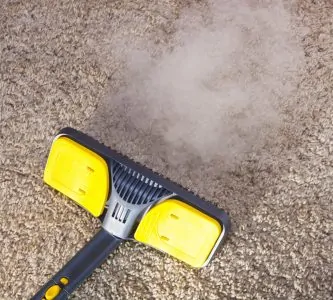
Use a vacuum the following day to remove the powder mixture. Then, apply a blend of white vinegar and water to a steam cleaner’s detergent vessel. Steam the whole carpet and leave it to dry.
7. Patch Test
If you haven’t used any cleaning mixtures or chemicals on your carpet before, make sure you do a patch test. Apply an amount in a corner and let it sit for a while. If it discolors your carpet, avoid using the product.
FAQs

Is Vomit Hard to Get Out of Carpet?
Vomit is hard to get out of carpet, especially if it is left to dry. Pour a can of soda onto the stain and wait while the bubbles break down the vomit. Dab at the carpet with a cloth or sponge, then dry it with a rag or paper towel.
You can also use baking soda and water, applying it liberally to the vomit stain. Then scrub with a stiff-bristled brush.

How Long Does a Vomit Smell Last?
Vomit smells can last for days. If you are lucky, the odor will dissipate, but you can speed up the process by using fans and opening the car doors and windows. The airflow dries the carpet quicker and removes the stench.

Can You Get Sick From Cleaning Up Vomit?
You can get sick from cleaning up vomit if the vomit is infected with a virus. The bacteria lives in the vomit and can pass to the person cleaning up the mess.