If you’ve gone searching for a new washing machine recently, you’ve likely run into high-efficiency washing machines. The high-efficiency washers use a low amount of water and energy to clean each load of wash, but how do they actually work? Do the HE machines actually do a good job of washing clothing or are you going to be left with stains on your favorite shirts?
Today we’re answering your questions by discussing high-efficiency washers and traditional washers, how they work, and if a HE washer will actually clean your clothing.
Key Takeaways
- High-efficiency (HE) washers use less water and energy compared to traditional washing machines.
- HE machines clean clothes by tumbling them, requiring special low-sudsing HE detergent.
- HE washers usually have a longer wash cycle, but are more energy-efficient and environmentally friendly.
- Regular fabric softener can be used in HE machines, but only HE detergent should be used to avoid excessive suds.
What is a High-Efficiency Washer?
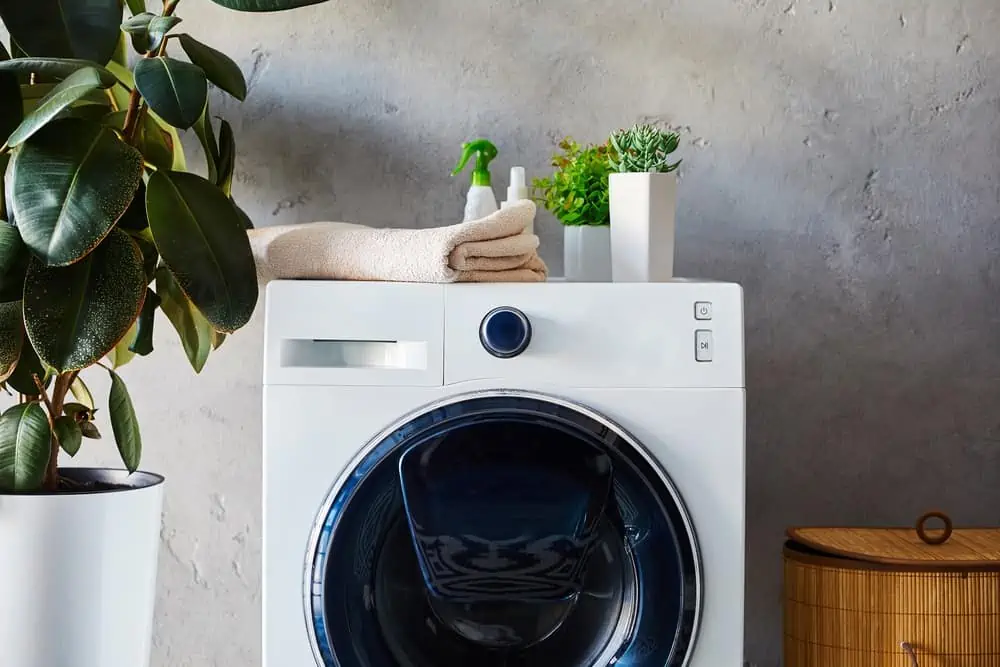
High-efficiency washing machines are able to wash clothing while using a low volume of water, unlike a traditional washing machine.
A traditional washing machine fills the drum with water until the clothing is floating inside the machine. Then the machine begins agitating the water with an agitator. This agitating motion creates suds while rubbing the clothing against the agitator and sides of the drum to remove dirt, soil, and stains.
The suds help to remove the dirt and suspend it in the water then it is flushed out when the dirty water is drained.
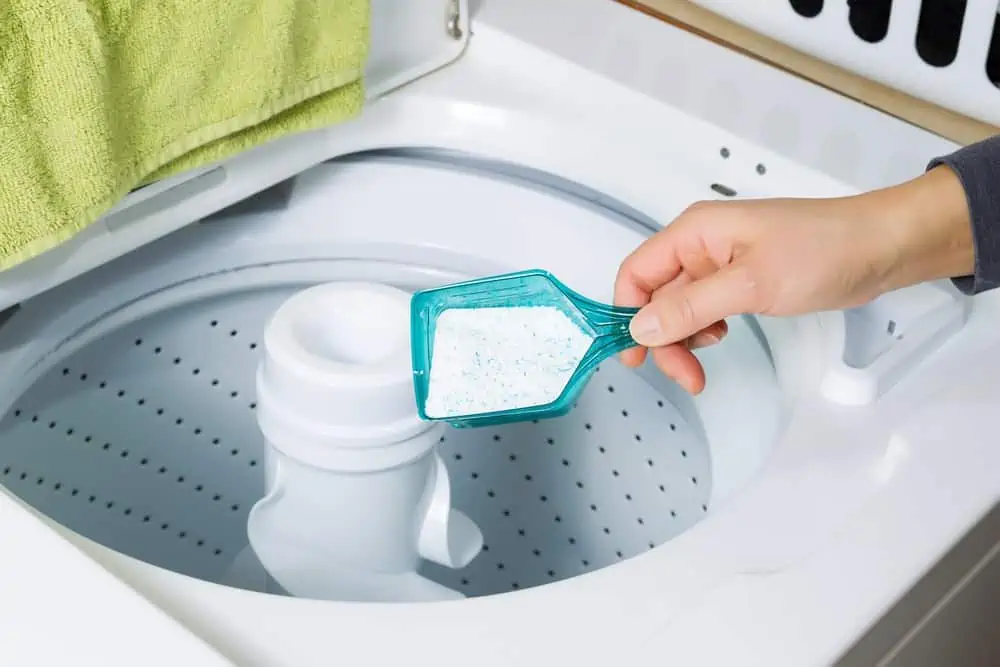
A high-efficiency washing machine uses a specially formulated HE detergent that is more concentrated and will produce far fewer suds. The washing machine will add a low volume of water to the bottom of the washing machine. A rotating tub and an impeller tumble the clothing around the drum causing the clothing to rub against each other and to tumble into the water.
The low sudding and concentrated detergent is needed as too many suds prevents the clothing from rubbing against each other, interfering with the HE washer’s ability to clean your clothing.
The tumbling action allows a high-efficiency washer to clean your clothing without using much water or energy.
How Do I Know If My Washer is High Efficiency?
Most HE washing machines have an HE symbol on the front of the washing machine, near the controls. If you don’t see the HE symbol you can check inside a top load washer to see if it has an agitator. HE washing machines do not have agitators.
You can also look up your model online to find out whether it’s an HE washer.
Why Do New Washers Use So Little Water?
The HE washing machines use very little water to clean your clothing. This is because they use a rotating tub combined with an impeller that tumbles the clothing around the drum.
The clothing rubs against each other as they tumble around the drum and into the water. This rubbing is what removes the dirt and stains allowing your clothing to be cleaned.
A HE front loading washing machine spins like a wheel and tumbles the clothing back and forth in the water while the impeller sprays water onto the clothing.
A HE top loading machine will spin, rotate, and tumble the clothing in the drum using a small impeller at the bottom of the drum.
The HE washing system uses the gentle rotating action rather than the harder agitation to clean clothing. The action draws the clothing down into the low volume of water.
The action combined with the specially formulated HE detergent allows the washing machine to use a small amount of water to clean your clothing as well as or better than a traditional washing machine.
Pros and Cons of High-Efficiency Washing Machines
High-efficiency washing machines have some definite advantages over a non-HE machine, but there are also some disadvantages to using an HE machine as well. Here’s a list of the pros and cons of using a HE washer.
Pros:
- Uses less water.
- Uses less energy.
- The increased movement makes your clothing cleaner.
- Fewer suds are created which gives more room for clothes to move around in the water.
- The cost per load is similar to a traditional machine.
Cons:
- A longer wash cycle because less water is used.
- HE detergent may cost more.
- Not able to use regular detergents in a HE machine.
- Requires special care to prevent mold and mildew growth in your machine.
- Need to clean your washer more often.
- More expensive.
High-Efficiency Washer Vs Traditional Washer
HE Washers Vs Conventional Washer
| Traditional Washer | HE Washer | |
| Water Usage | Uses more water. | Uses less water. |
| Energy Usage | Uses more energy. | Uses less energy. |
| Appearance | Slightly shorter and narrower | Slightly taller and wider |
| Size | Slightly smaller capacity | Slightly larger capacity |
| Life Span | 10-15 years | 10-15 years |
| Cost | Less expensive | More expensive |
| Repair & Maintenance | Requires less maintenance | Requires monthly maintenance |
| Detergent | Can use either HE or regular detergent | Requires HE detergent |
Water Usage
HE machines use less water but do have a longer wash cycle than a traditional washing machine.
A regular washing machine requires a larger volume of water which results in a shorter wash cycle.
Energy Usage
HE washers use less water which means that they require less energy as well. Many HE washers are ENERGY Star compliant.
Traditional machines use more energy and tend not to be ENERGY Star compliant as they use too much energy and water.
Appearance
Most HE washers are front load washing machines. However, you will find some top load HE machines. These machines have no agitators and may be slightly taller and wider than a traditional top load washer. This will require you to reach farther down into the appliance to move clothing from the washer into the dryer.
Size
You’ll find that both HE and traditional washing machines come in all sizes and capacities from small washers to high capacity washing machines.
However, HE top load machines do tend to be larger than traditional top load machines. The agitator is missing in the HE machine allowing you to put more clothing into the drum.
Lifespan
The expected lifespan is the same for both types of washing machines, about 10-15 years. Your washing machine will last longer if you make sure that it’s installed on a flat surface, don’t overload the machine, and make sure to use the right type of detergent for your machine.
Cost
Traditional washing machines don’t cost as much to purchase, but they use more water and energy to run. So while a HE machine will cost more, you’ll save money each month as the HE washer uses less water and energy.
Repair and Maintenance
High-efficiency washing machines require more maintenance than a traditional washer since it doesn’t use as much water during the load. The low level of water means that soapy residue will build up over a short amount of time.
You’ll need to clean your laundry machine once a month instead of twice a year in order to maintain your machine.
Detergent
A regular washing machine can use either regular laundry detergent or HE laundry detergent. An HE machine must use only the specially formulated HE detergent.
Is a High-Efficiency Washer Worth It?
High-efficiency washing machines are more expensive to purchase, but you will save money each month on water and energy usage.
You will need to purchase HE detergent, which tends to be more expensive, as regular detergent will damage your machine. However, HE detergent is more concentrated than regular detergent and so it tends to last longer as it can be used for more loads of laundry than regular detergent.
HE machines do an excellent job of washing clothes, but the tumbling action is harder on the clothing. A load of laundry will also take longer to finish than that of a standard washing machine. You’ll also need to keep an eye on your washing machine as the load can become unbalanced more easily.
However, an HE machine will also be able to wash more clothing at a time which may save time if you have a large amount of laundry to wash each week.
Best High-Efficiency Washers
Here are a few excellent high-efficiency washing machines we recommend you consider purchasing.
- Maytag 4.7 cu Smart Top Load Washer
- Samsung 5.0 cu HE Top Load Washer
- GE 4.8 cu HE Front Load Washer
- Whirlpool 4.5 cu HE Stackable Front Load Washer
FAQs

Do High-Efficiency Washers Get Clothes Clean?
Yes, high-efficiency washing machines use a tumbling action that will clean your clothing as well as a traditional washing machine even though they use less water.
Do HE Washers Take Longer to Wash?
Yes, the washing cycles of HE washers is longer than that of traditional washers.

How Do I Trick My HE Washer to Use More Water?
HE washing machines use the weight of a load of laundry to determine how much water to use. If you’d like to trick your HE washer into using more water, pour some water on your clothing. Give the water a few minutes to soak into the fibers before starting the cycle.
The excess water in the clothing will cause the load to weigh more, tricking your washing machine into using more water.

Can You Use Regular Fabric Softener In a High-Efficiency Washing Machine?
Yes, you can use a regular fabric softener in an HE washing machine.

Why is My HE Washer Not Cleaning My Clothes?
There are several reasons why your HE washer is not cleaning clothes. It could be a blocked feed from the detergent dispenser, a blocked drain, or you are choosing the wrong wash setting.

What Happens If I Don’t Use HE Detergent In an HE Washer?
If you don’t use HE detergent in a HE washer, you risk creating too many suds, which could fill the inside of the washing machine and overflow from the detergent dispenser.
High Efficiency Washer Vs Regular Washer
High-efficiency washing machines use far less water and energy than regular washing machines. The tumbling action will ensure that your clothing is cleaned and stains are removed. However, a HE machine will require more maintenance to prevent mold, mildew, and bacteria from taking over your machine, and you’ll also need to use a specialized detergent in your washer.