If you’re new to the world of HE washers and confused by all the lingo, you’re not alone.
We can help clarify what HE washers are, whether or not you have one, and if you should get one. You may have heard a lot of hype, so we’ll break down the pros and cons so that you can make the right decision for you.
Keep reading if you want to become an expert in all things high-efficiency washing machines. We can’t say your friends will be super impressed by the information, but it will come in handy when you’re shopping for a new appliance!
Key Takeaways
- HE washers use less water and energy, making them eco-friendly and cost-effective.
- High-efficiency washing machines clean clothes using a tumbler system or impeller instead of a central agitator.
- HE washers require HE detergent which is low-sudsing and more concentrated.
- Common drawbacks include being prone to mold, noise, and sometimes uneven cleaning.
What Are HE Washers?
This is the question at the forefront of your mind. What on earth are they?
HE stands for high-efficiency. High-efficiency washing machines are more energy and water-efficient machines. They use less water and detergent to clean your clothes. You can find both front and top-loading HE washers, so if you have a personal preference in that realm, you’re in luck.
HE washers use up to 66 percent less water than traditional top-loading machines (1). They can use up to 50 percent less energy since there’s less water to heat up. In the long run, you’re going to save a lot of money. Plus, it’s kind to the environment.
These washing machines work using a tumbler system. It doesn’t use an agitator, so it’s more gentle on your clothes. They use less water for both the wash and rinse cycles.
Front-loading HE washers tumble the clothes in the water in rotating motions to combine the water and detergent. This removes dirt and stains.
Top-loading HE machines use impellers. To wash the clothes, the impellers work in gentle motions — spinning, wobbling, and rotations.
Your clothes are washed in a shallow pool of water — so low that you might not even be able to see it through the machine’s door. However, they still wash as many clothes and work as well as traditional machines.
HE washing machines are becoming more popular. This is partly because new legislation means more brands are creating HE washing machines. But these machines also use less water and energy, so they’re cheaper for customers to run over the years.
How Do You Know If You Have an HE Washer?
When you buy a machine, the manufacturer will disclose whether or not the appliance is high-efficiency. That’s the main way to tell.
However, if you aren’t sure, there are a few key factors.
Firstly, if you have a top-loading machine, you’ll notice that your washing machine is missing the central agitator. That is a good clue that you have an HE washing machine.
The other giveaway is that it uses much less water. You might not even be able to see it!
There should, in general, be a sign or sticker on the appliance or in the user manual that states whether it’s high-efficiency or not.
Pros and Cons of High-Efficiency Washing Machines
Let’s get into the good stuff! Now that you know what an HE washing machine is, what’s the main selling point? What makes people go crazy for them? We’ll walk you through the main pros as well as some of the noteworthy drawbacks.
Pros:
- Less water usage and less energy: These laundry machines are more efficient. They are kinder to the environment due to using less water and energy. This also saves you money on your monthly bills.
- Clean clothes: Your clothes could be even cleaner when you opt for an HE washer. They are more gentle on your clothes, reducing wear and tear. The machines generally have sensors to adjust to the best temperature, level, and spin cycle to wash your clothes, as a result, it cleans more efficiently.
- More space: You don’t have the central agitator when it comes to top-loading machines. This makes more space in the machine so you can do larger loads of laundry at a time.
- Less detergent: Since HE detergent is concentrated, you don’t need to use as much of it. This results in less soapy residue left on your clothes. It also means buying laundry detergent less often, thus saving you money!
- Quicker spinning: HE machines can spin quicker than regular machines. This means that your clothes are less wet when the cycle is finished. Therefore, they’ll dry faster on the line or in the dryer!
While there are some great benefits, there are also some significant disadvantages to consider.
Cons:
- Prone to mold and mildew: Because a little water is left in the drum after washing cycles, you’re more likely to find mold and mildew in your machine. Ensure to air the machine out in between uses to eliminate this issue.
- Noisy: Customers find that HE washers are noisier than standard ones. This is because they spin faster, so they vibrate more.
- Uneven cleaning: Since the machines are more gentle on the clothes, they can often miss spots. The lack of an agitator means that these machines aren’t always good at removing tough stains. You may need to pretreat your clothes before washing them, especially if they’re stained.
- Maintenance: Since these machines use less water, the machine doesn’t always eliminate all of the soap and water residue at the end of the cycle. This can lead to bacteria growth and mold, which means more maintenance and, sometimes, repair costs.
- Longer wash cycles: HE washing machines tend to take more time per cycle to wash clothes, so you will be waiting for your clothes. However, you are doing larger loads at a time, so this isn’t a huge issue.
High-Efficiency Washer Vs. Regular Top-Load Washer
While these two appliances differ, they’re both still popular in households. If you can’t quite decide between them, let us compare the two in terms of price, water, appearance, and more. Maybe it will help you make the right choice for your laundry room.
Price
First up, if you’re on a budget, you may want to consider an old-school top load washer. As of 2022, they average around $600, but there are some cheaper options, too.
On the other hand, high-efficiency washers average around $700, with quite a few popular options reaching up to $1000.
Water and Energy Usage
It’s no doubt that high-efficiency washers use less water and energy than traditional washers. As mentioned, HE washers use up to 66 percent less water and up to 50 percent less energy. This leads to some pretty significant savings on your monthly bills.
Appearance
At a glance, these laundry machines might not look too different. But high-efficiency washers are available as both front and top-loading machines. So if you are looking for a new machine, we recommend looking at an HE washer.
Lifespan
Conventional top-load washers tend to last around 14 years. HE washers tend to last around 10-13 years. So you may get an extra year or two from your regular top-load washer.
Size
Both types of laundry machines come in a variety of sizes and capacities. Some HE machines are slightly taller and wider. However, HE washers come without the central agitator so that you will fit more clothes in per cycle. If you have piles of laundry looming overhead, this will be music to your ears.
Installation
Both appliances are easy to install. If you have plumbing set up and ready to go, your installation team will be able to install either of these machines into your home.
Now that you know how these two appliances stack up against each other, hopefully, it’s easier to make the right decision.
Best High-Efficiency Washer
After learning what an HE washing machine is, you might be curious and keen to choose one. There are many available on the market, and we’ve spent hours researching a few. Here are five great recommendations:
- Samsung High-Efficiency Top Load Washer With Active WaterJet: Samsung is our go-to washing machine brand. We’ve used them for years and remain impressed. This model has a large five cubic foot capacity so that you can get through more loads in less time. It has an excellent Active WaterJet faucet, so you can pretreat stained garments using the machine.
- LG High-Efficiency Front-Load Washer With 6Motion Technology: The 6Motion technology on this machine uses six different wash settings for ultimate cleanliness. Each motion works to get clothes cleaner while remaining super gentle. It also comes with a 10-year warranty on the motor.
- Maytag High-Efficiency Top Load Washer With Dual Action PowerWash: I know we said that HE top loaders don’t come with a central agitator, but this combines the best of both worlds. It’s high-efficiency but has the traditional agitator. However, it uses a PowerWash boost which breaks down stains and dirt for a more concentrated clean. If you have kids, then this might just deliver the cleanliness you’ve been dreaming of.
- LG Front Load Washer WIth Steam: This machine gets your clothes cleaned quicker, thanks to the TurboWash 360 degree technology. The machine uses sensors to detect fabric, texture, and load size, so you don’t have to separate your laundry! We also like the steam feature, which reduces allergens by 95 percent; it’s certified by the Asthma and Allergy Foundation of America.
- GE Front Load Washer With UltraFresh Vent System: Not only does this machine look lush, but it leaves your clothes smelling lush too. The OdorBlock system eliminates moisture which in turn prevents odors. It has fantastic antimicrobial technology that ensures your gasket, drains, and dispenser is cleaner for longer. Lastly, you can personalize every wash cycle since there are various digital controls.
How is HE Detergent Different From Regular?
When you opt for an HE washer, you must use HE Pod detergent. Regular detergent is too soapy for HE laundry machines.
The two detergents contain the same cleaning ingredients to lift and remove dirt. But HE Liquid detergent is low-sudsing which is suitable for the low water machines. It’s also more concentrated, so you can use less detergent, which means lower costs over time.
Expert Advice
You can use HE detergent in HE and non-HE machines. But you should never use regular detergent in an HE machine.
FAQs

What Happens If You Use Regular Detergent In an HE Washer?
This detergent produces too many suds for an HE washer. Therefore, it can overflow your machine, damage it, void the warranty, and also leave too much soap residue on your clothes.
Too many suds cushion the laundry, too, which reduces its ability to clean and rinse your clothes well. These suds can also cause the machine to overheat, which can lengthen the wash cycle. This defeats the purpose of saving money on your energy bills.

What Are Common Problems With HE Washers?
HE washers are pretty phenomenal, but they aren’t perfect yet.
HE washers are more prone to mold and mildew since the machines cling to a little more water at the end of a cycle.
These appliances also tend to be noisier since they vibrate more.
Sometimes the machine doesn’t provide even cleaning of your clothes and can leave a residue on your clothes if you use too much detergent.
Whether this type of appliance is right for you is really down to personal preference.

Are All Tide Detergents HE?
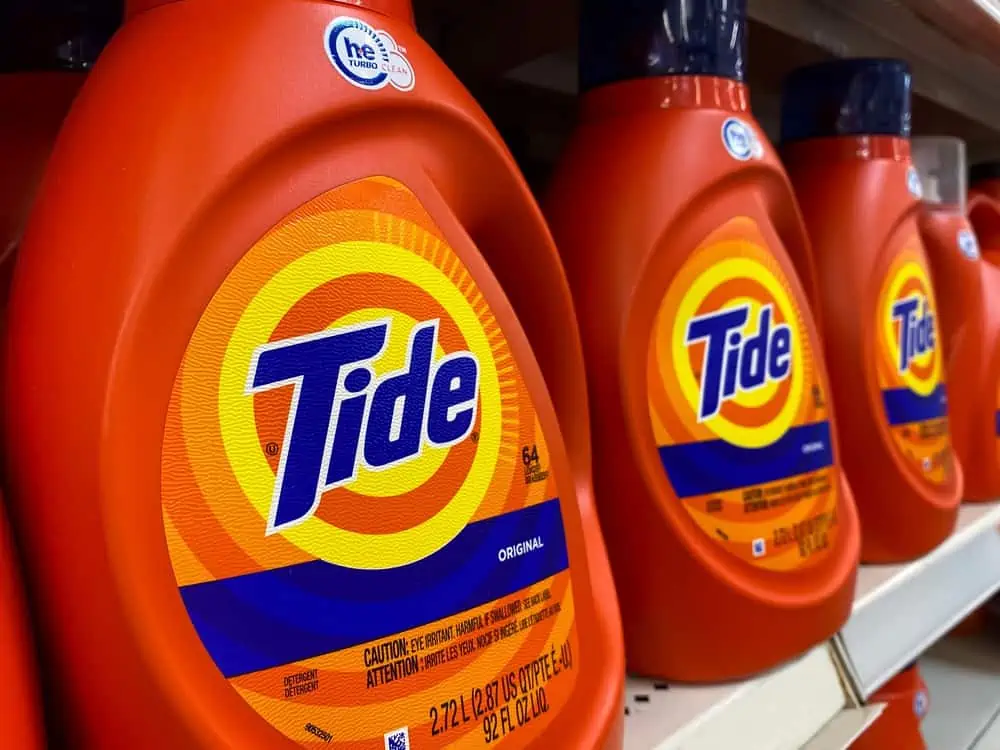
If you’re a fan of Tide detergent, you’re in luck. All Tide detergent is HE compatible! Tide detergent is astounding at removing dirt and stains, but they’re also low-sudsing so that you can use them in any type of washing machine.
When in doubt, look for the HE symbol on the packaging. It’s a circle around a lowercase “he”.

What is the Best HE Laundry Detergent?
Deciding which is the best HE laundry detergent is tricky. We think the All Liquid Laundry Detergent is one of the best on the market and soft on sensitive skin.

Can I Use Regular Fabric Softener In My HE Washer?
You can use regular fabric softener in your HE washer as long as you follow the manufacturer’s guidelines and use the fabric conditioner dispenser.

How much Detergent Should I Use In My HE Washer?
Knowing how much detergent to use in your HE washing machine is crucial for the best results. Use two tablespoons of liquid detergent and one of the pod variety per wash.
Washing Machine Expert
Now that you know what HE washers are, you can decide whether you have a place for them in your laundry room. These machines are energy efficient, super effective at cleaning, and require less detergent. If you have endless piles of laundry, this might be the right machine for you.
Just keep in mind that you must always use an HE detergent. The machine itself may cost more up-front, but it should last 10-13 years.
While many families use and love HE washing machines, it’s all down to personal preference.