Clean clothes are our top priority, so we’re here today to teach you how to wash polyester properly.
Polyester is a synthetic fabric used in many articles of clothing and textiles. This fabric is loved in the fashion world because it is durable, easily dyed, strong but lightweight.
Many people wonder what to do when washing polyester, but wonder no more because we’ll share our top tips!
Key Takeaways
- Separate polyester clothes by color and pretreat stains with heavy-duty detergent.
- Machine wash polyester using the permanent press or synthetics cycle with cold or warm water.
- Dry polyester on low heat or hang to dry, and fold or hang the clothes when dry.
- Never use chlorine bleach on polyester, and avoid high heat in the washer, dryer, or iron.
What Is Polyester Typically Used For?
Polyester has many purposes. It’s used for a variety of different items:
- Outerwear.
- Underwear.
- Sheets.
- Blankets.
- Carpets.
- Filters.
- Paper and tape.
- Tents.
- Seatbelts.
- Laundry bags.
- And more!
What Kind of Clothes Are Made From Polyester?
Besides outerwear and underwear, there are a few more kinds of clothes made from polyester. It tends to be anything that needs a long lifespan and good durability. For example, sportswear and outerwear are typically made from polyester because they need to last and have flexibility.
Polyester is also naturally waterproof, so it’s ideal for clothes you’re going to wear outside a lot (1).
Other clothes typically made from polyester include jerseys, raincoats, and winter coats. Hiking pants, swimwear, faux satin, leggings, sports bras, and underwear are also on the list. Even hats, pants, dresses, socks, and upholstery — anything really.
How to Machine Wash Polyester
Machine washing polyester clothing is the most convenient way.
What You Need
- Washing machine.
- Dryer or drying rack.
- Heavy-duty laundry detergent.
Step-by-Step Instructions
1. Separate Your Clothing
You want to wash your polyester clothes with similar colors. We suggest splitting them up into three groups: dark clothes, whites, and colors.
2. Pretreat Stains
When you notice a stain on your polyester item, treat it as quickly as possible. Dab the stain with your heavy-duty laundry detergent and work it in with your fingers. Leave it for 15 minutes.
Double Check
3. Wash
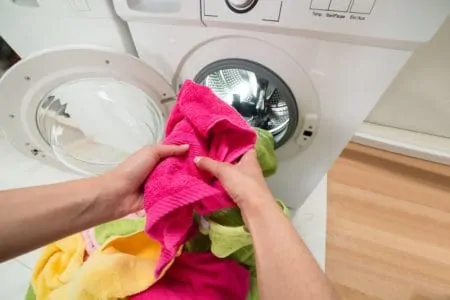
Set your washing machine to the permanent press or synthetics cycle. Use cold or warm water.
4. Add Detergent
Add a heavy duty detergent to the dispenser or the drum. It’s best if the detergent contains enzymes that can break down dirt and soil and really clean the clothes. Of course, add the right amount for your load size.
5. Dry
Take the clothes from the machine and either air dry, or use the permanent press drying option. Again, you can use the synthetics dry option if you don’t have a permanent press. Remember to check all the stains are gone before you set them in the dryer!
6. Fold or Hang
Loosely knit polyester items can be folded and placed in drawers. You can hang woven items and tightly-knit items like shirts, dresses, and pants. Polyester doesn’t tend to wrinkle, so if you fold away a dress, don’t worry too much. A quick iron on medium heat will quickly smooth away any wrinkles.
How to Hand Wash Polyester
Sometimes the care label for a polyester item might instruct you to hand wash it. This is simply to protect the quality of the item.
What You Need
- A sink or basin.
- A light detergent.
- Drying rack.
Step-by-Step Instructions
1. Fill a Basin
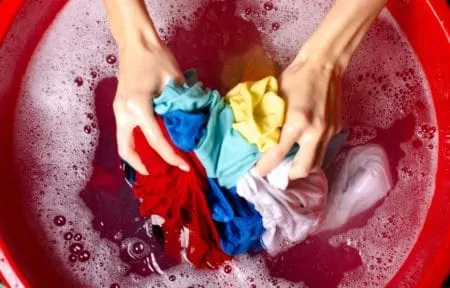
First, fill a basin or sink with warm water and a bit of light detergent. Follow the label instructions on the detergent to know how much to use for the amount of clothes you’re washing.
2. Swirl the Clothes
Swirl the clothes around in the water. Be gentle, but do it for long enough that the dirt begins to lift.
3. Rinse
Rinse the clothes under cold water. You can either run them under the tap or refill the basin with cold water.
4. Drain Water
Drain the excess water from the polyester clothes. Fold them and press them against the side of the basin or sink to squeeze the water out.
5. Dry
If you’re hand-washing an item, that’s probably because it’s too delicate for the dryer. So we recommend you air dry your polyester items. You can put them over a radiator, on a drying rack, or hang them in the sun to dry.
Can I Use Chlorine Bleach on Polyester Clothes?
You can absolutely not use chlorine bleach on polyester. We recommended oxygen bleach instead — it’s safe for polyester. But chlorine bleach is not.
Polyester is synthetic. Bleach will cause them to lose their color, even white clothes, and it can remove the outer coating of color in the polyester item (2).
Tips for Washing Polyester
Not quite convinced you’ll be able to properly wash your polyester? Here are some more tips that will help you get it clean and take good care of polyester clothes.
- Not too hot: Never use high heat in the washer, dryer, or iron. High heat can damage polyester by yellowing it or changing the overall shape (3).
- Clean after workouts: If your workout gear is made from polyester, make sure you wash it straight away, so the sweat stains don’t set.
- Oil stains: If you get an oil stain on a polyester garment, it’s best to take it to the dry cleaners. Polyester items tend to hold onto oils and can’t be removed in a normal wash.
- Turn them inside out: When washing polyester, turn the garment inside out to prevent snagging.
- Treat whites with extra care: You can soak your polyester whites overnight to boost whiteness. Mix ½ cup of automatic dishwashing detergent in a gallon of warm water. This will remove dirt and stains before washing as normal. Plus, the dishwashing detergent will help to brighten the whites.
- Always read the care label: Always read the care label or washing symbols on the item to know how best to wash it. Polyester blends will have different instructions than 100 percent polyester items. Plus, you’ll also find out if it’s a dry-clean-only item before you go and ruin it.
FAQs

Can You Put Polyester in the Dryer?
Yes, but use low heat. Polyester can actually melt and shrink when exposed to heat. Use the permanent press or synthetic drying cycle.

Does Polyester Shrink in Hot Wash?
It’s very possible that your polyester will shrink in a hot wash. Polyester is a type of plastic, so when exposed to heat, it can change shape, shrink, and get damaged.

How Do You Wash a Polyester Filling?
If your pillow has a polyester filling, it’s best to hand-wash this item.
- Fill a sink or bathtub: Fill the tub halfway with cold water. Pour in a cup of gentle detergent and stir with your hands or a long handle utensil.
- Soak the item: Place the items in the tub. Submerge fully in the water, then use your hands to massage and squeeze them. This will help get rid of the dirt.
- Rinse: Drain the tub or sink and refill with cold water. Soak your items until all the soap and dirt are washed away. Do this a few times until the items are no longer soapy.
- Squeeze: When you’re ready, squeeze all the excess water out. Don’t twist or wring the pillows, just gently squeeze. You can press it against the side of your tub for the best results.
- Dry: A hot and sunny day will get your polyester-filled items dried nice and quickly. Hang them on a clothesline, and don’t forget to flip them a few times to thoroughly dry both sides. If you knead them every so often, this will create air pockets and help dry them quicker.

Why Do Polyester Clothes Smell After Washing?
Most people use polyester clothing for exercise, and it can leave a pretty terrible smell behind. Even after washing.
This is because bacteria grow really easily on polyester clothing (4). This leaves behind a foul smell that worsens over time. If you notice your polyester workout shirt always smells under the armpit, that’s unfortunately pretty common.
Soaking your polyester clothes in distilled white vinegar can help remove the odor and bacteria.

How to Remove Stain From a Polyester Shirt With Dish Soap?
Dish soap is good for getting stains out of a polyester shirt.
- Dampen the stain down with warm water to break up the stain.
- Apply dish soap. Rub in with your fingers or a brush.
- Put it in a wash cycle immediately.
- Air dry.
- Repeat, if necessary.

Why Do My Polyester Shirts Stain After Washing?
Not every stain can come out during a regular washing cycle, especially oily stains. Oil sticks to polyester, as we’ve previously discussed. But the dish soap trick should do the job of getting the stain away! If not, take it to the dry cleaners.
Your polyester shirts might also be stained by other items in the wash, especially if you’re mixing colors. Always separate your colors!

Does Polyester Fade When Washed?
Polyester shouldn’t fade when washed, provided you have followed the instructions in the letter. Polyester is designed to hold color, so you are doing something wrong if the material fades.
Wash It the Right Way
Once you get the hang of washing polyester, you won’t need to think twice. Washing these garments will become second nature. Always remember to read the care label to know if it needs to be hand-washed, dry-cleaned only, or if it can go in the washing machine.
Make sure to stick with the proper detergent and never wash in hot water. Polyester is a type of plastic, after all, and it can melt when subjected to high temperatures.