If you’re wondering how to wash clothes with poop on them, you’ve come to the right place!
Has your little one had an accident? Or did your pet leave a surprise in the laundry room? Perhaps somebody in your family is quite unwell? Either way, it’s important to clean the clothes properly. This will ensure they’re germ-free, stain-free, and there’s no trace of the poop.
Key Takeaways
- Remove excess poop and soak the garment in warm water for 30 minutes.
- Apply an enzymatic cleaner to the stain and let it sit for 15 minutes.
- Wash the garment in a hot, heavily-soiled cycle with detergent.
- If stains remain, run an extra cycle with bleach or white vinegar, and then tumble dry.
Are There Germs in Poop?
In short, yes, there are germs in poop. Human intestines are made up of a complex bacterial ecosystem (1). For the most part, this is necessary and healthy bacteria, but sometimes there are bad germs in there. It’s difficult to culture all bacteria, so this is often a bit of a grey area.
What we do know is that some nasty illnesses are spread through feces. So it’s important to stay on top of cleaning poop from clothes. These illnesses include (2):
- Hepatitis.
- Typhoid fever.
- Cholera.
- Norovirus.
- Polio.
- E. coli.
- Tapeworms.
- Giardia.
- Rotavirus.
Keeping your clothes clean, especially your underwear, can limit the spread of these diseases.
If your child is unwell, for example, and they wear cloth diapers, it’s very easy for that disease to spread. Especially if their diapers are in contact with other garments in the laundry basket or washing cycle.
In general, though, unless a person has a disease, it’s unlikely contact with human feces will cause an illness.
Animal feces, however, is one to watch for. If you have a pet, take great care when dealing with their excrement. As an example, campylobacter, cryptosporidium, toxoplasmosis, E. coli and other diseases can be spread through cat and dog poop (3).
Can You Wash Poop Out of Clothes?
Don’t be concerned if there’s poop on clothes. It’s very possible to get it out, leaving you hygienic, disinfected and even stain-free clothes. Keep in mind that cleaning poop from clothes might require a change in your laundry routine and some new products.
How to Wash Clothes With Poop on Them
Let’s get to cleaning!
What You Need
- A tub or basin.
- Rubber gloves or doggy bags.
- Enzymatic cleaner.
- Soft cleaning brush (optional).
- Laundry detergent.
- Bleach or distilled white vinegar.
Step by Step Instructions
1. Remove the Poop
First, remove as much poop from the clothes as possible. You can use high water pressure, rubber gloves or doggy bags. Be careful not to push the poop further into the garment. Removing the excess poop will make the garment much easier to clean.
2. Submerge Garment
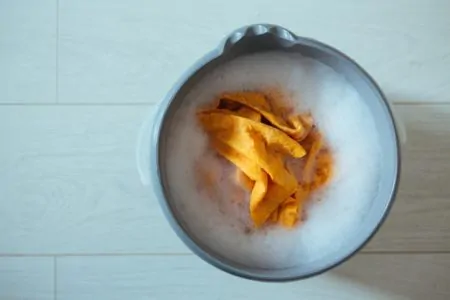
Soak the affected garment in warm water, submerging it fully underneath. If the garment cannot be submerged into water, then use a spray bottle and apply water to the stained area. Soak for about 30 minutes.
3. Apply Stain Remover
Because poop contains proteins, you need an enzymatic cleaner to break them down (4). You can find enzymatic cleaners that contain bleaching agents, or you can use a separate bleaching agent afterwards.
Take the garment out of the water and apply enough cleaner to cover the poop stain. Let it sit for the recommended time — as per the manufacturer’s advice — to let it soak into the garment’s fibers. If there’s no advice, let it sit for about 15 minutes.
If you have a cleaning brush, use it to work the detergent into the garment.
4. Launder
Place the garment in the washing machine. If there are other poop stained items, add them. Otherwise, be careful about adding other items, especially if the person is sick. Mixing garments could spread the bacteria — and possibly the stain — around.
Set the cycle to the hottest water possible on the heavily soiled setting, if you have one.
Add detergent as normal.
Begin the cycle.
5. Check
When the cycle is finished, check that the stains are gone. If not, then you can do another cycle to remove stains. Use a lukewarm temperature, normal cycle, and add your laundry stain remover.
We recommend adding one cup of distilled white vinegar, or the recommended dose of bleach. However, do not mix these two ingredients as you can create chlorine gas (5).
Run a cycle with an extra rinse.
6. Dry
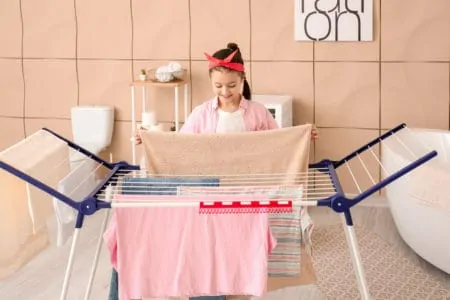
As long as the stains are gone (or if you don’t mind the stains), you can dry the garment. Using a tumble dryer can help to further disinfect the item, but you could also hang the item to dry outside.
Don’t Forget
How to Clean Diarrhea From Clothes
Diarrhea can be a bit harder to remove than poop, since you can’t remove the excess as easily. But we have a method that makes it possible! After that, you can follow the same steps as above.
- Remove excess: Use toilet paper to remove excess poop if possible. Toss the toilet paper into the toilet and flush it away.
- Flush the garment: Holding tightly to the garment, submerge it into the toilet and flush a few times. The water pressure will pull away excess feces.
- Soak: Soak the garment in warm water for 30 minutes.
- Treat the stain: Apply an enzymatic cleaner to the stained area and let it sit for 15 minutes.
- Launder: Wash the garment in the washing machine using laundry detergent, hot water and the heavily soiled setting.
- Check: Check for stains. If there are any left, you can use bleach or distilled white vinegar and run an extra cycle.
- Dry: Tumble dry or air dry the clothes.
Keep In Mind
Can You Put Poopy Clothes in the Washing Machine?
It’s okay if the clothes have a little bit of poop on them but too much can cause the feces to spread throughout the cycle. We always recommend rinsing the poopy clothes first. Some people do this in the washing machine, but we recommend doing it separately. It just keeps things a bit more sanitary and prevents poop buildup within your machine or on other clothes.
Top Tip
Can You Wash Baby Poop Clothes With Other Clothes?
If you need to meet your machine’s minimum capacity, or just don’t want to run a half-empty cycle, you can wash your baby poop clothes with other clothes. But be cautious. Here’s what not to wash your baby’s clothes with:
- Clothes with grease or chemicals: If this remains on the baby’s clothes, it can irritate their skin.
- Delicates: The velcro or loops on cloth diapers can snag on delicates.
- Clothes that have been pre-treated with other stain removers: The chemicals can mix and cause build up.
- Dark colors: Because you’re going to be using hot water, this can cause dark colors to bleed. This can stain your other clothes.
Stay Consistent
FAQs

What is the Ideal Wash for Soiled Laundry?
The ideal wash for soiled laundry is on a warm water temperature of 40 degrees or higher. However, it could cause colored fabrics to fade and some garments to shrink. It also uses a lot more energy per wash.

What Temperature Kills Bacteria In a Washing Machine?
The temperature that kills bacteria in a washing machine is 60 degrees or above. Because you rarely wash at that temperature, your washing machine needs regular disinfecting.

Does Vinegar Disinfect Poop?
Vinegar doesn’t disinfect poop, but it reduces the pH value, reducing stains and odors. Effective disinfectants should kill 99.9 percent of harmful bacteria, and vinegar doesn’t reach that threshold, according to the Environment Protection Agency (EPA).

Will Hydrogen Peroxide Remove Poop Stains?
Hydrogen peroxide does remove poop stains, especially when combined with ammonia. It disinfects multiple surfaces like toilet seats and floors to remove poop stains.

What is the Best Way to Get Rid of a Poop Smell?
Vinegar is an excellent natural ingredient for getting rid of poop smells. It reduces the pH value of the poop, which helps neutralize any bad odors. Spray it on and leave it to evaporate, or soak a cloth in neat vinegar and wipe the area clean.
Keeping It Clean
If you have clothes with poop on them, it’s important to clean them properly. This prevents any diseases from spreading, removes stains and freshens up the garments. Poop-stained clothes will happen to most people at some point.
So arm yourself with this information and you’ll have no issue cleaning these garments!