Puppies, babies and rom-coms are all cute. But what’s not cute? Wrinkles in the wardrobe. Your clothes look lifeless and dull if they are riddled with wrinkles.
True, you can do everything in your power to get wrinkles out through DIY methods. Often, though, it just may be time to invest in a funky gadget that can do the job for you.
We’ll go through the pros and cons of a steamer vs an iron to help you find the best option for you.
Key Takeaways
- Garment steamers are handheld, easy to use, and don’t require an ironing board, but may not give a perfect finish.
- Clothes irons provide crisp, sharp results, but have a learning curve and require additional accessories like an ironing board.
- Steaming is good for delicate materials and fabrics like wool, cashmere, and rayon, while ironing is better for dress shirts, pants, and cotton.
- Some fabrics should not be steamed, such as leather, suede, and velvet, while others should be handled with care, like silk and chiffon.
The Garment Steamer
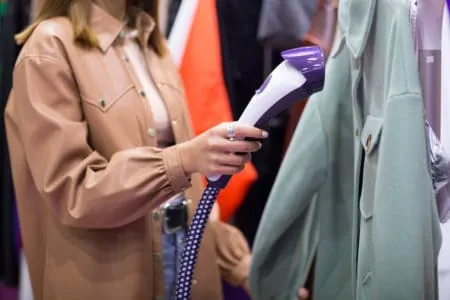
First up, we’ll take a look at the garment steamer. Garment steamers are vertical handheld steamers that can quickly tidy up your clothes and remove wrinkles. All you need to do is hold it in your hand and wave it over your clothes. The steam will help smooth out wrinkles without touching the clothes directly.
Advantages of a Garment Steamer
- No ironing board needed: A huge plus about the garment steamer is you don’t need to get out your ironing board. It’s a quick fix for wrinkled clothing. You’ll save time with a garment steamer.
- It makes the task easier: If you don’t like, or struggle with an iron and ironing board, a garment steamer is a top choice. You don’t need to worry about turning the clothes around, following a certain order or ruining delicate fabrics.
- It is faster: A garment steamer is typically quicker than an iron in terms of set up and use. Notice a shirt or dress pants on the hanger has wrinkles? You don’t even need to take it off the clothes hanger to tidy it up with a garment steamer.
- Other uses: A garment steamer can do more than just smooth out your clothes. It can also get rid of dust mites, bacteria and bedbugs. The steam kills the bad stuff in your home. You can run it over your mattress, duvet and other furniture.
Disadvantages of a Garment Steamer
- The results aren’t perfect: You won’t be able to get your garments as crisp and professional-looking as you would with an iron. If you’re a perfectionist, you might get quite frustrated with the steamer. Your wrinkles might still be on show, especially in light.
- Hard to get a deep-set crease: If you like to have deep set creases in your clothes, an iron will do a better job. A steam press will do the best job here. A garment steamer might come with a creaser attachment, but these creases don’t tend to last. The lack of weight and pressure means it’s not strong enough.
- Your arms will get tired: If you’re not a bodybuilder, this tool is kind of tiring. Although it’s lightweight and good for traveling, this gets heavy if you’re steaming a lot of clothes.
The Clothes Iron
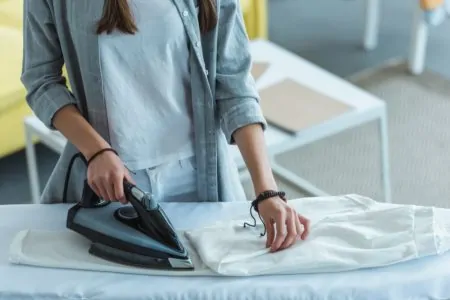
The clothes iron is a classic laundry tool. Still, there are pros and cons to using one.
Advantages of a Clothes Iron
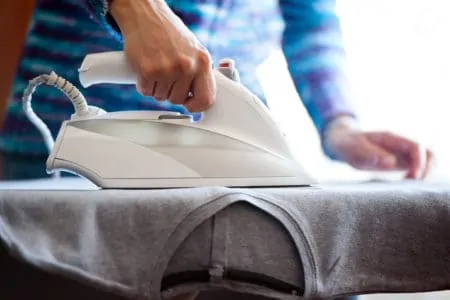
- Crisp and sharp results: If you dress to impress, a clothes iron can help you. It will smooth out stubborn wrinkles and it can set creases. Forget going to the dry cleaners, a clothes iron will get you the best results at home.
- Dry or steam: If you buy a steam iron, you can dry and steam your clothes. In fact, you can take damp clothes from the washing machine and dry them with your iron. This is especially good for delicate items.
- Ironing board is not a must: If you don’t have an ironing board, you can still work with a clothes iron. While we recommend a good padded ironing board, there are some handy alternatives to get you by. You could try an ironing blanket, a laundry sorter with an ironing board, or a thick white cotton towel.
Caution
Disadvantages of a Clothes Iron
- Learning curve: Learning how to iron clothes properly is not simple. It takes practice, and sometimes, ruining a few garments to get it right.
- Ironing accessories needed: You need a few extra items when buying an iron. This includes an ironing board (or the alternatives), and creasers and brushes if you want them. These items don’t typically come with a clothes iron, whereas garment steamers come with creasers and brushes.
- Storing and taking out the ironing board: It seems like a small job but it’s a hassle trying to find somewhere to store your ironing board. Not to mention the annoyance it is to take it out of that skinny spot you choose.
Steamer vs. Iron
This handy table will show you whether the steamer or the iron is best for different types of clothes.
| Steamer | Iron | |
| Wool | Jackets | Dress shirts |
| Cashmere | Curtains | Sheets |
| Delicates | Polyester | Pants |
| Pillows | Mattresses | Cotton |
| Rayon | Upholstery | Jeans |
| Corduroy | Linen | |
| Suits | ||
FAQs
Does Steaming Damage Clothes?
If you use a garment steamer incorrectly, you can risk damaging the clothes. You can shrink and stretch the fabric, leaving it misshapen. So, make sure you use the appropriate heat setting for each individual garment.
If an item has stains, don’t use hot steam as this can set the stain into the fabric permanently.
A steamer will be kinder on your delicate clothes than the tumble dryer, so it is a great choice. This is especially so for clothes that can’t go into the dryer at all.

What Fabrics Should Not Be Steamed?
There are definitely some materials that should not be steamed. These include:
- Leather.
- Suede.
- Velvet.
- Waxed jackets.
- Plastic.
If you’re not sure, test a small corner of the fabric to see how it responds. There are also some items you should be careful with, only using a small amount of steam. These include:
- Silk.
- Chiffon.
- Sheer.
Is Steaming Clothes the Same as Dry Cleaning?
No. When you take your clothes to the dry cleaner, they will use a machine. Usually, they use a chemical called perchloroethylene to dry clean your garments. A steamer, on the other hand, just uses hot water.

Can I Put Essential Oils Into My Clothes Steamer?
If you’re like us and love essential oils, you probably look for any excuse to use them. However, you shouldn’t put essential oils into your clothes steamer. It might damage the tool. You could check the manufacturer guide though because some steamers might have suggestions if you want your clothes to be scented.

How Do You Use an Iron Steamer?
If you want the best of both worlds, you could get a steam iron. This device has a hot soleplate and a steam function. Here’s how to properly use it:
- Fill the tank with water: According to the instructions, fill the tank with the right water. Do this while the steam iron is unplugged and cold.
- Check the garment label: As always, check the garment’s label to see if it can handle heat. Set the steam iron to the correct temperature and wait for it to heat up.
- Hang up the clothes: For best results, hang up the clothes. You can also lay them flat on the ironing board.
- Press the steam button: Without making contact with the fabric, hold the steam iron close to the garment. Press the steam button while aiming it at the areas you want to target. This will gently remove wrinkles from your clothes.

How Do You Unwrinkle Clothes Without an Iron?
The best way to unwrinkle clothes without an iron is to use a hair dryer. Other methods include hanging garment next to a shower to steam them wrinkle-free, and using a hair straightener.
Choosing a Steamer vs. Iron
There are definitely pros and cons to both a steamer and an iron. Think carefully about what type of clothes you have in your closet. If you mostly wear delicates and funky materials like corduroy and cashmere, go for a steamer. But if you like a more professional look for your suits, jackets and shirts, an iron is the best option for you.