Are your drawers a cluttered mess making it hard to find fresh clean clothing? Then it’s time to reorganize your dresser drawers.
You’ll be able to clean your drawers, organize your clothes, and add perfumed cotton balls to keep everything smelling fresh. It will bring back your excitement to get dressed in the morning again.
Here are 15 excellent ideas to help you get your dresser organized.
Key Takeaways
- Organize dresser drawers by taking inventory, creating keep and donate piles, and grouping clothes by category.
- Clean and line drawers, use drawer organizers, and roll clothes instead of folding them for better visibility.
- Relocate bulky clothes, rotate clothing per season, and keep the top of the dresser organized and tidy.
- Use baking soda, dryer sheets, or perfumed cotton balls to keep clothes smelling fresh in drawers.
15 Easy Dresser Organizing Ideas
Take an Inventory of Your Clothes
When you sit down to organize your dresser, the first thing you should do is take inventory of your clothing. Pack everything out on your bed and take a look at what you have. Organize the clothing into types of clothing.
For instance, put underwear together. Group your sweaters, shorts, and pants.
The goal is to be able to see what you do and don’t have.
Create Keep and Donate Piles
As you’re going through your clothing, sort it into keep and donate piles. Some clothing will look great and you’ll want to keep the item. Other clothing will need to be donated. It may be out of fashion, too small, too large, or simply not an item that fits your style.
Another great question to ask yourself is whether you would purchase the item if you were shopping today and saw it hanging in the store. If not, why are you keeping it?
Also, check to see if the item is stained or damaged. Get rid of it if it is.
Donate Any Old Clothes
Put the old clothes into a bag and immediately put it in your car. The idea is to remove the old clothing as soon as possible. Otherwise, you’ll be thinking and questioning yourself.
Your dresser will quickly fill up with clothing and clutter again.
Group Clothes By Category
Now that you have your clothing laid out, group the clothing by category. Such as tops, bottoms, underwear, and pajamas each into their own groups. When you put your clothes into the drawers, you’ll be organizing them by category.
Otherwise, you won’t be able to find the items you need when you need them!
Relocate Bulky Clothes
Relocate your bulky clothing. Sweaters and jeans take a lot of room. Why store them in the precious and limited space in your dresser?
Instead, you can hang them in the closet, or store them in bins under your bed. By relocating the bulky items you will create more room in your dresser.
Clean Your Drawers
Now that your dresser drawers are empty, it is time to clean and check your drawers. Take a clean microfiber cloth and spray some dusting spray on it. Dust out your drawers.
Also, take the time to check the drawers for loose bolts. This is the perfect opportunity to carry out any needed maintenance on your drawers.
Line Your Drawers
After cleaning your drawers, consider lining your drawers with old newspaper or removable wallpaper. You can also use heavy-duty wrapping paper to line your drawers. Another option is to use a textured drawer liner which will keep your drawer organizers in place.
Use Drawer Organizers
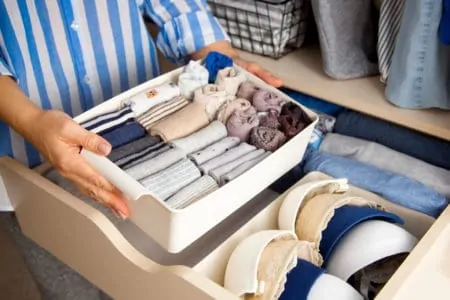
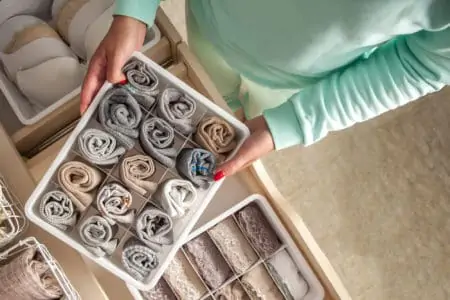
Use drawer organizers to organize your drawers into sections. You can have a space for t-shirts, dress shirts, and tank tops. It’s also a great way to organize a drawer of pajamas and underwear.
Organize By Color
As you replace the items in your drawer, it helps to organize them by color. Put your green shirts together. Stick your black pants in one location.
This way you’re not digging through the drawers looking for that specific outfit you want to wear.
Label Your Drawers
Labeling your drawers is helpful as well, especially if you’ve completely reorganized them. You can hang a post-it note on the drawers for a few days until you’ve reset your habits.
For kids, consider painting the drawers in various colors. This way your kids will know to put pants in the brown drawer and shirts in the green drawer.
Another great idea is to cover the dresser drawers with blackboard paint. Then you can label the drawers with chalk. If the chalk smears off or you need to reorganize the drawer, it’s super easy to simply wipe the dresser drawers clean and relabel them.
Roll, Don’t Fold Your Clothes
Roll, don’t fold your clothing. The reason is that you’re better off if you can see all the clothing in your dresser drawers. Otherwise, when folded and stored horizontally, the clothing at the bottom gets forgotten while the clothing at the top gets worn again and again.
Use PVC Pipe to Organize Clothes
Have you ever thought about using PVC pipes to organize your clothes? Cut the pipe into small sections about 3-4 inches long. Then roll your shirts and place them in the pipes. The clothing will stay upright and you’ll be able to easily see the item you want to wear.
Holiday Ornament Boxes Make Great Sock Holders
Another fun idea is to use holiday ornament boxes to hold your socks. This won’t just make it easy to find the socks you want to wear, but it will also make it super fast to put your socks away after washing your clothing.
Just stick all socks of the same type in the ornament boxes. Then when you want to wear a pair, grab two socks!
Rotate Your Clothes Per Season
Remember to rotate your clothes seasonally. After all, you’re not going to be wearing sweaters in the middle of summer, so store the sweaters somewhere else for the summer months.
Also, rotate tank tops and shorts out of your drawers for the winter so you can make room for warm winter clothing.
Organize the Top of Your Dresser
Keep the top of your dresser organized and tidy. Don’t use it as a place to store random knick-knacks. This will make your room look cluttered and untidy.
Instead, use some pretty trays and holders to decorate the top of your dresser. You can toss a couple of items in the trays and your room will still look neat.
One good tip is to think of the top of your dresser as a place for decorations, not clothing.
Dresser Organization FAQs

Is It Better to Hang Clothes or Fold Them?
Anything that may stretch out such as scarves, sweaters, t-shirts, exercise clothing, and knits should be folded. Jeans, khakis, and heavy materials can also be folded. Other materials do best when they are hung.
What Can You Put In Drawers to Keep Clothes Smelling Fresh?
You can add a bowl of baking soda to absorb bad odors from your clothing. Another idea is to add dryer sheets to your drawers. Perfumed cotton balls also work well to keep your clothes smelling fresh in your drawers.
What Do You Put In Empty Dresser Drawers?
Empty dresser drawers are great places to store items that would be useful to have in your bedroom. Sheets, pillowcases, and extra blankets are great examples of this. You can also use a drawer for storing jewelry, perfume, hairbrushes, hair bands, etc.
Any item you use or put on in your bedroom is handy to have in your dresser.

What Goes In a Closet and What Goes in a Dresser?
Knowing what goes in a closet and what goes in a dresser is crucial for organizing your storage. Typically, foldable items and accessories go in your dresser, while larger, hanging garments go in your closet.

How Do You Decorate the Top of a Dresser?
The best way to decorate the top of your dresser is to arrange a focal point above the dresser like a mirror and set it in the center beneath that object. Also, place a tray on top and arrange everything for balance.

Can I Put a Dresser In Front of a Window?
You can put a dresser in front of a window, provided it is the correct size, and it doesn’t restrict the amount of natural light coming into the room.