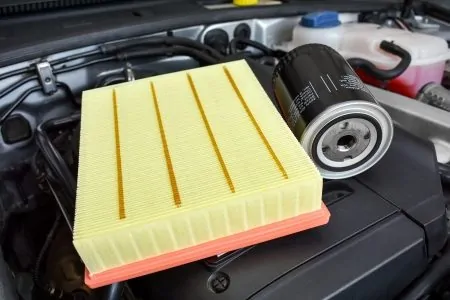
The cabin air filter is one of the car’s most important but often overlooked parts. This filter purifies the air that circulates inside your car. Most modern cars already have air filters installed, but some are of an undesirably low quality.
The best car air filters will capture dust, pollen, and other pollutants while removing odors. Some effective filters will even remove harmful gases and exhaust fumes. Therefore, choosing the right one is crucial.
We’ve spent hours researching car air filters, so you don’t have to. We’ve analyzed real customer reviews and expert advice. The key factors we’ve considered are durability, effectiveness, and how well it removes odors and allergens. Ready to meet our seven favorites?
- Keeps pollutants separated
- Consists of three layers
- Removes fumes & odors
- Contains baking soda
- Removes bad odors
- Lasts a long time
- 28 pleats
- Contains carbon & baking soda
- Removes a variety of large particles
- Removes up to 99.5% of pollutants
- Improves your car’s HVAC system
- Removes unpleasant odors
- Excellent for families
- Thick & durable
- Removes odors and allergens
- Easy to install
- Filters up to 98% of contaminants
- Good value for money
- Effectively removes bad odors
- Removes allergens, kills viruses and bacteria
- Connects easily with a phone charger
Review Methodology: At Oh So Spotless, our team of professionals conducts thorough research, rigorous testing, and hands-on analysis to provide you with reliable data and facts about the best car air filters on the market. We evaluate products from a user’s perspective, using criteria such as performance, efficiency, durability, and design to rank and compare options. Our assessment is based on first-hand experience, quantitative measurements, and expert knowledge to help you make informed decisions. We identify key factors such as filtration quality, compatibility, and ease of installation, and rate products based on these areas. Our findings will help you understand what sets each product apart from its competitors and choose the car air filter that best meets your needs. Trust Oh So Spotless to deliver the most accurate, up-to-date, and comprehensive information on the best car air filters available.
The Best Car Air Filters of 2024
In our quest to find the best car air filters, we considered affordability and value for money. We also scoured the internet for customer reviews and combed through product specifications to assess efficiency. After looking through car air filters recommended by experts, we found our top seven.
ACDelco CF188 Cabin Air Filter
Best Overall
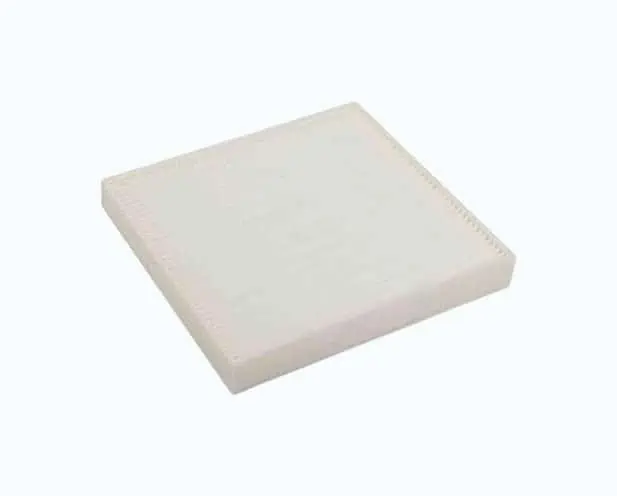
The ACDelco cabin air filter consists of a three-layer media that promises to filter out pollutants such as dust and pollen. It’s a non-woven filter that captures more particles while increasing airflow within the car’s AC.
The three layers work effectively together to capture both large and small particles. Larger pollutant particles will be caught in the first layer, while the middle layer captures small particles. The filter will also remove fumes and unpleasant odors to give you and your passengers a pleasant ride.
Because of the different layers, the filter separates the pollutants and contains them much better, so nothing escapes. This filter was made to fit General Motors (GM) vehicles, so make sure it will fit your car before buying.
You get great value for money since the filter is durable and works very efficiently. Most customers were pleased with how easy it was to install, even for those who claimed not to be as knowledgeable.
Pros
- Keeps pollutants separated and prevents them from entering your car’s interior.
- Consists of three layers: one captures large particles, one for small, and one keeps the filter stable.
- Removes fumes and odors, such as smoke and exhaust emissions.
- Easy to install, even if you aren’t used to setting up such equipment.
- Prevents mold and bacteria from thriving and growing inside your car’s vents.
Cons
- Only compatible with GM vehicles.
- Might fit loosely in certain models, which causes some vibration and noise.
Product Specs
| Mileage | 12,000 miles |
| Instructions Included | No |
| Size | 10.4 x 9.8 x 1.3 inches |
| Effectiveness | 100 percent of large airborne particles, “most” small particles |
Our Ratings
User Experience
EPAuto Premium Cabin Air Filter CP285
Best Premium Car Air Filter
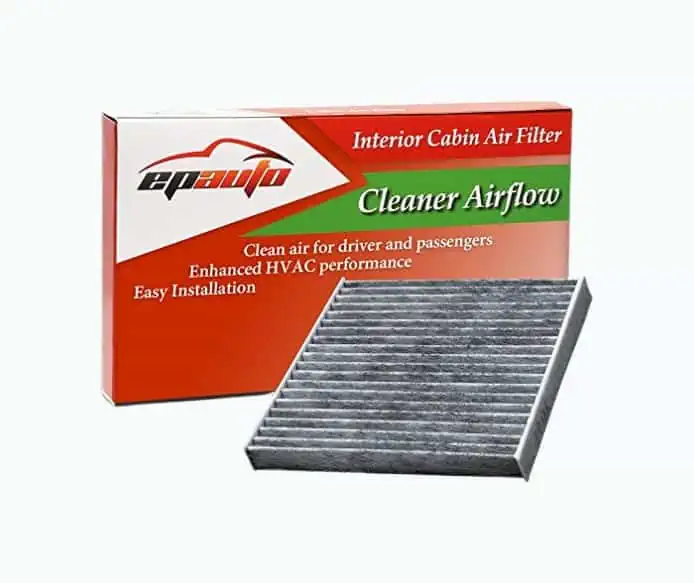
The CP285 uses a carbon and baking soda filter to enhance the air quality and remove unpleasant odors and fumes.
Both carbon and baking soda are highly effective at absorbing odors. Here, it’s inside your car’s air system, removing any odor before it makes its way into the cabin.
One of the best things about this filter is that it fits various cars and models. It’s easy to install and lasts a long time. Replacing the filter is also inexpensive as it’s highly affordable and offers excellent value for money.
EPAuto recommends that the filter is changed every 12 months or 12,000 miles.
There has been a bit of confusion going around due to the “up” arrows on the filter. Many users confused this with an indication of airflow. However, when installing, the arrows should be pointing up.
Pros
- Contains baking soda and carbon to remove odors and generate fresh air.
- Lasts a long time; you only need to replace it every 12,000 miles.
- Affordable in the long run since it lasts so long and is budget-friendly.
- Super easy to install in just a few minutes.
Cons
- It has fewer pleats than other brands, which filter out fewer contaminants.
- The arrows on the air filter are confusing for customers.
- It can affect the temperature of your car, making it hotter than you’d like.
Product Specs
| Mileage | 12.000 miles |
| Instructions Included | No |
| Size | 8.54 x 7.91 x 1.34 inches |
| Effectiveness | Not specified |
Our Ratings
Personal Perspective
Kootek Car Cabin Air Filter CF10285
Best Woven Car Air Filter
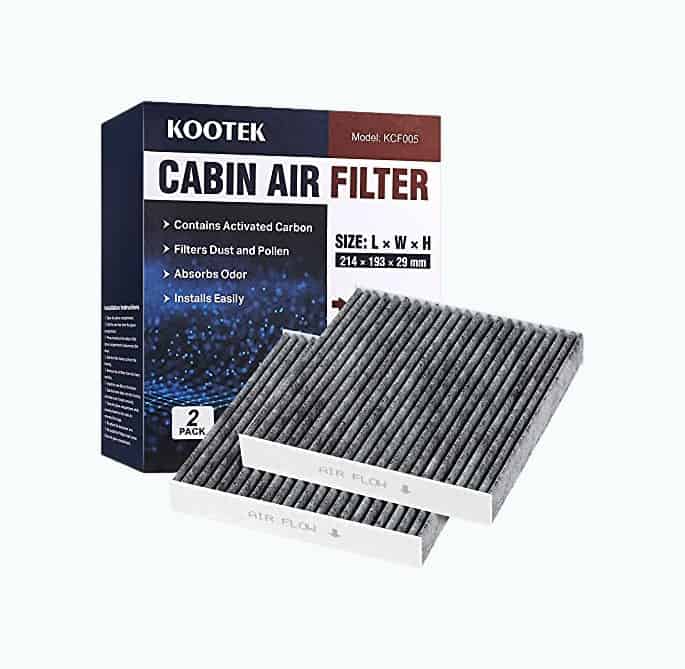
The Kootek CF10285 filter was made to capture pollutants such as pollen and dust. The tightly packed woven pleats capture particles ranging in size between five and 100 microns.
Within the pleats, you will find carbon and baking soda. These will effectively absorb bad odors before they enter your car cabin. The filter will also help to enhance the HVAC performance in your car.
It fits various cars, including Toyota, Lexus, Pontiac, Scion, and Subaru. Installation is a breeze, and you get full instructions on how to complete the job correctly.
You should replace the filter every 12 months or 12,000 miles. Although it’s slightly higher-priced compared to the previous ones on our list, it’s still affordable in the long run.
A common problem with this filter is restricted airflow. A few customers noticed they had to turn their AC up slightly higher to get the same flow as usual.
Pros
- 24 folding layers to provide more contact area and capture more substances.
- Contains carbon and baking soda to remove bad odors and create clean air.
- Removes various large particles, including dust, pollen, and other pollutants.
- Long-lasting; it lasts 12,000 miles or a year.
- Includes five layers of filters to purify air better.
Cons
- Might restrict airflow and air conditioning in your car.
- Instructions are a bit confusing as it’s challenging to know which direction the filter should go in.
Product Specs
| Mileage | 12,000 miles |
| Instructions Included | Online instructions |
| Size | 8.46 x 7.56 x 1.10 inches |
| Effectiveness | Very good due to five layers and 24 folds |
Our Ratings
Community Feedback
EcoGard XC36080 Premium Air Filter
Best Filter for Honda
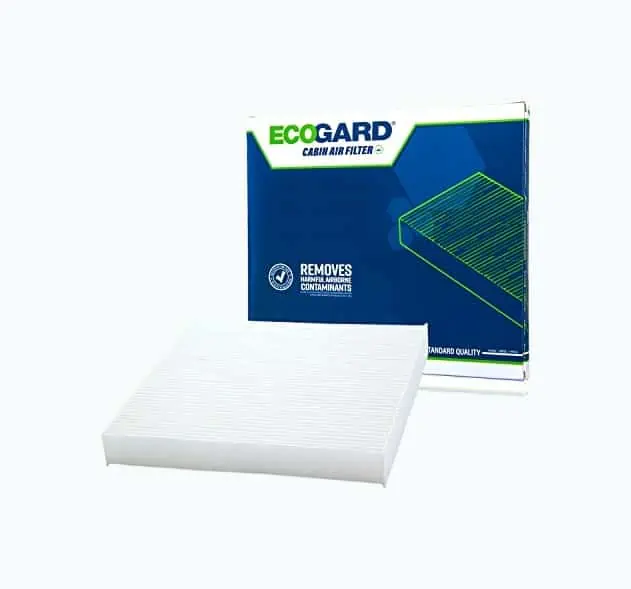
If you want a very thorough filter for your Honda vehicle, this is it. The EcoGard Premium Cabin Air Filter effectively captures and removes up to 99.5 percent of pollutants. This includes dust, pollen, allergens, pet dander, and other contaminants, which makes this an excellent choice for family cars.
It helps to promote good airflow within your car’s HVAC system, and it can help to prevent premature wear. Unlike other filters with a limited life, this one is recommended to be used until airflow is compromised. However, the manufacturer recommends that you change the filter once in spring and once in fall.
The price is highly affordable, and the easy installation makes it very user-friendly. It was specifically made and tested for Honda Original Equipment.
Honda owners have complimented the filter for providing excellent airflow while removing musty odors.
Pros
- Removes up to 99.5 percent of pollutants, including dust, pollen, pet dander, and more.
- Improves your car’s HVAC system and protects it from premature wear.
- Affordable price point, even if you need to change it twice a year.
- Easy installation within five minutes; instructions are approachable, too.
- Electrostatic fibers within the filter capture more airborne particles.
Cons
- Fits only Honda models; if you have another model, this won’t suit.
- It’s not specifically made to remove odors.
- Some customers found it was a bit too long and didn’t fit perfectly.
- It’s a bit of a flimsy filter; it doesn’t seem that sturdy.
Product Specs
| Mileage | 12.000 to 15.000 miles |
| Instructions Included | Yes |
| Size | 10.9 x 9.5 x 2.1 inches |
| Effectiveness | 99.5 percent |
Our Ratings
First-Hand Impression
Spearhead Premium Breathe Easy Filter
Best Long-Lasting Filter
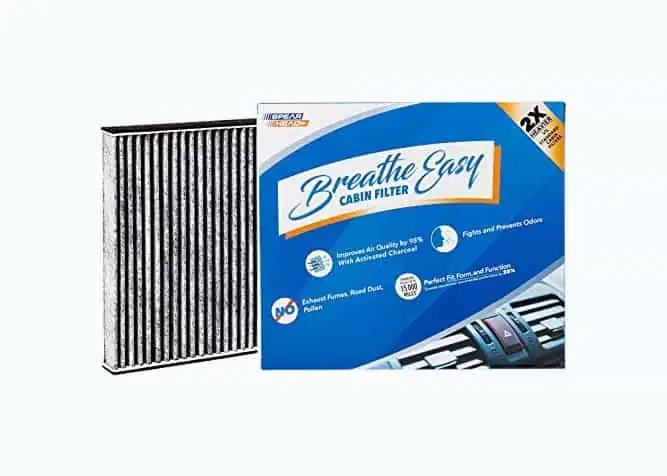
The Breathe Easy filter uses a thick honeycombed charcoal weave that traps even the tiniest particles. The four-stage filtration system effectively removes road debris, fumes, and allergens, creating a safe space inside the car for you and your family.
Due to the thickness of this filter, it performs slightly better than others. This is especially true regarding gases, odors, and fumes. Within the filter, there’s also an antimicrobial stage that blocks allergens.
The filter is long-lasting and doesn’t need replacing until 15,000 miles. It’s super simple to install, and you get full instructions on how to do it correctly.
It offers great value for money and is affordable to keep replacing in the long run. If you’re not happy, the manufacturer offers a guaranteed money-back.
Customers praised this filter for its thickness, and many said it considerably improved air quality from their previous filter.
Pros
- Four-stage filtration: dust filter, anti-inflammatory, absorption, and coconut shell carbon weave filter.
- Thick and durable; thick electrostatic media captures more small particles.
- Removes odors, including gas smells and allergens.
- Excellent for families since it purifies the air.
- Starts working within five minutes of installation.
- It improves air quality in your car by 98 percent.
Cons
- The thickness and stability make it hard to install.
- Some customers noticed a significant reduction in airflow due to the thickness of the filter.
Product Specs
| Mileage | 15,000 miles |
| Instructions Included | Yes |
| Size | 8.46 x 7.64 x 1.14 inches |
| Effectiveness | 98 percent |
Our Ratings
User Experience
Fram FreshBreeze CF10374 Air Filter
Best for Pet Families
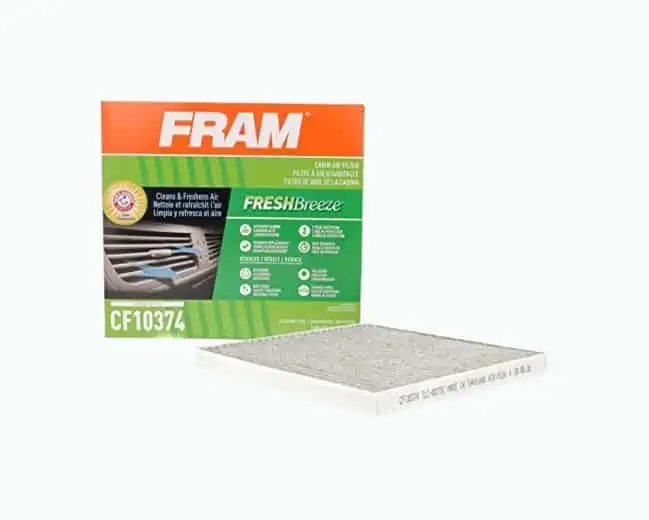
The Fram FreshBreeze filter is the go-to for musty-smelling cars. It uses a combination of carbon and Arm & Hammer baking soda to remove bad odors before they enter the cabin.
This filter is an excellent choice for families since it captures up to 98 percent of pollen, dust, and other pollutants. It provides improved airflow and helps to prevent harmful particles from ruining the HVAC system and engine.
Customers have praised the filter for its easy installation, saying it fits well in most car models. Other compliments are its low noise level, as some air filters create a sound when the AC is on.
A common issue with this filter, however, is loose carbon. If not removed, this will come flying out the vents when the air conditioning is turned on. So make sure you give it a tap or a quick vacuum before installing it.
Pros
- Easy to install; you get full instructions and videos to help.
- Filters up to 98% of contaminants duh as dust and pollen.
- Good value for money; it’s affordable to buy and replace.
- Long-lasting; replace the filter every 15,000 miles or when airflow becomes restricted.
- It uses activated carbon and baking soda to minimize odors and fumes.
Cons
- A significant amount of loose carbon is present on the filter.
- Advertised as having a fresh breeze scent, but the filter is not scented.
- Customers described the filter as flimsy.
Product Specs
| Mileage | 15,000 miles |
| Instructions Included | Not specified |
| Size | 8 x 8 x 8 inches |
| Effectiveness | 98 percent |
Our Ratings
Personal Perspective
Pure Car Air Purifier With HEPA Filter
Best Ionizer Filter
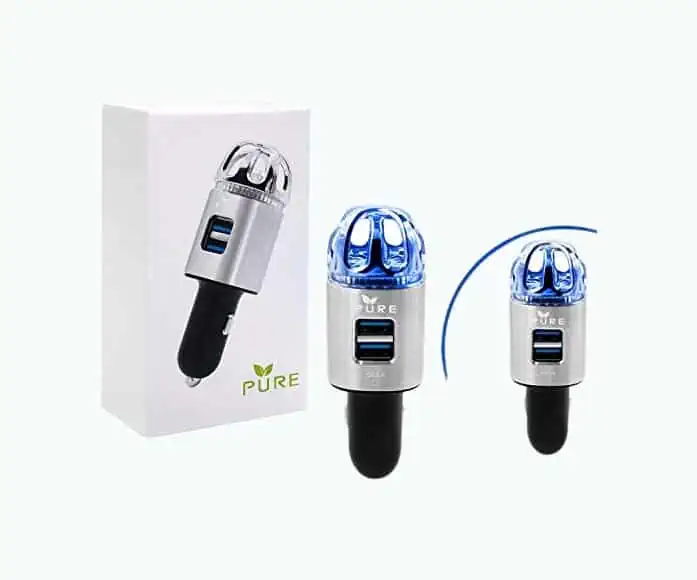
Air purifiers are commonly used within our homes to clean our air, but they can also be useful in cars. This purifier easily connects to the USB outlet in the car and effectively removes bad odors.
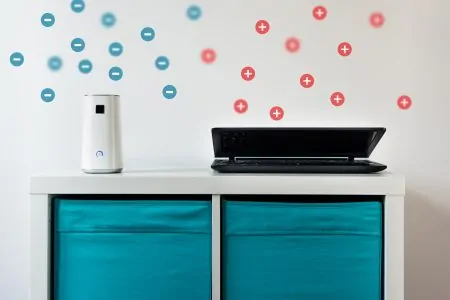
It uses a combination of a HEPA filter and an ionizer to remove allergens, viruses, bacteria, and mold.
This purifier is especially popular among pet owners. Many complain about bad odors caused by pet urine or wet fur. This purifier removed most odors.
Because it uses an ionizer to kill bacteria and odors, it does produce small amounts of ozone. However, the manufacturer claims it’s only minimal amounts at a safe level and isn’t a concern.
Still, if you’re unhappy with the air purifier, Pure offers a full refund and money-back guarantee.
Pros
- Effectively removes bad odors; doesn’t just cover them up.
- Removes allergens and kills viruses and bacteria.
- Connects easily with a phone charger.
- Available in three different colors: silver, bronze, or white.
- Doubles as a car charger since it has USB ports.
Cons
- Produces ozone which can be dangerous to breathe in.
- More expensive than other options on our list.
- It pops out of the car charging port easily.
- Customers often aren’t sure if it’s working properly.
Product Specs
| Mileage | N/A |
| Instructions Included | Not specified |
| Size | 1 x 1 x 4 inches |
| Effectiveness | Advertised as super effective, but customers aren’t always sure |
Our Ratings
Community Feedback
| Product | Best | Mileage | Instructions Included | Size | Effectiveness |
|---|---|---|---|---|---|
| ACDelco CF188 Cabin Air Filter | Overall | 12,000 mi | No | 10.4 x 9.8 x 1.3″ | 100 percent of large particles, “most” small particles |
| EPAuto Premium Cabin Air Filter CP285 | Premium Car Air Filter | 12.000 mi | No | 8.54 x 7.91 x 1.34″ | N/A |
| Kootek Car Cabin Air Filter CF10285 | Woven Car Air Filter | 12,000 mi | Online instructions | 8.46 x 7.56 x 1.10″ | Very good |
| EcoGard XC36080 Premium Air Filter | Filter for Honda | 12.000 – 15.000 mi | Yes | 10.9 x 9.5 x 2.1″ | 99.5 percent |
| Spearhead Premium Breathe Easy Filter | Long-Lasting Filter | 15,000 mi | Yes | 8.46 x 7.64 x 1.14″ | 98 percent |
| Fram FreshBreeze CF10374 Air Filter | Pet Families | 15,000 mi | N/A | 8 x 8 x 0.7″ | 98 percent |
| Pure Car Air Purifier | Ionizer Filter | N/A | N/A | 1 x 1 x 4″ | Advertised as super effective, but some customers disagree |
Why You Need a Car Air Filter
The closed space of a car is often more polluted than the outside. This is due to the impurities the HVAC system brings inside. Studies show most of the pollutants found inside a car are from the vehicles in front of you (1).
The harmful pollutants include:
- Ozone: This is a colorless, odorless gas that’s harmful at ground level. The sunlight reacts with the nitrogen oxide a car emits, and VOCs found in the air and create ozone (2).
- Nitrogen dioxide: A pungent-smelling gas that can cause respiratory issues such as lung irritation and breathing problems (3).
- Sulfur dioxide: This gas can cause respiratory issues such as shortness of breath. It can also cause chest pain and permanent lung damage (4).
- Carbon monoxide: Is an odorless, colorless gas that’s highly poisonous. When inhaled, it can cause dizziness, confusion, and fatigue (5).
If that isn’t enough, dust, pollen, and other allergens could also find their way into your vehicle.
Bad odors are another common complaint within a car. These could be caused by leftover food debris, pet messes, children’s messes, or even mold.
Installing a good-quality air filter is an excellent way to keep most pollutants at bay.
Finding the Best Car Air Filters
There’s a wide choice available on the market regarding air filters for your car. It can get overwhelming, but knowing what to look for can make it easier.

Odor Removal
If you’re struggling to remove bad odors from your car, a carbon and baking soda filter is efficient. These filters have baking soda and activated carbon woven into the pleats. As air passes through the filter, the baking soda absorbs odors while carbon absorbs fumes and gases.

Dust and Allergen Removal
A thick filter will help capture finer particles of dust and pollen and some allergens. Where you live also plays a significant role in what filter you need. People living in polluted cities will need a more thorough filter. A dust filter should be sufficient for people living in remote areas.

Durability and Mileage
How long a car air filter lasts is based on mileage. For example, you should replace your air filter after a certain number of miles. On average, this is between 12,000 and 15,000 miles which is decent durability. Any less than 10,000 miles, the air filter might not be as durable.
FAQs

How Often Should You Change Air Filter In Car?
The frequency you change an air filter in a car depends on which filter you are changing. A cabin filter should be changed every 12,000 to 30,000 miles, while you should change the engine filter every 30,000 miles.
However, the engine filter does vary between manufacturers. Ford recommends a change every 30,000 miles, while Chevrolet stipulates every 45,000 miles. Hyundai state you should swap the engine filter every 15,000 miles.

What are the Signs of a Dirty Engine Air Filter?
The signs of a dirty engine filter include a slower acceleration time, issues starting the car, and thick black smoke billowing from the exhaust. Your engine needs the correct air-to-fuel ratio, so when the filter is blocked, it upsets the balance, causing the fumes to run black.

Does a New Air Filter Improve Car Performance?
A new air filter will improve car performance because it ensures a healthy airflow, which means the car has the correct air-to-fuel burning ratios.

Is a Dry or Oiled Air Filter Better?
To know whether a dry or oiled filter is best depends on a couple of variables: airflow and filter performance. Most engines use a dry filter, which is better for filtration but not for airflow. Oil filters are less restrictive and give better airflow.

Can I Wash the Air Filter of My Car?
You can clean your car’s air filter with soapy water, provided you give it ample time to dry. It enhances the vehicle’s performance and saves you the cost of a new one.