Dust, pollen, mold, and other allergens exist in the air we breathe every day. Just because they’re invisible doesn’t mean they’re not there. To ensure good air quality and home cleanliness, you should invest in one of the best air purifiers available.
With our help, you can find the right one for you. We’ve researched real customer reviews and expert advice to conclude the 10 best air purifiers currently available.
To make our list, we focused on the type of filtration system, specialized features, effectiveness, energy consumption, and ease of use. We’re confident in our choices, so keep reading to find your best match!
- Air quality sensor works automatically
- Sleep mode operates at low volume
- Compact design fits most homes
- Filter change indicator
- Aromatherapy function
- Quiet operation at 33 decibels
- Compact and portable
- Highly efficient, 360-degree air purification
- Sleep mode at maximum 30 decibels
- Works silently and won't disturb your baby
- Tackles up to 360 square feet
- Filter replacement indicator
- Lifetime warranty included
- Medical-grade filter prevents allergies
- Child-lock stops kids from changing settings
- 26 decibel operation
- 5-stage 360-degree filtration
- Child-safety mode
- USB car charging port
- Neutralizes the air in your car
- Reduces asthma attacks and allergies
- Automatic air quality sensor
- Stylish sleek design
- Works for the whole house
- Tackles odors and freshens home
- Medical-grade HEPA filter
- UV sterilizing function
- Includes filter replacement light
- Handle large spaces
- Turbo Clean setting quickly cleans
Review Methodology: At Oh So Spotless, we take pride in our thorough research, hands-on experience, and data-driven analysis to provide you with the most accurate and reliable information on the best air purifiers. Our team of professionals conducts in-depth evaluations, comparing the performance, design, and key decision-making factors of each product. We rank air purifiers based on criteria such as filtration efficiency, noise levels, energy consumption, and ease of use. By examining real-life experiences, we identify essential features that set top-performing air purifiers apart from their competitors. Trust our expertise to guide you in making an informed decision when choosing the perfect air purifier for your needs.
The Best Air Purifiers of 2024
After comparing the market’s leading air purifiers, examining consumer reviews, and conducting our own thorough research, we compiled some of the best air purifiers for different needs and lifestyles that we think are worth considering.
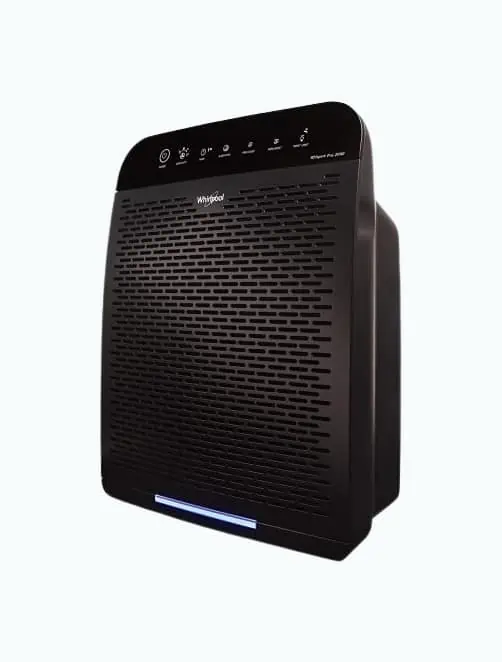
Whirlpool Whispure True HEPA Air Purifier
Best Air Purifier for Dust
Dust is everywhere, no matter how often you vacuum. This air purifier will help take care of what you can’t see.
The Whirlpool Whispure True HEPA Air Purifier uses a true HEPA filter. So it can remove 99.97 percent of particles (as small as 0.3 microns) of dust, pollen, pet dander, and mold spores from indoor air.
It also has a carbon filter which reduces odors. Although this is a compact device, it can cover large spaces of up to 508 square feet. It boasts a CADR of 328.
This ozone-free air purifier comes equipped with a sleep mode setting, making it an energy-saver. It also features a Quiet Partner System, which can be left on while you sleep or work, as it cleans your air silently.
We love the wildfire smoke protection. This device can remove particles in the air left behind by wildfires.
Pros
- Air quality sensor automatically detects air quality and adjusts fan speeds.
- Sleep mode operates at a low speed so that you can rest undisturbed.
- Compact design will fit discreetly in most homes.
- Quiet Partner System, which uses top technology.
- Reduces odors from pets, smoking, cooking, and more.
- A HEPA filter captures 99.97 percent of particles as small as .3 microns.
Cons
- Pricey filter replacements, averaging around 1/5 of the unit cost.
- Some customers noticed a buzzing or squeaky noise within the unit.
- It’s a more expensive option than some other candidates.
Product Specs
| Type of Filter | True HEPA filter and carbon filter |
| Energy Star Rating | Yes |
| Remote Control | No — smart screen touch |
| Air Quality Sensor | Yes |
User Experience
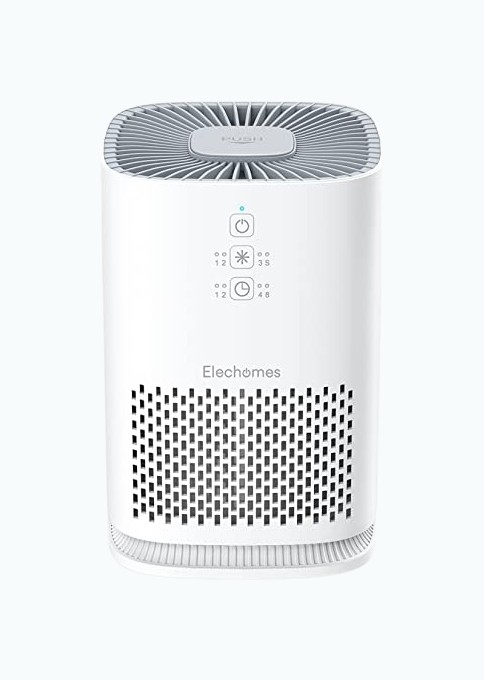
Elechomes Air Purifier With True HEPA Filter
Best Air Purifier for Smoke
Smoking indoors can cause odors to linger, as smoke smell clings to your furniture and carpets. There are also much higher levels of respirable suspended particles, such as nicotine, in smokers’ houses than in non-smokers’ houses.
Thankfully, this air purifier is fitted with an ozone-free three-stage filtration process. It can filter 99.97 percent of pollutants in the air.
Its process includes a true HEPA filter that targets the tiniest airborne particles. On the other hand, the carbon filter helps eliminate odors, creating fresher air for smokers.
The Elechomes air purifier has three fan speeds and a timer setting. The air purifier has a sleep mode setting, quieting the fan and turning off the indicator light. That way, you can have it on at night without being disturbed.
Pros
- Sleep mode turns down the fan and turns off the light.
- Filter change indicator tells you when to replace filters.
- Aromatherapy function allows you to add essential oils.
- Compact size so you can pop it on a desk or table.
- Quiet (33 decibels) during the sleep mode.
Cons
- Filter replacements are difficult to find.
- It has a small coverage of 215 square feet, so it’s unsuitable for larger homes.
Product Specs
| Type of Filter | Three-stage filtration: pre-filter, HEPA filter, and carbon filter |
| Energy Star Rating | No |
| Remote Control | No — touch panel |
| Air Quality Sensor | No |
Personal Perspective
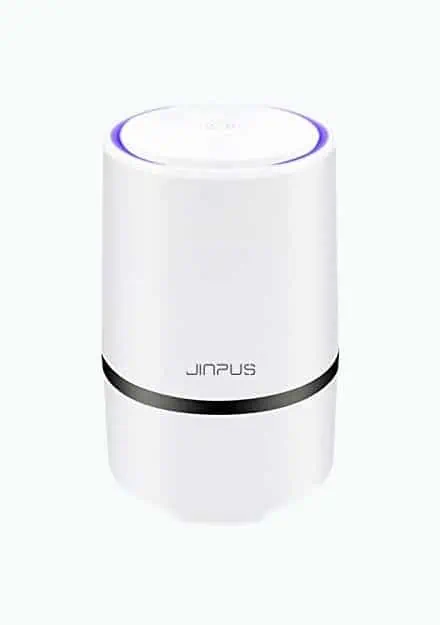
Jinpus Air Purifier
Best Budget Air Purifier
If you’re looking for an effective air purifier that won’t send you running to the bank, look no further.
The Jinpus air purifier has a HEPA filter, which removes airborne pollutants such as pet dander, pollen, and bacteria. This powerful air purifier boasts an almost silent operation (around 30 decibels) for quiet cleaning.
Its compact, cylindrical design allows for highly efficient 360-degree air purification. The activated carbon filter removes odors and toxic gases from the air in your living space. Plus, it comes with a blue LED light, which you can dim in sleep mode.
Pros
- Compact and portable, designed for small homes.
- Very quiet; the loudest it goes is 30 decibels.
- Highly efficient, 360-degree air purification.
- Easy to operate due to the LED lights and large buttons.
- Three-stage filtration system captures 99.97 percent of airborne particles.
Cons
- LED light may disturb sleep as it cannot be completely switched off.
- It requires a USB connection, so you may need an adaptor.
- The filters have a short lifespan, around one month.
Product Specs
| Type of Filter | True HEPA filter and activated carbon filter |
| Energy Star Rating | No |
| Remote Control | No |
| Air Quality Sensor | No |
Community Feedback
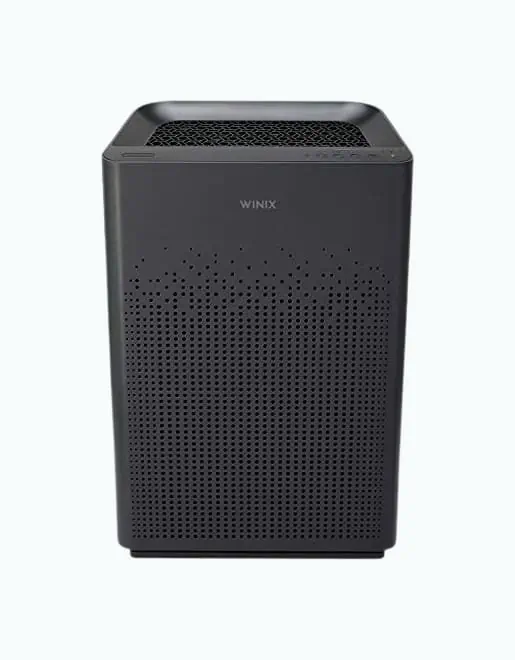
Winix AM80 True HEPA Air Purifier
Best Air Purifier for Baby Nurseries
Babies are more susceptible to illness as they’re still developing a fully functional immune system. This air purifier may help prevent your baby from getting sick. We love its large room coverage and odor-removing filter.
The Winix air purifier also has a true HEPA filter, which captures 99.97 percent of airborne toxins. These include dust, pollen, pet dander, volatile organic compounds (VOCs), and other particles as small as 0.3 microns.
It also has a washable pre-filter and activated carbon filter, eliminating odors. Moreover, it safely uses PlasmaWave technology to break down pollutants and allergens. And, it does all these without emitting harmful ozone.
The device has four fan speeds. Its air quality sensor will automatically regulate the quality of the air and adjust its function accordingly. It can cover large rooms of up to 360 square feet.
Pros
- Works silently; will not disturb your baby on low or medium mode.
- Can tackle spaces of up to 360 square feet.
- Air quality sensor analyzes air quality and automatically adjusts the fan’s speed.
- Filter replacement indicator lets you know when it’s time to change the filters.
- Four-stage purification system including a carbon filter and a true HEPA filter.
Cons
- UPS is recommended to protect the motor and fan.
- The HEPA filter isn’t washable, and replacements are expensive.
Product Specs
| Type of Filter | Mesh pre-filter, True HEPA filter, activated carbon filter, and PlasmaWave |
| Energy Star Rating | Yes |
| Remote Control | Not specified |
| Air Quality Sensor | Yes |
First-Hand Impression
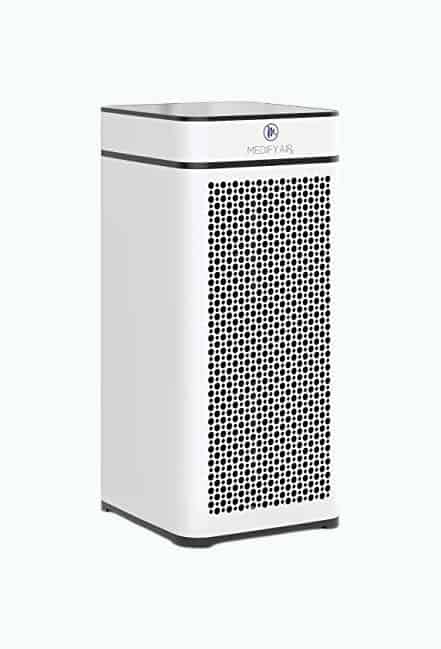
Medify MA-40 Air Purifier Medical-Grade HEPA Filter
Best Air Purifier for Pets
Having pets (especially ones that live indoors) affects your living environment. Animals shed fur, produce odors, and can leave traces of themselves in the air you breathe.
This air purifier is suitable for pet owners. It freshens the air in your living space by removing airborne particles and pet hair. For one, it uses four levels of filtration system to eliminate pet dander and odors.
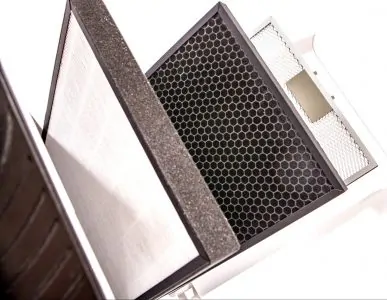
Its filtration system consists of a permanent pre-filter, a medical-grade HEPA filter, an odor-reducing carbon filter, and an optional anion generator. For allergy sufferers, its medical-grade HEPA filter helps tackle those niggling pet-induced sniffles.
The company offers a lifetime warranty as long as the filters are replaced with a legitimate Medify air filter every 2500 hours of usage.
Pros
- Carbon filter reduces odors which is necessary for pet homes.
- Tall and slender, so it can fit in various tight spaces.
- Great for allergy sufferers due to the medical-grade HEPA filter.
- Lifetime warranty as long as you replace filters every 2500 hours.
- Child lock prevents kids from changing settings.
- Tackles rooms up to 1,600 square feet at a CADR rating of 330.
Cons
- When on high speed, the fan noise is loud.
- This unit doesn’t have an air quality sensor despite being advertised as including one.
Product Specs
| Type of Filter | Medical-grade HEPA filter, pre-filter, carbon filter, and optional anion generator |
| Energy Star Rating | Yes |
| Remote Control | No |
| Air Quality Sensor | No |
User Experience
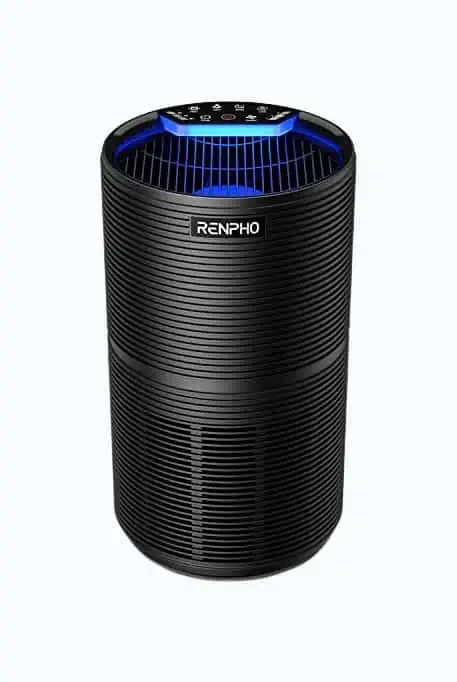
Renpho Air Purifier
Best Air Purifier for Mold
Mold can be harmful to your health if left unchecked. It’s essential to ensure that the air you breathe is free of mold.
This powerful air purifier uses a five-stage filtration process to tackle mold. Its phases include a pre-filter, intercept coating, true HEPA filter, carbon, and net filter.
This air purifier traps airborne pollutants such as dust, pollen, mold spores, pet dander, and smoke.
On the other hand, the HEPA filter reduces unwanted odors in your living space, such as smoke and cooking fumes.
The air purifier is designed to cover large rooms of up to 480 square feet. It possesses an air quality sensor that adjusts the fan speed depending on the particles in the air.
Finally, it has a child-lock, which ensures that the settings are unaffected by curious children.
Pros
- Filter replacement indicator flashes red when it’s time to replace the filter.
- Quiet operation as low as 26 decibels which won’t interrupt sleep.
- Child-safety mode locks the unit, so kids can’t change settings.
- 5-stage 360-degree filtration, including true HEPA filter and carbon filter.
- The unit changes the air up to five times an hour.
- Captures various particles, including pollen, smoke, dust, cooking odors, and more.
Cons
- Produces a relatively loud noise when adjusted to the highest setting (53db).
- It’s hard to find replacement filters.
- After a few months, it starts to make a whining noise.
Product Specs
| Type of Filter | Five-stage filtration: pre-filter, intercept coating, true HEPA filter, carbon filter, net filter |
| Energy Star Rating | No |
| Remote Control | No |
| Air Quality Sensor | Yes |
Personal Perspective
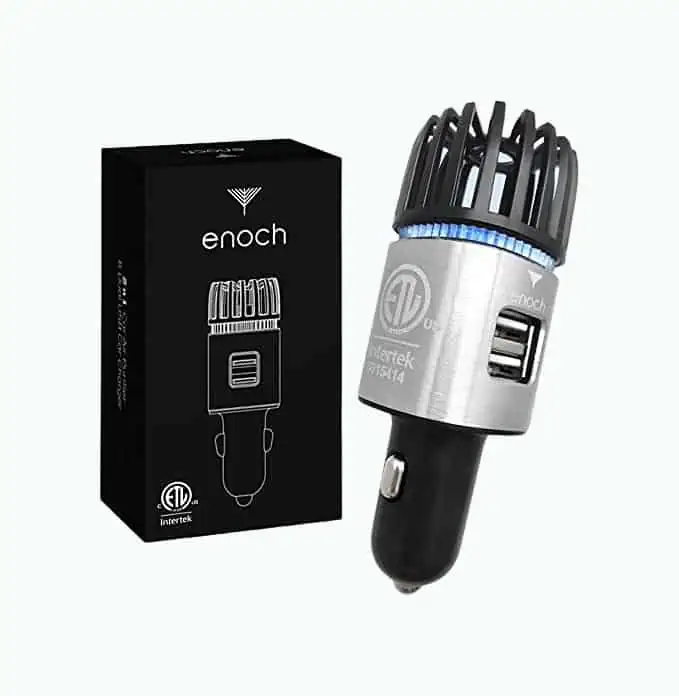
Enoch Car Air Purifier
Best Car Air Purifier
It’s important to purify the air in your car, as well as your home. This car air purifier emits negative ions, which remove lingering odors.
The Enoch purifier can release 5.6 million negative ions per cubic centimeter. The negative ions neutralize pollutants, such as benzene and formaldehyde, which are toxic after long-term inhalation. These ions also eliminate airborne particles of bacteria, dust, pollen, and smoke.
This car air purifier releases a light ozone scent, similar to that of rain. Ozone is effective at deodorizing over extended periods. However, it can also be dangerous to health (1).
This handy gadget can charge your phone, making it a perfect companion on long road trips. It also has a blue LED indicator, allowing you to locate it in the dark.
Pros
- USB car charging port charges two devices at once.
- Neutralizes the air and airborne contaminants in your car.
- Eliminates odors, dust particles, cigarette smoke, and more.
- Works quickly due to the 5.6 million negative ions per cubic meter.
Cons
- Emits ozone which can be dangerous.
- After the particles fall to the floor or dashboard, you need to vacuum or dust.
- Customers noticed a high-pitched noise from the purifier.
Product Specs
| Type of Filter | N/A — Ionic Air Purifier |
| Energy Star Rating | No |
| Remote Control | No |
| Air Quality Sensor | No |
Community Feedback
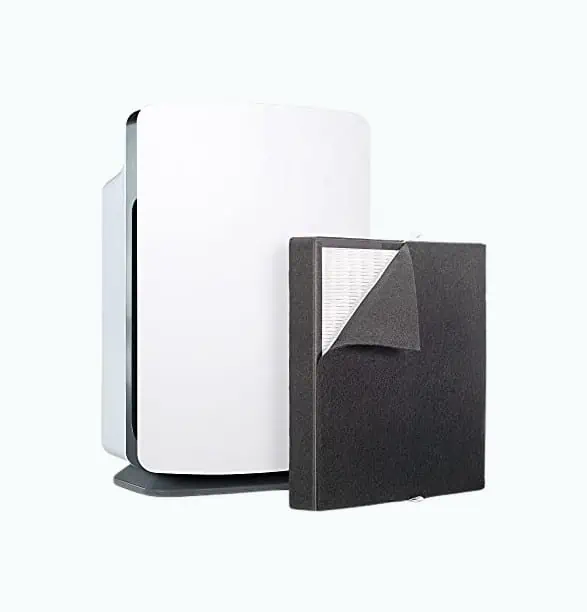
Alen BreatheSmart Classic Air Purifier
Best Whole House Air Purifier
To clean the air in your entire house, you need a powerful air purifier. The Alen BreatheSmart Classic air purifier is one. This device can clean the air in spaces of up to 1,100 square feet.
The Alen BreatheSmart uses a HEPA filter to alleviate allergy symptoms. It catches airborne particles of dust, pollen, and pet dander throughout your entire house.
It is designed to improve indoor air quality and tackles airborne irritants and larger particles, such as hair. Its modern design and various colors make it a stylish option that won’t clash with your interior decor.
Pros
- Quiet operation at 32.4 decibels, or 48.7 max.
- Air quality sensor analyzes air and adjusts fan speed automatically.
- Filter life indicator lets you know when to change the filter.
- Stylish, sleek design which looks beautiful in most homes.
- Works for the whole house up to 1100 square feet coverage.
- Unique HEPA filter eases allergy systems and catches small particles.
Cons
- Very expensive, so not great for those on a budget.
- Strange chemical smell during the first few uses.
- Some customers noticed a grinding or squeaking noise.
Product Specs
| Type of Filter | HEPA-Pure filter |
| Energy Star Rating | Yes |
| Remote Control | No — control panel |
| Air Quality Sensor | Yes |
First-Hand Impression
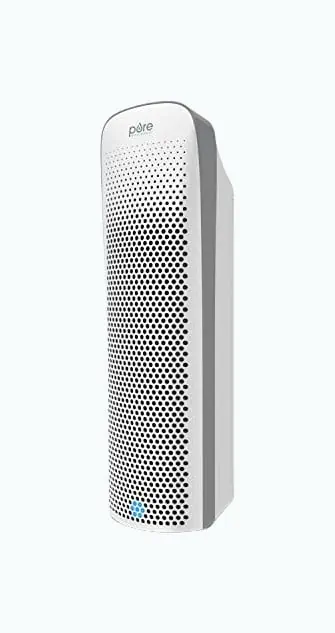
Pure Enrichment PureZone Elite 4-in-1 Air Purifier
Best Ionic Air Purifier
Ionization effectively fights air pollutants. An ionic air purifier in your home can help reduce illnesses, which is ideal if you’re prone to getting sick.
This ionic air purifier comes with a four-stage filtration process, UV light, and an air ionizer. It helps to create an allergen-free living space by removing airborne pollutants, bacteria, and viruses.
Its activated carbon removes odors and impurities. On the other hand, the true medical-grade HEPA filter eliminates dust, dander, smoke, and pollen.
Meanwhile, the photocatalyst and UV-C light destroy bacterial pathogens. Finally, the ionizer traps allergens by binding to positively charged airborne particles, such as dust, causing them to become heavy and drop out of the air.
Pros
- Three automatic timer settings help conserve energy.
- Tackles odors, freshening up the air in your home.
- Kills bacteria and viruses, as well as germs and fungi.
- UV sterilizing function destroys illness-causing microorganisms.
- Lightweight at 9.3 pounds, so you can move it from room to room.
- Smart technology true HEPA filter only needs replacing twice a year.
Cons
- Only covers an area of 190 square feet.
- The noise level is quite loud and not suitable for nighttime.
- It’s hard to find replacement filters, and they are expensive.
Product Specs
| Type of Filter | Four-stage filtration process |
| Energy Star Rating | No |
| Remote Control | No |
| Air Quality Sensor | Yes |
User Experience
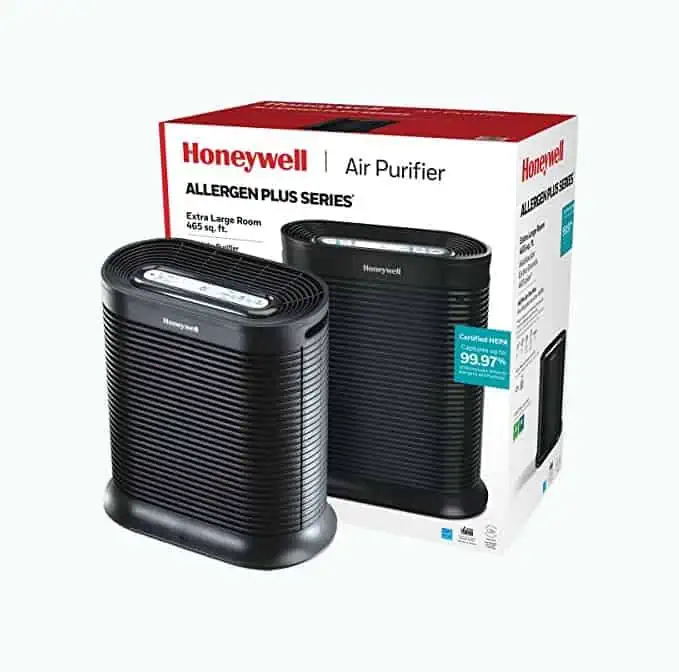
Honeywell HPA300
Best Air Purifier for Allergies
Allergies can be tricky to manage. So it may be handy to invest in an air purifier that can limit the impact of your allergies by removing allergens from the air you breathe. Allergists have recommended this air purifier.
The Honeywell HPA300 air purifier uses an odor-reducing pre-filter and true HEPA filter to trap various types and sizes of allergens in the air — as small as 0.3 microns.
It consists of three air cleaning levels. These can remove pet dander, pollen, mold, dust, and smoke particles.
The device is capable of catching some germs and neutralizing odors. It’s designed to improve indoor air quality, as it filters and circulates the air in your living space up to five times per hour.
Pros
- Includes filter replacement reminder light.
- Can handle large spaces of up to 465 square feet.
- Adheres to guidelines set out by the Association of Home Appliance Manufacturers (AHAM) and provides a strong CADR performance.
- It cleans air quickly five times an hour.
- It can remove dust, hair, pollen, odors, gases, and more.
- Turbo Clean setting quickly cleans polluted air.
Cons
- The replacement filters are pricey.
- This unit doesn’t feature an air quality sensor.
- The unit is loud and sometimes makes a high-pitched noise.
Product Specs
| Type of Filter | Activated carbon pre-filter and true HEPA filter |
| Energy Star Rating | No |
| Remote Control | No |
| Air Quality Sensor | No |
Personal Perspective
| Product | Best | Type of Filter | Energy Star Rating | Remote Control | Air Quality Sensor |
|---|---|---|---|---|---|
| Whirlpool Whispure | Air Purifier for Dust | True HEPA filter and carbon filter | Yes | No | Yes |
| Elechomes Air Purifier | Air Purifier for Smoke | 3-stage filtration: pre,HEPA,carbon | No | No | No |
| Jinpus Air Purifier | Budget Air Purifier | True HEPA filter, activated carbon | No | No | No |
| Winix AM80 | For Baby Nurseries | Mesh pre-filter, True HEPA, activated carbon, PlasmaWave | Yes | N/A | Yes |
| Medify MA-40 Medical-Grade | For Pets | Medical-grade HEPA filter, pre-filter, carbon filter, & optional anion generator | Yes | No | No |
| Renpho Air Purifier | Air Purifier for Mold | Five-stage filtration: pre-filter, intercept coating, true HEPA filter, carbon filter, net filter | No | No | Yes |
| Enoch Car Air Purifier | Car Air Purifier | N/A – Ionic Air Purifier | No | No | No |
| Alen BreatheSmart Classic | Whole House Air Purifier | HEPA-Pure filter | Yes | No | Yes |
| Pure Enrichment Elite | Ionic Air Purifier | Four-stage filtration process | No | No | Yes |
| Honeywell HPA300 | For Allergies | Activated carbon pre-filter, true HEPA filter | No | No | No |
Why Buy an Air Purifier? (Buying Guide)
Is it worth spending money on something that will just sit quietly in the corner of your room?
Air purifiers are good for your health. They remove airborne particles of dust and mites, mold, allergens, and smoke from your indoor air. Besides these, they also eliminate other nasty microscopic pieces you might be unknowingly inhaling (2).
For instance, an air purifier may be a good investment if you or someone in your household is prone to getting sick. These can trap bacteria and viruses that cause illness.
Types of Air Purifiers
There are various types of air purifiers to choose from:
Ultraviolet Air Purifiers
UV air purifiers remove harmful viruses, bacteria, and pathogens from the air using ultraviolet light (3). They can remove 99 percent of microorganisms present in the air, such as mold spores.
This type of air purifier is inspired by the medical use of UV light in hospitals to disinfect laboratories and patient rooms.
Pros
- Kill germs, viruses, bacteria, and mold, which cause illness.
- Less maintenance than filtered purifiers.
- Use less electricity compared to other purifying systems.
Cons
- Bulbs must be replaced frequently, depending on the frequency of use.
- Dust can decrease the efficiency of bulbs.
HEPA Air Purifiers
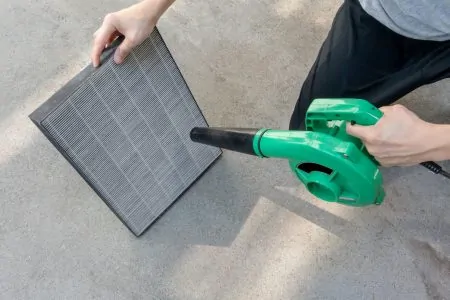
HEPA (high-efficiency particulate air) air purifiers have a dense HEPA filter.
It traps up to 99.99 percent of particles (over 0.3 microns) in the air.
These include pollen, dust, and mold.
Pros
- Effective in removing almost all air pollutants.
- Captures both small and large particles.
- Good for people who suffer from asthma or allergies.
Cons
- HEPA air filters must be replaced monthly.
- Ineffective at killing viruses and bacteria.
- Incapable of neutralizing odors or removing VOCs.
Activated Carbon Air Purifiers
Activated carbon air purifiers are good at removing smoke, odors, and fumes from the air by trapping gas molecules in a bed of activated carbon or charcoal (4). They are designed to tackle volatile organic compounds (VOCs). Some will also work alongside HEPA filters that will remove other particles from the air.
Pros
- Effectively remove odors, smoke, and other chemicals in the air.
- Particularly useful for those sensitive to smells.
- A great power combo when combined with a HEPA filter.
Cons
- Ineffective for the elimination of pollen, dust, and mold.
Ionic Air Purifiers
Ionic air purifiers use ionization to combat contaminants in the air. They release negative ions that attach to airborne particles through electrostatic attraction. This process makes the particles heavy, so they drop out of the air.
Pros
- Very quiet since they function without a motor.
- Able to remove anything (except odors) from the air.
- There aren’t any filters you need to clean or replace.
Cons
- Generate ozone, which is potentially harmful.
- You must clean more often to remove dust particles that have fallen from the air.
Electronic Air Cleaners
Electronic air cleaners are equipped with HEPA filters and positively charged ions. These work with your air conditioner to remove almost all allergens in the air.
Electronic cleaners ensure that the air that travels through your home’s HVAC system passes through filters, which trap larger particles. The smaller particles are then caught by electrically charged filters, which prevent them from circulating in your home.
Pros
- Effectively remove dust, bacteria, viruses, fumes, and smoke from the air.
- Able to catch the smallest of particles.
- Straightforward cleaning process, as collector cells can be hand-washed or placed in your dishwasher.
Cons
- Require professional installation.
- Collector cells need to be cleaned monthly.
- Filters must be replaced monthly.
Central Air Cleaners
Central air purifiers can be connected to your central heating or cooling system to purify your air circulation.
They work within your home’s air ducts to remove particles, such as dust and pollen, smaller than one micron.
Pros
- Very quiet, which won’t interrupt relaxing evenings or sleep.
- Efficient at removing small particles such as pollen and dust.
- Limits the impact of allergies and viruses on your health.
- Extend your air conditioner’s lifespan by filtering out particles that affect its functionality.
Cons
- Require professional installation.
- Costly, ranging into the thousands.
Air-To-Air Exchangers
Air-to-air exchangers provide ventilation throughout your home by replacing stale air with fresh air. They use energy recovery ventilators (5). This means that, for instance, in cold weather, the air-to-air exchanger will trap heat in the air. Whereas, during warmer seasons, the air-to-air exchanger will cool the clean outside air entering your home.
Pros
- Regulate temperature and humidity within the home.
- Reduce the presence of mold in the air, which can prevent illness.
- Improves the air quality inside a building or home.
- Flushes out odors and indoor pollutants.
Cons
- Expensive to install and run since it uses electricity often.
- Maintenance is ongoing, time-consuming, and expensive.
Choosing Your Air Purifier
Here’s a list of the prime features to look out for when choosing an effective, high-quality air purifier that’s right for you:

True HEPA Filter
These filters catch 99.97 percent of the smallest particles in the air, including dust, pollen, and pet dander (6).

Reusable Pre-filters
Reusable pre-filters trap large particles in the air and prolong the primary filter’s lifespan in your air purifier. You can also wash them, allowing you to save money on replacement filters.

UV Light
UV light eliminates bacteria, viruses, and germs that cause illness, helping to create a clean and sterile living space.

Filter Change Indicator
This indicator means you don’t have to guess when the filter in your air purifier needs to be changed; the indicator will tell you.

Air Quality Sensor
This allows for a ‘hands-free’ system, as it regulates the air quality by identifying toxins. Then it automatically adjusts the fan speed to eliminate them quickly and restores its regular operation.
Energy Star Label
This label distinguishes air purifiers that are environmentally friendly, have low operating costs, and greater efficiency levels.
Remote Control
This provides an element of convenience. Air purifiers with a remote control feature allow you to control the settings from anywhere in the room. You no longer have to fiddle around with the buttons on the purifier itself.
The Best Air Purifier Brands
Below is a non-exhaustive list (in no particular order) of some of the brands known for producing good quality, effective air purifiers.

Rabbit Air
This brand is one of the fastest-growing in the U.S. and produces effective and innovative air purifiers with a modern design. Their products come armed with a five-year warranty (7).
Alen Air
This brand is highly rated and only produces air purifiers. Naturally, they possess specialist expert knowledge on high-quality air purification and apply advanced technology to their products. No wonder their air cleaners come with a lifetime guarantee (8).
IQAir
This brand manufactures high-quality air cleaning products. IQAir is dedicated to improving the quality of life of its consumers by helping them breathe clean and healthy air. They also do their bit for the community by helping people adversely affected by air pollution.
Blueair
This brand uses technological innovation to supply air purifiers and filters. Its products are environmentally friendly, energy-efficient, and silent while providing optimal air-cleaning power.

Hamilton Beach
This brand is a leading distributor of home and kitchen appliances. Their range includes blenders, toasters, slow cookers, air purifiers, and clothing irons. Hamilton Beach products are designed to enable convenience.

Honeywell
This brand produces air purifiers, humidifiers, heating and cooling systems (thermostats), and home security devices. Honeywell designs its products with energy efficiency and sustainability in mind. Their smart home products use technological advancements to enhance convenience.
Levoit
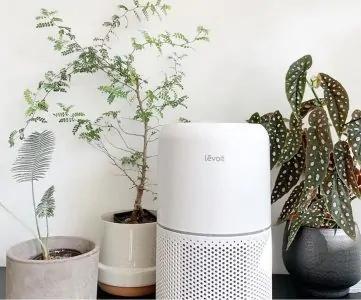
This brand focuses on improving health and well-being through its stylish and functional products. Their range includes air purifiers, humidifiers, and salt lamps. Levoit air purifiers boast a 40 percent higher efficiency rate than other air purifiers. This results from its cylindrical 360-degree filter design with a larger surface area and the ability to take in air from all angles.

Coway
This brand specializes in the global supply of innovative home wellness appliances. They pride themselves specifically on looking after the world’s air and water.
GermGuardian
GermGuardian offers a wide range of small appliances to facilitate healthier home environments. Their products include air purifiers, heating and cooling appliances, humidifiers, and oil diffusers.
Austin Air
This brand introduced medical-grade HEPA air purification to residential consumers. They specialize in producing effective air purifiers targeted at people who have asthma. Their purifiers are designed to remove contaminants released into the air during wildfires (9).
Dyson
Known as a market leader, Dyson designs and manufactures a range of technologically advanced homeware, office, and hair styling products. Their range includes vacuum cleaners, hand dryers, air purifiers, fans, heaters, and hair dryers.

Holmes
This brand produces home appliances, such as air purifiers, humidifiers, and fans. Their functional and stylish products are designed to increase comfort. Holmes air purifiers can accommodate any budget.

Winix
Winix produces air and water purifiers and humidifiers. Their air cleaners eliminate 99.97 percent of airborne particles through PlasmaWave technology and true HEPA filtration systems. Other bonuses are that their products boast convenience to use through your smartphone and quiet operation.
FAQs

How Do I Detect an Indoor Air Quality Problem?
Pay close attention to your allergies. Note the appearance of new symptoms, such as coughing or sneezing. If you frequently suffer from bronchitis or pneumonia, it may result from pollutants contaminating your indoor air.
Consider your external environment. Is there construction happening near you? Or has there been a fire nearby? Residual smoke and dust can contaminate your indoor air quality (10).

How Can You Improve Indoor Air Quality?
Besides investing in an air purifier, there are several things you can do to improve the air quality in your home.
- Change your air conditioning filter regularly, especially if you live in a polluted area.
- Use cooking vents in your kitchen to limit fumes and odors.
- Clean as often as possible and vacuum your rugs and carpets regularly to limit dust accumulation around your furniture.
- Allow fresh air in whenever possible (11).
What Are CADR Ratings?
CADR stands for Clean Air Delivery Rate. The higher the CADR rating of an air purifier in cubic feet per minute, the more air it cleans. Different particle sizes (smoke, pollen, and dust) should be given their own rating.
You can use CADR ratings to compare the performance of different air purifiers. It indicates how fast an air purifier can clean the air in a particular room.
Do Larger Air Purifiers Have Better CADR Ratings?
The size of the air purifier may not always determine its CADR rating. High CADR ratings come from an air purifier’s high fan power, filter surface area, and ability to cover the air in an ample space.

Where Should I Place My Air Purifier?
Small air purifiers are handy as they can be moved from room to room as needed. When deciding where to place your air purifier, choose the room(s) you spend the most time in. It may also be wise to choose the room(s) you think are most affected by air pollutants.
The ideal location for an air purifier is in the middle of a room, with no objects blocking it and preventing the air from reaching it. However, this may cause a tripping hazard. So try to aim for at least 3 feet of space between the device and a wall or piece of furniture (12).

What is the Best Air Purifier at a Reasonable Price?
The best air purifier at a reasonable price is the Coway Airmega AP. It costs almost half the price of other models, and yet it has four-stage filtration, built-in smart features, and sensors to take away the guesswork.