If your clothes are consistently coming out of the washing machine smelling foul, then it’s probably a problem with the machine over anything else.
In our home, we love keeping our appliances clean. It’s not a hard job, and it makes sure that the clothes are always as clean as possible.
We’ve researched a few different reasons why your washing machine could be smelling and how to get rid of these smells. So next time you go to a load of laundry, the only thing you will be smelling is the lovely scent of your chosen detergent.
Key Takeaways
- Washing machine smells can be caused by bacteria, mildew, mold, lint, soap, or gas leaks.
- To eliminate odors, clean the machine with a vinegar and water solution, clean pipes, and clear the detergent dispenser.
- Deep clean the drum once a month using distilled white vinegar or bleach on the highest water temperature available.
- Prevent future smells by leaving the door open to dry, changing detergents, and cleaning the filter regularly.
Why Your Washing Machine Smells
Before you get rid of the smell, you need to locate where it’s coming from and what’s causing it. Here are a few main reasons why washing machines smell bad.
Washing Machine Smells Like Sewage
If your washing machine smells like sewage, it’s important to tackle this right away as the sewer gases are potentially hazardous.
It could simply be that the machine smells like sewage, but isn’t necessarily caused by sewage. However, if it still smells bad after being cleaned, then it is most likely coming from the sewer.
The p-trap may be trapping sewer gases from underground sewer pipes which are now coming into your washing machine.
Rotten Egg Smell
A rotten egg smell is either caused by bacteria growth due to dirt, mildew, mold, lint, or soap left in the machine. Or it’s caused by a gas leak, which comes up as an eggy or sulfur-like smell.
Mildew/Damp Smell
Mildew and damp smells are caused by a heat and water buildup in the machine that’s never aired or cleaned out. If water sits in the machine, in the gaskets, or in other crevices, it can lead to these nasty smells. There may even be a wet sock or something stuck in the rubber gasket which is leading to the terrible odor.
Washing Machine Smells Worse After Cleaning
But what if you’ve cleaned your machine, and it isn’t any better? Or maybe it even smells worse?
This could be a sign that cleaning it actually worked. The cleaning solution you used, or even the hot water, may have broken up some hidden gunk that didn’t get completely washed away and now it’s sitting in your machine.
Another reason could be a blockage in the standpipe.
Washing Machine Smells Like Burning
It’s hard to pinpoint a burning smell down to one thing without servicing the machine. It’s most likely down to the malfunctioning of one of the internal parts. It could be a motor, pump, drive couplings, seals, a drive belt, or other electrical parts.
It could also be that the burning smell is coming from the plug or socket, rather than the machine.
Word Of Warning
How to Get Rid of Washing Machine Smells
There’s nothing more annoying than a stinky washing machine ruining your laundry routine. Thankfully, there are some easy and effective fixes to getting rid of that odor once and for all.
Vinegar and Water Solution
This is the solution we use to clean our washing machine and it works a treat.
- Mix together a 1:1 solution of distilled white vinegar and water in a spray bottle. Add about 10 drops of your favorite essential oil if you want.
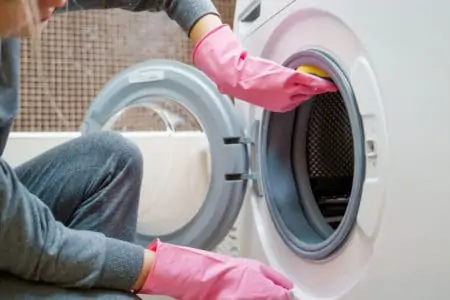
- Spray the entire inside of the washing machine. Don’t forget all around and inside the folds of the rubber gasket.
- Take a damp cloth and scrub the inside of the machine well.
- Do the same on the outside of the machine and the door. Avoid electrical buttons.
This can help to get rid of all sorts of bad smells, even from mildew, dampness, and sewage-like or rotten egg-type smells.
Clean Out the Pipes
Clogged or dirty pipes can lead to bad smells, especially sewage-like smells. There are a few pipes that you should work on cleaning out.
Firstly, you should try cleaning out the p-trap. Simply pour a gallon of water down this pipe which should clear it and remove the smells. If the smell remains, call a plumber.
Another pipe to clear out is the drain pipe. For this, you should call a plumber who will use a sewer machine to clear this.
Lastly, you may need to clean out the clogged vent pipe. Follow these steps:
- Call a professional to do this. However, if you’re trained in this kind of work, safely get yourself on the roof and shine a flashlight down the vent pipe.
- Pull out anything causing an obvious blockage such as a bird’s nest, leaves, or other debris.
- If it’s too difficult to pull out by hand, use a long-handled tool to remove it.
When In Doubt
Clean the Detergent Dispenser
The detergent dispenser rarely dries out fully, making it the perfect place for mold and mildew to grow. Here’s how to clean it out:
- Remove the drawer if possible.
- Fill up a basin of hot soapy water and let the drawer soak in there for about an hour.
- Use an old toothbrush to scrub away loosened dirt and debris.
- Use a pipe cleaner to dig out lodged dirt inside the pipes behind where the drawer goes in the machine. This may be gross, but it will help!
- Dry the drawer thoroughly.
- Before you put it back in, use a surface cleaner or your vinegar spray from step one to clean out the crevices where the drawer goes.
- Replace the drawer.
After each cycle, it’s a good idea to let the detergent drawer air out. Leave it open until fully dry.
Deep Clean the Drum
This may be the most important step to removing bad odors. Deep cleaning the drum can kill bacteria, mold, mildew and just remove other nasty lingering smells.
- Check your manufacturer’s instructions for their advice on how to clean the drum. Some may recommend a certain cleaning solution for the machine.
- Pour one cup of distilled white vinegar or bleach into the detergent drawer, or directly to the drum for top-loading models.
- Set the machine to a long hot cycle. Use the highest water temperature available.
- Let the cycle run fully.
- Open the door and let the machine air dry.
Do this at least once a month.
It Still Smells
Change Detergents
Did you know that it could be your detergent that’s actually causing the bad smells? Who would have thought! Shouldn’t detergent be cleaning anything it comes in contact with?
Not necessarily.
Some heavy-duty detergents are hard to rinse away, especially if you use too much. It can cling to the insides of your machine and over time, this leads to a bad smell. Likewise, if you have a high-efficiency washer and aren’t using HE detergents, this can lead to bad smells.
Switch to a detergent that is HE-friendly if you have an HE washer. You may also want to consider a laundry detergent that doesn’t suds up as much. More suds often mean more scum is left behind.
You could also change the type of detergent you are using, switching to powder detergent or pods which are less likely to leave behind a film like a liquid detergent will.
Ditch The Fabric Softener
Leave the Door Open
It may not be the most aesthetic choice, but it’s the best one for minimizing and preventing odors. After a cycle, remove your clothes and leave the door open so moisture can escape and the drum can fully dry.
You should also dry the inside of the door after a cycle. Just use a dish towel to remove water droplets.
As an extra measure, run a fan in the room or use a dehumidifier in extreme cases.
Clean Your Filter
The filter, usually located at the front of your machine, should be emptied and cleaned monthly. Your user manual will depict exactly how to do this.
In general, you should remove the emergency drain tube, take the top off and let the water drain into a tub.
If you have a larger opening, lay down a towel below this. Remove the plug and let the excess water drain out. You may find gunk, fluff, and other debris over this filter. Clean this in the sink with hot soapy water before replacing it.
FAQs About Washing Machine Smells

How Do I Clean My Washing Machine Drain Pipe?
The best thing to do is call a plumber to do this for you. Your manufacturer may also be able to send out a professional to do this. This may even be covered by your warranty.

How Do I Get The Smell Of Diesel Out of My Washing Machine?
If you smell gas, you should be calling a professional immediately. Once they have looked at the machine, fixed any problems, and approved it for use again, you may still be stuck with the lingering odors. Here’s how to remove them:
- Place a few old towels or t-shirts into the machine. This will mimic a normal cycle and help agitate the drum so it gets clean.
- Add two cups of white vinegar to the detergent drawer or directly to the drum.
- Run a long hot wash with an extra rinse cycle.
- After the cycle is finished, remove the towels and t-shirts and check if the odor in the machine is gone.
- If it remains, repeat the process. You may want to add a suitable detergent alongside the vinegar. Just make sure it doesn’t have any ingredients that will react with vinegar.
- Let the machine air dry thoroughly to help waft any odors away.
- If the smell still remains, we recommend contacting the manufacturer to see if they can help. They may want to send somebody out again to check if the machine is definitely safe to use.

How Often Should You Drain Your Washing Machine?
You should empty the water from the emergency drain tube at the front of the machine at least once a month.

Does Calgon Stop a Washing Machine From Smelling?
Calgon does stop a washing machine from smelling because it reduces the need for heavy detergents, minimizing soap scum buildup. It also protects the internal washing machine components.

Where Do You Put Baking Soda In a Washing Machine?
Knowing where to put baking soda in a washing machine is crucial if you want the best results. Place one cup of baking soda into the drum before adding your laundry.

Can You Use Dishwasher Tablets to Clean a Washing Machine?
You can use dishwasher tablets to clean a washing machine. However, check with your manufacturer before doing so, because they may cause lasting damage.
Clean Machine, Clean Clothes
Many people don’t realize they need to clean their washing machines. After all, it is subject to warm soapy water on a daily basis. But in reality, it’s also subject to a lot of dirt, bacteria, moisture build-up, and other gunk.
This leads to bad smells. With our seven tips, you’ll be able to get rid of all kinds of smells. In return, your clothes will be fresher than ever.
When in doubt, contact a professional or the manufacturer of your machine. They will be able to fix intense or severe problems.