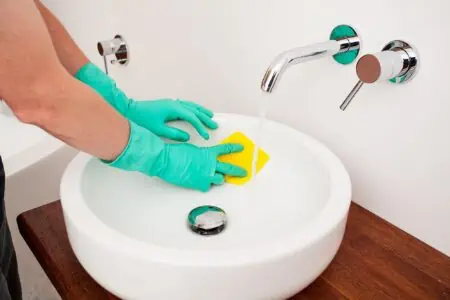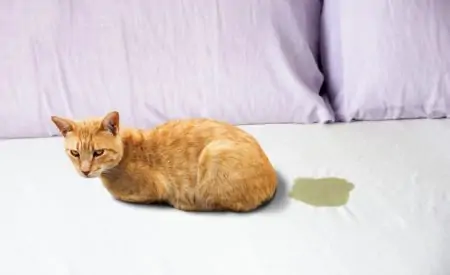
As much as we love our furry little friends, they can stink up the house if we’re not careful. When it comes to cats, they do their business in the house as well, which can cause odors in the air.
We’ll show you the best way to get rid of cat pee smell in your home. We’ll walk across multiple surfaces, including hardwood flooring, carpet, mattresses, and more.
If you’re keen to have a fresh, odor-free home while still hosting a bunch of cat buddies, then keep reading.
Key Takeaways
- Remove cat pee smell from various surfaces using vinegar, baking soda, or enzyme cleaners.
- For carpets, use enzyme cleaner, a towel, and a heavy object to absorb the liquid and remove odors.
- To clean upholstery and cushions, use hydrogen peroxide or vinegar to remove stains and smells.
- Eliminate cat pee smell in the air with baking soda bowls and a vinegar and water spray.
How to Get Rid of Cat Pee Smell
Here are step-by-step guides for getting cat pee odors out of a variety of different surfaces.
Hardwood Flooring
Here’s our top method for removing cat pee odors from hardwood floors. Awesome bonus: this also works for other pet pee smells.
- Mix ⅓ cup of distilled white vinegar, ¼ cup of baking soda, and a splash of dish soap in a measuring cup.
- Pour it into a spray bottle and screw the lid tight.
- Spray the stinky spots and let it sit for 15 minutes.
- Wipe with a clean cloth.
- Sprinkle baking soda over the affected area.
- Leave it overnight.
- In the morning, vacuum up the baking soda.
- Repeat if necessary, but by now, the odor should be gone.
You can also use designated pet odor remover products, but this is a green eco-friendly, and cheap alternative that often works just as well.
For Extreme Odors
If the odors are extreme and no products are working, you may need to sand back the floors to eliminate the smells.
Carpets
Pet pee and carpets are an unfortunate mix. Not only can the odors linger around forever, but the pee can also cause stains. This method is for removing odors, so keep that in mind. However, it should also help ensure that a stain isn’t left behind if you deal with it quickly.
All you need for this method is an enzyme cleaner, towels, and a heavy object.
- Read the instructions on your enzyme cleaner. You may need to dilute it. Also, check how long it should stay on the carpet.
- Test the cleaner in an inconspicuous spot. If no damage, continue.
- Spray the enzyme cleaner on the affected area.
- Leave for the recommended amount of time.
- Place a towel over the spot to absorb the cleaner.
- Cover the towel with a heavy object, like a stack of books.
- Leave overnight for the towel to absorb the liquid.
- In the morning, remove the books and towels. Wash the towels as normal.
The enzyme cleaner should remove the odor because the compounds break down bad smells and stains (1).
Caution
Always check the enzyme cleaner is safe for your carpet type. If you have wool carpets, for instance, it may not be suitable.
Upholstery and Cushions
Sometimes cats are little pests and do their business on couches or upholstery, especially as kittens. Here’s how to remove the odors from these items with hydrogen peroxide. However, you can certainly use baking soda and vinegar, a pet cleaning product, or an enzymatic cleaner, too.
- Saturate the affected area with three percent hydrogen peroxide. Don’t worry if it bubbles up — this is normal.
- Scrub the area with an old or unused toothbrush.
- Let it sit for about 30 minutes before rinsing with cold water.
- Blot with a towel to absorb the liquid.
- Let the area dry.
- For cushions, if you can remove the cover, toss it in the wash. Wash as normal and add one cup of distilled white vinegar to the rinse cycle to kill odors.
Word Of Warning
This is best for light-colored couches since hydrogen peroxide can bleach fabrics. If you have a darker or colored couch, try an enzymatic cleaner or vinegar.
Clothes and Other Linen
It can be super annoying if cat pee has gotten into your clothes. But the good news is, this is really easy to clean!
- Put the garments in the washing machine.
- Add your regular detergent and wash at the highest temperature possible.
- During the rinse cycle, add one cup of distilled white vinegar. This will help to kill odors.
- Put the clothes and linen in the dryer or hang them outside to dry.
- If the odor remains, repeat this process.
Mattresses
One of the most annoying places to remove cat pee from is your mattress. This method will help you to remove the stains and odors. Keep in mind that this works best when dealt with right away!
- Strip your bedding and wash, following the instructions above.
- Blot up any cat pee from the mattress using an absorbent towel. Make sure you wash this super well afterward!
- If possible, get the mattress outside in an open workspace. Lay down the tarp beforehand, so you’re not laying the mattress on the dirty ground. If you can’t take the mattress outside, no worries.
- Mix a 1:1 solution of distilled white vinegar and water in a spray bottle. Add a few drops of laundry detergent. Shake to combine.
- Spray the affected area thoroughly with the cleaning solution.
- Let it soak for 15 minutes.
- Lay down some absorbent towels and a heavy item, such as books, to help absorb the liquid.
- Sprinkle baking soda generously over the affected area. This will absorb any residual odors.
- You can leave this for up to 10 hours. If you need to use the mattress again that night, you can leave it on for a shorter period. However, the longer it’s on,the more odors it will absorb.
- Vacuum the baking soda up.
- Once the mattress is fully dry (it will dry quicker outside), return your bedding and get back into bed!
How to Get Rid of Cat Pee Smell Naturally
Sometimes store-bought products for removing cat pee contain synthetic ingredients. If you’re all about the natural-product-life and going green, then you can absolutely remove cat pee odors naturally.
A water and distilled white vinegar solution is going to be your best friend. Once you’ve cleaned the area with that, sprinkle baking soda, let it sit for a few hours, then vacuum. This is the most effective natural DIY method we can recommend. Plus, you can use it on pretty much all surfaces!
How to Get Rid of Cat Pee Smell in the Air
What if the cat pee odors are just lingering throughout the house? How can we get rid of those? Easy!
- Make sure that the root of the cat pee smell has been dealt with. For instance, if they urinated somewhere in the house, on a surface, on clothes, or even in their litter box, ensure that it is clean before moving onto the next step.
- Pour one cup of baking soda into a bowl. If the odor is extreme, fill a few bowls with baking soda.
- Lay these bowls around the house and leave them there for a couple of days. The baking soda will absorb the odors.
- If the smell persists, get fresh baking soda and repeat.
- Meanwhile, mix a 1:1 solution of distilled white vinegar and water into a spray bottle. Add a few drops of essential oils. Make sure to use cat-safe ones!
- Spray the solution around the stinky rooms. This DIY air spray can kill odors and add a pleasant scent.
FAQs on Cat Urine Odor Removal

Why Does Cat Pee Smell So Bad?
There’s a chemical reason as to why cat urine stinks badly. When a cat pees, the bacteria break down quickly and emits a stinky odor (2). This is thanks to a particular amino acid called felinine. The enzymes break down this acid and produce three things: ammonia, carbon dioxide, and MMB, which all smell very bad.

Why Do Cats Urinate Outside of the Litter Box?
There are a few reasons your cat isn’t peeing in the litter box.
- Medical problem: It’s possible your cat can’t make it to the litter box in time. This can be caused by UTIs, inflammatory diseases, kidney diseases, hormonal problems, general aging, and more (3). If your cat is suddenly unable to make it to the litter box, then contact your vet for a health check-up.
- Behavior problem: Stress and anxiety can cause a cat to act differently and pee outside its designated spot. If you’ve changed your routine or the environment, they might also “rebel” and pee elsewhere in the house.
- They don’t like the litter tray: Some cats don’t like the litter tray. It may be uncomfortable for them to use or too high to climb into. Another issue is that the litter tray is in an inconvenient location. It’s a good idea to have a few throughout the house, so there’s always one accessible. Lastly, if the litter box is dirty, they may not want to pee in there.
- Marking territory: Cats, like dogs, also feel the need to mark their territory. To do this, they pee on objects, usually vertical ones.
- Repeated spot: If you haven’t cleaned up an old pee spot, then cats will likely return to that spot and pee there again (4). Make sure to clean up after your cat, so they don’t return to the same spot.

Why Do Cats Spray?
Cats spray by squirting urine backward onto a vertical surface (5). Both male and female cats can do this. They tend to do this as a territory marking behavior or when they have an urge to mate (6). If your cat hasn’t been spayed or neutered, then you can expect this behavior to emerge at some point.
However, cats also spray when there are other cats nearby — they can feel threatened. They might spray when they’re ill, stressed, or there is a new routine in the home. If you’re worried, contact your vet.

What is the Best Cat Urine Odor Remover?
If you’re looking for a specific product not already mentioned, we recommend checking out Nature’s Miracle Advanced Stain & Odor Eliminator. It uses an enzymatic formula to remove stains and odors from urine, vomit, and other messes. Not only does it remove odors, but it also leaves behind a refreshing scent.

Does Laundry Detergent Get Rid of Cat Pee?
Regular detergent isn’t ideal for removing cat pee odors unless it’s enzyme-based. You can certainly use laundry detergent, but we recommend using it in combination with other ingredients such as vinegar or baking soda.

What Smells Deter Cats From Peeing?
Firstly, clean up their pee, so they don’t repeat marks. Other smells that stop cats from peeing in the same place include (7):
- Citrus peel (such as lemon or orange).
- Coffee grounds.
- Pepper (but be careful, if it gets into the cats’ eyes, it can cause damage).
- Urine remover products that can prevent repeat marking.
If you’re unsure if you have thoroughly cleaned up cat pee, you can use a black light to check if all pee is gone from the area (8).