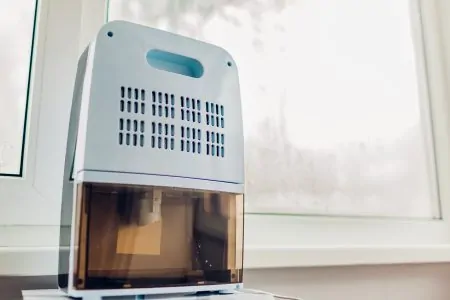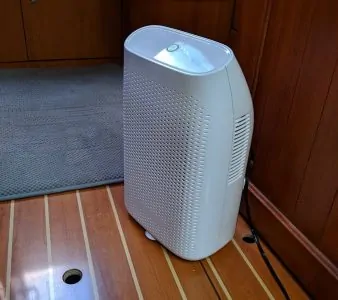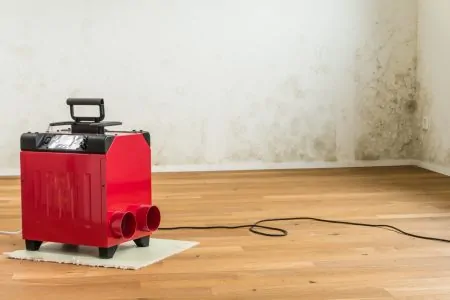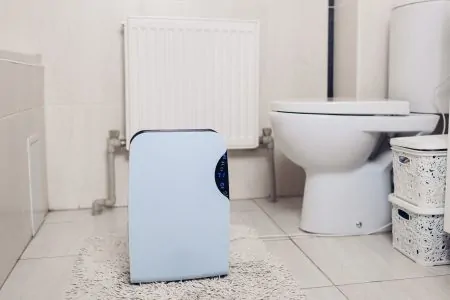
Buying a dehumidifier can seem overwhelming if you don’t know what to look for. With so many different brands and models vying for your attention, it’s no wonder many people get decision fatigue when shopping for a new one.
How big should it be? Do you need one for every room? What on earth is reservoir capacity?
We’ve put together an ultimate guide to help you find the best dehumidifier for your home. In conclusion, we also found 10 fantastic options that might be the right fit for your lifestyle.
- Lightweight & portable
- Quiet enough for bedrooms
- Auto-shutoff
- Quiet below 35 decibels
- Compact and portable
- Eco-friendly and energy-efficient
- Smart features
- Five-year warranty
- Commercial grade
- Portable with handles
- Easy maintainance
- Energy efficient
- Lightweight and portable
- Quiet enough for nighttime
- Efficiently removes 10 ounces daily
- Compact sizing
- Quiet enough for nighttime
- 16-ounce tank

- Quiet at 46 decibels
- Smart features
- Intelligent defrost
- Easy maintainance
- Auto-shutoff and restart
- Removes 100 pints daily
- Easy to use
- Includes auto shutoff
- Extra drainage
- Portable with four wheels
- Odor Remover
- Large 1.6 gallon capacity
Review Methodology: At Oh So Spotless, we conduct thorough research and analysis on the best dehumidifiers to provide you with reliable, hands-on assessments and evaluations from a user’s perspective. Our experienced professionals measure and compare key factors and criteria, such as performance, energy efficiency, noise level, and design choices, to determine which products stand out from their competitors. We rank and review dehumidifiers based on quantitative data and first-hand experience, ensuring you have the necessary information to make an informed decision. Trust us to deliver expert advice and evidence-based recommendations to help you choose the perfect dehumidifier for your needs.
The Best Dehumidifiers of 2024
We put the top-rated products to the test. Scouring reviews from real users and industry leaders and using research and experience from our team of experts, we’ve identified 10 of the best dehumidifiers on the market this year. Check them out.
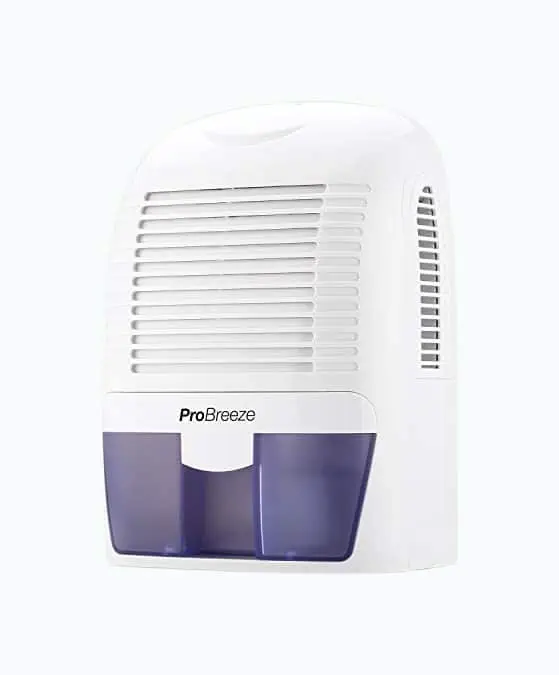
Pro Breeze 2200 Cubic Feet Mini Dehumidifier
Best Dehumidifier for RVs
Thanks to its lightweight, compact design and incredible efficiency, we love this dehumidifier for hitting the road.
When traveling with a dehumidifier, you don’t want something you’ll have to lug around. Luckily, moving and storing the Lonove dehumidifier is a breeze since it only weighs around five pounds.
Pro Breeze is ideal for overnight use, thanks to its quiet efficiency and auto-shutoff feature.
The tank is easy to remove, too: slide it out, empty it outside or over the sink, and slide it back in. You’ll know when it needs emptying, thanks to the transparent design.
With the Pro Breeze, your whole family can keep your RV’s humidity under control.
Pros
- Lightweight and portable, weighing five pounds.
- Quiet enough for the bedroom.
- Easy to use and empty the water.
- Auto-shutoff prevents leaks.
- Low power consumption saves energy.
- Spacious 52-ounce water tank.
Cons
- You can’t remove the top cover.
- Might heat the room you keep it in.
- Struggles to work well in super humid rooms.
Product Specs
| Dimensions | 6.6 by 9 by 12.69 inches |
| Weight | 5.04 pounds |
| Removal capacity | 18 ounces |
| Warranty | 1 year |
| Room coverage | 250 square feet |
Our Ratings
User Experience
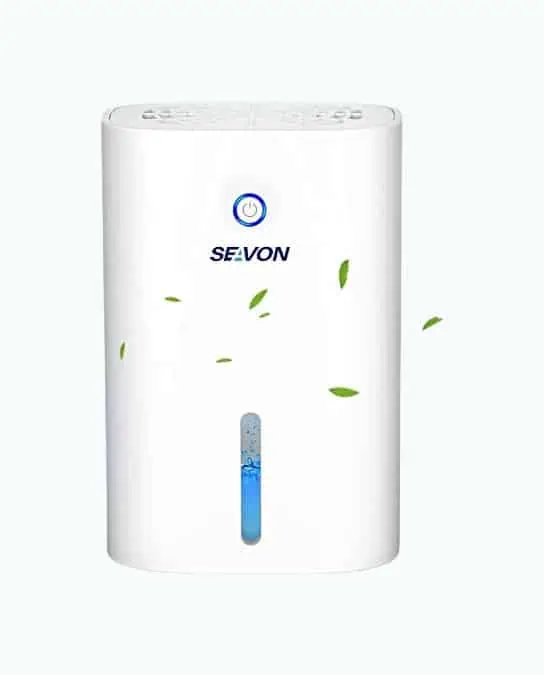
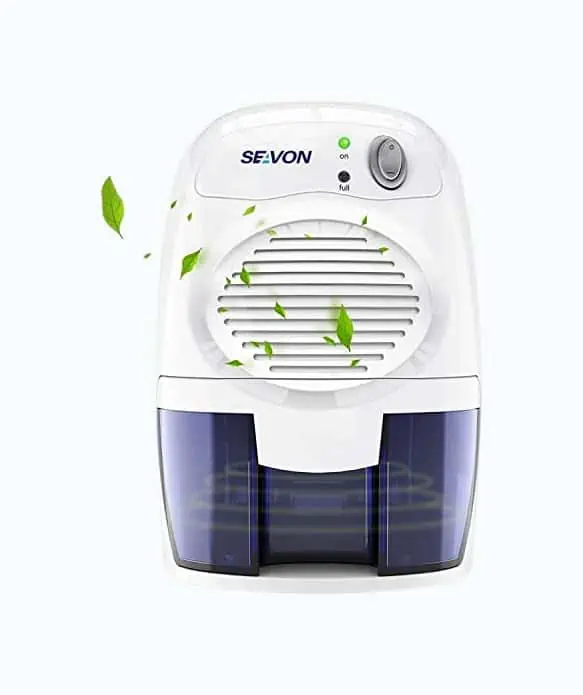
Seavon Small Dehumidifier
Best Small Dehumidifier
The Seavon dehumidifier is perfect for bedrooms, offices, or anywhere else you want peace and quiet. Because it’s so compact, you can also use it in closets or pantries.
This unit is designed for small spaces, so you’ll have to empty the tank regularly. But the auto-shutoff feature means you don’t have to worry about the tank overflowing. Feel free to leave it running overnight.
Despite its size, the Seavon packs a punch, collecting up to 12 ounces of moisture a day. It’s also a great eco-friendly option as it runs on minimal energy.
One thing to note is the bright LED light that the machine displays. This bothered some users at night.
Others found it helpful as it could double as a night light for kids’ rooms. Whether you love or hate this feature will come down to personal preference.
Pros
- Quiet below 35 decibels which is great for nighttime.
- Compact and portable.
- Eco-friendly and energy-efficient.
- Auto-shutoff function prevents leaks.
- Removes 12 ounces of water per day.
Cons
- Bright LED light is annoying at night.
- Only works for tiny rooms (240 square feet maximum).
- Not strong enough to decrease high humidity levels.
Product Specs
| Dimensions | 6.2 inches by 4.9 inches by 10.1 inches |
| Weight | 2.55 pounds |
| Removal capacity | 12 ounces |
| Warranty | 12 months |
| Room coverage | 240 square feet |
Our Ratings
Personal Perspective
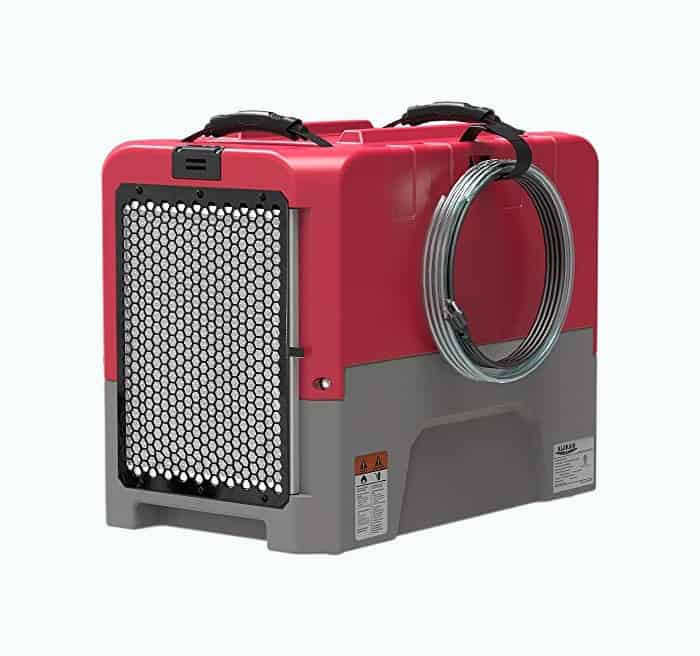
AlorAir LGR 85-Pint Dehumidifier With Pump
Best Dehumidifier for Crawl Spaces
This commercial-grade dehumidifier is designed for flooded areas, so it’s highly efficient. It’s waterproof and can be used in temperatures as low as 35 degrees, making it ideal for crawl spaces.
The AlorAir has many features, including a digital humidistat control, timer, condensate pump, and hot gas defrosting system. It can remove up to 180 pints of moisture a day at saturation. With a built-in pump, you can drain moisture from anywhere in your home.
It’s also stackable, which makes transporting it a breeze. Be wary of the weight, though. At 78 pounds, this isn’t the most portable dehumidifier. It also doesn’t come with wheels, so you’ll need to be careful about moving it safely.
Despite the hefty weight, users report that the dehumidifier is easy to use and clean. And you won’t need an extension cord in your crawl space, thanks to the 19.6-foot power cord.
Pros
- Smart features, including auto operation and auto defrost.
- Commercial grade, removing up to 180 pints per day.
- Built-in pump allows for automatic drainage.
- Remembers setting after losing power.
- Suitable for industrial spaces, basements, and crawl spaces.
- Five-year warranty included.
Cons
- 78 pounds heavy.
- Not the most durable option.
- Coils freeze over often, so the unit has to defrost a lot.
Product Specs
| Dimensions | 22.8 by 13.7 by 17.3 inches |
| Weight | 78 pounds |
| Removal capacity | 180 pints per day |
| Warranty | 5 years |
| Room coverage | 2,300 square feet |
Our Ratings
Community Feedback
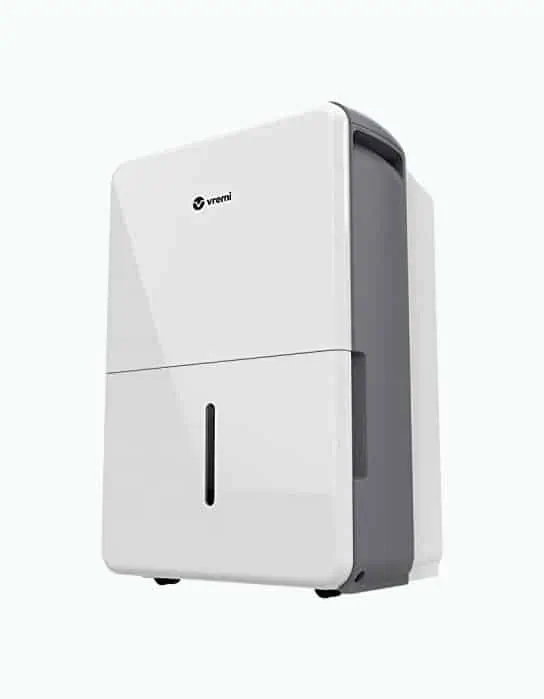
Vremi Dehumidifier Energy Star Rated
Best Dehumidifier for Basements
This is our top pick for basement dehumidifiers thanks to its efficiency and lightweight, portable design. It’s ideal for basements of up to 1,500 square feet, which will suit most households.
With an easily removable tank and filter, users love how straightforward this device is to maintain. Its simple design makes cleaning the filter each month a breeze.
The Vremi comes with a removable tank and drain access, so you can decide how you want to use it. You’ll have to buy a separate hose if you want to run it continuously, though.
The tank can hold up to 22 pints, which some users found small compared to other basement dehumidifiers. The unit has an auto-shutoff feature, so it won’t overflow when the tank is full, but you may have to empty it once or twice a day if you run it a lot.
Pros
- Portable with built-in handles.
- Easy to maintain with a reusable filter.
- Energy efficient model won’t cost you loads of money.
- High-performance filter traps dust, mold, and bacteria.
Cons
- Hose not included.
- Small 1-gallon water tank.
Product Specs
| Dimensions | 16.1 by 10.4 by 19.9 inches |
| Weight | 30.9 pounds |
| Removal capacity | 22 pints |
| Warranty | 12 months |
| Room coverage | 1,500 square feet |
Our Ratings
First-Hand Impression
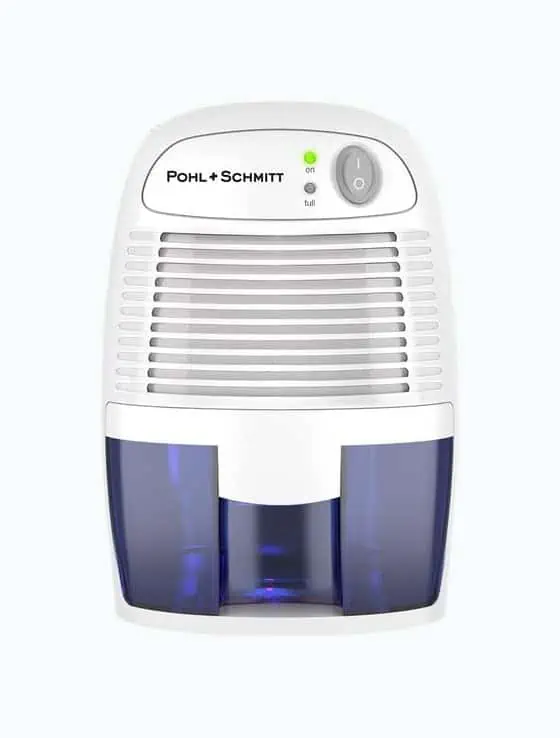
Pohl Schmitt Compact Dehumidifier
Best Dehumidifier for Dust Mites and Allergies
If someone in your household is allergic to dust mites or other allergens, they might need their own dehumidifier. A portable dehumidifier is also great for anyone with a respiratory illness or families with small children.
We recommend the Pohl Schmitt dehumidifier because of its compact size and high efficiency. This unit is the perfect size to sit on a bedside table or shelf in a bedroom. It’s so small you can carry it around with you, effectively clearing the air in every room of the house.
The unit doesn’t have a compressor, so it won’t disturb your sleep at night. This makes it an excellent option for bedrooms and nurseries where you want to keep allergens to a minimum.
If your home is particularly damp, the unit may take some time to kick in. However, given its size, this is a small price to pay.
Pros
- Lightweight, portable, and small enough for a bedside table.
- Quiet operation is suitable for nighttime.
- Highly effective at removing 10 ounces daily.
- No harmful chemicals included.
Cons
- Slow at extracting moisture.
- Struggles to bring down levels by more than five percent.
Product Specs
| Dimensions | 11.2 by 6.4 by 5.2 inches |
| Weight | 2.53 pounds |
| Removal capacity | 17 ounces |
| Warranty | Not specified |
| Room coverage | Not specified—small rooms |
Our Ratings
User Experience
Seavon Electric Portable Dehumidifier
Best Dehumidifier for Bathrooms
In most houses, the bathroom is the dampest room. Even if you’re blessed with a dry home, regular showering, damp towels, and limited space means there is a lot of moisture in bathrooms. This is why it’s worth getting a small dehumidifier to keep in your bathroom, even if you have a dehumidifier for the rest of the house.
The Seavon is an excellent choice. It’s compact so that you can store it out of the way on a window sill or shelf.
This product also performs incredibly well, collecting up to 16 ounces a day. While this won’t be suitable for your whole house, it will keep your bath mat, ceiling, and mirror dry even when multiple people use the bathroom daily.
Customers love how easy this dehumidifier is to use and clean. With a user-friendly design and an auto-shutoff feature, this is one you can set and forget.
Pros
- Compact enough to fit on tables or countertops.
- Quiet enough for using through the night.
- 16-ounce tank can hold a day’s worth of moisture.
- Auto shutoff feature prevents leaks.
Cons
- Not suitable for larger spaces.
- It’s difficult to clean, and the lid can’t be removed.
- Removes moisture too slowly for some situations.
Product Specs
| Dimensions | 7.2 by 6.2 by 11 inches |
| Weight | 2.5 pounds |
| Removal capacity | 16 ounces |
| Warranty | 1 year |
| Room coverage | 110 square feet |
Our Ratings
Personal Perspective
Airplus AP20-1905EE 70-Pint Dehumidifier
Best 70-pint Dehumidifier

If you’re looking for a dehumidifier to cover large spaces, this 70-pint unit is a fantastic option. With a huge tank, you’ll spend less time emptying your dehumidifier and more time enjoying your home.
The Airplus has many smart features, including an auto-defrost function and a transparent water level indicator. It also has an auto-restart function which will save your settings if there’s a power cut.
This unit allows continuous draining, although many users found this wasn’t as efficient as using the tank. Several customers also reported difficulty removing the bucket, which you’ll need to do to use the continuous draining function.
At 46 decibels, it won’t be a nuisance to you home relaxation nor will it scare away your pets. Thanks to the simple design and four castor wheels, you can easily use this unit in any room of the house.
Pros
- Quiet at 46 decibels.
- Smart features include a 24-hour timer and auto-shutoff.
- Great customer support.
- Continuous draining option, which is great for humid rooms.
- Excellent for large areas up to 4,500 square feet.
Cons
- Operational instructions may not be the best.
- Many customers found it only worked for two to three years.
- Small want tank capacity.
Product Specs
| Dimensions | 8.7 by 12.6 by 22.2 inches |
| Weight | 28 pounds |
| Removal capacity | 70 pints |
| Warranty | 1 year |
| Room coverage | 4,500 square feet |
Our Ratings
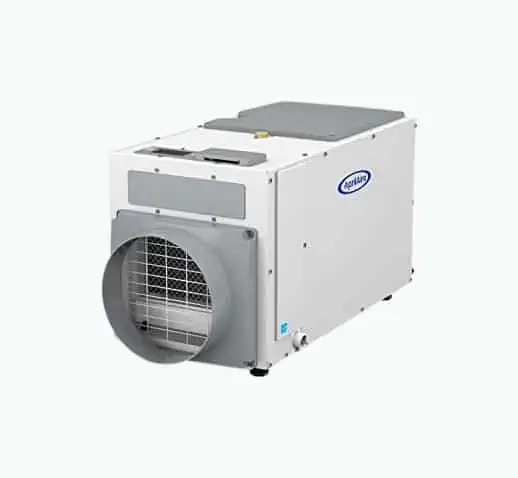
Aprilaire E100 Pro 100-Pint Dehumidifier
Best Dehumidifier for the Whole House
Got issues with mold, mildew, or allergies? Then you may want to invest in a whole-house dehumidifier. The Aprilaire is a fantastic choice for homes of up to 5,500 square feet. It can remove up to 100 pints of moisture every day.
You can connect the unit to your heating and air conditioning system for easy use. Many customers found that having it professionally installed yielded better results. Still, it’s easy enough to get it up and running yourself.
This dehumidifier is designed for continuous use. It doesn’t have a tank which makes it easy to maintain. Instead, the unit comes with a drain line allowing water to flow naturally.
We love that it has an enviable range of features. These include auto-shutoff and restart, energy efficiency, and an easy-to-use panel. The Aprilaire is ideal for keeping your whole house at the perfect humidity level.
Pros
- Easy to maintain with a continuous drainage option.
- Great for large spaces up to 5,500 square feet.
- Removes 100 pints daily to prevent mold and mildew.
- Durable and corrosion-resistant aluminum coils.
- Easy to set this up and get it started ASAP.
Cons
- High price point.
- 65 pounds heavy.
Product Specs
| Dimensions | 26 by 9 by 15 inches |
| Weight | 64 pounds |
| Removal capacity | 100 pints |
| Warranty | 5 years |
| Room coverage | 5,500 square feet |
Our Ratings
First-Hand Impression
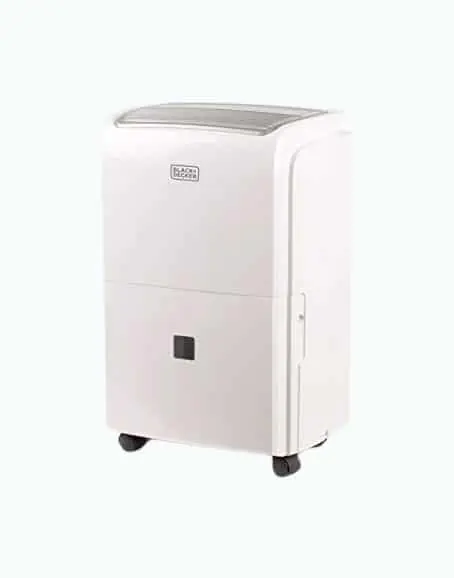
Black+Decker BDT30WTA 30-Pint Dehumidifier
Best 30-Pint Dehumidifier
The Black + Decker 30-pint dehumidifier is a good choice for a small, portable option. It can extract up to 30 pints of water from the air in just 24 hours, making it ideal for basements, cellars, or smaller rooms in the house.
It’s not bulky or too ugly, either. So whether you have a modern or cozy aesthetic in your home, this dehumidifier has been designed to fit right in without being obtrusive.
It’s straightforward to use. On top of the unit is an electronic panel with LED lights so you can easily adjust your settings day or night. It has three fan speeds to choose from, depending on the humidity levels around you.
Pros
- Easy to use with three simple settings.
- Easy to read LED display buttons.
- Includes auto shutoff and auto defrost.
- Select your desired humidity levels between 30 and 90 percent.
- Small and portable, suitable for most rooms.
Cons
- Water tank doesn’t line up seamlessly.
- Some leaking issues were reported.
Product Specs
| Dimensions | 10 x 13.4 x 19 inches |
| Weight | 49.6 pounds |
| Removal capacity | 30 pints per day |
| Warranty | 1 year |
| Room coverage | Not specified |
Our Ratings
User Experience
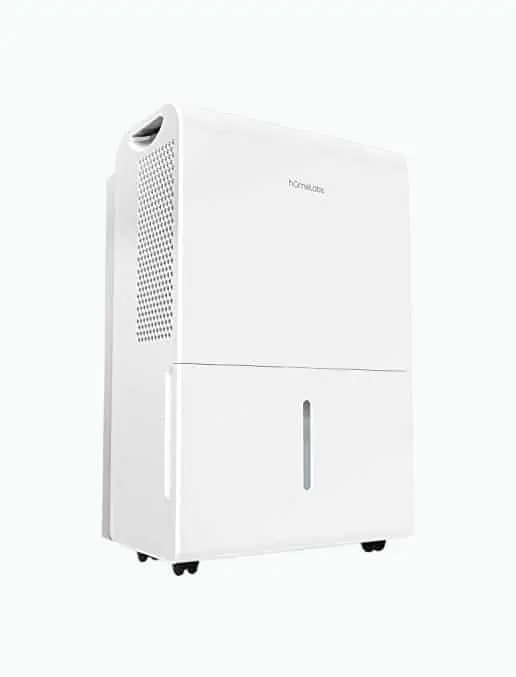
HomeLabs Energy Star Dehumidifier
Best Dehumidifier for Garages
We love this dehumidifier for the garage because it eliminates odor as well as moisture. It will leave your garage smelling fresh and clean.
The unit covers a whopping 4,500 square feet and is, therefore, suitable for commercial and residential garages. It’s also fully portable, with four wheels for safe and easy handling.
With a 70-pint tank and an auto-shutoff feature, you won’t have to worry about emptying it often. If you want total peace of mind, you can attach a hose and set it up near a drain for continuous use.
However, some users found this cumbersome without a pump. The system is designed to let gravity do its thing, which can take longer.
Pros
- Portable with four wheels.
- Gets rid of bad odors.
- Large 1.6-gallon capacity with a drawer-like tank.
- Removes 50 pints per day, preventing mold.
- Great for using after a flood or leak.
- Includes a drain for continuous draining.
Cons
- No pump, so it takes longer to drain.
- On the pricey side.
- Reaches 62 decibels, making it quite loud.
Product Specs
| Dimensions | 15.4 by 11 by 24.3 inches |
| Weight | 40 pounds |
| Removal capacity | 50 pints |
| Warranty | 2 years |
| Room coverage | 4,500 square feet |
Our Ratings
Personal Perspective
| Product | Best | Dimensions | Weight | Removal capacity | Warranty | Room coverage |
|---|---|---|---|---|---|---|
| Pro Breeze Mini | For RVs | 6.6 x 9 x 12.69″ | 5.04 lbs | 18 oz | 1 year | 250 sq ft |
| Seavon Small Dehumidifier | Small & Compact | 6.2 x 4.9 x 10.1″ | 2.55 lbs | 350 ml | 12 months | 240 sq ft |
| AlorAir LGR 85-Pint Dehumidifier With Pump | For Crawl Spaces | 22.8 x 13.7 x 17.3″ | 78 lbs | 180 pints per day | 5 years | 2,300 sq ft |
| Vremi Dehumidifier Energy Star Rated | For Basements | 16.1 x 10.4 x 19.9″ | 30.9 lbs | 22 pints | 12 months | 1,500 sq ft |
| Pohl Schmitt Compact Dehumidifier | For Allergies | 11.2 x 6.4 x 5.2″ | 2.53 lbs | 17 oz | N/A | Small rooms |
| Seavon Electric Portable Dehumidifier | For Bathrooms | 7.2 x 6.2 x 11″ | 2.5 lbs | 16 oz | 1 year | 110 sq ft |
| Airplus Dehumidifier | 70-Pint | 8.7 x 12.6 x 22.2″ | 28 lbs | 70 pints | 1 year | 4,500 sq ft |
| Aprilaire E100 Pro 100 Pint Dehumidifier | For the Whole House | 26 x 9 x 15″ | 64 lbs | 100 pints | 5 years | 5,500 sq ft |
| Black+Decker BDT30WTA | 30-Pint | 10 x 13.4 x 19″ | 49.6 lbs | 30 pints | 1 year | Not specified |
| HomeLabs Energy Star Dehumidifier | For Garages | 15.4 x 11 x 24.3″ | 40 lbs | 50 pints | 2 years | 4,500 sq ft |
Do I Need a Dehumidifier?
If your home is old, uninsulated, or doesn’t get a lot of sunlight, this moisture can linger and become trapped in your walls, floor, and ceiling. Damp homes are breeding grounds for bacteria, fungi, and allergens.
Having fungi and mold in the home can present serious health risks for you and your family. So it’s important to regularly clean, ventilate, and dehumidify your home.
Dehumidifiers collect excess moisture from the air. This lowers humidity levels and makes it harder for mold and dust mites to thrive.
Signs you should consider investing in a dehumidifier include:
- Condensation on the walls or windows.
- A musty odor.
- Visible mold or mildew.
- Allergic reactions to mold or dust mites.
- A stuffy feeling inside.
- Peeling wallpaper or blistering paint.
What Is the Optimal Humidity Setting?
The Environmental Protection Agency (EPA) recommends indoor humidity be kept below 60 percent. Most people find 40–50 percent is the sweet spot (1).
How to Choose the Right Size Dehumidifier
The size of your dehumidifier will depend on the size and dampness of your home. Just want to dehumidify a small room like a bedroom or office? Then you can get away with using a smaller dehumidifier.
What if, however, you want to use your dehumidifier in a large garage? Or, perhaps, in an open-plan living area? Then you’ll need something that can hold more water.
You should also consider whether you’ll be moving your dehumidifier between rooms or even buildings. This will determine whether you go for a heavier device or a lighter, portable one.
Types of Dehumidifiers
There are several types of dehumidifiers, and which one you choose will depend on your home, budget, and individual needs. The two most common dehumidifiers are compressor dehumidifiers and desiccant dehumidifiers.
Compressor Dehumidifiers
Compressor dehumidifiers use a fan, heat pump, and heat exchange coils to collect moisture from the air. The coils are extremely cold, which causes moisture to condense and collect in the tank. These are the most popular types of dehumidifiers and are best for warm, damp rooms.
Pros
- Easy to use.
- Great for warm or damp spaces.
- Usually uses less electricity than other dehumidifiers.
- Great for large spaces as they can dehumidify up to 70 pints per day.
Cons
- Difficult to move since they are larger.
- Coils can freeze in colder conditions.
- Can be noisy, with a minimal level of 40 decibels.
Desiccant Dehumidifiers
You know those little silica gel packets you get when you buy new shoes, bags, or electronics? They’re there to attract moisture and protect your new purchases. Desiccant dehumidifiers work similarly, using materials such as silica gel to attract and absorb moisture.
Pros
- Portable, since they are more compact.
- Ideal for cold environments.
- Quieter than other types, often less than 35 decibels.
Cons
- Can be pricey to run.
- Not the best option for medium or large spaces.
- They are a more expensive option to buy.
How to Choose a Dehumidifier
Researching the right dehumidifier for your needs will ensure you are satisfied with your purchase and save you money in the long run. Here are some of the things you should consider before making a purchase.

Indoor Temperature
As with size and weight, this depends on where you’ll use your dehumidifier most. Planning on setting it up in a cold area of the house — such as the garage or basement? Then you need to check that the unit can withstand lower temperatures.
Remember, the coils are extremely cold, so lower temperatures may cause them to freeze!

Noise
Dehumidifiers can be loud! Usually, the bigger the unit is, the noisier it will be. This is something to keep in mind if you prefer a quiet home or want to dehumidify your child’s room while they sleep.
In this case, a smaller, portable dehumidifier might be your best bet. They don’t have room for all the moving compressor parts that create noise. As such, they’re generally quieter and more peaceful.
Dehumidifiers range from 30 to 70 decibels, so look at each product’s noise rating.
Tank Capacity
Your dehumidifier’s tank — or reservoir — capacity will determine how much water it can hold. This will, in turn, determine how often you’ll need to empty it.
Want to set your dehumidifier going and not worry about it for a while? It might be best to get a larger unit that will take longer to fill.
However, if you don’t mind emptying the tank every day and want the convenience of a portable dehumidifier, a smaller unit may be just what you’re looking for.
We recommend something around one gallon, but for smaller dehumidifiers, half a gallon is more realistic.

Built-in Pumps
If you don’t want to worry about emptying tanks at all, you can opt for a unit with a built-in pump. These don’t come with a tank to collect water and are designed to extract moisture from the air in a continuous flow.
Since they don’t have space to collect water, you’ll need to position the pump near a drain or vent. This would allow the vapor to escape.

Additional Features
Modern dehumidifiers are packed with features to make your life easier. Here are some common features you might want to look for:
- Humidistat or hydrostat: These instruments measure the humidity in the area and allow you to set your optimal humidity level.
- Auto-shutoff: This is handy if your unit has a tank to collect water because it will automatically switch off if the tank becomes too full.
- Full tank alert: Similar to the auto-shutoff feature, this prevents your tank from overflowing. It notifies you when the tank is full and needs to be emptied.
- Clean filter alert: As the dehumidifier sucks in air, its filters collect dust and debris floating about. The clean filter alert will notify you when you need to clean the filters to keep the unit running smoothly.
- Defrost: This feature is invaluable if you use your dehumidifier in cold areas where the coils can freeze. The defrost function allows you to quickly and safely defrost the coils. Thus, you avoid damage to your machine and ensure it continues to run smoothly
Top Dehumidifier Brands
When you’re looking for a new dehumidifier, you’ll notice that a few brands seem to dominate the market. And for good reason too.
Frigidaire
Frigidaire is a leading kitchen and laundry appliance brand that sells dehumidifiers ranging in capacity from 30–95 pints. Based in the US, their appliances tend to be energy efficient and highly respected. All of their dehumidifiers come in a sleek, white design that will suit any room.

HomeLabs
Specializing in home and kitchen appliances, HomeLabs delivers intuitive, easy-to-use dehumidifiers. Their no-frills approach lends itself well to the market, where customers appreciate efficiency and ease of use. Their products are highly rated and provide excellent value for money.

Black+Decker
Black and Decker manufacture various products, from power tools to home appliances. They are customer-focused, striving to create quality products that provide value for money. You know you’re in good hands with a brand that’s been going for over 100 years!

Eva-Dry
Eva-Dry has been creating small, efficient dehumidifiers for 10 years. All of their dehumidifiers are compact.
They’re designed for use in small areas such as closets, vehicles, or small rooms. Despite their size, their highly efficient products make Eva-Dry a great choice for all those small areas in your home.

Keystone
Keystone creates tools, accessories, and appliances for the home and garage. Their dehumidifiers are some of the highest rated on the market, combining quality and affordability. There’s not a lot of information about the brand’s history out there, but Keystone products speak for themselves.

DampRid
DampRid specializes in desiccant dehumidifiers. They’ve been around for a while — over 70 years — and are a household name to many. Their products are created with a solid gel that absorbs moisture and odor in the air.
Their products are cost-effective and natural. If you want to keep a small space, such as a closet or a drawer, fresh and dry, this brand is worth a look.
Dehumidifier FAQs

Where Is the Best Place to Put a Dehumidifier?
This will largely depend on your home and lifestyle. Many people find they only need a dehumidifier for certain problem areas in their house, such as the bathroom or basement. Others find they need one in multiple rooms to get a manageable humidity level for the whole house.
Finding the best place for your dehumidifier may take some trial and error. We recommend opting for a portable unit if you’re unsure where to place your dehumidifier. That way, you can move around as needed.

What Fan Speed Should I Use?
Most dehumidifiers come with three fan speeds: low, medium, and high. Higher speeds will collect moisture faster, meaning you won’t have to run your dehumidifier for long.
Bear in mind, however, that higher speeds generally create more noise. So, if you’re running the unit at night or in a quiet office, you may want to opt for a lower setting.

How Long Should I Run the Dehumidifier?
This depends on the size of your unit and the humidity level in your home. You don’t need to run it 24/7; this will make your electricity bills skyrocket!
We recommend measuring the humidity levels in your home and running your dehumidifier in areas over 60 percent. You can switch the dehumidifier off when the humidity level drops below 50 percent.
Does the Dehumidifier Filter Need to be Replaced?
Most dehumidifiers have removable filters you can clean and reuse. Some models, however, use disposable filters that you will need to replace regularly. Check your manual or contact the manufacturer to find out how to replace or clean the filter on your particular model.

Do I Need to Buy a Separate Hygrometer to Measure Humidity?
Many modern dehumidifiers have built-in hygrometers — or humidistats — to measure the humidity in your home.
If your model doesn’t have one, we recommend buying a separate one. This will allow you to monitor the moisture levels in your home and ensure your dehumidifier is working efficiently.

How Much Electricity Does a Dehumidifier Use?
How much electricity your dehumidifier uses will depend on the model, its size, and how frequently you use it.
If you want to keep your electricity usage down, we recommend looking for a model with the Energy Star rating. This means the unit uses up to 20 percent less energy and usually costs the same as other models.

How Much Does It Cost To Run a Dehumidifier?
How much you spend to run your dehumidifier will depend on the size of the unit and how many hours a day you run it.
You can run smaller dehumidifiers for as little as $25 a year. Larger units (70 pints or more), on the other hand, can cost up to $350 a year. Most dehumidifiers will cost around $100 a year, depending on the model and how often you use it.

Should I Run a Dehumidifier In Winter?
You should run a dehumidifier in the winter if the moisture content inside is above 50 percent. Winter air is often damp and the perfect breeding ground for mold spores.