There could be many culprits in your fridge that are causing the bad odors. Old milk, moldy cheese, or forgotten leftovers tucked away at the back can lead to stinky smells.
After much trial and error, we’ve figured out several foolproof methods for stopping odors.
Our step-by-step guide will help you figure out how to get rid of refrigerator odors. Now, every time you open your fridge, you’re met with the excitement of your next meal rather than foul smells.
Key Takeaways
- Remove expired or spoiled food from the fridge to eliminate bad odors.
- Place a bowl of baking soda mixed with a few drops of lemon essential oil in the fridge to absorb smells.
- Deep clean the fridge by removing shelves, drawers, and food, then washing and sanitizing surfaces with a vinegar-water solution.
- Prevent future odors by maintaining proper fridge temperature, organizing food, and regularly checking for expired items.
How to Get Rid of Refrigerator Odor
Let’s look at eight different ways to tackle fridge smells. If one doesn’t work for you, then you can always try another.
Remove Old Food

Sometimes getting rid of out-of-date or off food is enough to get rid of the bad smell.
We recently found an in-date block of cheese in our fridge that had expired early. It was causing a rotten smell and 10 minutes after throwing it in the garbage, our fridge was significantly less smelly.
So go through your fridge, checking every shelf and drawer, and remove anything that may have expired.
Baking Soda Bowl
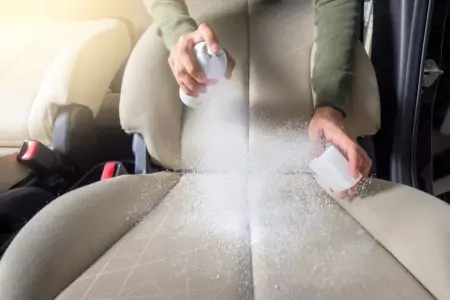
This is our absolute favorite tip for removing bad smells in the fridge. It’s best used once you’ve ensured there’s no bad food left in the fridge. It can absorb bad odors.
Simply follow these steps and enjoy a fresh fridge again:
- Fill a bowl with one cup of baking soda.
- Add a few drops of essential oil. I recommend lemon and orange as these are super refreshing.
- Place it in the fridge.
- Swap it out every day as long as the odor continues.
Usually, within a day or two, the baking soda will have absorbed the odors.
Top Tip
Deep Clean the Fridge

This may seem obvious, but sometimes it really is the only option. Can’t figure out where the bad smell is coming from and the above two steps aren’t helping? It may be time to deep clean the fridge.
Here’s our step-by-step guide to doing so:
- Take out all food, throwing out anything that’s expired. This is a good time to organize your fridge, too. Prep fruit and vegetables and put them in tubs. Not only does it keep this fresher for longer, but it minimizes odors in case the food does go off.
- Take the shelves and drawers out of the fridge.
- Fill up a basin or sink with warm soapy water.
- Wash the drawers and shelves as you normally wash your dishes.
- Wipe with a dish towel or let them air dry.
- Mix a 1:1 ratio of distilled white vinegar and water in a spray bottle. Spray the fridge’s interior and wipe clean with a damp cloth. Scrub areas with stuck-on food.
- Use this spray to clean the outside of the fridge, too. Don’t forget the sides and the handles. Wipe with a damp cloth.
- Put the drawers and shelves back into the fridge and close the door. This will save energy and make sure the fridge doesn’t warm up.
- When everything inside is dry, put your food back into the fridge.
Don’t Forget the Fridge’s Condenser Coils
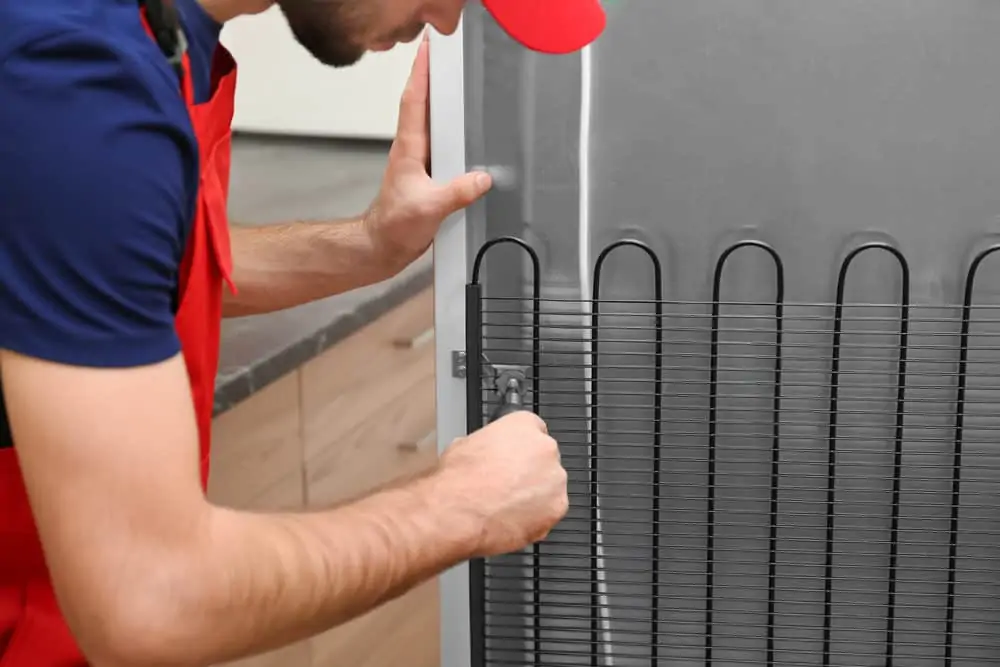
This may not be your first thought, but it can be helpful to clean your fridge’s condenser coils for eliminating odors. If there’s a build-up of dust, this can lead to bad smells, including a burning smell.
All you need to do is:
- Unplug your fridge.
- Locate your fridge’s condenser coils. You may need to move your fridge away from the wall to find them.
- Use a brush or dry cloth to remove any debris on the coils. Otherwise, you could get a coil cleaning brush.
- Vacuum up any loose dust.
- Put the fridge back into place and plug it back in.
Check Your Fridge’s Temperature
It’s very important to have your fridge at the correct temperature to preserve food and keep it fresh.
Your fridge should be between 37 and 40 degrees Fahrenheit (1). If your fridge doesn’t have a built-in thermometer, buy one and put it inside your fridge.
Slice a Lemon
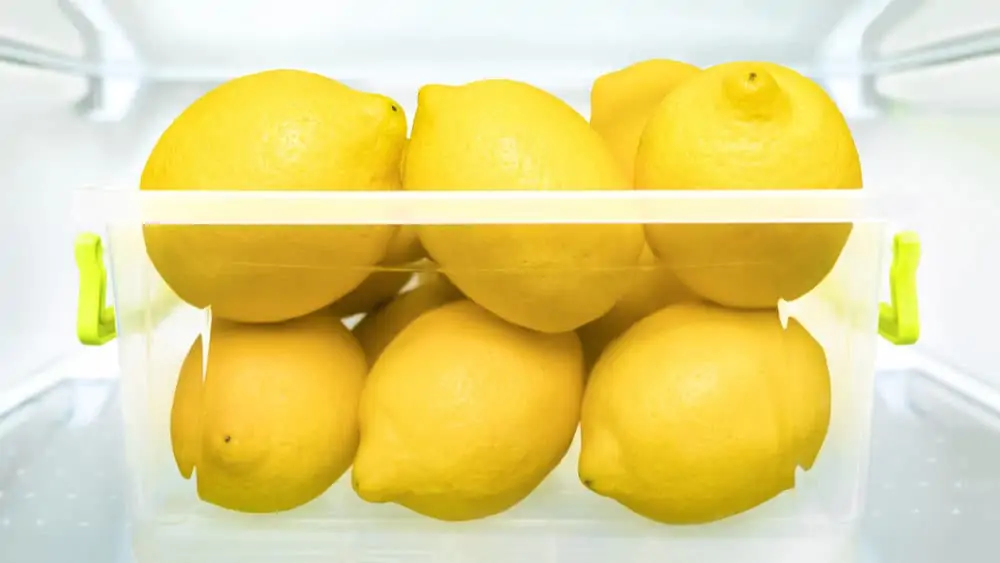
Lemons are another natural way to get rid of bad odors. We use them often for cleaning clothes, cookware, and chopping boards.
They’re a great way to blast bad odors out of your fridge, too.
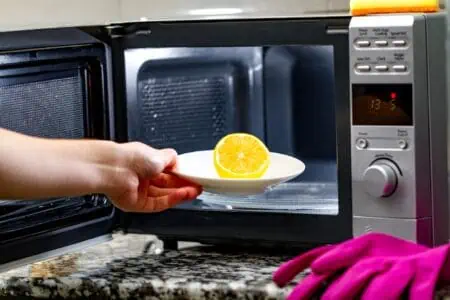
- Cut up a few lemons into slices.
- Put them onto a plate.
- Place the plate inside your fridge and leave it there for about 24 hours. It will absorb odors and leave a nice natural fresh scent.
Charcoal It Up
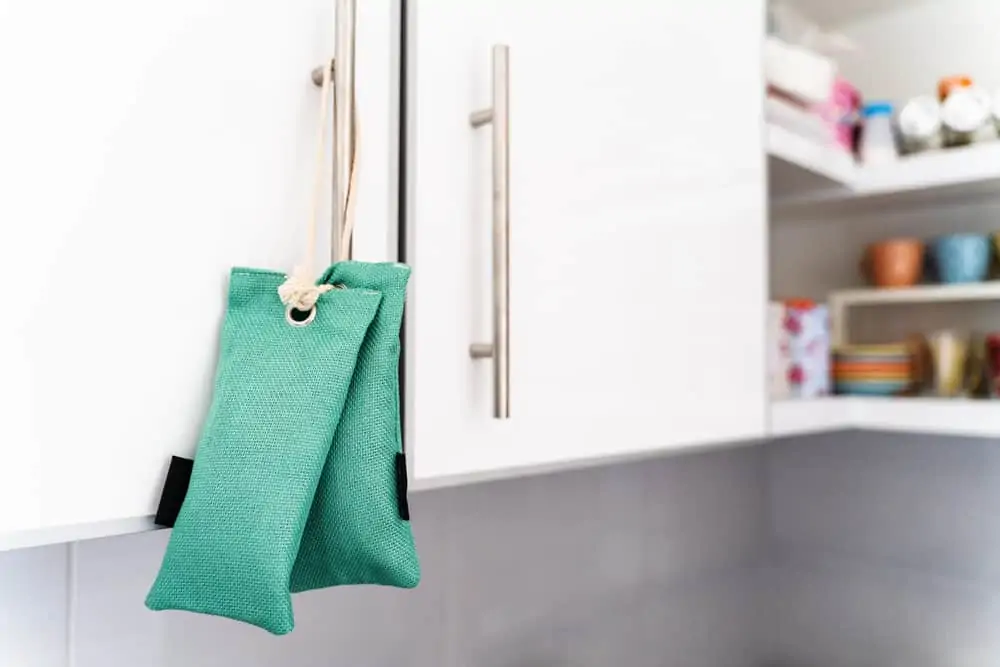
Charcoal is a great natural way to absorb odors, too. You can use a block of charcoal or you can buy handy charcoal bags. Simply place one or two bags into the fridge, close the door and let the charcoal absorb the bad odors.
Guess What
Air Out Your Fridge
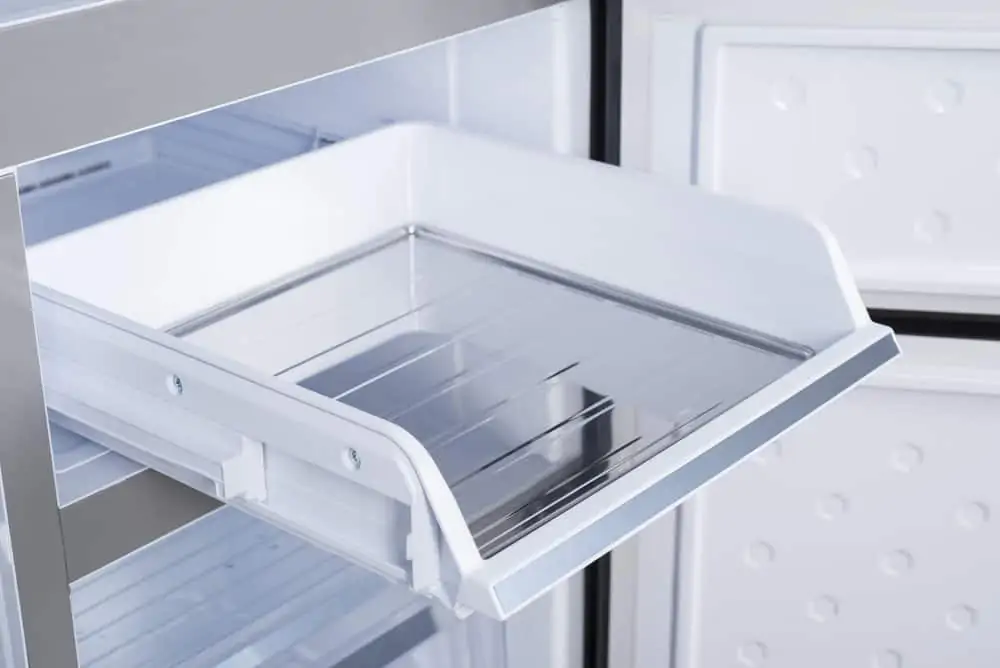
This is kind of a last resort since it means taking out all your food and risking the fridge warming up. It can take a few hours for your fridge to reach the desired temperature again. But sometimes, airing out your fridge is the only way to get rid of those lingering smells.
Only do this after you’ve deep cleaned the fridge, removed expired food, and tried one of the natural fresheners.
If those all fail, open up your fridge, remove the food and let the fridge air out for 30 minutes. Odors can become trapped inside the fridge and letting the fridge air out can help remove them altogether.
How to Prevent Refrigerator Odors
It’s better to prevent odors than fight them when they arrive. It can save time in the long run, as well as preventing that nasty shock of opening your fridge to foul stenches. Here are our top tips for preventing refrigerator odors:
- Keep your fridge at the proper temperature of 40°F maximum: Anything higher can spoil food and lead to odors.
- Organize your food: When you do your weekly shop, put food that perishes quickly — such as fruit and vegetables — into tubs. Most foods like this come in plastic tubs, but they’re not airtight. So when the food goes off, it quickly fills the fridge with bad smells. As an extra measure, add a use-by date onto your tubs. This will help you keep everything organized as you’ll know when to get rid of stuff before it starts to stink.
- Clean your fridge regularly: You don’t need to do a deep clean every single day, but wipe down any spills or food messes as soon as you notice them using a 1:1 vinegar-water mix.
- Don’t overstuff your fridge: Your fridge needs to circulate air well to minimize odors. If your fridge is jam-packed all the time, this air can’t circulate which leads to odors.
- Get rid of expired food regularly: We recommend doing a weekly sweep of your fridge and tossing out anything that’s off or about to go off. We do this every week before going shopping and it keeps the fridge fresh.
- Keep baking soda, lemons, or charcoal bags in the fridge at all times to absorb odors: This will help you stay on top of bad smells. Just make sure to swap out these items every few days to avoid them getting too smelly as well.
So Long, Odors
Fridge odors never need to bother you again. Use our six helpful tips to prevent odors so they don’t exist in the first place.
If they do creep about, we have eight awesome methods for getting rid of them. Most of them require very little maintenance so you don’t have to spend hours trying to sort out the source of bad smells.