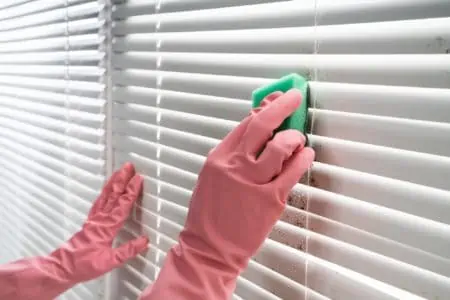
Dust gathers on blinds, and it can be easily forgotten during your cleaning routine. With too much dust hiding in your home, you’re at risk for various health problems. This includes asthma, allergic reactions, respiratory irritation, and more (1).
When you’re looking at your dusty blinds, you might not even know where to start with cleaning them. You’re not alone.
We’re here to show you how to clean blinds so they’re dust-free. Our methods include cleaning blinds without taking them down, as well as a method for washing them in the bath. Get your blinds sparkling clean today!
Key Takeaways
- Clean blinds once a month to remove dust, greasy residue, dirt, pet hair, and other particles.
- Use a duster, vacuum, or damp microfiber cloth to clean blinds without taking them down.
- For a thorough clean, wash blinds in the bathtub with dish soap and water (not suitable for wooden blinds.)
- Fabric blinds can be cleaned by vacuuming, stain removal, and steaming.
How Often Should You Clean Blinds?
Blinds are handy for keeping dust from entering your home. They act as a barrier between your indoor and outdoor world. So if you’re wondering why they get so dusty — now you know.
We recommend cleaning your blinds once a month to remove dust, greasy residue, dirt, pet hair, and other nasties.
How to Clean Blinds Without Taking Them Down
- Time: 10 minutes
- Difficulty: Easy
With a Duster or Vacuum
This method doesn’t require any water, so it’s a little less messy and a little quicker. If you’re using a vacuum over a duster, make sure it has a dusting brush attachment.
What You’ll Need
- Duster or vacuum
This method is easy and quick. It works as a charm for removing dust from your blinds.
- Close the blinds: Start with the blinds closed downwards. You can shut them upwards halfway through to ensure both sides are cleaned. This is best for Venetian blinds.
- Vacuum or dust: Start at the top of the blinds and work your way down. This ensures that you catch any fallen dust by the time you’ve finished. If vacuuming, attach your dusting brush and work your way from left to right, right to left, and then move downwards. Do the same with a dusting brush, applying a little more pressure where necessary.
- Flip and repeat: Close the blinds upwards and repeat step two.
With a Damp Microfiber Cloth
This method uses the power of dish soap and a microfiber cloth. This is great for stubborn dust and debris. So if you haven’t cleaned your blinds in months, this is a great option.
What You’ll Need
- Microfiber cloths
- Bowl of water
- Dish soap
- Rubber gloves (optional)
Top Tip
If your blinds are very dirty you can vacuum them first to remove dust, then finish with a damp microfiber cloth for the most thorough clean.
- Open the blinds: Open the blinds so that the slats are horizontal and flat.
- Make solution: In a bowl, mix warm water with a few drops of dish soap to create a bubbly cleaning solution.
- Dampen cloth: Dampen your microfiber cloth in the cleaning solution and wring it out well, so it’s not dripping. If you can’t get your hands on microfiber cloths, opt for any lint-free cloth. If you have spare muslins or even an old t-shirt, that will work great.
- Clean blinds: With the damp cloth, clean the blinds from left to right and back again, working from top to bottom. Make sure you wrap the cloth around the slats to clean the top and bottom of each slat simultaneously. This saves you time and ensures that you don’t miss a single spot.
- Keep the cloth clean: When you notice dust building up on your microfiber cloth, take it outside and give it a good shake to release dust. Dip it in the cleaning solution and repeat. Swap it out for a new cloth and fresh soapy water if necessary.
- Dry: With a separate dry microfiber cloth, dry the slats.
How to Clean Blinds In the Bath
For thoroughly cleaning blinds, you can take them down and wash them in the tub. This isn’t the easiest way to clean blinds, but if you’ve neglected this aspect of your cleaning routine — it might be necessary.
- Time: 1 hour
- Difficulty: Intermediate
Not For Wood
You should never use this method for wooden blinds. Too much moisture can damage them. Instead, save this for materials such as plastic, vinyl, and metal. Just be cautious not to soak metal blinds for too long, as this can lead to rust. Always check the manufacturer’s instructions before commencing.
What You’ll Need
- A few towels
- Dish soap
- Baking soda (optional)
- Microfiber cloths or rags
- Rubber gloves (optional)
1. Line the Bath With Towels
You don’t want to scratch your tub, so it’s important to line the bath with a few towels.
2. Fill Tub With Cleaning Solution
Fill the bathtub about halfway with warm water. Add about ¼ cup of dish soap. For extra stain-fighting power, add one cup of baking soda. Swish the water around to dissolve the soap and baking soda.
3. Submerge the Blinds
Extend the blinds fully and open the slat. Place one window blind into the bathtub at a time. Don’t put any more in the bath, as they could get tangled and damaged. Keep the top rail dangling over the side of the tub if possible. This is the easiest for mini blinds. Leave them to soak for around 20 minutes or as long as the manufacturer suggests.
4. Scrub Clean
With your cloth or rag, give the blinds a good scrub to remove loosened dust, dirt, and debris. Make sure to get both the top and bottom of each slat.
5. Rinse the Blinds
Drain the water and rinse the blinds with warm water. If you have a showerhead, spraying the blinds down with that is more manageable. Use your cloth again to wipe off any residual dirt and soap.
6. Dry the Blinds
Wipe the blinds with a lint-free towel. Then lay the blinds flat to dry. You can do this on a towel outside or inside. Hang them back up when the blinds are completely dry.
How to Clean Fabric Blinds
If you’re wondering about the best way to clean fabric blinds, you’ve come to the right place. Our other methods won’t work for fabric blinds, so we’ve got a specialized technique for you.
- Vacuum with brush attachment: This is the most crucial step for keeping fabric blinds clean. We recommend doing this weekly when you’re vacuuming the rest of the room. Attach the duster brush to your vacuum and hoover the blinds from left to right, right to left. Start at the top and work your way down. Make sure you have your vacuum on a low suction setting to avoid ripping the blinds.
- Remove stains: Create a solution of warm water and dish soap. Blot any stains with a microfiber cloth dampened with your cleaning solution. Keep blotting until the stain lifts. Don’t scrub. You can peel the fabric.
- Steam clean: After your weekly vacuum, steam cleaning your fabric blinds is also a great step. It sanitizes the blinds as well as loosens dirt and debris. It keeps the blinds fresh and removes any wrinkles too. If you have a handheld steamer, move it across the blinds from left to right, right to left, and from top to bottom. Move-in smooth strokes.
- Wipe blinds: Once you’re done vacuuming, removing stains, and steaming, wipe the blinds with a clean cloth or towel to remove any residue.
- Repeat: Repeat the above steps on the other side of the blinds if necessary.
When to Replace Blinds
Blinds aren’t like diamonds — they don’t last forever. Within about 10 years, you’ll find it’s time for new blinds.
You’ll know when the time comes if your blinds:
- Are bent, broken, or warped
- Have been ruined by heat and humidity
- It’s hard to open and close the blinds
- The cords are loose or broken
- The blinds are discolored or fraying
- The blinds don’t tilt or close tightly
- You have kids now, and the exposed cords are considered a strangulation hazard
- You’ve got new windows that don’t work with your current blinds
If you notice any of the above, we recommend investing in new blinds.
FAQs

How Do Professionals Clean Blinds?
Many professionals will use a vacuum and cloth. However, some use something called Ultrasonic Blind Cleaning, in which they submerge the blinds into a cleaning tank filled with water and green cleaning solutions.
Another method is Extraction Blind Cleaning, which first puts the cleaning solution onto the fabric blinds and then extracts it into a tank. This is great for fabric blinds.
While a professional can help rejuvenate dirty blinds, you can get similar results by washing your blinds in the bath.

How Do You Keep Blinds Dust Free?
Dust will always be part of your home, so you can’t ever have your blinds 100 percent dust-free. But you can stay on top of the dust by vacuuming your blinds as often as you’d like. We recommend doing so every week or at least every month.

Can Wooden Blinds be Washed?
You can clean your wooden blinds with a vacuum, duster, or dry microfiber cloth. If you need extra cleaning power, use a specialized wood cleaner. Do not submerge wooden blinds in the bath.

How Do You Prevent Mold on Blinds?
If you have condensation by your windows, the windowsill, blinds, and windows can quickly become moldy. Here are some top prevention tips:
- Minimize moisture: Keep the window area dry. Fix any leaks. For bathrooms and kitchens, install an exhaust fan. In other rooms, you can plug in a portable fan or turn on the ceiling fan. If you notice condensation around your windows, wipe it dry immediately with a cloth.
- Keep blinds in sunlight: If you plan to install blinds in the home, consider keeping the blinds in direct sunlight. This can dry off moisture and prevent mold growth.
- Keep blinds clean: Use our methods every month — or more often if necessary — to stay on top of dirt, mold, and mildew.
- Disinfect the blinds: You may want to steam clean your blinds or use a disinfectant cleaner to kill mold spores. Cleaning with distilled white vinegar or tea tree oil is a terrific natural disinfectant.
- Remove plants: If you notice mold, remove any plants from the windowsill area. Some plants increase humidity in a room, which can lead to mold. Move the plants elsewhere.
- Open your blinds: During the day, keep the blinds open. Keeping them closed can cause cold air pockets, which can then form condensation. Keeping the blinds open also lets in more sunlight which can kill mold.

How Do You Make Yellow Blinds White Again?
If your white blinds have become discolored, one of the easiest options is tossing them and getting new blinds. However, if that’s not within a budget right now, you can try to clean them.
The best way to do this is to use bleach. Follow our “How to Clean Blinds In the Bath” method but swap out the dish soap and baking soda for two cups of bleach. Only soak the blinds for 10 minutes. Make sure to wear rubber gloves and a mask for your protection.

What is the Easiest Way to Clean Your Blinds?
The easiest way to clean your blinds is to mix dish soap and water in a bowl, use a soft cloth to wipe down each individual slat, and use a brush attachment on your vacuum to remove the remaining dust.
Leave the slats open so that they can air-dry.

What Repels Dust on Blinds?
The best way to repel dust on blinds is to mix one part liquid fabric softener with four parts of water in a spray bottle. Apply the solution with a soft cloth to reduce static electricity on your blinds to minimize dust.