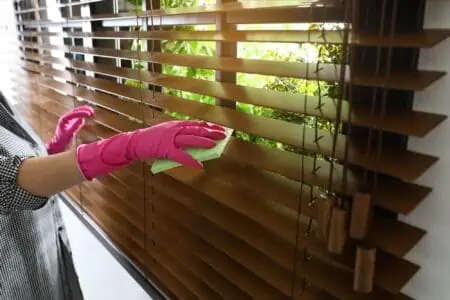
Wooden blinds are beautiful, but they can look less appealing when they become covered in dust, grime, and other stains.
Knowing how to clean wooden blinds can keep them in excellent condition and minimize dust in the home. Unfortunately, your Venetian wooden blinds probably didn’t come with thorough step-by-step cleaning instructions.
That’s where we come in; we’ll show you the best methods for cleaning wooden blinds. This includes real and faux wood and some handy tips that will make this chore much easier.
Key Takeaways
- Determine if blinds are real or faux wood by checking weight, grain pattern, and color change when damp.
- Clean real wooden blinds with a microfiber cloth, vacuum, wood cleaner, and optional wood conditioner.
- Clean faux wood blinds using microfiber cloths, vacuum, and a solution of vinegar and water or all-purpose cleaner.
- For both types, dust regularly, avoid excess moisture and steam cleaning, and use a dryer sheet or finger dusting cleaner for easier cleaning.
- How to Tell if Blinds are Real or Faux Wood
- How to Clean Wooden Blinds
- How to Clean Faux Wood Blinds
- Can You Clean Wooden Blinds in the Bath?
- How to Clean Faux Wood Blinds in the Bathtub
- How to Clean White Wooden Blinds
- How to Clean Blind Ladders and Window Sills
- Tips For Cleaning Wood Blinds
- FAQs
- No More Flying Blind
How to Tell if Blinds are Real or Faux Wood
Real wood:
Faux wood:
There are two main types of Venetian wooden blinds: real and faux.
While the manufacturer will state whether it’s real or faux, you may not know if the blinds were already in your home when you bought them.
It can be hard to tell the difference as faux wood blinds can look genuine, but one way to tell is by the weight. Faux wood is actually heavier.
An even better way to tell is by studying the grain pattern. If it’s exactly the same from slat to slat, it’s faux wood. Real wood will have some variation.
A final way to tell is by slightly dampening the blinds. Faux wood will not change color when wet, but real wood will darken slightly.
How to Clean Wooden Blinds
We’ll share the best way to clean wood blinds without taking them down. This method is great for weekly dusting and monthly cleaning.
- Time: One hour.
- Difficulty: Intermediate.
What You’ll Need
- A few microfiber cloths.
- A vacuum with a soft brush attachment (optional).
- Wood cleaner.
- Wood conditioner (optional).
- Shaving cream.
- Socks (optional).
1. Dust the Blinds
Close your blinds with the slats facing downwards. Use a microfiber cloth dampened slightly in water to dust your blinds from left to right. A more effective and less tedious option is to use a vacuum cleaner with a soft brush attachment.
Start at the top of the blinds and work your way down, moving from left to right. The soft brush attachment will ensure not to scratch or damage your wooden blinds.
Flip the blinds to the upwards position and repeat your dusting technique. Instead, this time start from the bottom and work your way to the top.
2. Use the Sock Method
Your blinds might still have a little excess dust. Open them so the slats are horizontal and straight. Place a sock over your hand and dampen it with a little water. Wipe the slats from left to right, working from top to bottom, to collect excess dust.
3. Prepare Your Cleaning Solution
Using your chosen wooden blinds cleaner, follow the packaging instructions to dilute or apply it. We recommend a specific wood cleaner over a DIY method to protect your wood. For instance, you might like to try the popular Touch of Oranges Beeswax Wood Cleaner. Bonus — it also polishes the wood!
4. Apply a Wood Cleaner
Close the blinds into a downward position.
Apply the wood cleaner to a cloth and wring it out well. Clean the blinds from side to side, working from top to bottom.
After each slat, wipe the slat with a dry microfiber cloth to remove excess moisture. Moisture can quickly damage wood, so you don’t want the blinds to be too wet for too long.
Close the blinds in an upward position and repeat the process.
You may need to replace the diluted cleaner a few times so that you aren’t cleaning the blinds with dirty water.
5. Condition the Blinds (Optional)
If your blinds look dull and dry, it’s a good idea to condition them. This will add shine back to the wood. Take your wooden conditioner — we can recommend something like Howard Feed-N-Wax — and read the usage instructions.
Typically, this will involve applying the conditioner to a cloth and evenly applying it to the wooden blinds. Repeat on both sides of the blinds.
6. Clean the Strings and Ladders
The strings and ladders (the strings on either side of horizontal blinds that keep it together) can also get filthy. A fun hack is to spray shaving cream on a clean, white, microfiber cloth. Rub the strings and ladders with the cloth, repeating where necessary—no need to rinse.
How to Clean Faux Wood Blinds
Faux blinds differ from wooden blinds in their cleaning requirements. Instead of a wood cleaner, we’ll use vinegar or all-purpose spray.
- Time: 45 minutes.
- Difficulty: Intermediate.
What You’ll Need
- A few microfiber cloths.
- A vacuum with a soft brush attachment (optional).
- Spray bottle with distilled white vinegar and water.
- All-purpose cleaner.
- Dish soap (optional).
- Shaving cream.
- Socks (optional).
1. Dust the Blinds
Close your blinds, so the slats are facing downwards. Dust with a dampened microfiber cloth or a vacuum cleaner with a soft brush attachment. Start at the top and work your way down.
Flip the blinds so they’re in an upwards position and repeat, working from the bottom to the top.
2. Use the Sock Method
Place a sock over your hand and dampen it with water. Wipe the slats from left to right, top to bottom, to remove any leftover dust.
3. Prepare Your Cleaner
You can clean faux wood blinds with an all-purpose cleaner or make your own.
If you’re making your own, combine a 1:1 solution of distilled white vinegar and water into a spray bottle. Add a teaspoon of dish soap if you have greasy, grimey blinds to tackle. Shake well to combine.
4. Clean the Blinds
Spritz your cleaner onto a microfiber cloth. Close the blinds in a downward position. Clean the blinds from side to side, top to bottom.
Close the blinds in an upward position and repeat the process.
You can let the blinds air dry since the moisture won’t damage the faux wood.
5. Clean Strings and Ladders
Spray shaving cream onto a white microfiber cloth. Rub the strings and ladders with the cloth to remove dirt and grime.
Can You Clean Wooden Blinds in the Bath?
You shouldn’t clean real wooden blinds in the bathtub. Excess moisture can ruin your wooden blinds, distorting, warping, and damaging the wood.
If you have faux wooden blinds, you can clean them in the bath. This is an excellent method if the blinds are incredibly filthy, covered in food and grime, and you need to issue a deep clean.
How to Clean Faux Wood Blinds in the Bathtub
We’ll help you get those faux wooden blinds sparkling clean. No more grease here!
Note that this method works best for mini blinds, as larger ones may not fit in your tub.
- Time: Two hours.
- Difficulty: Intermediate.
What You’ll Need
- Dish soap.
- Microfiber cloth.
- Towels.
- Hairdryer (optional).
1. Uninstall the Blinds
Check your user manual for information on how to remove the blinds from the brackets.
2. Prepare the Bath
Fill the bath with warm water and add about 150 milliliters of dish soap.
Take Note
If the water is too hot, it can warp the blinds.
3. Submerge the Blinds
Submerge the blinds fully in the bath water. Leave them to soak for one hour.
4. Scrub the Blinds
While the blinds are still in the bath, wipe the slats individually with a microfiber cloth to remove loosened dirt and grease. You may need to spend extra time on stubborn stains.
5. Dry the Blinds
Remove the blinds from the bath and empty the dirty water. Lay the blinds down on a few towels. With an extra towel, dry each slat individually.
You can leave the blinds to air dry for a few hours. But if you’re in a rush, use another towel to wipe them dry. Then blow-dry them with a hairdryer on a cool setting. This is especially handy for the ladders and strings that might hold more water.
6. Hang Them Back Up
Follow your manufacturer’s guidelines to hang the blinds back up. Enjoy their clean aesthetic!
How to Clean White Wooden Blinds
If your Venetian blinds have been painted white, over time, they will likely yellow.
The above cleaning method may be enough to whiten them since the yellow residue could be a buildup of grease and grime.
The other thing to note is that if the yellowing is caused by UV damage, it may be impossible to whiten the blinds again.
However, no matter the reason the blinds have yellowed, it’s worth trying to whiten them with bleach. Follow these steps:
- Fill the bath: Fill the bath with cool water and add three cups of bleach.
- Soak blinds: Wearing gloves, submerge the blinds into the water for 10 minutes.
- Remove: Remove the blinds from the bath and scrub them with a microfiber cloth to remove excess water and bleach. Repeat until the blinds are dry.
- Hang: Hang the blinds back up. Hopefully, they’re a bit less yellow!
How to Clean Blind Ladders and Window Sills
To clean the blind ladders, spray a little shaving cream onto a microfiber cloth. Scrub the ladders well to remove grease, grime, and stains—no need to rinse.
To clean window sills, follow this method:
- Vacuum: Use a vacuum with a nozzle attachment to remove excess dust and debris from the window sill.
- Brush: Use a brush to loosen debris from corners and crevices. Then vacuum up the loosened debris.
- Spray: Spray the window sills with an all-purpose cleaner. If they’re made from wood, you will need a wood cleaner. If your windows aren’t wood, you can make your own cleaner using a 1:1 solution of distilled white vinegar and water, and one teaspoon of dish soap.
- Brush: Use a scrubbing brush to distribute the cleaning solution evenly. It will start to look really mucky!
- Wipe: Use a damp microfiber cloth to wipe the window sills and remove the cleaning solution and accompanying dirt. This part is super satisfying!
- Wipe again: With a separate damp microfiber cloth, wipe the window sill to remove any extra dirt and cleaning solution.
Tips For Cleaning Wood Blinds
It’s important to take care of your wooden blinds, treat them well and avoid damage. Here are our favorite cleaning hacks:
- Avoid excess moisture: Too much moisture can ruin real wood, so make sure you minimize excess moisture. If you notice moisture residue on the blinds, immediately wipe it away with a cloth.
- Dust weekly: Close your wooden blinds and give them a fast dusting with a cloth or vacuum. Do this every week to stay on top of dust. It only takes a couple of minutes.
- Don’t steam clean: You may think steam cleaning is a universal hack for everything, but you should use it for real or faux wooden blinds. Heat can distort and warp the materials, as well as cause discoloration.
- Condition regularly depending on where you live: If you live in a sunny, hot, dry area, condition your real wood blinds more often. This will bring back moisture and shine.
- Use a dryer sheet: This fun hack can remove dirt and dust, as well as prevent it from accumulating. Wipe the blinds with a dryer sheet from left to right, top to bottom.
- Try a finger dusting cleaner: These tools aren’t super well-known yet, but they can be really handy. They have separate fingers so you can clean the blinds quicker and more effectively. Make sure to check the dimensions of the cleaner against your blinds. For instance, if you have 2-inch Venetian blinds, ensure the duster is large enough.
FAQs

What is the Easiest Way to Clean Window Blinds?
Regular dusting easily tackles surface-level dust and debris. Close the blinds downward and dust each slat, from left to right, top to bottom. You can also use your vacuum cleaner with a soft brush attachment.
Flip the blinds closed into an upward position and repeat.
While it takes a while to deep clean blinds while hanging up, we think it’s easier than cleaning them in the bath. However, the bathtub hack is super useful if you need a proper deep clean.

What Oil Can You Use on Wooden Blinds?
While you can condition your blinds with a commercial wooden conditioner, you can also use various oils. Here are some great options:
- Danish oil: This is made from linseed or tung oil, mineral spirits, resin, and varnish. It’s great for adding durability to the wood.
- Tung oil: Derived from a tung tree, this eco-friendly oil is ideal for keeping the wood’s color and resisting mold. It has food-safe properties, so it’s an excellent option for wooden toys or kitchen countertops.
- Teak oil: Teak oil got its name from being suitable for teak wood. So, if your wooden blinds are made from teak, give it a try.
- Linseed oil: This is a popular choice. It’s derived from flax plants and is great for interior wood. It will add shine and life back to your wooden blinds. Just note that it can stay sticky and wet for quite a long time, so avoid touching the blinds for a few days.
- Olive oil: Olive oil is cheap and safe on wooden blinds. It can add shine to your wood and protect it from scratches and dents. You can make your own olive oil polish by mixing a 2:1 ratio with olive oil and lemon juice. Then apply it to the blinds with a dry microfiber cloth.
- Lemon oil: Lemon oil is a popular wood polish. One product is the Parker & Bailey Natural Lemon Oil Polish. Lemon oil can protect your wooden blinds from dryness and cracks, as well as bring back its natural beauty.

Can I Use Vinegar to Clean My Blinds?
Vinegar is a great cleaner for faux wood blinds. The acidic nature can deep clean the material and remove grease, grime, and odors.
However, we don’t recommend vinegar for real wood blinds. The acid in the vinegar can dry out the wood, leaving it looking dehydrated and dull.
No More Flying Blind
Now that you know how to clean wood blinds, there’s no need to guess the best methods anymore. Our step-by-step instructions will walk you through the best way to dust and clean your wooden blinds, so they’re sparkling clean.
To recap, dust your blinds every week or two to stay on top of debris.
Clean real wooden blinds with a wood cleaner and condition them if necessary. As for faux wood, you can clean them with a vinegar solution or an all-purpose cleaner. Add dish soap for grease-fighting power.
Remember — you can also pop your faux wood blinds in the bath if they need some extra deep cleaning.