Thinking of making the switch to microfiber cloths? These cost-effective cloths are a must-have in the home. They can be used for basically any cleaning job!
The only problem is: there are hundreds of brands and types to choose from. The good news is we’ve done all the research for you. We spent hours looking into real customer reviews, dozens of products, and expert advice.
In conclusion, we are here to share the 10 best microfiber cloths on the market. Whether you’re looking for big or small cloths, ones for cleaning electronics or drying your car, we’ve got you covered.

- 1200 GSM so it's super asborbant
- Great value for money
- Lint- and streak-free
- Super absorbent
- Made of extra thin fiber
- Fused edges to prevent fraying
- Soaks up oils, liquid & dust
- Great for eyeglasses & jewellery
- Works great without cleaning solution
- Large size for big & small projects
- Ultra-soft for a scratch-free finish
- They work wet or dry
- Streak & lint free finish
- Great for windows & mirrors
- Five year warranty
- Traps 99% of bacteria using water
- Streak-free finishes
- Super absorbent

- Non-abrasive texture
- All-purpose for cleaning any surface
- Super fast drying
- Small sized and easy to store
- Works great on stainless steel
- Non-abrasive
- Great for dusting all surfaces
- Lint-, scratch- & streak-free
- Works without chemical solution
- Scratch-, lint- and swirl-free
- Super-absorbent holding 8x its weight
- Multi-purpose: use for cars and household chores
Review Methodology: At Oh So Spotless, we pride ourselves on providing you with a thorough analysis and assessment of the best microfiber cloths available on the market. Our team of professionals brings years of hands-on experience and expertise to evaluate products from a user’s perspective, taking into consideration key decision-making factors such as performance, durability, and versatility. We compare and rank each product based on criteria like design, material quality, and effectiveness, and provide first-hand supporting evidence when recommending the top choices. Our research and reviews are backed by data and facts, ensuring that our recommendations meet the highest standards, helping you make informed decisions for all your cleaning needs.
The Best Microfiber Cloths of 2024
We spent hours researching expert advice on microfiber cloths. Combining that with our own expertise, real customer reviews, and product descriptions, we have created a comprehensive list of the best microfiber cloths available.
Here are 10 microfiber cloths to make your home sparkling clean!
Mr. Siga Extra Thick Microfiber Cloths
Best Long-Lasting Microfiber Cloth
Customers love that the Mr. Siga microfiber cloths are built to last.
They have a double-layer design and weigh 1,200 GSM. That’s more than four times our recommended GSM! So these are more durable and absorbent than your regular microfiber cloths.
Not only does this save you money in the long run, but it saves you time and work. No need to repeat drying the same spot — one swipe will absorb most of the liquid.
Mr. Siga claims that each cloth can absorb water up to 1.4 liters. Of course, you should wash the cloths between uses. Clean with other microfiber items, with no fabric softener, in cold water and air dry for best results.
This pack includes three cloths measuring 16 by 16 inches double layer plush microfiber. These super soft and absorbent cloths will be gentle on your most delicate surfaces and paint jobs.
Pros
- 1200 GSM means they are super absorbent.
- Can absorb up to 1.4 liters of water.
- Great value for money.
- Lint- and streak-free.
- Won’t scratch your surfaces.
- Multi-purpose cloths: use for cars, mirrors, tiles, dishes, and more.
Cons
- May take a great effort when wringing it.
- All cloths are the same color.
Product Specs
| Material | 80% polyester, 20% nylon. |
| Softness | Very soft |
| Thickness | 1200 GSM — Extra thick |
| Size | 16 x 16 inches |
| Purpose | All-purpose |
Our Ratings
User Experience
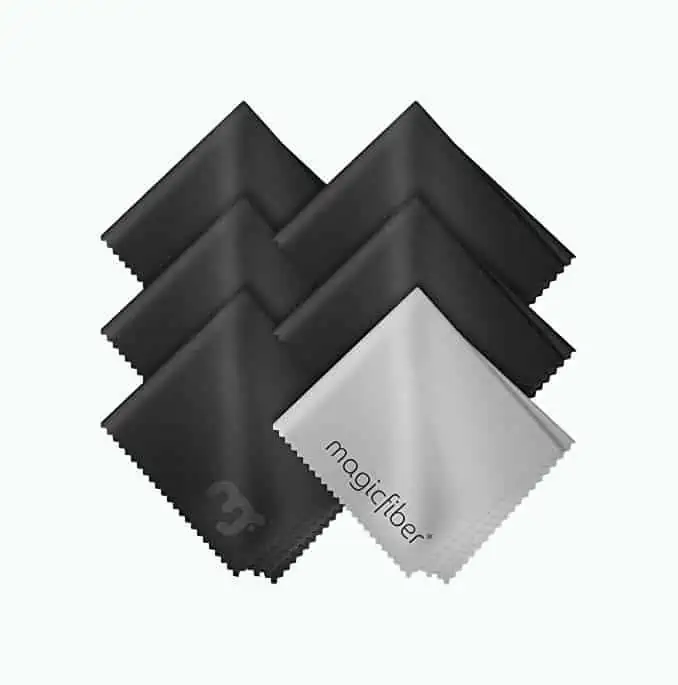
MagicFiber Microfiber Cleaning Cloths
Best for Electronics
Give new life to your electronics by cleaning them with a microfiber cloth. The MagicFiber cloths can revive your phone, tablet, computer, and other electronics. Get rid of dust, stains, marks, and fingerprint blemishes with one quick wipe.
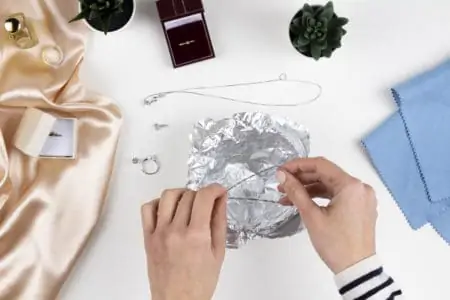
These cloths are also suitable for cleaning your glasses, tableware, watches, and jewelry. They’re designed to remove germs, bacteria, fingerprints, dust, and oils.
Made from high-quality materials, these are soft and absorbent cloths. They will spruce up your expensive items, leaving no scratches, streaks, marks, or lint.
If you’re anything like us, you’ll know the inconvenience of always losing these small microfiber cloths. But each pack of MagicFiber cloths come in a little bag so you can keep them organized, tidy, and away from other items.
Each fiber is 200x thinner than a human hair. That’s why it’s so effective at trapping even the smallest particles. Your favorite items will be cleaner than ever before!
Pros
- Super absorbent with each fiber 200x thinner than a human hair.
- Comes with a storage bag.
- Great for electronics, glasses, jewelry, and more.
- Fused edges to prevent loose strings and fraying.
- Won’t scratch or streak your electronics.
Cons
- Not good for absorbing liquids.
- Leave lint behind on and inside cameras.
- Hand-wash only.
Product Specs
| Material | Blend not specified |
| Softness | Very soft |
| Thickness | Average |
| Size | 6 x 7 inches |
| Purpose | Dusting and tidying up electronics |
Our Ratings
Personal Perspective
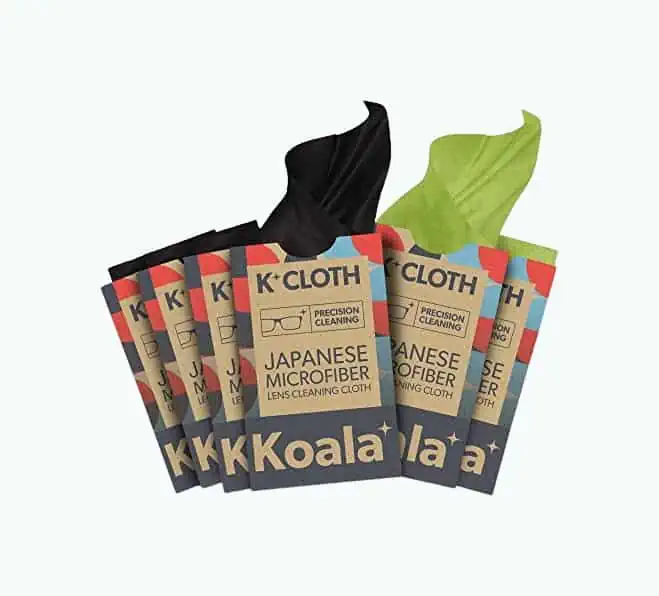
Koala Kloth Microfiber Cleaning Cloth
Best for Glasses
If you wear glasses, you’ll know the massive difference a good clean can make. It’s suddenly like you have brand new eyes. We can’t stand when our glasses are filthy, and a quality microfiber cloth can expel that issue in a flash.
The Koala Kloth cloths are made from premium optical quality microfiber. They’re good for glasses, goggles, sunglasses, and other eyewear. The ultra-fine yarn is so dense that it can pick up the tiniest dust, dirt, and other debris particles. You don’t need an additional cleaning solution.
How dense are the cloths? One gram has 25,700 centimeters of filament surface area. Most cloths have about 8,500 centimeters.
The fabric is also treated specially to absorb water and oils, which is a massive bonus if you have oily skin!
You can wash and reuse these cloths many times, too. The brand offers a lifetime guarantee as long as you use the cloths properly. So this six-pack of cloths should, in theory, last forever.
Pros
- Six times as dense as other cleaning cloths.
- Soaks up oils, liquid, dust and other particles.
- Great for eyeglasses, technology, and jewelry.
- Works great without additional cleaning solution.
- Provides a lint-free finish.
- Each cloth can be used 500 times.
Cons
- They get dirty quite quickly.
- May leave streaks after a few months.
- Hand-wash only.
Product Specs
| Material | Blend not specified |
| Softness | Very soft |
| Thickness | Thick, and very dense |
| Size | 6 x 7 inches |
| Purpose | Cleaning glasses, electronics, jewelry |
Our Ratings
Community Feedback
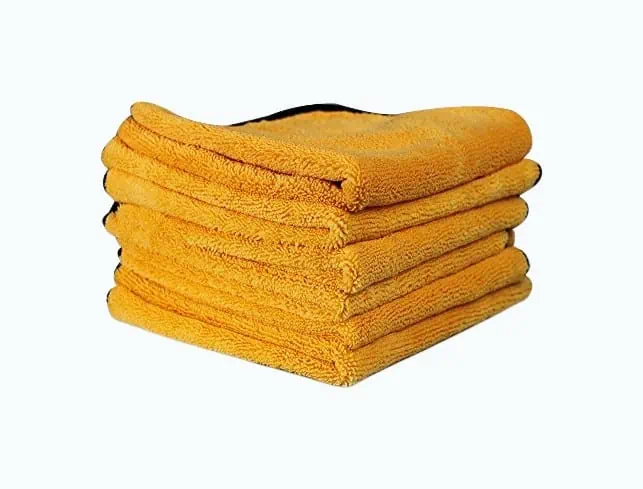
Chemical Guys Professional Grade Microfiber
Largest Microfiber Cloth
These large, scratch-free, yellow towels are best for various tasks. Use them in a domestic setting for cleaning and drying. Or use them in a professional setting, such as washing cars. They are soft and fluffy, so they’ll leave a scratch-free finish.
Keep in mind that the yellow fibers tend to shed, so we can’t say these will leave a super lint-free finish for every customer.
Each cloth has two sides. One is designed for wiping dust and debris away. The other side is excellent for removing waxes and sealants, which is fantastic if you’re using these for cars.
Don’t be put off by the fact that they’re designed for professional car cleaning. Customers absolutely love using these in the house!
They are great for dusting, cleaning the kitchen, and wiping down stainless steel appliances. These lush cloths are the right solution if you’re sick of that streaky finish.
Pros
- Large size for big and small projects.
- Ultra-soft for a scratch-free finish.
- The bright yellow showcases dirt, so you know when it’s time to switch cloths.
- They work wet or dry.
- Machine-washable design.
- Super absorbent: you can clean an entire car with one towel.
Cons
- The fibers shed, especially during the first few uses.
- Some dirt becomes embedded in the fibers.
Product Specs
| Material | 70% polyester, 30% polyamide. |
| Softness | Ultra-soft |
| Thickness | Thick |
| Size | 16 x 24 inches |
| Purpose | Cleaning, wax removal, polishing |
Our Ratings
First-Hand Impression
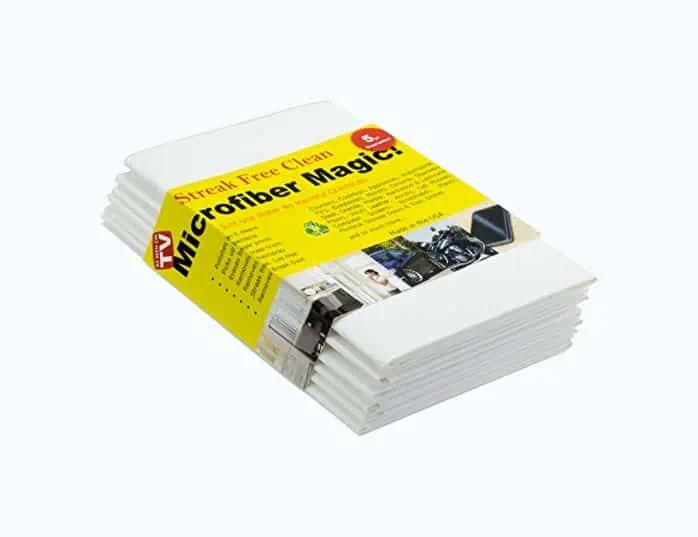
Microfiber Magic Microfiber Cloth
Best for Cleaning Windows
Experience a magic finish with the Microfiber Magic cloths.
These cloths can really be used for any purpose. But we think they are the best solution for cleaning mirrors, windows, and other glass items.
They leave a streak- and lint-free finish when you use just water. So whether you’re cleaning the bathroom mirror or the front windows, this is the way to go.
But these cloths are also wonderful for a variety of other jobs, such as:
- Laminate or hardwood floors.
- Drying dishes.
- Cleaning and dusting your car.
- Eyeglasses.
- Desks and chairs.
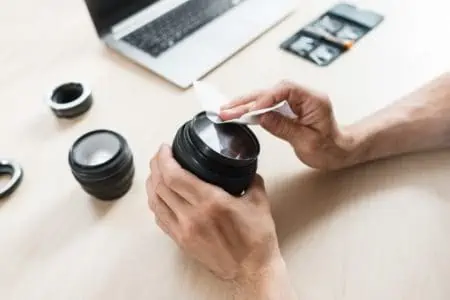
- Cleaning camera lenses.
- And much more!
These cloths are built to last. If you care for them properly, the company offers a five-year warranty. For microfiber cloths, that’s out of this world!
Pros
- Streak- and lint-free finish on all surfaces.
- Great for windows and mirrors.
- Five-year warranty included.
- Fibers are finer than 1/100th of a human hair, capturing more debris.
- You can cut them to any size you want.
- Simply add water to remove bacteria from surfaces.
Cons
- The cloths stain easily.
- Not super absorbing.
Product Specs
| Material | 70% polyester; 30% polyamide |
| Softness | Average |
| Thickness | Average |
| Size | 16 x 16 inches |
| Purpose | All-purpose |
Our Ratings
User Experience
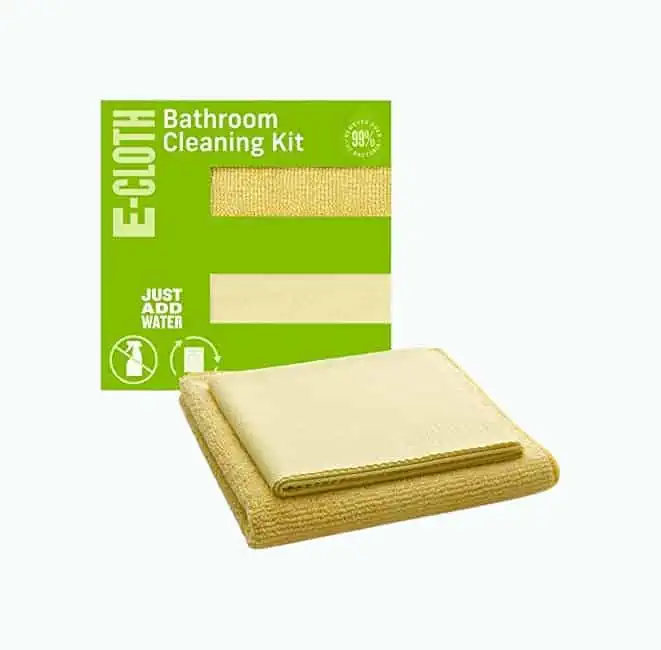
E-Cloth Microfiber Bathroom Pack
Best for Bathroom
A quality microfiber cloth can be used to clean the bathrooms, too. The absorbent material comes in handy and does a stellar job sweeping up dirt, debris, and liquids.
The E-Cloth bathroom pack is the cleaning solution for bathroom surfaces. With just water, you can tidy up the bathrooms, but pair it with a cleaning solution, and boom — a spotless bathroom! We’re talking baths, sinks, showers, faucets, tiles, glass, mirrors, and, of course, the toilet.
The pack comes with a bathroom cloth for appliances and a glass cloth for mirrors and windows. The super absorbent bathroom cloth removes soap scum, grime, and 99 percent of bacteria using just water! The fibers can absorb up to seven times their weight, so you can use one cloth for the entire bathroom.
The cloth for glass also removes grease, dirt, and 99 percent of bacteria from mirrors and windows. Plus, no streaks or lint left behind.
Double Protection
Pros
- Traps 99 percent of bacteria using just water.
- These cloths work for every task around the house.
- Streak-free finishes.
- Super-absorbent.
- Lasts for at least 100 washes.
- Works great to polish surfaces.
Cons
- Color may run when the cloth is wet.
- Expensive.
Product Specs
| Material | 80% polyester, 20% polyamide. |
| Softness | Soft |
| Thickness | Thick |
| Size | 6.25 x 7.75 inches |
| Purpose | All-purpose |
Our Ratings
Personal Perspective
S&T INC. Microfiber Cleaning Cloth
Best Value for Money
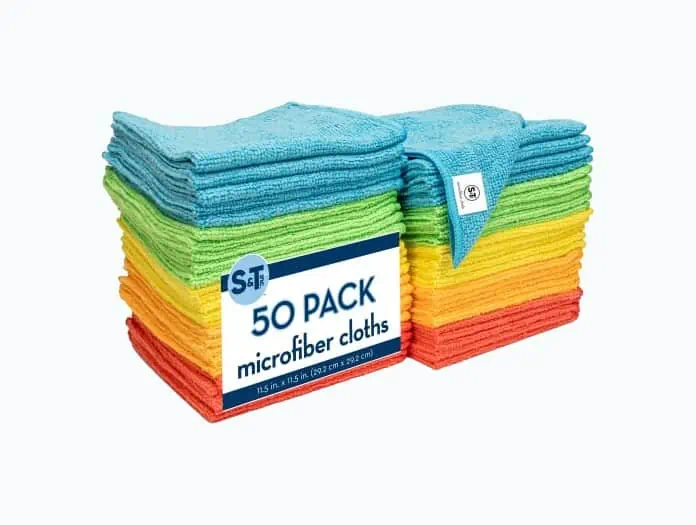
Bulk buying microfiber cloths can save you money in the long run. We think the best value-for-money cloths are the S&T INC ones. This pack includes 50 cloths in five colors, but you can also choose the 100-pack option if you prefer.
Just because they’re cheaper per cloth doesn’t mean they lack quality. These are super durable cloths that can be used for any purpose in the home. Whether you’re dusting, cleaning, detailing your car, or cleaning up spills, reach for one of these brightly colored cloths.
They have a non-abrasive texture to remain gentle on the most delicate of surfaces. The cloths are quite small — 11.5 x 11.5 inches — but they’ve been designed to be easy to handle. Yet they still fit on the end of most floor sweepers or mops!
Even though they’re small, they’re still very absorbent. They’re excellent for mopping floors and cleaning up spills.
Simply wash them in cool water with a bit of detergent after use. Air dry them, and because of the material, they’ll be dry and back in action very soon!
Pros
- 50- or 100-pack with five colors.
- Non-abrasive texture leaves no scratches.
- All-purpose cloths work on any surface.
- They dry super fast.
- Machine-washable.
- Polishes, dusts, cleans, and absorbs spills.
Cons
- The colors may bleed and stain surfaces.
- Quite thin.
Product Specs
| Material | 88% polyester; 12% polyamide |
| Softness | Ultra-soft |
| Thickness | Quite thin |
| Size | 11.5 x 11.5 inches |
| Purpose | All-purpose |
Our Ratings
Community Feedback
Sophisti-Clean Microfiber Cloths
Best Small Microfiber Cloth
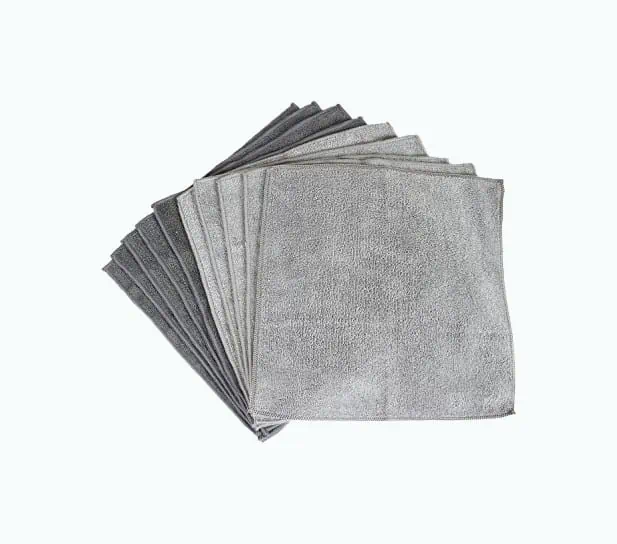
This 10-pack of small microfiber cloths is tremendous for pretty much any task! The small size means they’re easy to store and great for quick jobs, like wiping up a spill or doing the dishes.
These non-abrasive but still grippy cloths are designed for cleaning, polishing, dusting, and drying surfaces. In fact, if you use these with just water, they still do a great job of cleaning.
They’re even specifically designed to work well on stainless steel surfaces. Clean and wipe your sink, cooktop, microwave, and other stainless steel surfaces. Then, watch as the cloth leaves behind a streak-free and lint-free finish.
You can machine wash these warm or cold hundreds of times. So this 10-pack of cloths will last many years.
They come in grey or dark grey so that you can color-code them for different tasks. Avoid cross-contamination and enjoy an extra clean home.
Pros
- Two color options for color coding.
- Small size and easy to store.
- Works great on stainless steel.
- Non-abrasive for a damage-free experience.
- Multi-purpose for us across all surfaces.
- They work wet or dry.
Cons
- May shrink when you first wash them.
- Not soft enough for some customers.
Product Specs
| Material | 80% polyester, 20% polyamide. |
| Softness | Average |
| Thickness | Very thin |
| Size | 11.5 x 11.25 inches |
| Purpose | Cleaning, polishing, dusting, and drying |
Our Ratings
First-Hand Impression
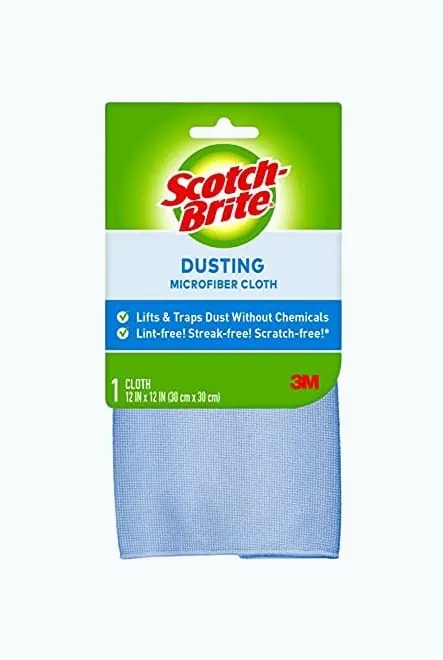
Scotch-Brite Dusting Microfiber Cloth
Best for Dusting
A dusty house is a nightmare for people with allergies, asthma, or folk wanting a super clean home! You need a top-quality dusting cloth to ensure your home is as clean as possible, with excellent air quality.
For that, we recommend the Scotch-Brite dusting cloth. It can lift and trap dust using just the cloth. Leave behind harsh chemicals and achieve a clean home with one simple wipe.
It won’t damage your delicate surfaces or leave behind a streaky finish. It’s lint-free, streak-free, and scratch-free.
Although it’s pretty expensive for one cloth, it can be washed hundreds of times! No matter what you’re dusting — this is a great companion.
It even works for scrubbing dishes, wiping down counters, and cleaning appliances. Take it to the test for cleaning shower tiles or the toilet. It also works for removing lint and hair from your clothes!
Pros
- Great for dusting all surfaces, but can be used for general cleaning.
- Lint-, scratch- and streak-free.
- Lifts and traps dust without harsh chemicals.
- Great for glass.
- You can wash it hundreds of times.
- Removes lint and hair from clothes.
Cons
- Expensive price point for one cloth.
- Gets dirty quickly.
Product Specs
| Material | 85% Polyester, 15% Nylon |
| Softness | Average |
| Thickness | Thin |
| Size | 7 x 6 inches |
| Purpose | Dusting |
Our Ratings
User Experience
MYH Microfiber Cleaning Cloth
Best for Drying Car
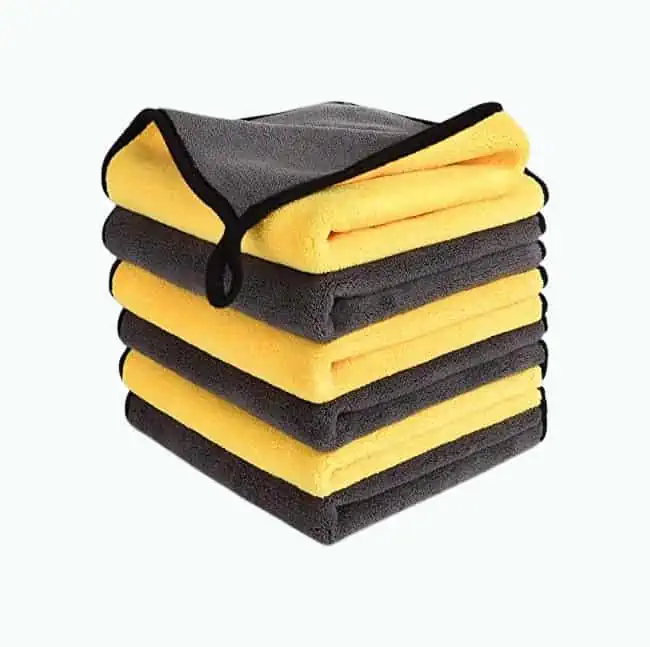
A good microfiber cloth will leave your car dry, streak-free, lint-free, and scratch-free. For this delicate job, we recommend the MYH cleaning cloths.
We know your car is valuable and should be treated as so. These premium cloths are made with highly refined loop-woven microfiber with silk edges. They work great under wet and dry conditions, so you can carefully detail your car without scratching paint or leaving behind lint.
Each towel has 300,000 soft fibers per square inch. This creates a dense and super absorbent towel so you can get a better wash, polish, wax, and drying of your car.
Besides drying your car, you can definitely bring these cloths inside to use around the house. They’re great for cleaning and dusting, no matter what the task at hand is.
Pros
- Scratch-, lint- and swirl-free.
- Super absorbent, holding up to eight times its weight.
- Multi-purpose, both for cars and household chores.
- Can be washed without losing its absorbency.
- Plush-like softness is gentle on surfaces.
- Machine-washable.
Cons
- Yellow cloths may easily stain.
Product Specs
| Material | Blend not specified |
| Softness | Ultra-soft |
| Thickness | Very thick |
| Size | 16 x 16 inches |
| Purpose | Cleaning and drying cars, and household chores |
Our Ratings
Personal Perspective
| Product | Best | Material | Softness | Thickness | Size |
|---|---|---|---|---|---|
| Mr. Siga Microfiber Cloths | Long-Lasting Microfiber Cloth | 80% polyester, 20% nylon | Very soft | Extra thick | 16 x 16″ |
| MagicFiber Microfiber Cleaning Cloths | For Electronics | N/A | Very soft | Average | 6 x 7″ |
| Koala Kloth Microfiber Cleaning Cloth | For Glasses | N/A | Very soft | Thick | 6 x 7″ |
| Chemical Guys Professional Grade Microfiber | Largest Microfiber Cloth | 70% polyester, 30% polyamide | Ultra-soft | Thick | 16 x 24″ |
| Microfiber Magic Microfiber Cloth | For Cleaning Windows | 70% polyester; 30% polyamide | Average | Average | 16 x 16″ |
| E-Cloth Microfiber Bathroom Pack | For Bathroom | 80% polyester, 20% polyamide | Soft | Thick | 6.25 x 7.75″ |
| S&T INC. Microfiber Cleaning Cloth | Value for Money | 88% polyester; 12% polyamide | Ultra-soft | Thin | 11.5 x 11.5″ |
| Sophisti-Clean Microfiber Cloths | Small Microfiber Cloth | 80% polyester, 20% polyamide | Average | Very thin | 11.5 x 11.25″ |
| Scotch-Brite Dusting Microfiber Cloth | For Dusting | 85% Polyester, 15% Nylon | Average | Thin | 7 x 6″ |
| MYH Microfiber Cleaning Cloth | For Drying Car | N/A | Ultra-soft | Very thick | 16 x 16″ |
What Is Microfiber?
Microfiber is a super-absorbent synthetic material. It’s usually made from a polyester and polyamide blend, but sometimes nylon, too.
It’s an eco-friendly switch from cotton for a few reasons. First, they’ll last a super long time if you wash them properly.
Second, there are no pesticides used in the manufacturing process. Lastly, no water is used to dye the fabric, whereas cotton uses a huge amount of water for dyeing.
Microfiber cloths come in various sizes and colors, so you can color-coordinate them with your cleaning routines. For example, yellow for the bathroom, blue for dishes, white for dusting, and so on! Leave cross-contamination behind.
Microfiber is the best of the best when it comes to picking up and removing dirt from surfaces. Plus, it’s lint-free, so it won’t leave streaks on your windows, surfaces, or dishes.
Are All Microfiber Cleaning Cloths the Same?
No. You can get high-quality and low-quality microfiber cloths. The most significant difference is the absorbency.
A good microfiber cloth should suck up water quickly and effectively. Poor-quality microfiber cloths will push the water around or take too long to absorb it.
Microfiber cloths are also manufactured differently from brand to brand. The quality and the ratio of the synthetic materials, as well as the machinery used, can make a huge difference in the effectiveness of the microfiber.
Polyester and polyamide is the most effective blend, but they should also have extremely thin threads. Microfiber threads should be at least 1/16th the width of a human hair, or less than one denier or decitext (1). Look out for this on the packaging, or contact the manufacturer directly.
Lastly, quality microfiber cloths shouldn’t shed lint and fibers when used or washed. They should be lint-free and leave your surfaces cleaner than before!
How To Choose the Best Microfiber Cloth
So, if no two microfiber cloths are the same, how do you choose the best one?

Material
Consider the quality of the material. Being a critic about this may make shopping take a little longer, but it will leave you with microfiber cloths that don’t disappoint!
Look at these details:
- Split: High-quality cloths have gone through a splitting process, and the fibers are in a sort of asterisk pattern. The spaces in between are what make the cloth so effective at absorbing liquid and dirt.
- Softness: The cloth should be soft and not scratchy. Otherwise, it can damage surfaces.
- Thickness: Microfiber cloths come in a variety of thicknesses. Thin ones are great for electronics and glasses. But thicker ones are best for cleaning and drying. A good thickness will also determine the cloth’s durability. How long will it last?
- Grip: A microfiber cloth should be soft but also have a grippy feel to pick up dirt, dust, water, and other debris.
- Absorbency: A microfiber cloth can usually pick up seven to eight times their weight in liquid (2). We recommend choosing a polyester/polyamide blend to get the best absorbency.
- Polyester to polyamide ratio: Some brands label a 70:30 blend while others state an 80:20 blend. However, studies have shown that the blend ratio doesn’t really matter. Both are effective, but the blend ratios aren’t always stated accurately. As long as it’s a blend and not 100 percent polyester, it’s probably quality.
- Weight: If you have a grams per square meter (GSM) scale, pop on the cloth. It should be at least 250 GSM.

Value for Money
When you buy microfiber cloths, they usually come in a pack. Look at the price per cloth to see if you’re getting good value for your money.
Size
Microfiber cloths come in a range of sizes. 11.5 x 11.5 inches is generally the smallest recommendation for cleaning.
However, the electronics and glasses cloths come in smaller sizes. Choose the best size for you according to your cleaning needs.

Purpose
As we said, no two microfiber cloths are the same. They even have different purposes.
Granted, most are multipurpose and can be used across many different cleaning chores. Still, some are specifically for electronics, glasses, or dusting, for example.
What do you need yours for? Make sure to buy the right cloths for the job!
How To Use Microfiber Cloths
Here’s a list of ways to use microfiber cloths, whether for cleaning or something else.
- Dusting: Microfiber cloths pick up dust like no other cloths! Use them dry to attract and trap dust around the home.
- Cleaning: Wet the cloth, and scrub anything dirty in the home using some cleaning solution if you like. Bathrooms, kitchen surfaces, tables, anything.
- Appliances: With a little surface cleaner, microfiber cloths are amazing at cleaning appliances. Cooktops, microwaves, kettle and toaster exteriors, and all around the washing machine — you’re good to go!
- Cars: You can use microfiber cloths to clean the inside and outside of your car, as well as drying it.
- Glass: We love microfiber cloths for their lint and streak-free finish on mirrors, windows, glasses, and electronics.
- Towels: Microfiber cloths are great for drying your body or hair, as they’re super gentle and absorbent.
- Mopping: You can attach microfiber cloths to the bottom of certain kinds of mops. It traps dust and absorbs liquids, leaving you with spotless floors.
- Wash your face: You can use microfiber cloths to wash your face or remove makeup. It absorbs oils and dirt, so it’s great on your skin.
Microfiber Cloth FAQs

How Long Do Microfiber Cloths Last?
This varies from brand to brand, but many brands state that the cloths can be washed up to 500 times. You’re likely to wash the cloths every week, meaning the cloth will last around 10 years!

Which Side of the Microfiber Cloth Should You Use?
Sometimes a microfiber cloth has two sides, but most are the same on both sides.
However, some have a plushier texture on one side. This side is best for buffing, specifically for wax, polish, and sealants. The other side is best for removing dirt and dust.

Do Microfiber Cloths Remove Viruses?
Microfiber cloths can remove viruses and bacteria from nonporous surfaces (3). It doesn’t kill them; it simply removes them, so it’s on the cloth rather than the surface.
You must disinfect the cloths afterward. For best results, use microfiber cloths in combination with a cleaning solution.

Can Microfiber Cloths Be Used To Wash Dishes?
Microfiber cloths are great for washing dishes. However, because they’re so absorbent and food particles might cling to the fabric, always wash your cloths after every use. We love microfiber cloths for washing non-stick pots and pans as they’re so gentle on these delicate surfaces.

Is Microfiber Safe for Car Paint?
As long as the microfiber is soft and scratch-free, it’s totally safe. Test in an inconspicuous area first to check if it will damage the car paint.

Which Is Better — Chamois or Microfiber?
We prefer microfiber. They’re more durable and softer on delicate surfaces, such as your car or mirrors. Chamois towels soak up water quickly but not as effectively as a high-quality microfiber cloth.

How Often Should You Wash Microfiber Cloths?
You should wash your microfiber cloths after every use. Whether you’re washing your cars, a dirty surface, or dishes, it’s important to toss it in the wash to get rid of dirt, debris, and bacteria.

What Do You Clean Microfiber Cloths With?
A gentle detergent is best. You should never use bleach or fabric softener. Bleach will ruin the fabric, and fabric softener will cause the cloth to lose its absorbent qualities.

At What Temperature Should You Wash Microfiber Cloths?
Check the care label. It will tell you the specific temperature for that cloth.
Generally, the temperature should be cold or warm, never exceeding 105 degrees Fahrenheit. This may vary from brand to brand.