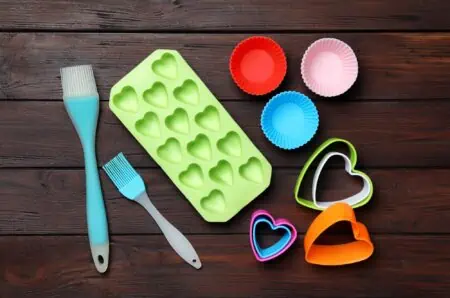
Using silicone cookware and utensils has many benefits. Silicone is non-stick, dishwasher safe, affordable, and easy to clean. On the other hand, silicone can melt under high temperatures, it’s not the most durable, and one major flaw: it absorbs odors.
You might notice that your silicone ice trays or water bottles are starting to smell funky. Not only does this have you pinching your nose, but it also changes the flavor of whatever you’re eating or drinking.
That’s where we come in. We’ll show you how to remove smells from silicone so that it doesn’t boast a treacherous odor anymore. All you need is one hour to follow these five steps.
Key Takeaways
- Soak silicone in hot soapy water for 20 minutes, then scrub with a non-abrasive sponge and rinse well.
- If odors persist, heat oven-safe silicone items in the oven at 350 degrees Fahrenheit for 20 minutes or until odors disappear.
- Boiling silicone items in water for 3-5 minutes can help eliminate odors.
- Using a mixture of vinegar and baking soda can also remove odors from silicone items.
How To Remove Smells From Silicone
The first thing you should try is simply cleaning with soap and water. A quality dish soap can remove germs, bacteria, and residue, leaving you with fresh and odor-free silicone. This method works for food odors or chemical smells, which you often notice on new silicone items.
- Time: About one hour.
- Difficulty: Easy.
What You’ll Need
- Dish soap.
- Non-abrasive sponge.
- Microfiber cloth.
- Sink.
- Rubber gloves.
1. Fill the Sink
Fill a sink with hot water (the hotter, the better) and a few drops of dish soap.
2. Soak the Silicone
Submerge the silicone items into the soapy water and soak for up to one hour.
3. Scrub
Scrub the silicone with a non-abrasive sponge to remove residue and odors.
4. Rinse
Rinse the silicone under hot water.
5. Dry
Dry the silicone pieces with a microfiber cloth. The microfiber is nice and gentle, so it won’t cause scratches.
Other Ways To Get Smells Out of Silicone
Are you wondering how to get smells out of silicone using another method? Perhaps the soapy water wasn’t powerful enough for you. We have four other methods to try.
Note that these methods are for handheld silicone pieces. So if you have odors coming from the bathroom, caused by dirty silicone sealant, these methods aren’t going to work.
In the Dishwasher
Before starting this method, ensure your silicone is dishwasher-safe. It will either say on the bottom of the item, or you can check with the manufacturer. Not all silicone is dishwasher-safe, and the last thing you want to do is melt the item!
If it is dishwasher-safe, follow the steps below. This is particularly useful for greasy residue and odors.
- Position: Place the silicone item on the top or bottom rack of the dishwasher. We recommend the top rack as it doesn’t get as hot.
- Check for sharp objects: Fill the dishwasher with other items, ensuring you keep sharp objects away from the silicone. Knives and forks can tear silicone.
- Start the cycle: Add your dishwasher detergent and run a normal cycle between 120 and 140 degrees Fahrenheit.
In the Oven
Baking your silicone kitchen utensils at a high temperature can remove odors. Ensure the item is definitely oven-proof. Some silicone items are made with plastic or rubber and, therefore, can’t handle high heat.
This method works for more stubborn odors, like a smoke smell or freezer burn smell. If your silicone pieces are definitely oven-safe, here’s how to deodorize them:
- Preheat: Preheat the oven to 350 degrees Fahrenheit.
- Wash the silicone: While the oven is warming up, wash the silicone pieces with hot soapy water to remove residue and rinse them.
- Heat the silicone: Place the silicone items on a baking sheet and place it into the oven.
- Wait: Let it heat for 20 minutes.
- Check: Wearing oven gloves, pull the tray out and carefully sniff the silicone. Beware because it will be hot! If the odors remain, put them back in the oven for 10-minute increments until the odors are gone.
- Cool: Let the items cool down.
- Wash: Rewash the items in hot soapy water.
- Dry: Dry the items with a microfiber cloth.
Caution
If you aren’t certain of the exact oven-safe temperature of your silicone item (for example, it’s not always labeled on items like ice trays), go for 250 degrees Fahrenheit to avoid damage.
By Boiling the Silicone
While you can use the power of oven heat, you can also boil silicone to remove odors. Whether you’re tackling a grease smell or a lingering garlic smell, this method is super easy and effective.
- Fill a container: Fill a container with boiling water. Ensure it’s big enough to host the silicone items you want to deodorize.
- Submerge: Submerge the items in the boiling water.
- Wait: Let them sit in the water for three to five minutes. The boiling water will kill odor-causing bacteria.
- Air dry: Leave the items to air dry thoroughly before you put them away.
With Vinegar and Baking Soda
It wouldn’t be an Oh So Spotless post if we didn’t recommend our two favorite cleaners: baking soda and vinegar. And you bet it works for removing odors from silicone, too. Here’s how to use it:
- Dampen the silicone: Rinse the silicone under water and shake gently so that it’s slightly damp.
- Sprinkle baking soda: Lay the pieces over paper towels and sprinkle generously with baking soda. The baking soda will cling to the damp silicone. Use your finger to gently rub it in, creating a paste with the water.
- Wait: Leave the baking soda to dry on the silicone — this might take a few hours. You can leave it overnight if you have the time.
- Scrub: When the baking soda is dry, dampen a non-abrasive sponge and scrub the items, working the baking soda into the item.
- Rinse: Rinse the baking soda residue away with hot water.
- Soak: Fill a sink or large basin with distilled white vinegar. Place the items in the solution for 30 minutes. This will remove hard water stains and odors.
- Rinse: Rinse the items well.
- Dry: Dry the items with a microfiber cloth.
Tips for Preventing Odors On Silicone
While you can spend your Saturday afternoon deodorizing all your silicone, it’s easier to know how to prevent the stench in the first place. Here are our top tips for preventing odors on silicone baking mats, bakeware, cups, and more:
- Clean it while it’s still hot: When you bake silicone, the molecules expand, letting odors in. When the item cools down, it traps the odors. So if you pull a silicone baking tray out of the oven, try and clean it while it’s still hot.
- Avoid abrasives: Using abrasive cleaners can scratch and ruin silicone, creating pores for odors to set in. Use non-abrasive cleaning tools, such as a cloth or specialized sponge.
- Dry items in the sun: If air-drying silicone items, why not place them in direct sunlight? This can help to tackle lingering odors.
- Store the items correctly: Store your silicone items in airtight containers or bags so they don’t absorb smells while in storage. This also works with ice trays — place the ice tray inside a freezer bag to avoid that weird freezer taste and smell.
- Cover baking trays: When using baking trays in the oven, cover them with baking paper, so they don’t absorb the odors from whatever you’re cooking. This is a great tip for cooking fish.
FAQs

Does Silicone Leak Toxins?
When silicone is heated, it can release volatile siloxanes into your food (1). The good news is that it’s usually tiny amounts, and it’s not as dangerous as plastic.
It’s important to note that the siloxanes released are linked to cancer. But because of the trace amounts, many experts and authorities still deem silicone to be safe and non-toxic. However, the studies aren’t long-term, so the data is inconclusive.
A great alternative is ceramic or stainless steel if you want to avoid silicone.

How Long Does Silicone Take To Cure Before Showering?
If you have used silicone caulk in your shower, it can take between one and 10 days to fully cure before you should shower. The length of time depends on the sealant brand you used, the room temperature, and the humidity levels. When you buy silicone caulk, the user manual will instruct you on how long to let it cure before showering.

How Do You Get the Freezer Smell Out of Silicone Ice Cube Trays?
The most effective way is the oven method. Always make sure that your silicone trays are definitely oven-safe. If they’re oven-safe, but you’re not sure of the best temperature, heat them at 250 degrees instead of 350.
If your silicone trays aren’t oven-safe, wash them in soapy water and then try the vinegar and baking soda hack.
No More Smelly Silicone
While silicone is an affordable and generally non-toxic material, it can be hard to remove lingering odors. Since it’s slightly absorbent when heated, it can cling to musty smells, which leech into your next meal.
We have shared five methods for how to remove odors from silicone, so your cookware can smell as good as new. Our methods range from using soapy water to heating the items in the oven.
Always check if your silicone items are dishwasher or oven-safe before using the respective methods. For instance, some items like spatulas or containers might not be oven-safe.