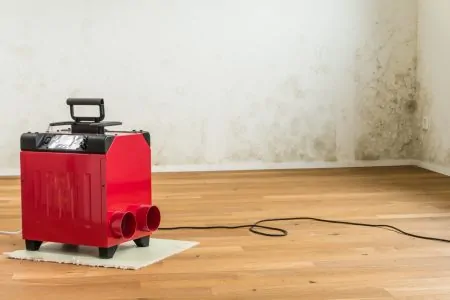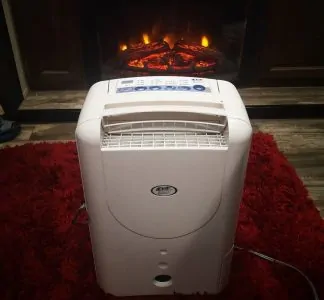
An RV is an enclosed space. As such, everyday activities such as cooking and showering can cause a significant amount of water vapor. When moisture builds up, it can not only become uncomfortable, but it can also damage soft furnishings and even cause mold.
If mold and mildew begin to grow within your RV, they will quickly spread and can become a serious health risk. The most effective way to keep moisture and mold at bay is by using the best RV dehumidifiers on the market.
How to choose one? That’s where we come in. We’ve spent hours researching real customer reviews, expert advice, and dozens of products. After looking at the dehumidifier’s ability, effectiveness and coverage, we’re confident in our top choices.
- Highly effective with two inlets
- Compact and light
- User-friendly design
- Energy efficient operating on low power
- Easy to use
- Large 68-ounce tank
- Excellent for small RVs
- Effectively absorbs moisture
- Requires no power or batteries

- Large 16-ounce tank
- Auto-shutoff
- Quiet operation
- Excellent for bigger RVs
- Smart features increase usability
- Easy to maintain
Review Methodology: At Oh So Spotless, we understand the importance of choosing the best RV dehumidifiers to ensure a comfortable and healthy environment during your travels. Our team of professionals has conducted thorough research, analysis, and hands-on testing to evaluate various dehumidifiers based on key criteria such as performance, efficiency, capacity, noise level, and ease of use. We have compared data and findings from various sources to rank each product according to our assessment. Through our experience and expertise, we provide you with an unbiased review, highlighting the unique features and design choices that set each dehumidifier apart from its competitors. Our goal is to help you make an informed decision by providing quantitative measurements and first-hand evidence that support our recommendations. Trust in Oh So Spotless for a comprehensive and reliable guide to selecting the best RV dehumidifier for your needs.
The Best RV Dehumidifiers of 2024
Having a good dehumidifier on board while traveling in your RV is essential to keep moisture and mold at bay. As we found the best RV dehumidifiers, energy consumption, size and weight were strict criteria.
After extensive research, we sorted the good from the bad. Here are the five best RV dehumidifiers:
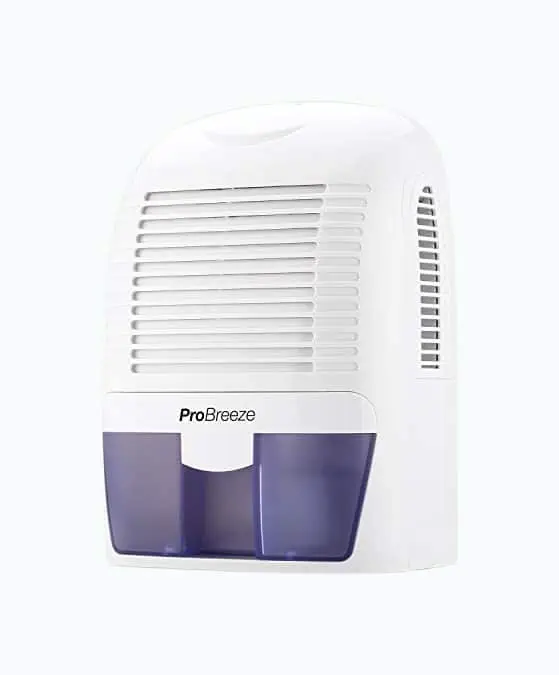
Pro Breeze 2200 Cubic Feet Mini Dehumidifier
Best Airflow
To tackle fun adventures on the road, you need to be comfortable.
The Pro Breeze portable dehumidifier will ensure you have a comfy RV environment to live in.
It’s a very lightweight and compact machine, but it works effectively while using minimum power.
We love how easy it is to use, as well as how quiet it is.
What We Like
Highly Effective With Two Inlets
This dehumidifier is incredibly efficient, having not one but two air inlets. Its unique design allows it to draw air in from both sides. Despite its small size, it can extract up to 18 fluid ounces of water daily in an area of up to 250 square feet.
No matter how high the humidity levels are in your RV, the Pro Breeze dehumidifier will keep it below 50 percent. It will effectively work in temperatures between 59 and 86 degrees Fahrenheit.
Compact and Light
When traveling in an RV, weight is an important factor as you’re packing and planning.
Fortunately, this dehumidifier allows you to bring what you need without worrying about weight. The Pro Breeze weighs a little more than five pounds; it’s light and easy to pack. The small size enables you to place it anywhere within the RV.
Noise Levels Are Toleratable
We don’t want to disturb nature with a loud machine, right? Pro Breeze uses thermoelectric Peltier technology that is ultra-quiet and energy-efficient so that you can enjoy your trip and the peace of the open roads.
User-Friendly Design
Equipped with auto-off and LED indicator when full, we love how easy it is to operate and how low-maintenance it is.
Unlike many other dehumidifiers, the water tank is a breeze to remove and empty. You simply slide it out and empty it over a sink or outside. When it’s empty, slide it right back into place.
Auto-Shutoff Function
You don’t have to worry about getting to the dehumidifier in time as it’s filling up. Thanks to the auto-shutoff function, the unit will automatically turn off when the tank is full. It will notify you through the on/off button by changing color.
What We Don't Like
Water Tank Cleaning
One downside of this little machine is that there is no way to thoroughly clean the water tank because you cannot remove the top cover. One could either use lukewarm water, add some liquid soap, or bleach and stir the entire solution with the hope of getting rid of the accumulated dirt.
No Drain Included
This unit is without a drain port, so you will have to manually remove the water every few hours.
Not for Severe Moisture
If you’re traveling to a seriously humid place, this will take forever to capture all the moisture. Keep in mind that this is best for lighter jobs.
Product Specs
| Dimensions | 6.6 by 9 by 12.69 inches |
| Weight | 5.04 pounds |
| Area Coverage | 250 square feet |
| Effectiveness | 18 ounces per day |
| Tank Capacity | 52 ounces |
Our Ratings
User Experience
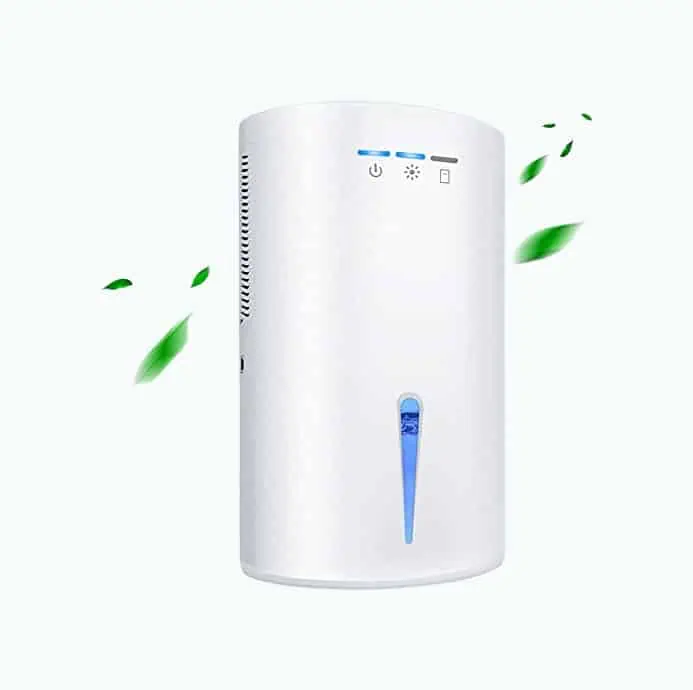
Cosvii Portable Mini Dehumidifier
Most Energy-Efficient
This is an excellent option if you’re on a budget but still want an effective dehumidifier.
The Cosvii Mini Dehumidifier is highly effective yet energy efficient. It works with very low energy consumption, making it an excellent fit for an RV.
This unit is a breeze to operate and is overall user-friendly. It’s easy to empty and will even turn off automatically when the tank is full.
What We Like
Energy Efficient Operating on Low Power
Power sources are sometimes rare when traveling in an RV, so you need something efficient. The Cosvii dehumidifier works very effectively on low-power consumption. It will also save energy by only working when humidity levels are above 35 percent.
Quiet Operation Under 40 Decibels
Dealing with a loud, vibrating dehumidifier can be frustrating, especially in an RV. Luckily, this dehumidifier is ultra-quiet, producing less than 40 decibels when working.
Large 68-Ounce Tank
Despite the small size, this dehumidifier can hold over 68 ounces of collected water. The auto-shutoff function will automatically turn the unit off to ensure the tank won’t flood when full.
Easy to Use
There’s only one button to get familiar with: the on/off button. You don’t need to get the manual out every time, and there are no special settings to get used to.
Lightweight Under Four Pounds
This dehumidifier weighs only a little under four pounds. It’s the perfect addition to an RV adventure without having to compromise other essentials.
What We Don't Like
Adapter Overheating
Although this compact dehumidifier is effective, the adapter does tend to create heat in the process. While it is normal for the adapter to overheat after continuous usage, some users might find it disturbing.
Just make sure to place it away from combustible material within your RV. The manufacturer made sure to have their product UL certified for your safety and peace of mind.
Short Lifespan
This unit tends to work for about a year before it gives out. While it is budget-friendly and still possibly worth it, it’s something to note.
Product Specs
| Dimensions | 8.19 by 5.9 by 13.27 inches |
| Weight | 3.97 pounds |
| Area Coverage | 480 square feet |
| Effectiveness | 34 ounces per day |
| Tank Capacity | 68 ounces |
Our Ratings
Personal Perspective
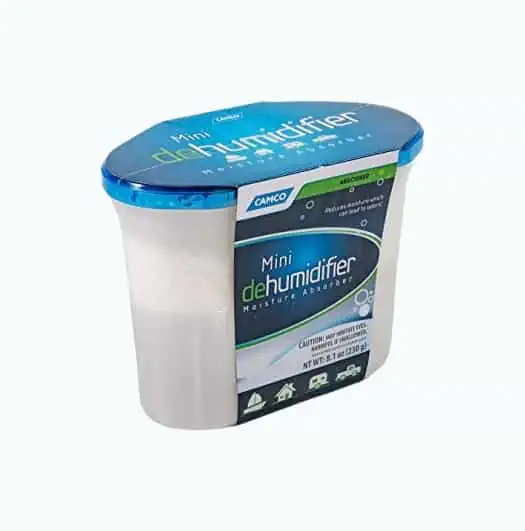
Camco Miniature Dehumidifier
Best for Off-Grid Adventures
If you need a dehumidifier that can follow you on any adventure, this moisture absorber is right for you. The Camco Miniature Dehumidifier contains calcium chloride that effectively absorbs moisture and dampness, creating a comfortable environment.
It’s super simple to use and can absorb up to three times its weight in moisture. However, it does require refills.
Still, you don’t have to worry about power outlets or recharging batteries. And, there are no loud sounds or vibrations to deal with.
What We Like
Excellent for Small RVs
Finding a suitable dehumidifier for a small RV or caravan can be challenging. Luckily, Camco has a solution. This moisture-absorbing mini dehumidifier is the perfect fit for any small space.
Effectively Absorbs Moisture
Inside the compact box, you’ll find calcium chloride, which is a mixture of chloride and calcium. It’s one of the most effective moisture absorbents after silica gel and clay.
Calcium chloride is highly effective against odors and musty air, improving your overall RV environment.
Reusable Container
These mini dehumidifiers are an excellent choice for long-term solutions as you can reuse the container. You can purchase refills whenever needed.
Requires No Power or Batteries
Having a dehumidifier that requires a power outlet at all times isn’t always possible in an RV. It won’t be beneficial if you like to travel off-grid frequently.
We prefer this type of dehumidifier for off-grid travels since there’s no need for electricity or batteries. If you’re going away for an extended period, pack a few refills to avoid running out while enjoying the outdoors.
What We Don't Like
Refills Are Required
Before you hit the road for the summer, you must consider how many refills you might need. If you run out while on the road, getting your hands on a refill can be challenging.
Promised Odor Is Weak
These promise a nice odor, but many customers couldn’t smell anything. If you want a 2-in-1 air freshener and dehumidifier, this might disappoint.
Beads Clump Up and Stop Working
These little beads can clump up together. Then they stop absorbing moisture, rendering this product useless.
Product Specs
| Dimensions | 4.7 by 5.8 by 3.3 inches |
| Weight | 0.4 pounds |
| Area Coverage | N/A |
| Effectiveness | Absorbs three times its own weight in water |
| Tank Capacity | N/A |
Our Ratings
Community Feedback
Seavon Mini Electric Dehumidifier
Best Quiet Dehumidifier
Customers love this compact dehumidifier, and it’s easy to see why. It’s the perfect addition to a camper or RV, thanks to its weight and size. It uses thermoelectric technology to create dehumidification instead of a compressor, which makes it whisper-quiet.
This dehumidifier is highly effective despite its compact size. It will remove up to nine ounces of moisture daily and can hold up to 16 ounces in the tank. There’s only one button to use when turning the unit on or off, and it’s equipped with an auto-shutoff function.
What We Like
Large 16-Ounce Tank
Having a large — 16-ounce — tank means the unit can run for longer without the need to empty it. It’s a breeze to empty by sliding the reservoir out of the bottom of the unit. There’s no need to open anything, simply pull the plug out and empty it over a sink or drain.
Auto-Shutoff Feature
Remembering to empty the water tank in time can be tricky, which often leads to overflow and a broken dehumidifier. Fortunately, Seavon has equipped its Mini Dehumidifier with an auto-shutoff function. This function automatically turns the device off when the reservoir reaches its total capacity.
Quiet Operation
Because there’s no noisy compressor, the dehumidifier is ultra-quiet. You can easily use it at night when everyone’s sleeping without worrying about disturbing your family or fellow campers.
Compact Design Fits on Tables
When traveling in an RV or camper, space is limited. The Seavon Mini Dehumidifier won’t take up much space and can easily stand on a small table or shelf out of sight.
What We Don't Like
Difficult to Clean
Despite working effectively, it’s rather tricky to clean. The tank’s lid can’t be removed, making it tricky to clean it properly.
Removes Moisture Slowly
When you’re in a rush to bring down humidity levels, you want something that acts fast. This dehumidifier, on the other hand, likes to take its time. You can expect slow results from this one.
Product Specs
| Dimensions | 6.5 by 5.3 by 11.5 inches |
| Weight | 2.4 pounds |
| Area Coverage | 170 square feet |
| Effectiveness | 9 ounces |
| Tank Capacity | 16 ounces |
Our Ratings
First-Hand Impression
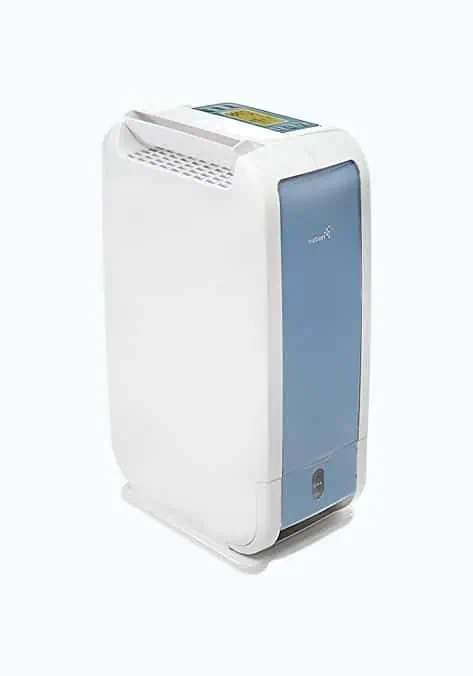
Ivation 13-Pint Dehumidifier
Best Dehumidifier for Large RVs
For a larger RV, we prefer a larger dehumidifier, which checks all the boxes. It’s compact and lightweight yet powerful enough to cover large areas of up to 270 square feet. The Ivation dehumidifier comes with multiple features and settings to suit your preferences.
Frequent RV’ers love this dehumidifier due to how effective it is and how easy it is to operate. It will remove up to 208 fluid ounces of moisture daily and protect your interior from mold and dampness.
What We Like
Excellent for Bigger RVs
In a large RV, a mini dehumidifier might not be enough, so we highly suggest this one from Ivation. It’s a 208-ounce desiccant dehumidifier that uses a desiccant rotor to remove high amounts of moisture. Ivation recommends that it’s used in areas of up to 270 square feet, so it’ll be able to cover an entire RV.
Lightweight at 11 Pounds
Despite being larger than the previous units we’ve reviewed, it’s still lightweight — weighing only a little over 11 pounds. It’s also compact and easy to fit inside the compromised space of an RV or camper.
Smart Features Increase Usability
Because this is larger than others, we expect to get a little more for our money. Luckily, this unit provides everything you’ll need. It has an advanced LCD control display that’s easy to read so that you can set your desired humidity level.
There are different fan speeds and even a sleep mode for nighttime with dimmed lights. The air vent can be programmed to swing, creating better airflow within the RV. You can also set the timer for the duration and automatic shutoff.
Easy to Maintain
Larger dehumidifiers are usually more challenging to empty, but this unit is different. The tank easily slides out at the bottom and slides right back into place when emptied. The air filter can also be removed and cleaned using water or a vacuum.
What We Don't Like
The Unit Gets Hot
When you’re out on the road in a hot place, the last thing you want is some more heat. When this dehumidifier runs, it heats up, causing the room temperature to increase.
Louder Than Expected
After a little while, this dehumidifier seems to be struggling to run. The main giveaway is the irritating noise that it emits.
Product Specs
| Dimensions | 10.6 by 6.8 by 17.5 inches |
| Weight | 13.8 pounds |
| Area Coverage | 270 square feet |
| Effectiveness | 208 ounces per day |
| Tank Capacity | 60 ounces |
Our Ratings
User Experience
| Product | Best | Dimensions | Weight | Area Coverage | Effectiveness | Tank Capacity |
|---|---|---|---|---|---|---|
| Pro Breeze Dehumidifier | Airflow | 6.6 x 9 x 12.69″ | 5.04 lbs | 250 sq ft | 18 oz per day | 52 oz |
| Cosvii Portable Mini Dehumidifier | Energy-Efficient | 8.19 x 5.90 x 13.27″ | 3.97 lbs | 480 sq ft | 34 oz per day | 68 oz |
| Camco Miniature Dehumidifier | For Off-Grid Adventures | 4.7 x 5.8 x 3.3″ | 0.4 lbs | N/A | Absorbs three times its own weight in water | N/A |
| Seavon Mini Electric Dehumidifier | Quiet Dehumidifier | 6.5 x 5.3 x 11.5″ | 2.4 lbs | 170 sq ft | 9 oz | 16 oz |
| Ivation 13-Pint Dehumidifier | Dehumidifier for Large RVs | 10.6 x 6.8 x 17.5″ | 13.8 lbs | 270 sq ft | 208 oz per day | 60 oz |
How to Choose a RV Dehumidifier
Having a dehumidifier in an RV is more critical than most people think. If mold begins to grow within your RV, you could experience several health effects. These include allergies, asthma attacks, nausea, and headaches (1).
Due to an RV’s compromised space, you must be careful when choosing a dehumidifier. A large 50-pint unit won’t fit and will use too much energy. We’ve put together a simple guide for you to find the best RV dehumidifier for you.

Size and Weight
When traveling in an RV, choose a portable humidifier. One that is lightweight and compact is best, so you can fit it in small areas or on a table or shelf.
Weight plays a significant role in how your RV drives and how much gas it uses. An overpacked RV is not only tricky to drive, but it’s also a risk for others on the road. Always include the total weight (full tank) of the dehumidifier when calculating the final weight for your RV (2). We recommend one between two and five pounds.

Energy Consumption
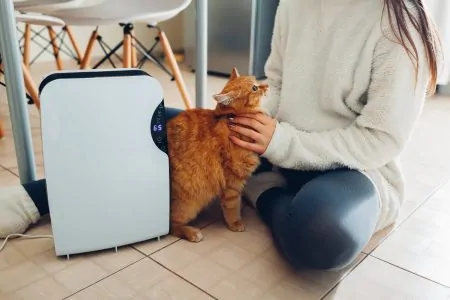
Just as space is compromised in an RV, so is energy. Considering energy consumption is essential if you like to travel off-grid where you rely on a generator and the RV’s battery.
Some dehumidifiers will use a significant amount of power during each cycle, so limiting yourself is also important. Consider when you most need it — for instance, in the early hours of the day or late afternoon and evening (3). Turn the unit off when the humidity is at a normal level to avoid wasting energy.
If you travel off-grid, choose an energy-efficient dehumidifier. You can also choose a moisture absorber, such as the Camco, on our list below. These don’t require any electricity or batteries; all you have to do is refill it when needed.

Noise
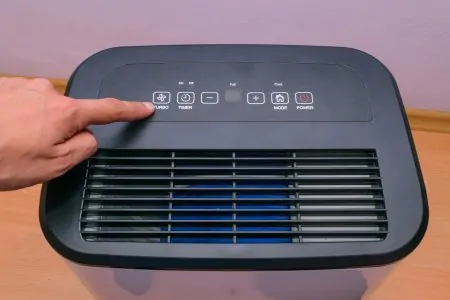
Dehumidifiers are generally rather noisy due to the moving parts of the compressor. However, having a loud, vibrating machine when you’re trying to enjoy nature at its best can be disturbing for you and others.
So we highly recommend choosing a unit without a compressor. These will usually use thermoelectric technology that minimizes sounds or vibrations. You’ll find this in most small dehumidifiers since there simply isn’t room for a compressor.

Tank Capacity
This information is essential to know whenever you consider a dehumidifier. The tank capacity refers to how much the unit’s reservoir can hold. Most small dehumidifiers can hold around 16 ounces.
It’s important to remember that smaller tanks need to be emptied more often, whereas a larger capacity can go for longer. If you’re traveling in humid locations, a larger capacity will be beneficial. However, a larger tank will also make the unit heavier, especially when full.
FAQs

How Do I Prevent Mold and Mildew In My RV?
The best way to prevent mold and mildew in your RV is to use a dehumidifier like this Pro Breeze Mini Dehumidifier. It is compact, portable, and covers 250 square feet.

What Should the Humidity Be In My RV?
The humidity in your RV should be the same as inside your home. The ideal moisture levels should be 30 to 50 percent for comfort and to prevent mold growth.

How Do I Dehumidify My RV In Storage?
The best way to dehumidify your RV in storage is to open windows to let the airflow. Running the dehumidifier to extract moisture it is also a great idea if you have an electrical hook-up.

How Do I Stop My Camper From Smelling Musty?
The best way to stop your camper from smelling musty is to run a dehumidifier to remove moisture and wash all removable fabric covers. Also, clean carpets and rugs, and wash down any hard surfaces with white vinegar and water.