With hundreds of pruning shears available, it can be almost impossible to know where to start. What is the best option for your flowers, shrubs, hedges, and trees?
That’s where I come in. As a garden enthusiast, I have spent hours creating this list and reviewing the seven best pruning shears available. As well as applying my own experience, I also studied genuine customer reviews and expert advice.
Keep reading for a comprehensive buying guide and great product recommendations, including electric shears, shears for small hands, and more.
- Super sharp blades
- Spring mechanism reduces hand fatigue
- Long narrow tip for hard-to-reach places
- Self-cleaning rust-resistant blades
- Non-slip handle
- Cuts up to ⅝ inches thick
- Good for clean precise cuts
- Looped handles for all hand sizes
- Sharp stainless steel blades
- Comes with two batteries for 8 hours battery life
- Brushless motor produces less noise
- Up to 100 cutting times per minute
- Brilliant for delicate cuts up to one inch thick
- Suitable for right & left-handed users
- Hardened and durable carbon steel blades
- Suitable for left & right-handed users
- Safety locking mechanism
- Easily adjust the screw tightness
- Low friction coating for easy cutting
- Contoured & ergonomic handle
- Handle has a small hole for hanging
Review Methodology: At Oh So Spotless, we take pride in providing you with a thorough analysis and assessment of the best pruning shears available in the market. Our team of professionals conducts hands-on tests and compares products based on various criteria like performance, durability, and ease of use. We evaluate products from a user’s perspective, sharing our findings backed by data, research, and first-hand experience. Our in-depth review covers key decision-making factors, such as blade quality, handle design, cutting capacity, safety features, and price, helping you make an informed decision. We also identify and rank products based on their unique features and design choices that set them apart from competitors. Trust our expertise and the results of our rigorous evaluation process to guide you in selecting the best pruning shears for your gardening needs.
The Best Pruning Shears of 2024
Take your gardening to the next level with fantastic pruning shears. To create this list, I studied dozens of pruning shears, snipping out the fluff and faff so that you don’t have to. I also investigated genuine customer reviews, expert advice, and my own experience.
Whether you need to prune hedges or stick to a tighter budget, there should be something for everyone on this list. Let’s cut to the chase.
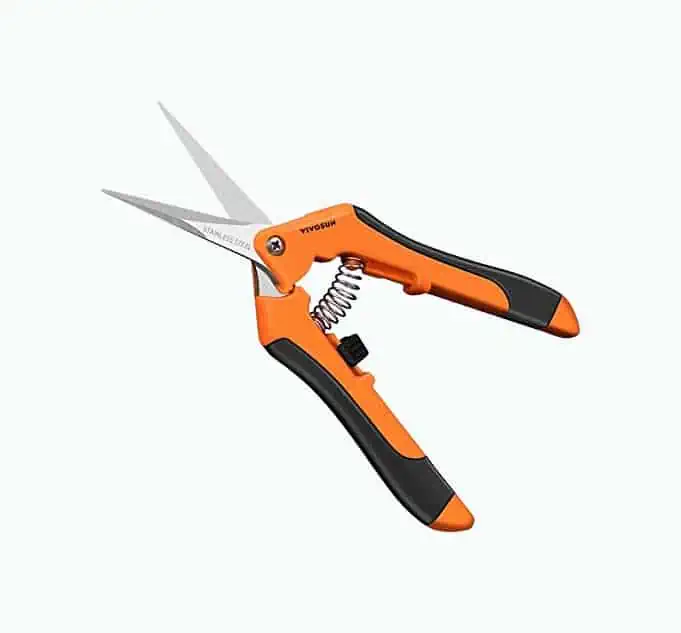
Vivosun Hand Pruning Shear
Safest Pruning Shears
These pruning shears offer added safety features for worry-free pruning. This pair of scissors features a micro tip snip and a secure sideways lock mechanism that is easy to operate. Not only does this protect the blades when you’re not using the shears, but it also prevents damage to other objects and fingers.
These tools are designed for right-handed and left-handed users to ensure safety for all.
Besides the safety, this is great for precise cuts. You can use these in hard-to-reach places without damaging other parts of your plants.
Cleaning Tip
It’s important to clean pruning shears after each use to ensure the durability of the blades and performance of the shears.
Pros
- Super sharp blades for trimming, shaping, and deadheading.
- Spring mechanism reduces hand fatigue.
- Long, narrow tip allows you to cut in hard-to-reach places.
- Budget-friendly price, about $10 cheaper than the average cost.
- Easy to lock in place when you’re not using it.
- Great for right and left-handed users.
Cons
- Locking mechanism is a bit flimsy.
- Springs back open quickly after cutting.
Product Specs
| Type | Anvil |
| Cutting diameter | Less than 1/2 inch |
| Safety lock | Yes |
| Blade material | Stainless steel and titanium |
| Warranty | Not specified |
Our Ratings
User Experience
Fiskars Steel Bypass Pruning Shears
Best Bypass Pruning Shears
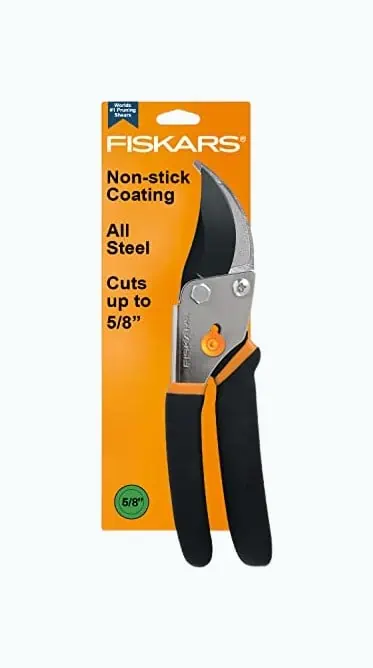
Check out these brilliant bypass shears if you need to trim stems and light branches up to ⅝ inches thick in diameter.
What can you expect? The blade is made from hard, precision-ground steel, which remains sharp even if you use it frequently.
You’ll notice how easily the blade glides through plants and woods. This prevents frayed edges and a build-up of sap and debris on your blade.
If you experience any issues, these shears are covered by a lifetime warranty. So you can rest assured that the manufacturer will deal with any problems.
Pros
- Rust-resistant blades with a self-cleaning function.
- Non-slip handle so you can use it even in the rain.
- Cuts through stems and branches up to ⅝ inches thick.
- Lifetime warranty to back up the product’s durability.
- Low-friction blade.
- Steel blade stays sharp for a long time.
Cons
- Some customers found that anything over ½ inch thick was too much for the shears.
- Safety locks can come loose quite easily.
Product Specs
| Type | Bypass |
| Cutting diameter | ⅝ inch thick |
| Safety lock | Yes |
| Blade material | Steel with a non-stick cover |
| Warranty | Lifetime warranty |
Our Ratings
Personal Perspective
Fiskars Micro-Tip Pruning Shears
Best for Small Hands
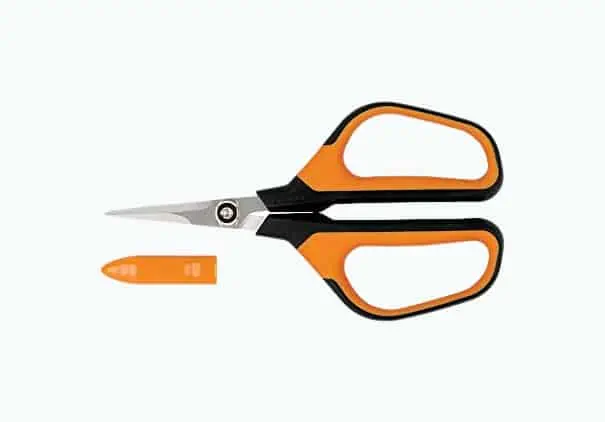
These pruning shears from Fiskars might be a great match if you have small hands. As more of a scissor shape, they are more natural and comfortable to hold.
The shears have long, evenly sharp blades for clean cuts, even in tight spaces. The stainless steel blades stay sharp even with frequent use.
Customers appreciate the large handle loops that accommodate both small and large hands, as well as gloves.
Pros
- Good for clean, precise cuts the entire way up the blade.
- The looped handles are comfortable and suitable for all hand sizes.
- Stainless steel blades stay sharp throughout use.
- Full lifetime warranty.
- Affordable price point.
- Great for making intricate cuts.
Cons
- Some customers found the blades dulled quite quickly.
- No safety lock.
Product Specs
| Type | Anvil |
| Cutting diameter | Not specified |
| Safety lock | No |
| Blade material | Stainless steel |
| Warranty | Lifetime warranty |
Our Ratings
Community Feedback
Swansoft Electric Pruning Shears
Best for Trees
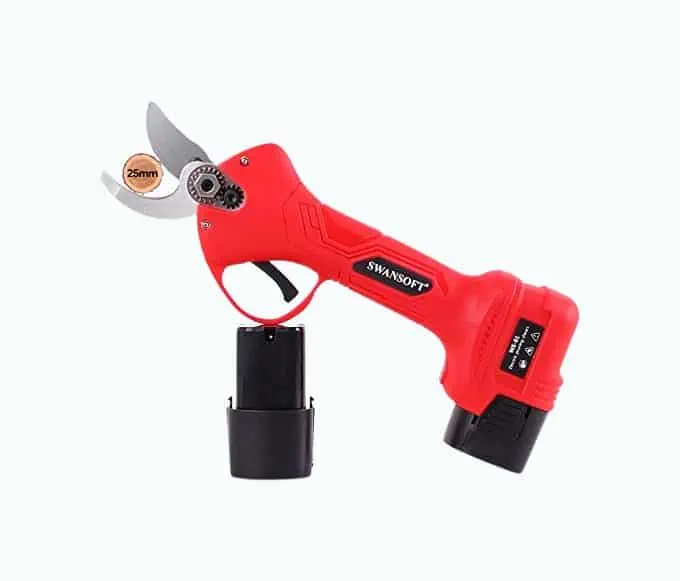
Cutting through tree branches with pruning shears is not the most effective. But if you need something for trees with branches up to one inch thick, these will be the best pruning shears for you.
These electric power pruning shears are easy to use; they’ll handle the hard work for you when you encounter a stubborn branch.
With over 100 cutting times per minute, it’s less stressful for you, easing hand fatigue and frustration. You get about three to four hours of battery life per charge, ensuring lots of pruning time in one go.
Pros
- Sharp and durable steel blades.
- Comes with two batteries, giving you up to eight hours of battery life.
- Brushless motor produces less noise.
- Up to 100 cutting times per minute, which takes the pressure off you.
- Cuts branches up to one inch thick.
- Easy to use and reduces hand fatigue.
Cons
- Only one year warranty for such an expensive product.
- No safety lock.
- Difficult to remove the battery.
Product Specs
| Type | Power |
| Cutting diameter | One inch |
| Safety lock | No |
| Blade material | Hardened SK5 steel |
| Warranty | One year |
Our Ratings
First-Hand Impression
The Gardener's Friend Ratchet Pruning Shears
Best Ratchet Pruners
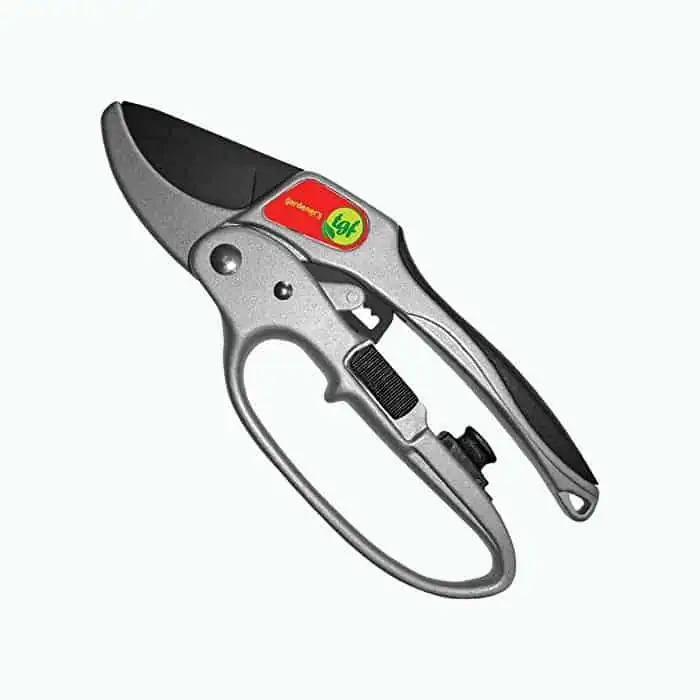
These ratchet pruners make cutting branches and stems quick and easy. The mechanism uses leverage so you can cut more branches with less effort. This includes shrubs, trees, and flowers up to an inch thick, which is incredible for handheld manual pruning shears.
The manufacturer claims that these pruning shears are helpful for people with arthritis or weak hands. If that sounds like you, and you don’t want to fork out the cash for power pruning shears, then this might be up your street. In fact, if you’re a senior — this was designed with you in mind.
Pros
- Brilliant for delicate cuts up to one inch thick.
- Suitable for both right and left-handed users.
- Hardened carbon steel blades for durability and sharpness.
- Lightweight aluminum body that’s comfortable and rust-resistant.
- Included sponge to clean the blades.
- Soft rubber handle to ease hand fatigue.
Cons
- Too big for small hands.
- Some customers said it didn’t last longer than one season.
Product Specs
| Type | Ratchet |
| Cutting diameter | One inch |
| Safety lock | Yes |
| Blade material | Hardened carbon steel |
| Warranty | Lifetime warranty |
Our Ratings
User Experience
Weichuang Professional Pruning Shears
Best Budget Pick
The price of pruning shears can vary significantly. But if you only want to spend a few dollars, the Weichaung pruning shears may tick your boxes.
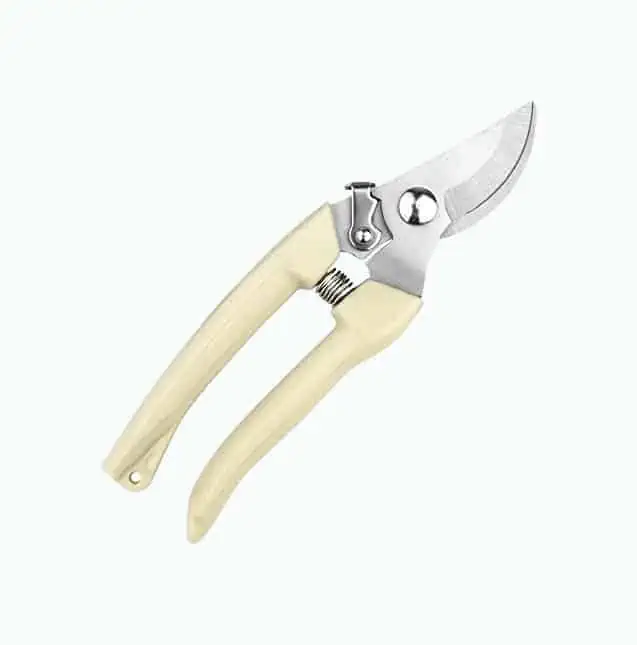
Despite the low price, the blades are made of high-quality stainless steel. They have been heat-treated and are high in hardness, allowing for sharp, quick cutting of small branches up to 1/3-inch thick in diameter.
The pruning shears are super light, weighing only 3.5 ounces, so they are ideal for small hands.
Pros
- Suitable for left and right-handed users.
- Safety locking mechanism keeps blades closed.
- Easily adjust the tightness with the screw on the blade.
- Spring tested to last 100,000 times.
- Very lightweight (3.5 ounces) and easy to carry.
Cons
- Not suitable for branches thicker than 1/3 inches.
- Not the best for larger hands.
Product Specs
| Type | Bypass |
| Cutting diameter | ½ inch |
| Safety lock | Yes |
| Blade material | Stainless steel |
| Warranty | Not specified |
Our Ratings
Personal Perspective
iGarden Combo Garden Tool Set
Best for Hedges
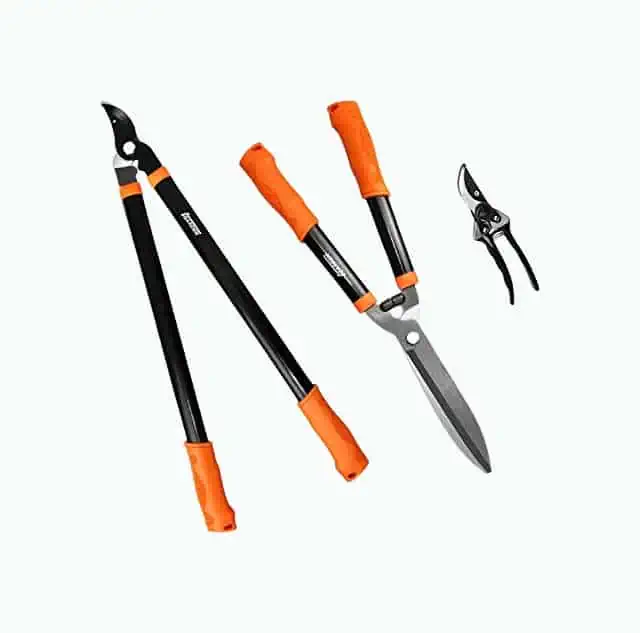
Pruning hedges with shears may take a while, which is why I am recommending this combo set. While you can certainly use the pruning shears for more delicate cuts, hedge shears and loppers can speed up your hard work.
This three-piece set features a soft grip on every tool, ensuring the user’s comfort and ease of use. The high carbon steel blades allow for quick and easy cutting on tree branches as well as hedges. The blades are hard and precision-ground, so they will stay sharp and resist rust.
Pros
- Low friction coating for easy cutting.
- Contoured and ergonomic handle to prevent hand fatigue.
- Small hole on handle so you can hang it to store it.
- Rust-resistant and built not to bend or break.
- Includes lopper, hedge shears, and a bypass pruner.
Cons
- The pruners are quite low in quality.
- Best for light-duty work.
Product Specs
| Type | Bypass shears, plus lopper and hedge shears |
| Cutting diameter | Not specified |
| Safety lock | Yes |
| Blade material | High carbon steel |
| Warranty | Not specified |
Our Ratings
Community Feedback
| Product | Best | Type | Cutting diameter | Safety lock | Blade material | Warranty |
|---|---|---|---|---|---|---|
| Vivosun Hand Pruning Shear | Safest Pruning Shears | Anvil | Less than ½ inch | Yes | Stainless steel & titanium | N/A |
| Fiskars Steel Bypass Pruning Shears | Bypass Pruning Shears | Bypass | ⅝ inch | Yes | Steel with a non-stick cover | Lifetime |
| Fiskars Micro-Tip Pruning Shears | For Small Hands | Anvil | N/A | No | Stainless steel | Lifetime |
| Swansoft Electric Pruning Shears | For Trees | Power | 1 inch | No | Hardened SK5 steel | One year |
| The Gardener’s Friend Ratchet Pruning Shears | Ratchet Pruners | Ratchet | 1 inch | Yes | Hardened carbon steel | Lifetime |
| Weichuang Professional Pruning Shears | Budget Pick | Bypass | ½ inch | Yes | Stainless steel | N/A |
| iGarden Combo Garden Tool Set | For Hedges | Bypass | N/A | Yes | High carbon steel | N/A |
Types of Pruning Shears
Before you dive into my product recommendations, it’s important to know the different types of pruning shears, as they all have different benefits and drawbacks.
Bypass
Bypass shears are best for sharp and clean cuts. They are the best for the plant’s health since frayed and ragged edges can attract diseases.
Bypass pruners have two sharp blades that can cut through stems and soft branches up to ½ inch thick. Note that you shouldn’t use these pruners for dry or weak branches in case you clog or bend the shears.
Pros
- They make sharp, clean cuts to encourage plant health.
- Good for stems and soft branches up to ½ inch thick.
- Many are made with comfortable and ergonomic handles.
- Suitable for various tasks, including pruning shrubs and trees.
- Available in a variety of sizes.
Cons
- There are fewer budget-friendly options on the market.
- Not suitable for dry or weak branches in case the blades bend.
Ratchet
These shears are similar to the shape of the anvil, but they have a catch-and-hold feature to ease hand fatigue. They also work for cutting larger branches, up to ¾ inch in diameter.
It might take a while to get used to as it’s a bit of a difference to employ the catch-and-hold feature. But once you get the hang of it, you’ll love these shears for dry, dead branches, especially if you have weaker hands.
Pros
- The catch-and-hold feature eases hand fatigue.
- Good for people with weaker hands.
- Works well for thicker branches, up to ¾ inch thick.
- Sharp blades that stay sharp.
Cons
- Takes a while to get used to.
- On the more expensive side.
Power
Power pruning shears are battery-operated. They’re ideal for reducing hand fatigue, so if you’re going to be pruning for a while or just have weaker hands — these are right for you. Simply squeeze the handle gently, and the power pruner does the hard work.
These can cut branches up to one inch thick and are available in an anvil or bypass style.
Pros
- Many have long battery lives, lasting up to eight hours.
- Ease wrist and hand pain while pruning.
- The pruner does all of the hard work for you.
- Quickly gets the job done.
- They don’t get dull as quickly.
Cons
- You have to remember to charge up the pruning shears.
- Much more expensive than manual shears by about $100-200.
Anvil
Anvil pruning shears crush rather than cut. They’re best for dry, dead branches that will snap off easily. I don’t recommend these for softer branches since the anvil shears can fray them. Anvil shears are also for smaller stems and branches, so don’t cut anything more than ½ inch in diameter.
Pros
- A good way to get rid of dead, dry branches.
- A variety of options available to choose from.
- Powerful with sharp blades for effective crushing.
- Great for dead-heading annuals.
Cons
- May fray softer bran,ches which can damage plants.
- Not suitable for thicker branches.
How To Choose the Best Pruning Shears
Let’s look at some of the most important details to consider before making your purchase.

Type
Recap the pros and cons of each type and what each is used for to decide which is best for you: anvil, bypass, ratchet, or power?
Size
Consider the size of the shears and how compact they will be for you to hold and transport. But also consider the size of the branch that the shears can cut.
Most have a maximum of about ½ inch, ¾ inch, or one inch. Choose a larger capacity if you have tree branches you want to prune.

Safety
Pruning shears are sharp. Consider one with a safety lock, especially if you have kids or pets around. Some also have a cover that covers the blades when you aren’t using the shears.

Ease of Use
Consider how easy it will be to use the shears. Firstly, check the material type and how sharp the blade is. The sharper it is, the easier it will be to cut.
Take note of the cutting mechanism and if it will be easy on your hands or cause fatigue. Overall, power pruning shears are one of the easiest types to use because you don’t have to do the hard work. Ratchet shears are also brilliant for weaker hands.
Durability
Choose something that’s built to last and can handle repeated use throughout the pruning season. You should consider the blade type for this, as certain materials will last longer.
Titanium-coated blades and carbon steel blades are the most durable. Stainless steel is also a great choice. Non-stick blades are great for stickier plants, but they aren’t as durable.

Budget
Pruning shears come in a variety of prices, from less than $5 all the way up to about $250 for power shears. The majority of shears sit between $10 and $20, though. Consider your budget and shop within it.
Pruning Shears FAQs

Which Is Better: Bypass or Anvil Pruners?
Both are suitable for different things. For dry or dead branches, anvil pruners are better. For stems and soft branches, use bypass shears.

What Are Anvil Pruners Good For?
Anvil pruners are best for cutting away dead or dry branches. They crush the stems and branches rather than making sharp, clean cuts, so you don’t want to use these on stems or soft branches as they could fray healthy plants.

Can I Use Scissors for Pruning?
Scissors won’t be effective. They won’t make sharp, clean cuts, and the thickness of the branch or stem could cause your scissors to snap or bend.

What Is the Difference Between a Lopper and a Pruner?
Loppers have long handles to help you get into hard-to-reach areas, whereas pruning shears are short and compact, like small scissors.
Pruning shears usually have a maximum cutting diameter of about one inch, whereas loppers can go up to 2.5 inches thick. If you have trees or vines, a lopper will be more effective than pruning shears.

Why Are Shears So Expensive?
Shears can be expensive because they are made from quality materials, like Japanese steel. Not all shears break the bank. Many domestic models are available at reasonable prices.

How Do You Maintain Garden Pruners?
The best way to maintain garden pruners is to rinse the blades in soapy water, use wire wood to remove stains and stubborn marks, and then dry them with a clean rag.