There are a lot of garden tools that everyone claims are a “must-have”. But what about edgers vs string trimmers? Do you really need both?
We’ll discuss the main purposes and differences between edgers and string trimmers, covering their uses, pros and cons.
By the end, you’ll know whether you need one or the other, both, or neither.
Key Takeaways
- Lawn edgers create distinct lines between grass and paved areas, improving aesthetics.
- String trimmers cut grass in hard-to-reach areas around obstacles and edges.
- Edgers use a blade, while trimmers use a flexible, spinning line for cutting.
- While string trimmers can be used as edgers, having separate tools is more efficient and safe.
What’s the Difference Between Edgers Vs String Trimmers?
Let’s look at the purposes for both edgers and string trimmers and see what makes them unique from one another.
Edgers
Lawn edgers are tools that allow you to define any edges in your lawn. For instance, you can use these around pathways, driveways, sidewalks, garden beds, and other edges.
This tool uses a blade that cuts the overhanging grass or weeds, creating a distinct separation.
You’ll find both manual or motorized lawn edgers. Manual edgers are more affordable but not as quick to use, especially if you have a lot of edges to trim. Motorized edgers are more expensive but easy and quick to use.
String Trimmers
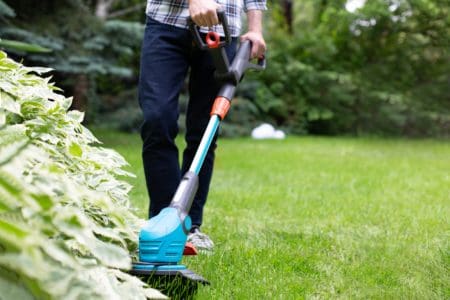
String trimmers — often called weed whackers or line trimmers — are for cutting grass near obstacles, such as pillars, furniture, trees, houses, and even walkways. It can be used for cutting grass at edges, similar to a lawn edger, but it’s not going to give you that fine edge you may want.
Unlike the blade on the edger, trimmers use a spinning line that cuts the grass. It’s ideal for cutting grass in difficult and hard-to-reach places due to its flexibility.
You’ll find both gas and electric string trimmers. If you have a large yard, we recommend a gas trimmer or a cordless electric to increase maneuverability.
Bottom Line
The big difference between edgers and strimmers is what they’re used for and the construction. Edgers create nice edges between different garden terrains. Trimmers cut grass in hard-to-reach places and around obstacles. Edgers use a blade, whereas trimmers use a flexible line.
When to Use an Edger
Use an edger when you want to define the edges in your lawn. This is especially helpful around paved areas like sidewalks and driveways where weeds and grass may overhang. Lawn mowers can’t help you out here, so an edger will be the most effective tool.
If you want a neat, crisp aesthetic in your yard, you won’t want to be without a lawn edger. They will spruce up your yard, making it look super tidy and professionally finished. While edgers aren’t necessary to your lawn’s health, they certainly make things look a lot nicer.
When to Use a String Trimmer
When you finish mowing, you will notice areas that haven’t been cut. A string trimmer will allow you to get into hard-to-reach areas. Think areas around trees, pillars, garden furniture, garden beds, plants, and other areas.
You can also use trimmers along paved areas, similar to an edger, but for cutting down the grass rather than creating neat fine lines.
Top Tip
Use a string trimmer after mowing to touch up areas that your mower couldn’t access.
Edgers vs String Trimmers: Pros and Cons
Because these are both different tools with different purposes, you may want to purchase both for your yard. But before you do, let’s look at the pros and cons of each, so you know exactly what to expect.
Edgers
Pros
- Creates a neat and aesthetically pleasing finish to your yard.
- Keeps foliage and paving separate.
- Minimizes weed invasion.
- Manual and motorized options available.
Cons
- Manual edgers may take too long to use in larger yards.
- Motorized edgers are more expensive than manuals by about $30.
String Trimmer
Pros
- Great to use alongside a lawn mower for a finished look in your yard.
- Gets into hard-to-reach spots, like along edges and around obstacles.
- Pretty lightweight and compact, making them easy to use and store.
- Many cordless options available to increase maneuverability.
Cons
- Gas trimmers can be loud and they emit fumes.
- Cordless electric trimmers need to be recharged often.
Can I Use a String Trimmer As an Edger?
You can! While it’s not too difficult, many people prefer having two separate tools. But if you’re trying to save money, here’s how to use your string trimmer as an edger.
- Hold the string trimmer at a 90-degree angle, so the spinning line is top to bottom rather than side to side.
- Slowly lower it to make contact with the soil or grass. This will cut away the soil or grass, creating a nice neat edge.
- Keep the string spinning away from you so that if any debris flies up, it doesn’t hit you.
FAQs

How Do You Use a String Trimmer Like a Pro?
Using a string trimmer like a pro is vital for the best results. Wear work boots to protect your feet, safety goggles, check the ground first for obstructions, and hold the strimmer clear of your body.

How Often Should You Edge Your Lawn?
You should edge your lawn every couple of mows. The amount of times you should edge also changes depending on the seasons.

How Can I Edge My Lawn Without an Edger?
You can edge your lawn without an edger. You can use a flat-head shovel, or edging shears to get that trimmed look.

Should You Edge Before or After You Mow?
Whether you should edge before or after you mow is down to preference. However, edging first might mean less clean up after you finish mowing.

How Deep Should You Edge Your Lawn?
Most experts recommend the depth you should edge your lawn is no deeper than one or two inches. That said, there are no rules and it all comes down to preference.

What is the Best Brand of Edge Trimmer?
In our opinion, the best brand of edge trimmer is the Worx 12-Amp Lawn Edger. It has an adjustable cutting length, a cutting line indicator, an additional support handle to improve grip, and a D-shaped handle for comfort and safety.
Edger Vs Trimmer
So what’s the big difference between an edger and a string trimmer?
An edger creates nice distinct lines between grassy areas and paved areas. This isn’t necessary to your lawn’s health but crucial to a crisp, finished aesthetic.
A string trimmer is used for cutting grass in hard-to-reach areas where your lawn mower couldn’t. You can use it around trees, furniture, pillars, and other obstacles.
While your string trimmer can also be used as an edger, it is best to invest in the two separate tools for safety and efficiency reasons.