High humidity can trigger asthma and allergies, among other health issues, due to mold, dust mites, and more. On the other hand, though, low humidity can also be highly uncomfortable. It is, therefore, essential to create a balance.
You can create that perfect balance for a comfortable living space by installing a whole house dehumidifier.
But how do you find the best whole house dehumidifier? It all comes down to the size of your house and where you can install it.
H
We’ve spent hours researching various products as well as expert advice. We’re confident in our five choices prioritizing efficiency, durability, and design.

- Large area coverage
- Tall design
- Large tank & drain option
- Easy maintenance
- Automatic restart
- Quiet operation under 52 decibels
- Highly effective
- Waterproof design
- Long power cord

- Professional whole house dehumidifier
- Large area coverage
- Easy to operate
- Smart features
- Built-in pump
- Compact size suits tight spaces
Review Methodology: At Oh So Spotless, we pride ourselves on providing you with the most accurate and reliable information on the best whole house dehumidifiers. Our comprehensive analysis and hands-on experience allow us to evaluate products from a user’s perspective, demonstrating our expertise in the assessment of these dehumidifiers. We share quantitative measurements of each product’s performance, compare their design choices, and review their unique features. Our research helps identify key decision-making factors such as energy efficiency, capacity, noise level, and ease of use. Through our rigorous evaluation process, we rank and score the top whole house dehumidifiers based on these criteria to guide you in making an informed decision. Trust our findings, as we provide first-hand supporting evidence to recommend the best products for your needs.
The Best Whole House Dehumidifiers of 2024
Our experts spent hours upon hours looking at different performances and area coverage to find the best. In the end, we found the best whole house dehumidifiers that experts prefer and customers love.
Our main priorities were finding efficient dehumidifiers with excellent coverage and a long lifespan.
Waykar 120 Pints Dehumidifier
Best for Apartments

If you want a stylish whole house dehumidifier, the Waykar 120-Pint is the way to go. It has a tall and slim design that suits any room. It’s also convenient, removing 120 pints of moisture per day and covering an area of up to 6,000 square feet.
There are different modes to suit the dehumidifying task you’re facing, such as drying laundry. Choose between manual or automatic drainage to suit your needs.
What We Like
Large 6,000 Square Feet Area Coverage
For the whole house, you need a powerful dehumidifier such as this Waykar model. It can cover an impressive 6,000 square feet and will extract up to 120 pints of moisture a day — that’s 18 gallons. It’s the perfect addition to any apartment or house to keep mold and moisture at bay.
Tall Design Fits Any Room
Despite this dehumidifier’s power and effectiveness, it’s quite easy to locate. It has a tall and slim design, which makes it excellent for any type of room. We highly recommend putting it in an open area so that it can draw moisture from all rooms.
Large Tank and Drain Option
It’s fitted with a 1.14-gallon tank, so it can hold a significant amount of water. This enables you to go longer without having to empty it. As a plus, it has the option of automatic drainage.
You can connect a hose to the water outlet, and the machine will automatically select continuous dehumidification. The unit will then run non-stop to keep the humidity comfortable.
Different Modes for Different Tasks
This dehumidifier is excellent for any occasion. It comes with multiple settings, such as setting the humidity levels and timer options.
What We Don't Like
Poor Customer Service
Some customers had complained about the terrible customer service that they have received when reaching out to the manufacturer. This is something to consider when purchasing the unit.
Product Specs
| Area Coverage | 6,000 square feet |
| Pints Per Day | 120 pints |
| Dimensions | 9.84 by 13.39 by 21.86 inches |
| Weight | 34 pounds |
| Warranty | Not specified |
Our Ratings
Tosot 70-Pint Dehumidifier With Pump
Best for Townhouses
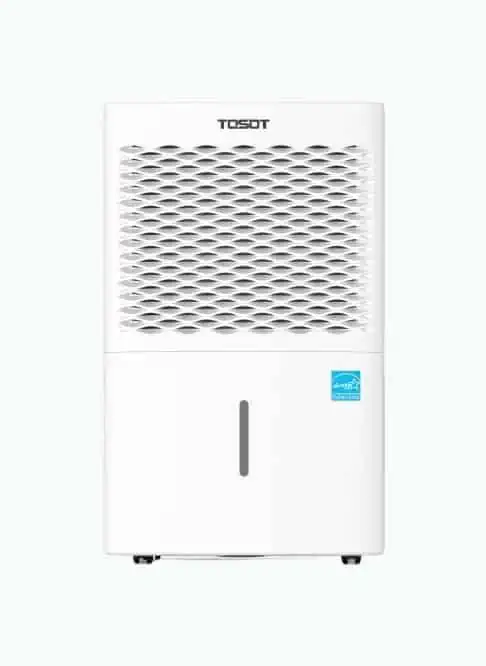
The Tosot 70-pint dehumidifier is an excellent addition to any home. It can cover an area of up to 4,500 square feet. It works quietly and efficiently, using minimal power for maximum results.
The dehumidifier is equipped with an internal pump to help you save the time and effort of having to empty the tank. It’s also fitted with a washable air filter and power outage restart.
What We Like
Built-In Pump Allows Continuous Use
The built-in pump enables you to drain water in any direction of up to 15 feet away. This gives you much more flexibility as to where the unit can stand. With the continuous drainage option, you can keep the dehumidifier running around the clock without worrying about a full tank.
Automatic Restart After Power Outage
When a power outage occurs, it can be frustrating to reset all your settings on the dehumidifier. Luckily, the Tosot 70-pint dehumidifier will automatically restart and restore your preferred settings.
Quiet Between 48 and 52 Decibels
Having a loud and cumbersome dehumidifier in your living room isn’t ideal. However, this unit works quietly — measuring 48 decibels on the lowest setting and 52 on the highest. It isn’t completely silent, but it also won’t be disturbing you or your family.
Easy Maintenance
This dehumidifier won’t waste your time when it comes to maintenance.
The bucket is easily removed from the bottom of the unit — slide it out and carry it using the handles to the sink or drain. The air filter is also quick to locate and remove. You can wash it using warm water and mild detergent.
Tosot recommends you do this after 250 hours of usage — a light on the display will notify you.
What We Don't Like
Pump Is Difficult to Use
Although the built-in pump is a smart feature, it can be tricky to get it started. Multiple customers had trouble connecting the different parts.
18 Month Lifespan
The average lifespan, according to customers, is around 18 months. That’s just after the warranty is up, making this an expensive item to replace or repair.
Product Specs
| Area Coverage | 4,500 square feet |
| Pints Per Day | 70 pints |
| Dimensions | 14.76 by 11.38 by 24 inches |
| Weight | 48 pounds |
| Warranty | One-year warranty |
Our Ratings
Personal Perspective
AlorAir LGR Dehumidifier With Built-in Pump
Best With Pump
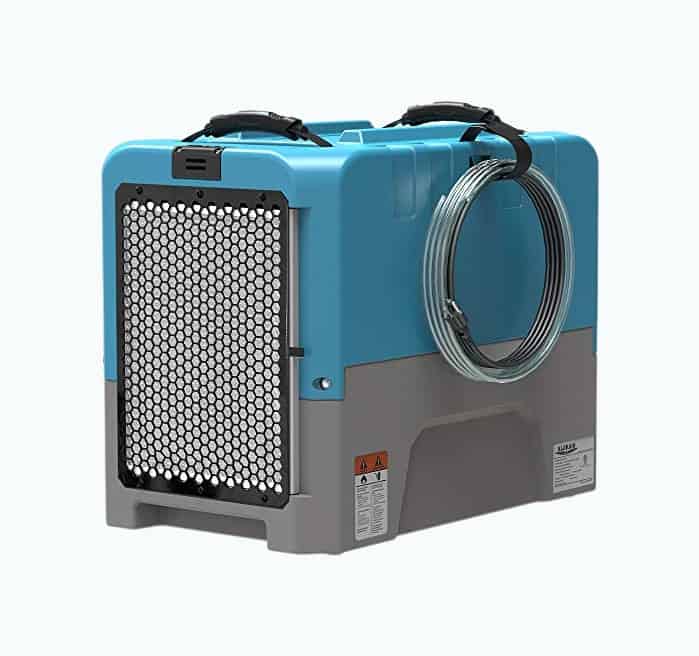
If you live in a flood-prone area, you need this dehumidifier at hand. The AlorAir LGR was designed to help you restore your home after a flood or very bad leakage. It works fast and efficiently and will remove a significant amount of moisture.
The dehumidifier has a few innovative features, such as a built-in pump, a bright LED display and even protected coils. The body of the unit is extremely durable as well as waterproof.
What We Like
Highly Effective in Humid Places
If you live in a very humid climate or are recovering from a flood or leak, this dehumidifier is for you. It can cover an area of up to 2,300 square feet and remove up to 190 pints per day.
Unlike many dehumidifiers, this one can work in cooler temperatures between 33 and 105 degrees Fahrenheit.
Waterproof Design
The waterproof design makes this dehumidifier as durable as it is effective. AlorAir claims that you can sink it in water, and it won’t break. It’s fitted with a rubber strip that seals and protects the circuit board.
Long Power Cord
The power cord reaches a whopping 19.6 feet. This gives you more freedom as to where the unit can stand, even if the outlet is far away. When not in use, the power cord is easily rolled up and stored on the side of the unit.
Epoxy-Protected Coils
AlorAir has coated the coils in epoxy powder to prevent leaks that could damage the dehumidifier. This feature helps extend the coils’ life and maintains their ability to transfer heat.
Built-In Pump
We love the built-in pump feature on this dehumidifier. It has a 20-foot lifting distance, so it can remove water from any location regardless of the drain. This gives you even more freedom to find the perfect spot to set it up.
What We Don't Like
Loud Enough to Irritate
This dehumidifier is quite loud and might be too noisy to keep in the living area. When setting it up, consider an area where it can do its job without disturbing you and your family.
Error Five Shows Often
Many customers had the E5 error show up. This requires a new or repaired unit. While the customer service line sometimes picks up and responds, other times, customers don’t hear back at all.
Product Specs
| Area Coverage | 2,300 square feet |
| Pints Per Day | 190 pints |
| Dimensions | 22.8 by 13.7 by 17.3 inches |
| Weight | 75 pounds |
| Warranty | Five-year warranty |
Our Ratings
Community Feedback
Aprilaire E80 Pro Dehumidifier
Best Commercial Whole House Dehumidifier
If you’re on the hunt for a dehumidifier that’s easy to use and practical, this is your guy. The Aprilaire E80 Pro can be hooked up to your HVAC ducts, effectively dehumidifying your entire house. Setup is relatively easy, but you might need professional help if you want to attach the ducts.
The unit is highly durable and made in the USA with corrosion-resistant aluminum coils. It comes with a very impressive five-year warranty.
What We Like
Professional Whole House Dehumidifier
This dehumidifier isn’t just set up in your living room; it’s connected to your HVAC system. There are two ducts on each side of the unit that you can attach to your system. The unit will then dehumidify your home as your HVAC is running.
Large Area Coverage
No matter the size of your home, this dehumidifier will be a perfect match — unless you live in a mansion. The Aprilaire dehumidifier can cover up to 4,400 square feet and remove up to 80 pints of moisture daily.
Easy to Operate
Despite being a professional dehumidifier, it’s actually quite simple to use. You can fit the control panel to the top of the unit. You can set it to your desired humidity levels, which will work non-stop until they’re reached.
High-Quality Construction
Made in the USA, this is a durable and quality device. It’s made with corrosion-resistant aluminum coils, so it should last a long time.
What We Don't Like
Expensive Price Point
This dehumidifier will set you back quite a bit, but it is an investment. It also uses a significant amount of energy, which will show on your monthly bills depending on usage.
You Need to Get It Installed Professionally
If you want to take advantage of the five-year warranty, you need to hire an HVAC technician to install it. Aprilaire doesn’t have its own technician, so you need to outsource someone.
After Six Months, Things Go Wrong
Things might go wrong when you hit the six-month mark with this machine. Customers noticed that the compressor stopped working, the humidity stopped reducing, and the noises increased.
Product Specs
| Area Coverage | 4,400 square feet |
| Pints Per Day | 80 pints |
| Dimensions | 34 by 15.42 by 15 inches |
| Weight | 63 pounds |
| Warranty | Five-year warranty |
Our Ratings
First-Hand Impression
Dri-Eaz LGR 7000XLi Dehumidifier
Best for Large Homes
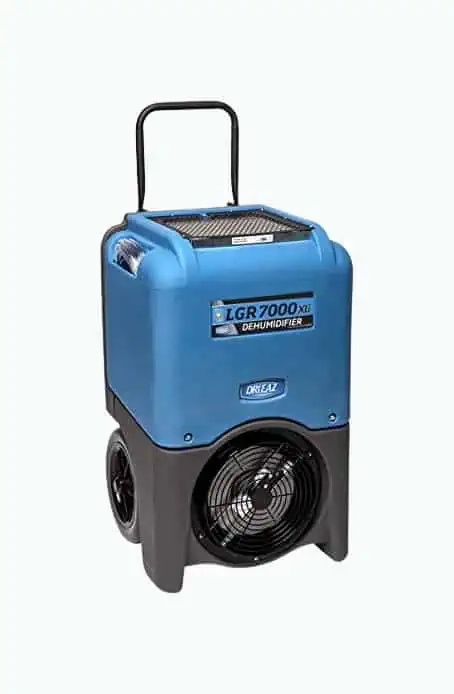
The Dri-Eaz LGR 7000XLi dehumidifier is one you have to see to believe. It works very effectively in large areas of up to 26,000 cubic feet. Setup is quick, and thanks to the built-in humidistat, you can set your preferred levels.
The heavy-duty body was designed and built in the US with protected coils and an easy-to-use touchpad display. Although strong, it’s compact and easy to store and fit into compromised spaces.
What We Like
Large Area Coverage
For large homes, this dehumidifier is the perfect addition. It can cover an impressive 26,000 cubic feet and will remove up to 235 pints daily. It’s excellent at drying the house after a flood or bad leak.
Built-In Pump
The built-in pump is an excellent feature since it allows the unit to drain to any location without the help of gravity. It gives you more flexibility when choosing the spot to set the unit up as well.
Compact Sizing Suits Tight Spaces
Despite the strength of this dehumidifier, it’s very compact and stackable if you have more units. It has a longer, slimmer size that enables it to fit in any tight space.
The power cord can be rolled up and stored on the side of the unit, making it easier to store.
Smart Features Included
In addition, this dehumidifier has a built-in humidistat where you can set your preferred levels. There are touchpad controls and an auto-pump-out system. Overall, it’s very user-friendly and easy to set up.
What We Don't Like
Loud Humming Noise
Unfortunately, the strength of this dehumidifier also causes it to become quite loud. When running, it makes a noisy humming, so you shouldn’t place it next to your bedroom.
Repeated Error Displays
This unit might need frequent repairs. Customers reported that it frequently showed up an error warning.
Product Specs
| Area Coverage | 26,000 cubic feet |
| Pints Per Day | 235 pints |
| Dimensions | 20 by 20 by 33.5 inches |
| Weight | 107 pounds |
| Warranty | Limited lifetime warranty (body); 6 years (compressor & coils); 1 year (parts & labor |
Our Ratings
User Experience
| Product | Best | Area Coverage | Pints Per Day | Dimensions | Weight | Warranty |
|---|---|---|---|---|---|---|
| Waykar 120 Pints Dehumidifier | For Apartments | 6,000 sq ft | 120 | 9.84 x 13.39 x 21.86″ | 34 lbs | N/A |
| Tosot 70-Pint Dehumidifier | For Townhouses | 4,500 sq ft | 70 | 14.76 x 11.38 x 24″ | 48 lbs | One-year |
| AlorAir LGR Dehumidifier | With Pump | 2,300 sq ft | 190 | 22.8 x 13.7 x 17.3″ | 75 lbs | Five-year |
| Aprilaire E80 Pro Dehumidifier | Commercial Whole House Dehumidifier | 4,400 sq ft | 80 | 34 x 15.42 x 15″ | 63 lbs | Five-year |
| Dri-Eaz LGR 7000XLi Dehumidifier | For Large Homes | 26,000 cu ft | 235 | 20 x 20 x 33.5″ | 107 lbs | Limited lifetime |
Is There Such a Thing as a Whole House Dehumidifier?
Yes. It’s actually an important part of your home if humidity is a problem. However, not all dehumidifiers can be used for the whole house.
Area coverage plays a significant role in determining whether or not a dehumidifier is suitable for the whole house. Generally, whole house dehumidifiers are hooked up to your HVAC system. This enables them to dehumidify your entire house in one go.
However, if you live in a one-story house or apartment, you can use a portable dehumidifier with a large area coverage.
How Do I Know If I Need a Whole House Dehumidifier?
Before deciding on a whole house dehumidifier, you must thoroughly assess your home’s humidity. Generally, mold is possible whenever the indoor relative humidity is above 60 percent (1). Here are a few signs that your house requires a dehumidifier:
- Musty odors: Excess moisture can cause mold and mildew to grow. This, in turn, results in an unpleasant musty odor.
- Allergies or asthma issues: Excess moisture or dampness in a home can trigger allergies and asthma. Several studies showed that damp environments could cause respiratory issues, infections, eczema, and bronchitis (2).
- Rotting wood: If your house is exposed to excess moisture for an extended period, the structure will begin to degrade.
- Noticeable condensation: Condensation commonly happens when the outside temperature is significantly different from the indoor temperature. You might see condensation on windows or metal pipes.
Choosing the Best Whole House Dehumidifier
To help you on your quest to finding a whole house dehumidifier, we’ve created a thorough guide. Here are a few important things to consider:

Performance
To determine a dehumidifier’s performance, you must look at its pints per day (ppd) rating. This can range between 30 to over 100; however, most dehumidifiers for whole houses are 70 pints or more. Pints per day refers to how many pints of moisture the unit can remove during a 24-hour period.
To figure out what you need, you must consider how humid your climate is. Homeowners who live in more humid climates need a more robust dehumidifier to reduce the humidity effectively.
On the other hand, if you live in a less humid environment, you can save energy and choose a small dehumidifier.

Area Coverage
If you choose a dehumidifier that’s ducted to your HVAC system, you must consider how many square feet your house is. These will generally cover quite large areas, but there are some exceptions.
A large portable unit will do in apartments or smaller townhouses where it isn’t possible to duct the dehumidifier. If placed strategically, a large portable dehumidifier can reduce the humidity in a spacious apartment. Preferably, put it in an open area with access to most or all rooms.
You can easily find portable dehumidifiers with a vast area coverage, such as 6,000 square feet. This should be enough for a townhouse or large apartment.
Save Energy

Drain Options
So, you’ve found a suitable dehumidifier, but where should the water go? Now for a whole house dehumidifier, you don’t want to have to worry about emptying a tank. Therefore, we highly recommend you choose a unit with a continuous drain option and preferably a built-in pump.
Whole house dehumidifiers that are ducted will have a pump and hose to remove the water as its extracted from the air. Therefore, it’s essential to consider where it’s installed as it needs to be close to a drain.
Check The Hose
How to Install a Whole House Dehumidifier
A whole house dehumidifier is ducted to your HVAC system. That way, it can dehumidify the air before it enters your home.
The best way to install a whole house dehumidifier is by installing a dedicated return that’ll bring air into the unit. You’ll then need to connect the supply side of the unit to your HVAC supply plenum (3).
By installing the dehumidifier this way, it will discharge the dry air directly into your HVAC supply. Otherwise, it will first be forced through the air handler, increasing static pressure in the dehumidifier. This will also prevent many common issues, such as evaporated moisture from the AC coils creeping back into the air.
Keep In Mind
How Much Does It Cost to Install a Whole House Dehumidifier?
The cost to install a whole house dehumidifier depends on the type. Portable units don’t require any professional installation — simply set it up and possibly connect a hose.
Ducted units, on the other hand, will likely require some help. These dehumidifiers are far from cheap, and in many cases, you’ll end up spending the same on installation.
Average installation prices of whole house dehumidifiers are between $1,300 and $2,800 (4).
FAQs

Does a Whole House Dehumidifier Save Money?
Knowing whether a whole house dehumidifier saves money depends on several factors, including the size and price. The dehumidifier must have the capacity to cover the entire house.

Do Whole House Dehumidifiers Use a Lot of Electricity?
Whole house dehumidifiers use more electricity than portable models, but in the scheme of things, they use less power than other electrical appliances like water heaters.

How Long Do Whole House Dehumidifiers Last?
Whole house humidifiers last between five and eight years, which is longer than portable models, at three to five years. Given that they are more expensive, you would expect a longer lifespan.

Where is the Best Place to Put a Whole House Dehumidifier?
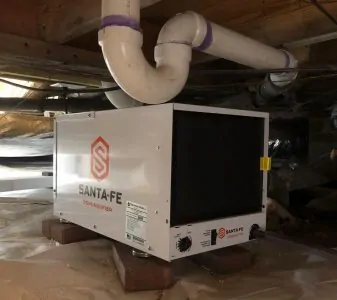
The best place to put a whole house dehumidifier is either in the basement, a central location in the home, like the first-floor landing, or the crawlspace, where dampness is common.

How Long Does It Take for a Whole House Dehumidifier to Work?
It typically takes 24 hours for a whole house humidifier to start working to reduce humidity inside your home. This can vary depending on the level of moisture and house size.