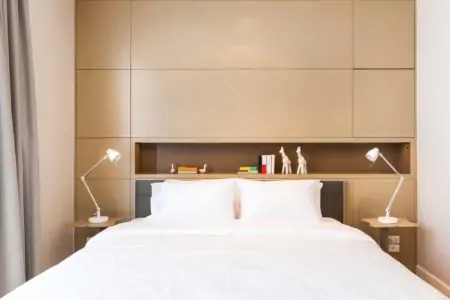
Living in a cluttered bedroom can be frustrating and not knowing where to start when it comes to organizing could be keeping you up at night. Your bedroom should be a tranquil place of rest, but when you feel overwhelmed by the mess it can be hard to rest here. The secret is to organize your small bedroom by maximizing the little space you have in an easily accessible way.
Organizing a tiny space and keeping it neat can be difficult, but we have the answers that you’ve been looking for. Here are some creative small bedroom organization tips that will help you organize your room.
Key Takeaways
- Maximize small bedroom space with creative storage solutions like murphy beds, loft beds, and under-bed drawers.
- Use wall space for storage, like floating shelves, wall units, and shoe displays, to keep items organized and easy to access.
- Save space by repurposing furniture, such as using a dresser as a nightstand or a stool for a bedside table.
- Utilize closet and drawer organizers, like adding a second rod or using baskets with labels, to keep your wardrobe tidy.
Small Bedroom Organization Ideas
These small bedroom organization hacks will help you create ample storage even in small spaces. You’ll simply need to be creative as you think about how to minimize your stuff, maximize your wall storage, and create the storage space you need.
Baskets with Labels for Organizing Wardrobe
Add a dry erase label to any baskets you keep in your wardrobe or closet. The labels will help you keep your items organized since you’ll instantly know what’s in the basket. Plus the baskets are a great place to keep jewelry, accessories, jeans, and sweaters.Murphy Bed
Install a murphy bed in your bedroom. The bed will fold up against the wall giving your plenty of living space in your bedroom during the day. At night, just pull the bed down for a comfortable place to sleep. Murphy beds are the perfect sleeping solution for a small bedroom.Murphy Desk
Another option is to add a murphy desk to your small bedroom. The desk will fold up against the wall so it’s out of your way. Then when you need to sit down to work, you can pull the desk down and have everything you need right there.DIY Murphy Bed and Murphy Desk Unit
Add a wall cabinet to your small bedroom that includes both a murphy bed and a murphy desk. During the day, you’ll have enough living space to work out or dance. You’ll be able to pull down the desk when you need a workspace as well.At night you can pull down the murphy bed to sleep. The shelves also provide plenty of storage space for you (1).
Under the Bed Drawers
Add sliding drawers underneath your bed instead of using a dresser. The drawers will add the storage space you need for jeans, sweaters, and shirts. However, since they slide back underneath your bed, you still have the extra space you need in your small bedroom.Loft Bed
Instead of using a regular bed in your small bedroom, try a loft bed. The loft bed raises your sleeping area almost to the ceiling giving you the space underneath to use for a dresser and a desk. This way you will be able to utilize the same space for sleep and work.Store Shoes Underneath the Bed
Slide a plastic shoe container underneath your bed to store your shoes. You’ll free up space in your closet and still keep your shoes from being underfoot. It’s a great solution to the problem of where to store your shoes in a small bedroom.Wall Unit
Add a wall unit along one wall of your bedroom. The unit can include a rod along the top to hold shirts, dresses, and slacks. In addition, you can add shelves down the wall for you to store jeans and sweaters.With a bit of thought, you can even add enough space to add a desk. You may need a ladder or step to access the items at the top.
Floating Shelves
Add floating shelves to your bedroom to store items along the wall. Since there are no brackets underneath the shelving to take up room, you’ll be able to store more items on the shelves such as books, knick-knacks, and jewelry.Shoe Display on a Wall
Display your shoes on your wall by adding a shelving unit. The shoes will look amazing and unique as they decorate your bedroom. It will also make it super easy to put your shoes away at night and choose a pair of shoes in the morning.DIY Floating Corner Shelves
Use the empty space in the corners by building yourself floating corner shelves. The shelves will hold shoes, books, jewelry, and accessories. Plus they’ll look amazing and decorate in the corner.This is a great weekend woodworking project (2).
Over the Door Hooks
Add an over-the-door hook unit over your closet or bedroom door. The hooks are the perfect place to keep your handbags, scarves, and belts. Plus the hook unit will use up the otherwise unused space that’s on the back of your doors.Over the Door Shoe Organizer
Install an over-the-door shoe organizer on your closet or bedroom doors. The shoe organizer will organize your shoes of course. It’s also a great place to keep other bedroom accessories as well.You can roll your scarves to put in the organizer. You can also store necklaces, socks, handbags, and other small items in the pockets.
Over the Door Shelving Unit
Install an over-the-door shelving unit around your bedroom door. The shelves can hold a lovely assortment of items such as books, plants, sweaters, and jeans. The area around your doorway is hard to use, but these shelves take advantage of this space.Bedside Shelf
Instead of using a nightstand, put a small shelf next to your bed there. You’ll be able to keep notebooks, a glass of water, your clock, and other small items on the shelf. Plus the shelf won’t take as much room as a nightstand freeing up the visual space.Basket as a Nightstand
Instead of using a shelf or a nightstand, try attaching a basket to the wall next to your bed. You can even add a shelf inside for extra storage. The basket adds a unique look to your bedroom while giving you the storage space you need next to your bed for clocks, water, and books.Rod and Hooks Underneath a Shelf
When you add a shelf to your small bedroom, think about installing a rod with hooks underneath the shelf. It will be perfect for storing shirts, jackets, and robes. At the same time, the rod and hooks won’t use up extra space that your bedroom doesn’t have.Use a Stool for a Nightstand
Instead of adding more furniture to your bedroom, arrange a stool next to your bed instead. A lamp can be placed on top of the stool so you have light to read at night. Then turn the rungs into shelves by stringing rope or thick twine between the rungs or placing a board on the rungs.You’ll have space for books, clocks, and other knick-knacks you need by your bed.
Bedside Caddy
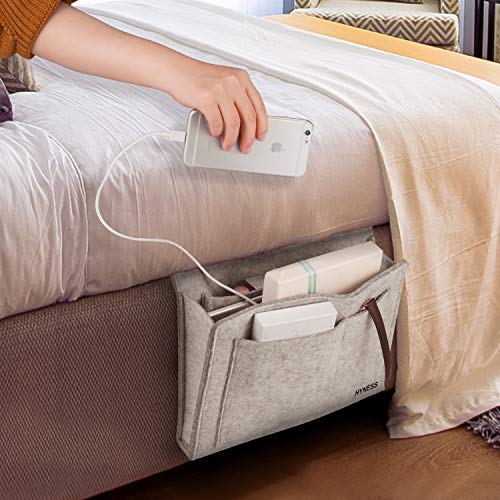 Use a bedside caddy for a nightstand in a small bedroom. It’s a fun hack that will maximize your space in a tiny bedroom. You slide one end of the caddy under the mattress while the rest hangs down.
You can store phones, water bottles, and books in the caddy so they’re ready for you when you need them.
Use Vertical Space with a High Shelf
Use the untouched vertical space with a high shelf just under the ceiling. It’s a simple way to maximize your wall storage. You can keep books, sweaters, scarves, and baskets on the shelves.The shelves are also a great storage solution for clothing and other items you’d like to keep but rarely need to access.
Display Jewelry & Accessories
Create a jewelry display on a wall using frames, shelves, and hooks. You’ll be able to keep a lot of stuff on the wall, save money if you’re on a budget, and have a unique space-saving display for your bedroom. It’s a great space-saving solution for a small bedroom.Headboard Bookcases
Turn a bookshelf into a headboard. This will give you a spot to keep your books and a lamp. You’ll also be able to use the bookcases as a nightstand, saving you some precious space there as well.Plus you’ll have a unique headboard for your bed that will hold a lot of items.
Bookshelf Under Window
Another storage solution for small spaces is to add a shelf underneath your window. It’s an area that often goes unused but is perfect for storing clothes, books, and other items. You can attach the shelves to the wall or install a small bookcase.Rotating Bookshelf
Here’s a fun hack, add a rotating bookshelf to your bedroom. It will hold all your books. Just spin the bookshelf like a lazy susan to find the book you’d like to read.The shelf can also hold shirts, pants, magazines, and other items which will save you valuable closet space.
Dresser as Nightstand
Use a dresser as a nightstand in a small bedroom. You’ll be able to keep your phone, clock, and a glass of water on the dresser. Plus you’ll be able to store your clothes neatly out of the way. This will help you maximize the space you have available in your bedroom.Ladder Shelving Unit
Instead of using your standard bookcase, try adding a ladder shelving unit to your bedroom. You can store blankets, books, scarves, and handbags on the ladder. Plus if you’ve added high shelves to your bedroom to store seasonal items, you can empty the ladder and use it to reach the top shelves on those rare occasions when you need to access them.DIY 2-in-1 Dresser and Desk
This amazing 2-in-1 dresser and desk unit helps you maximize space in a tiny bedroom. The desk doubles as a dresser. Also, the seat rolls out and includes storage in it.It’s a fun project to build and one that will allow you to store a lot of your things (3).
Hidden Bookshelves
Hide your bookshelves at the ends of your headboard. You’ll always be able to reach the book you’d like to read in bed. Plus you’ll have a small space to keep a water bottle or clock, while saving space.Dresser in the Closet
Instead of keeping your dresser in your bedroom, slide the dresser into your closet. It will be out of the way and you will save floor space in your room. You can then store your shirts and pants over the dresser, and the rest inside. This way you’ll be able to access all of your clothing at once.Add Baskets at Top of Your Closet
Install a shelf at the top of your closet to hold various baskets on it. The baskets are the perfect place to store seasonal items, handbags, jeans, and sweaters. You’ll be able to pull the baskets down when you need the items stored inside them, but you’ll still be able to keep the stuff out of the way giving you more room for your current needs.Drawer Organizer
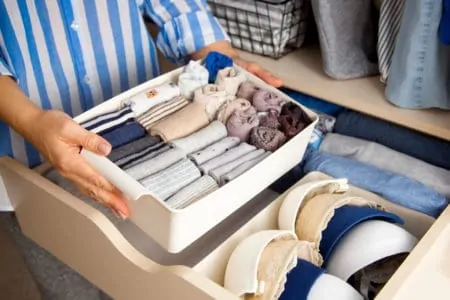
Use drawer organizers in your drawers to help keep your clothing organized. The organizers will give you specific spots to keep socks, shirts, and slacks. In addition, they’ll keep everything from becoming a cluttered mess inside your drawer.Add a Second Rod
Hang a second rod off the top rod in your closet. This will double your closet storage space as you’ll be able to hang clothing on both rods. For instance, many people hang shirts on the top rod while reserving the lower rod for slacks and skirts.Freestanding Clothes Rack
Add a narrow freestanding clothes rack to your small bedroom to give you extra storage space in your closet. You’ll be able to store shirts, pants, linens, and hats on the clothes rack. It’s a simple storage solution especially if you don’t have a closet in your small bedroom.Store Clothing Behind Bed
The wall behind your bed is a great place to create more storage space. You can use it as a place to store your clothing or simply put up some shelves. If you prefer, you can add an entire wall unit with a rod, shelves, and drawers surrounding the bed.Or you can simply add a rod behind your bed as extra storage space for clothing. Don’t forget to add a shelf above the rod for extra storage.
Valet Rod
Add a valet rod to a narrow closet. It will hold several coats, shirts, and dresses without taking up much space. Plus when you’re not using the valet rod, you can fold the rod down so it doesn’t take up any space at all.Pull Out Rod
Add a pull-out rod to hold your clothing in a small closet. The rod will pull out towards you, so you can hang a lot of clothing on the rod and still be able to access your outfits easily. It’s a space-saving solution for a tiny room.Turn a Niche into a Closet
Turn a narrow 12-inch niche into a closet. It’s the perfect place to keep linens, jeans, sweaters, and baskets of socks. Just add some closet doors and you’ll have the perfect storage solution for a small bedroom (4).Wire Baskets in Closet
Add wire baskets to the bottom of your closet. You’ll be able to use the wire basket in addition to a dresser or in place of a dresser. It’s a great way to save space in your bedroom by creating more space in your closet. Plus, you can store socks, shirts, sweaters, and pants on the wire baskets and easily see what is in each basket.Circular Hooks on Hanger
Use circular hooks on a coat hanger to hang your sleeveless summer shirts. The hanger will hold a large number of shirts yet will still make it easy to find the shirt you’d like to wear. You can also use it for scarves. It’s a great hack for a small space.Clear Plastic Containers
Use clear plastic containers on your closet shelves. Not only will you save space in a small bedroom, but you’ll be able to easily see all your clothing at a glance. This will make it super easy to get dressed in the morning.Crates
Use crates in your bedroom for extra shelving space. You can stack them, attach the crates to the wall, or leave them next to your bed. The crates will store a lot of stuff and are a great organizer for your room since they’re easy to customize for your space.Magazine Holders for Shoes
Use magazine holders to hold your flip flops and slippers. Quite a few shoes can be neatly kept in the magazine holders. Plus they’ll fit neatly on your shelves.It’s a great space-saving solution for a tiny bedroom.
Drawer Dividers
Install drawer dividers in your drawers. The dividers will help to keep your drawers organized so you don’t end up with a cluttered mess. It also makes it easier to keep your drawers neat and keep the space available for items that have been used. This way you will easily be able to pack the items away neatly again and not end up with a bunch of things lying around the bedroom (5).Chalkboard Paint on Dressers
Paint your dressers with chalkboard paint. Not only will kids love to draw on their dressers, but you’ll be able to label the dressers so everyone knows where and how to put away clothing. In the morning, the kids will be able to easily find their socks, underwear, and shirts.DIY Upholstered Storage Bench
Make an upholstered storage bench to keep at the end of your bed. Not only will it give you a place to sit and read in your bedroom, but you’ll be able to conveniently keep spare blankets and linens near your bed (6).Expert Tips to Organize Your Small Bedroom
Think Vertically
There’s quite a bit of unused space at the top of your bedroom walls. So think vertically as you think about how to store stuff in your room. For instance, add a line of shelves around the top of your room.
Another idea is to add a shelf over your doorway. In addition, because the shelves are just under the ceiling, the items on your shelves won’t add visual clutter to your room making it seem smaller.
Declutter Your Space
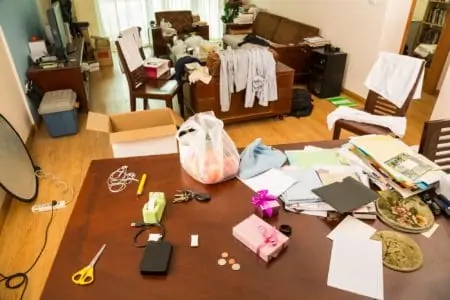
If you have a lot of stuff in a tiny room, consider decluttering your room before adding storage solutions. You may find that you have more than enough space for everything you need once you remove items that are broken, don’t fit, or don’t fit your style.
Also, consider removing any items you don’t like while you’re decluttering your space as well. This way you’re surrounded only by items you love when you’re relaxing or sleeping in your bedroom.
Create Displays
If you love shoes, handbags, or jewelry, think about creating a display of your collection instead of hiding them in a closet. Start by adding shelves, hooks, and pegboards to your wall. Then you can place your collection on your storage unit.
Your collection will add an artistic touch to your bedroom.
In addition, you won’t have to worry about where to store the items and you’ll be able to see them easily when you’re looking for the perfect shoes, handbag, or necklace.
Multi-Purpose Furniture
Another expert tip for organizing a small bedroom is to use furniture that will serve several purposes at the same time. Instead of using a nightstand, you can place a dresser next to your bed. The dresser can act as a nightstand while holding your clothing.
Another tip is to add a storage bench at the end of your bed. Not only will the bench give you a place to sit to read or put on your shoes, but the bench will be able to store sweaters, blankets, and linens.
Use Empty Space
Sit in your bedroom and look around for space that’s not being used. Corners are a prime example. Add a shelving unit in the corner to store books, shoes, or handbags.
Also think about storing items underneath your bed, under the dresser, or along the top of your closet. Even small bedrooms have empty space that can be used to hold a lot of stuff if you’re creative.
FAQs About Organizing A Small Bedroom

How Do You Make A Room Look Less Cluttered?
Keep your floors and tabletops clear. When the floor has clothing tossed everywhere and every flat surface is covered with stuff, your room will appear cluttered. The secret is to keep items off your floor and to have some surface area showing on shelves and the top of furniture.
If you do this, your room will look less cluttered.

Why Do I Struggle To Keep My Room Clean?
People struggle to keep their rooms clean when they don’t have a designated spot for every item they own. If there’s nowhere to put your jeans, they’re going to end up tossed on the floor or left hanging on the back of a chair. So when you’re organizing your bedroom, think about where everything you own will go. Then you’ll find your room is easier to keep clean.

How Do You Rearrange Your Room To Make It Look Bigger?
Consider adding shelves, putting your dresser in your closet, and using a shelf instead of a nightstand to make your room look bigger. It’s the lack of floor space that makes it look smaller, so be creative about arranging the furniture in your room.

Can You Put Your Bed In Front of a Window?
You can place your bed in front of a window. In fact, it may be the best way to use wasted wall space, and bring balance to the room. It even gives you the perfect solution for placing your bedside tables.

What Colors Make a Bedroom Look Bigger?
When choosing colors to make your bedroom look bigger, opt for lighter and cooler shades like white, cream, or pale blue. It reduces shadow, reflects light, and creates the illusion of height and space.

Do Rugs Make a Room Look Smaller?
Rugs do make the room look smaller if you choose the wrong size. A small rug in the middle of a large floor has this effect because it breaks up the flow, creating the illusion of separate zones.
Small Bedroom Organization Tips
These small bedroom organization tips will help you to maximize the space in your bedroom so you can store a lot of stuff. This way you can arrange your clothing on a shelf, organize jeans in a dresser and display your jewelry. You’ll always be able to easily find what you need plus your room will be a pleasant place to work, study, and relax.