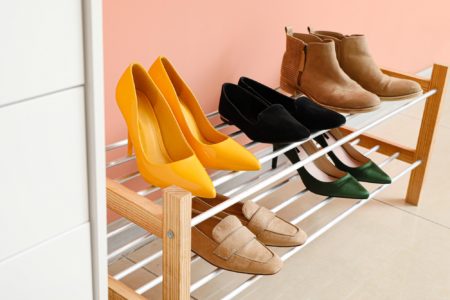
Are you tired of tripping over everyone’s shoes as you enter the house? Kids kick their shoes off and leave them scattered everywhere. Fortunately, there are many beautiful and user-friendly shoe storage ideas that you can implement at home.
So, let us help you curb your frustration and get your family’s shoes organized.
Key Takeaways
- Implement creative shoe storage ideas like DIY Hallway Command Center, Crate Shoe Cubby, Storage Bench with Shoe Rack, and Decorative PVC Shoe Organizer.
- Use space-saving techniques such as under-the-bed storage drawers, angled closet shelves, and alternating shoe direction for compact storage.
- Keep your shoes organized by grouping them by type and style, using shoe trees to maintain their shape, and adding silica gel packets to prevent mold and mildew.
- Store shoe care tools with your shoes for easy access when you need to clean, polish, or protect your footwear.
DIY Shoe Storage Ideas
You might think that there are only a few ways to organize your shoes and that they take up quite a bit of room. You’ll be surprised to find out that even though some hacks do take up some room, there are also other ideas that are perfect for small spaces.
Put your best foot forward with these amazing DIY shoe storage ideas.
DIY Hallway Command Center And Shoe Organizer
Build a hallway command center by hanging bulletin boards, chalkboards, baskets, and small shelves to keep mail and schedules organized. Underneath the command center install a long shoe cubby which will give everyone a place to store their shoes.If you ensure that the command center is near the front door, you’ll be able to easily stay on top of people’s schedules while keeping shoes out of the way.
DIY Concrete Form Tube Shoe Cubby
Make a custom shoe cubby from concrete form tubes. The concrete form tubes are the perfect size to hold a pair of shoes. Then you can glue or tack the tubes together so that it fits perfectly in your mudroom or by your front door where family and friends enter your house (1).DIY Shoe Tower
Make a free standing shoe tower to put in your house. It’s a great solution when you only have a couple pairs of shoes or a tight corner you’d like to store the shoes in. The shoe tower is a fantastic weekend project and will help keep your shoes out of the way (2).Crate Shoe Cubby
Build a rustic shoe cubby using crates. First, paint the crates to match the decor and color scheme of your house. Then attach the crates together to create the perfect shoe cubby for your home.You can store boots in crates that are upright and running shoes in crates that are horizontal. Crates give you the option of building a small shoe cubby for a small space or a large cubby in your garage that will hold all the shoes for your family.
Shoes on Coat Hangers
Have you thought about hanging your shoes on coat hangers in your closet? Add clothespins angled up to the coat hangers. Then you’ll be able to hang the toe of your shoes over the clothespins for easy shoe storage.This keeps your shoes neat and off the floor.
DIY Pallet Shoe Rack
Build yourself a custom rustic shoe rack from pallets. You’ll be able to store your shoes on the wall behind the front door and keep the shoes out from underfoot. It’s a fun project to make with your kids. Plus you can keep your shoes in a convenient area so that you can quickly put them on as you leave the house (3).DIY Hexagon Shoe Rack
Build a hexagon shoe organizer for your house using an old bookshelf. It’s a beautiful and unique shoe rack to have at the entrance to your house. Everyone will admire your beautiful shoe rack and it will keep your family’s shoes organized (4).Rods and Shoe Hangers
Install a series of rods running down the side of your closet. Then pick up some shoe hangers specifically designed to hang your shoes on the rods. You’ll be able to use a rarely used area of your home and keep your shoes tucked out of the way (5).Shoe Stand
Add a shoe stand to your front hallway to hold your shoes. The shoe stand will fit in small corners of your home and it will give you an easy place to store all the shoes and sandals your family usually wears. You can even keep handbags and keys on top of the stand (6).Storage Bench with Shoe Rack
Build a storage bench with a shoe rack underneath it in your entryway. You’ll be able to sit down as you put on your shoes and take them off. Plus the shoes will be neatly stored away so they won’t add visual clutter to the entrance of your home (7).Shoe Shelves
Install a large series of shelves in your garage to hold your family’s shoes. Family members can put on and remove their shoes before they enter the house which will help to keep dirt out of your home. In addition, the shelves will display all the pairs of shoes your family owns.DIY Shoe Storage Bench
Build yourself a shoe storage bench with open shelves for shoes. It will be easy to toss the shoes on the shelves when you enter. The shoe storage bench will give you a neat spot to store your family’s shoes as well as provide an area to sit down and put them on (8).Shabby Chic Shoe Racks
Install shabby chic shoe racks on your wall. You can install one row of racks or you can hang racks up and down the entire wall. Then insert the toe of your shoes into the racks so they hang neatly on your wall.It’s a great solution if you don’t have a lot of floor space to install a bench.
Clear Containers
No products found.
Instead of keeping your shoes in their original shoe boxes, try using clear plastic containers. You’ll be able to see where each pair of shoes is and the front opens for easy access. It’s really handy if the containers are able to be stacked. This will give you more storage options.
Small Shoe Shelf
If you only have a small corner in your front hallway for shoes, consider building a small shoe shelf to put there. The shoe shelf includes a narrow set of shelves that will hold a single pair of shoes on each shelf. It’s a perfect solution for small areas as you can tuck the stand neatly into a corner (9).DIY Shoe Ladder
Instead of adding a shoe rack to your home, try building yourself a DIY shoe ladder. It’s a unique way to display your shoes, plus it’s a fun weekend project to make. You can add it to your living room or front entrance. Kids will be able to easily put their shoes away (10).Glass Shoe Cabinet
If you have an old display cabinet, you can repurpose it and turn it into a glass shoe cabinet. The display cabinet will turn your shoe storage into a piece of art, allow you to see all the shoes you own, and still neatly store the shoes so they’re not underfoot. You can install the cabinet in a bedroom or in a front hallway.Under the Bed Storage Drawers
Build yourself some under-the-bed storage drawers for your shoes. This long drawer even includes wheels so you’ll be able to slide your shoes underneath your bed without damaging the floor. All you need to do is pull the container out to see every pair of shoes you own (11).Angled Closet Shelves
Fill a hall closet with angled shelves to store your shoes. Put your children’s shoes on the bottom and shoes you rarely wear at the top. This way, you’ll be able to see every pair of shoes your family owns.It makes it easy to enter and leave your home since you’ll never have to search for the perfect pair of shoes again.
Triangle Shoe Storage
Build yourself a shoe organizer using leftover pieces of cardboard. You can paint or decorate the cardboard to fit your home’s decor. The shoe organizer will give your entrance hall a unique look, as well as give you an easy place to store your shoes (12).Decorative PVC Shoe Organizer
Build yourself a decorated PVC shoe organizer. You’ll be able to store your family’s shoes neatly at your entrance. All you need to do is attach the PVC in a series of flower shapes going up a wall.The organizer will look decorative while fulfilling a useful purpose.
DIY Spinning Shoe Rack
Make a lazy susan style spinning shoe rack for your closet or hallway. You’ll be able to spin the rack so that you can see all your shoes that are stored on it. Plus it will look amazing holding your shoes in your front hallway or garage.If you know how to build with wood, then you’ll love this weekend project (13).
DIY Shoe Cabinet
Add a shoe cabinet to your entryway that includes sliding trays. Since the trays slide in and out, this allows you to put the shelves closer so you can store more shoes in the cabinet. Even your small children will be able to put their shoes away by themselves.The countertop area on top gives you a place for handbags, notes, or a command center (14).
Stair Shoe Storage
Add a small drawer underneath each stair in your house. You’ll be amazed at how many shoes you can store in the stairwell. The shoes will be out of the way when you don’t need them.When you’re ready to leave, sit on the stairs, pull out the pair of shoes you plan on wearing, and put on your shoes.
Magazine Rack for Shoe Storage
Add a large magazine rack to your front hallway and it’ll be an amazing place to store small children’s shoes. It’s easy for the kids to remove their shoes and drop them in the magazine rack. This way your entryway will stay neatly organized.Expert Tips For Storing Your Shoes
Group Shoes by Type and Style
Group your shoes by type and style. As an example, you’ll keep all your running and exercise shoes in one spot, high heels, and dress shoes together, and your boots in another area. This will make it easier for you to find the exact pair of shoes you’re looking for since you won’t have to randomly search among all your shoes.
Use a Shoe Tree
A shoe tree will help your shoes keep their shape in storage. The shoe trees are adjustable so you can fit the tree to the exact shape of your shoe. Plus they’re usually made from cedar to help prevent moths and pests from attacking your shoes.
Insert the shoe tree every time you put your shoes away.
Add Silica Gel Packets to Shoes
Add silica gel packets to your shoe storage area especially if you’re going to store the shoes for a while. They keep your shoes dry and prevent them from growing mold and mildew. Nothing is worse than pulling a favorite pair of shoes out of storage only to find they’ve been damaged by mold.
Alternate Direction of Shoes
If you don’t have much space for shoe storage, try alternating the direction of each pair of shoes. This means the first pair will have the toes facing forward. The second pair will have the toes facing backward. This way, you’ll be able to fit more shoes into your space.
Keep Shoe Care Tools With Your Shoes
Save a spot to keep your shoe care tools in your shoe organizer. This way when you’re ready to spray your shoes with water repellant or if it’s time to polish and buff your shoes, you don’t need to search the house. Everything you need is in one spot.
FAQs About Storing Shoes

What Is The Best Way To Store A Lot Of Shoes?
Vertical shoe storage is the best way to store a lot of shoes. Often people will only wear shoes that are easily visible when they pick out shoes for the day. If you use a vertical storage solution that allows you to see all of your shoes, you’re likely to make better decisions about which pair of shoes to wear each day.

Can We Keep Shoes In The Bedroom?
According to Feng Shui, shoes have negative energy that will affect marriages and relationships if they are kept in the bedroom.

Should You Keep Shoes In Boxes?
Boxes have the benefit of keeping shoes organized and clean. Shoe boxes also protect shoes from sunlight damage.
However, shoe boxes prevent the shoes from getting proper airflow. This can lead to moisture buildup that can cause mold and mildew to grow on your shoes.

Why Are My Shoes Dry Rotting In My Closet?
Dry rot happens when leather shoes dry out and lose their moisture. This often happens if the shoes are kept in a warm and dry environment. It also happens if the air is too hot, too dry, too cold, or too moist.
The best way to prevent dry rot is to clean and dry your shoes before putting them away. You can also use a cedar shoe tree in your shoes, as the shoe tree absorbs moisture.

How Do You Preserve Shoes For A Long Time?
Store your shoes in a temperature and humidity-controlled environment. In addition, clean your shoes regularly, and keep cedar shoe trees in the shoes to help preserve their shape. Cedar shoe trees will help the shoes preserve their shape.
In addition, the cedar helps to prevent bad odors and fungal growth in the shoes.

How Long Do Shoes Last Without Wearing Them?
To answer how long do shoes last without wearing them, we need to consider the material they are made from. In general, if you’re not wearing them, they should last for years and years.

Is It OK to Store Shoes In Plastic Bags?
It is OK to store shoes in plastic bags, provided that they are dry. Moisture gets trapped inside a plastic and may encourage mold and mildew growth.