Vinyl siding may be easy to clean, but when you’re restaining your deck and the stain splashes onto your vinyl — panic may ensue.
You probably love your vinyl siding and want it to look showstopping, especially if you chose a fun color. So, when wood stain accidents happen — it can ruin the appearance of the vinyl.
We’ll show you how to remove stain from vinyl siding using various methods and products you probably already have at home. Revamp your vinyl today.
Key Takeaways
- Remove wood stain from vinyl siding using an oxygen bleach solution, scrubbing gently with a soft-bristled brush, and rinsing with clean water.
- For stubborn stains, consider using a stain stripper, oxalic acid, or mineral spirits, always testing on an inconspicuous spot first.
- Alternative methods to remove stains include oil-based cleaners, pine cleaners, PVC pipe cleaners, and Magic Erasers.
- Avoid using acetone, bleach, or abrasive cleaners, as they can damage or dull the vinyl siding.
How to Remove Stain From Vinyl Siding
If you’ve been restaining your deck, it can easily splatter on your vinyl if you’re not careful.
However, it’s possible to remove both oil-based and water-based stains with a simple oxygen bleach solution.
It’s also worth noting that this can also remove stains from a vinyl railing, fencing, and more.
- Time: About one hour.
- Difficulty: Easy.
What You’ll Need
- Oxygen bleach.
- Two buckets.
- Stirrer.
- Water.
- Spray bottle or pump sprayer.
- Soft-bristled scrubbing brush.
- Cloth or sponge.
- Vinyl cleaner (optional).
1. Prepare the Cleaning Solution
In a bucket, mix oxygen bleach, and water according to the packaging instructions. For example, if using OxiClean, fill to line four on the included scoop and add to one gallon of water. For tough stains, you can use a more concentrated solution.
Stir the solution well using a stirrer, such as a wooden spoon or paint stirrer. Next, transfer the cleaning solution into a pump sprayer or spray bottle.
Fill up a separate bucket with plain cold water. We’ll use this later.
2. Apply Oxygen Bleach To the Stain
Saturate the stained area well. Don’t be afraid to really drown the stain! Leave it on to settle for 15 minutes.
3. Scrub
Dip the scrubbing brush into the oxygen bleach solution and scrub the stained area gently. You don’t want to scratch the vinyl.
Continue until the stains have mostly lifted.
4. Rinse the Vinyl
Dip a sponge or cloth into the clean water and wipe the stained area.
5. Repeat
If stains persist, repeat steps two to four one more time.
6. Clean the Vinyl
If stains persist, then they’re pretty stubborn. You can clean them with a specialized vinyl cleaner which may remove such marks. For this, we recommend Goo Gone Patio Furniture Cleaner, which works to remove tough stains.
How to Get Stubborn Stain Off Vinyl Siding
So the oxygen bleach isn’t completely removing the wood stain. What else can you try? We have seven other methods that can help you with removing stains from vinyl siding.
Let’s take a look.
With Stain Stripper
There are many stain strippers designed to remove the wood stain. But the catch is — these strippers are designed for wood. However, there are a few products out there that are safe to use on vinyl.
Popular options include Defy Exterior Wood Stain Stripper or Behr Stain Remover. Whatever product you choose, make sure that it’s safe for vinyl, and always test it in an inconspicuous spot.
- Apply: Apply the wood stripper to the vinyl using a pump sprayer. A light layer is best to start with.
- Wait: Wait half the recommended amount of time, as the instructions say. We don’t want to strip the vinyl coating. So if the instructions say 20 minutes, wait for 10. We can repeat the steps if necessary.
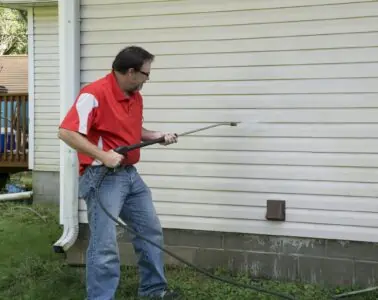
- Rinse: Rinse the solution away with a garden hose or pressure washer. A pressure washer can help to loosen the stain even further.
- Repeat: If necessary, repeat the above steps until the stain is gone.
Top Tip
When choosing a stain stripper, ensure it’s right for the wood stain you used. For instance, if you used a latex stain, ensure the stripper can remove that. The same applies for oil-based wood stains.
With Oxalic Acid
Oxalic acid is an organic compound that is a seriously impressive cleaner. There’s not much this ingredient cannot do!
So when it comes to removing wood stains on your vinyl siding — give this a go.
- Make the solution: Mix ¾ cup of oxalic acid per gallon of hot water. Instructions may vary depending on the oxalic acid you buy, so always read the manufacturer’s advice.
- Apply: Pour the mixture into a spray bottle and generously apply it to the stained area.
- Wait: Give the mixture five minutes to set.
- Scrub: Scrub the stain with a soft sponge to remove it.
- Repeat: Repeat the process, but this time, scrub with a tougher scrubbing pad for the best results.
- Rinse: Rinse the area with a cloth dipped in plain water.
Caution
When working with oxalic acid, manufacturers recommend wearing gloves and a protective mask. When it contacts your skin or eyes, or you inhale it, you can experience irritation, coughing, headaches, and more (1).
With Mineral Spirits
Mineral spirits are a solvent that can break down wood stains, leaving your vinyl looking brand new. Plus, you might already have mineral spirits in the house.
- Apply: Pour a little mineral spirit onto a dry cloth and apply it to the stain.
- Wait: Leave it to sit for 10 minutes — longer if the stain is more extensive (over six inches).
- Scrub: Scrub the stain with a soft-bristled brush. Move in circular motions until the stain has lifted.
- Repeat: Repeat the above steps if necessary.
- Rinse: Rinse the vinyl with plain water to remove the stain and mineral spirit residue.
With an Oil-Based Cleaner
Oil-based cleaners, also known as orange oil-based cleaners, can remove wood stains. A fantastic option is Gojo Natural Orange Hand Cleaner. Many of these types of cleaners contain pumice, which can pull the wood stain away from the vinyl.
- Apply: Apply the cleaner to a soft cloth before rubbing it over the stain.
- Scrub: Gently scrub the area with a soft cloth or brush to roughen up the stain and pull it from the vinyl.
- Repeat: Repeat if necessary.
- Rinse: Rinse the vinyl to remove the cleaning residue.
With Pine Cleaner
Utilizing the power of pine cleaner is handy if a slight stain remains. You can use this after trying oxygen bleach — it will help remove the remaining stain.
For this, we recommend Pine-Sol or Zep.
- Dilute: Dilute the product according to the packaging instructions. We recommend diluting it in a spray bottle for easy application.
- Apply: Apply the cleaner to the stain.
- Wait: Leave the cleaner on the stain for 10 to 15 minutes.
- Scrub: Scrub the stain with a soft-bristled brush until it lifts.
- Repeat: Repeat the process if necessary.
- Rinse: Rinse the area with clean water.
With PVC Pipe Cleaner
Vinyl is made from the same material as PVC pipes, so it makes sense that it also works to rejuvenate your vinyl. If you have just a slight stain left over from another method, use this to remove the lingering mark.
- Apply: Apply the pipe cleaner according to the manufacturer’s instructions. Usually, a pipe cleaner will come with its own applicator.
- Wait: Let it sit on the stain for a few minutes.
- Scrub: Scrub it gently with a soft-bristled brush.
- Rinse: Rinse the area with plain water.
With Magic Eraser
Finally — our last method in our guide for how to get stain off vinyl siding. While this shouldn’t be your first port of call, a Magic Eraser can remove the final stubborn bits of wood stain.
- Dampen the eraser: Soak the Magic Eraser with plain water.
- Squeeze: Squeeze the eraser to wring excess water out.
- Erase: Gently scrub the vinyl until the stain lifts.
Tips For Vinyl Stain Removal
The wood stain should be gone by now. But we have a few other tips that might come in handy.
- Always test: When choosing your cleaner, always test it in an inconspicuous spot. Check for damage or discoloration. Some cleaners might have a slight bleaching effect, especially on darker vinyl.
- Watch the pressure: When using a pressure washer to rinse vinyl, don’t exceed 1600 PSI, as this may cause damage. Start at 1000 and work your way up, but roughly around 1300 should be enough for stain removal.
- Avoid these cleaners: Only use cleaners we have recommended. Avoid other options that may cause damage, such as acetone or chlorine bleach.
FAQs

How Do I Restore Discolored Vinyl?
Vinyl siding is super popular, solid, and affordable, but it can discolor over time. This is caused by oxidation which is a chemical reaction between the vinyl and oxygen. This happens when the vinyl is exposed to sunlight — not something that can usually be helped!
But the good news is that you can restore discolored vinyl.
- Dampen the vinyl: Use a low PSI pressure washer and wide nozzle to dampen the siding.
- Prepare your cleaner: Pick a vinyl cleaner that has a built-in degreaser or is designed to remove oxidation. A great option is Renu All-Purpose Cleaner or Charlie’s Soap Indoor & Outdoor Surface Cleaner. Dilute it according to the packaging instructions.
- Test: Test the product in an inconspicuous spot to check the cleaner doesn’t damage your vinyl.
- Apply in small areas: You don’t want the product to dry, so work in small sections. Give the product enough time to dwell but not enough time to dry. Never leave it on the vinyl longer than the manufacturer suggests.
- Wipe: Wipe the cleaner off with a soft rag.
- Rinse: Rinse the vinyl once more.
- Repeat: Repeat across the discolored areas of the siding.
Expert Tip
If you’re working with a large area, use a pump-up sprayer or a pressure washer with a detergent tank. This will help you get through the task quicker.

What Do Professionals Clean Vinyl Siding With?
Professionals use power or pressure washers to clean vinyl siding. They ensure they use a lower pressure (maximum 1600) and a wide nozzle (25 degrees).
They will clean the siding with a vinyl detergent or distilled white vinegar. When applying detergent, they start from the bottom and work their way up. When rinsing the soap off and cleaning the siding, they work from top to bottom.
Professionals also take serious safety precautions, such as wearing protective wear and staying at least three feet away from the house.
The good news is that you can also clean your vinyl siding using this method. Just be sure you know how to use a pressure washer safely.

What Should You Not Clean Vinyl Siding With?
Avoid bleach, acetone, organic solvents, nail polish remover, furniture polish, and oven cleaners.
You should also avoid abrasive cleaners like metal scrapers, wire brushes, and steel wool. These can scratch and puncture the vinyl.

Can You Pressure Wash Vinyl Siding?
You sure can! Use a maximum PSI of 1600 (though around 1000-1500 is best) and hold the tool at least three feet away from the vinyl.

Can You Use Acetone on Vinyl?
We don’t recommend cleaning with acetone. Acetone is a powerful solvent that can dissolve plastic. Since vinyl is made from plastic, acetone is going to be an enemy.
Even if it doesn’t dissolve it, acetone can damage the finish, dulling down the vinyl.
Removing Wood Stain From Vinyl
When you have been using deck stain on your patio or fence, it’s frustrating if you overspray onto your vinyl siding.
But with our tips for how to remove stains from vinyl siding, you don’t need to worry about these ugly brown stains. Acting fast can help you remove the stain most effectively, but even if the stain has dried — these methods can help.
Start by using oxygen bleach. If that doesn’t work, move on to a stain stripper or oxalic acid. Use pine cleaner or a magic eraser for lingering stains.
Before you know it, eyes will be on your house, wondering how your vinyl siding looks so snazzy.