It is frustrating to use flimsy pressure washer pumps that fail to sustain the required pressure for cleaning.
After hours of research into genuine customer reviews and expert advice, I’m here to spare you the hard work. The pumps on this list are durable, can match a wide range of pressure levels, and won’t put your bank account in the red. I looked into each product’s pressure, water flow, versatility, size, and price.
Whether you use a pressure washer for work or you simply like to see your deck sparkle, these are the best pressure washer pumps you’ll find.
- 2600 to 2800 PSI rating
- 2.4 GPM
- Easy to start
- Improved seal system
- Thermal relief protection
- Fits most gas pressure washers
- High quality pump
- Easy start up, even in cold
- Affordable price point
- Comes pre-filled with oil
- Fits many pressure washers
- Maximum PSI of 2800
- Patented PowerBoost technology delivers high pressure
- Has overheating protection
- Made of anodized die-cast aluminum
Review Methodology: At Oh So Spotless, we pride ourselves on conducting thorough research, analysis, and hands-on testing to provide you with an accurate assessment of the best pressure washer pumps available. Our experienced professionals evaluate products based on key criteria such as performance, durability, compatibility, and ease of installation. We use quantitative measurements to rank and compare these pumps, identifying what sets them apart from competitors. By examining design choices and their effects on users, we offer valuable insights to guide your decision-making process. Our article is packed with essential facts, findings, and first-hand evidence to help you choose the ideal pressure washer pump for your needs. Rest assured, our comprehensive review process ensures you receive reliable, trustworthy advice from our team of experts at Oh So Spotless.
The Best Pressure Washer Pumps of 2024
I spent hours researching real customer reviews and expert advice, studying each products’ versatility, specs, and size. The hard work is done for you so you can sit back, relax and read all about my top five pressure washer pump picks.
Pump up your cleaning routine with one of these powerful tools.
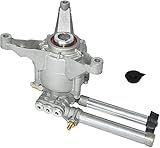
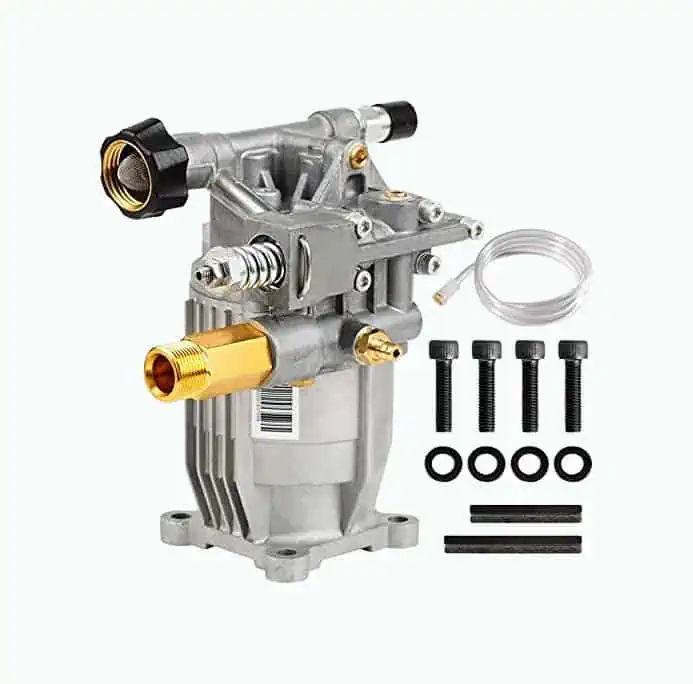
AgiiMan Pressure Washer Water Pump
Best Budget Pick
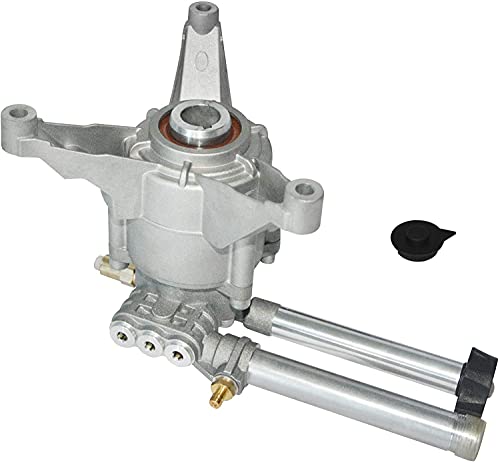
If you’re on a budget, the AgiMan pressure washer pump is one to consider.
It’s at a reasonable price, similar to some of our other recommendations. So it won’t break the bank but will still give you a super high-quality pump that will help you get the most from your pressure washer.
As an OEM replacement pump, it suits many models of pressure washers, but always double-check before purchasing.
Warning
What We Like
Great Specs for Household Use
This is a great pump for the majority of household pressure washers. It has a PSI rating of 2600 to 2800, which is suitable for most jobs around the house and garden. It also has a GPM of 2.4.
Easy To Start
This was built for simple and quick cold starts, allowing you to get it up and running in no time with no issues. You don’t need to release pressure before starting the engine, either.
Great Customer Service
Customers are delighted with the service they received when they have any issues or complaints. They state that if you’re not satisfied with the pump, you can get a refund up to 12 months after purchase.
Simple Installation
If this fits your pressure washer, it will be quick and easy to install. It works with many brands, including Honda, Sears Craftsman, Troy Bilt, and more.
What We Don't Like
Not for Electric Pressure Washers
As noted, this is unsuitable for electric pressure washers or pressure washers with a horizontal engine. This cuts down the versatility options with this pump. It’s important to note that before buying it so you’re not disappointed.
Product Specs
| Size | 7/8″ shaft |
| PSI | 2600-2800 |
| GPM | 2.4 |
| Versatility | Works with vertical gas pressure washers |
| Price | Low |
Our Ratings
User Experience
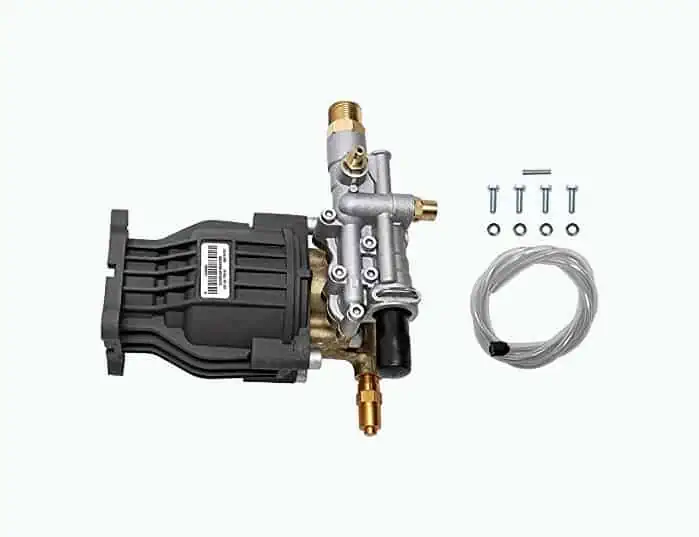
OEM Technologies Axial Cam Pump
Best Axial Cam Pump
For some people, a wobble pump just doesn’t cut it, but a Triplex pump is too expensive. Therefore, an axial cam pump is a good compromise. One of the top recommendations is the OEM technologies pump.
Whether you’re looking for a replacement pump or something to enhance your pressure washer’s power, this is an awesome option. Now you can get your jobs done quickly and effectively. It’s also designed to fit most gas pressure washers, so it’s quite a versatile gadget!
It’s averagely priced, so it’s not too much of an investment. Still, you will get your money’s worth, considering it’s more expensive than wobble pumps.
What We Like
Improved Seal System
Are leaks getting you down? Well, this comes with an improved seal system to prevent leaks. This cuts out the frustration of using a pressure washer. Now you can just enjoy a leak-free experience.
Thermal Relief Protection
Thermal relief protection in this pump prevents the pump from overheating. This allows you to use it for hours at a time without encountering any issues.
Versatile for Most Gas Pressure Washers
Many of our options will either fit horizontal or vertical gas pressure washers, but not always both. However, this one has a gas engine flange which allows it to fit most gas pressure washers.
No More Oil Changes
Hate oil changes? Never do one again! This includes a maintenance-free aluminum crankcase which means you never have to change the oil. Plus, the crankcase is die-cast, which protects it against corrosion.
What We Don't Like
Bother With the Bolts
Some customers had issues with the bolts. For instance, the instructions tell you to bolt the pump on separately from the housing, which isn’t necessary.
Another issue was that some packs arrived without the right amount of bolts. And another issue is that the bolt placement means you can’t use a socket; you must use a flat wrench. Small problems but something to be aware of.
Questionable Durability
You may not find this to be the most durable pump, but it should be covered by the warranty if yours is defective. A common complaint is that the materials are cheap, and the pump stopped working properly after a few uses.
Product Specs
| Size | 3/4″ shaft, threaded M22 connection |
| PSI | 3400 |
| GPM | 2.5 |
| Versatility | Fits most gas pressure washers |
| Price | Average |
Our Ratings
Personal Perspective
Yamatic Max 3000 PSI Pressure Washer Pump
Most Versatile
There’s no such thing as a true universal pressure washer pump, but this comes close. It works with most horizontal pressure washers, targeted at those with a ¾-inch shaft small gas engine.
The specific models that it works with are:
- Homelite: 308418007, 309515003, 308418004 308653078, 308653057, UT80522B, UT80953B, UT80522A, and UT80953A.
- Karcher G3050OH, K2400HH, and G2400HH.
- PowerStroke PS80522 and PS80903B.
- Generac 308418007, 01675, and 580.762011.
- Troy-Bilt 020241, 020241-1, and 20242.
- Simpson MS60753, MS60788, MS60850, MS60799, and MS61043.
- Honda GC190 and GC160.
So if you have one of those models, you’re in luck!
Another great bonus is that this is entirely made in the USA using high-quality materials, so you know you’re getting something good for your money.
What We Like
High-Quality Pump
As mentioned, this is a high-quality pump. It’s made with stable and sturdy aluminum and brass and has a powerful performance to help you experience the best from your pressure washer.
It Starts Up Easy
This pump is made for easy start-up, even in the cold. Therefore, every time you use this pump, it should be a total breeze to get going. You don’t even need to release pressure before starting the engine.
Affordable Price Point
This is one of the most affordable pumps on the market. And it’s much cheaper than buying a new pressure washer or getting somebody to try and repair yours. Sometimes all you need is a new pump, and you’ll be experiencing brand-new power again!
Works for Cleaning Around the Home
This comes in at a safe PSI of 3000 and 2.5 GPM, making it a great pump for cleaning homes, siding, pools, driveways, fences, and more. It isn’t too strong that it will cause damage (when used correctly), but it is strong enough to remove stubborn stains and grime.
What We Don't Like
Tested for 120 Hours
This unit has only been tested for 120 hours. While it might last longer than that, if it only lasts around 120 hours, that’s a fraction of some of the other choices we found.
PSI In Question
Some customers question if the PSI is up to what it’s advertised. It says it’s 3000 PSI with 2.5 GPM, but some customers struggled to experience the same pressure they had with a previous pump.
Product Specs
| Size | 3/4″ shaft, 22mm x 1.5-14mm hose connections |
| PSI | 3000 |
| GPM | 2.5 |
| Versatility | Works with horizontal engine pressure washers |
| Price | Low |
Our Ratings
Community Feedback
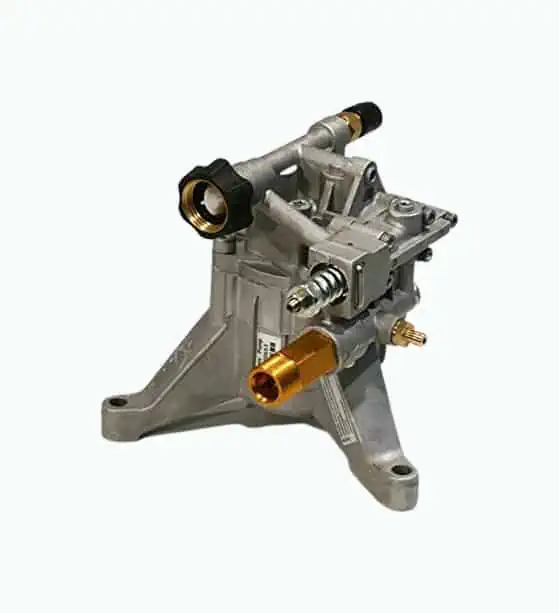
Himore Universal 2800PSI Pump
Easiest To Install
When your pump arrives, you probably want to get it up and running immediately to put your pressure washer to use. You don’t want something that’s a hassle to install or takes too long. That’s why I recommend the Himore Universal 2800PSI Pump as my favorite easy-to-install option.
Customers rate it very highly for its installation process. You should find the process straightforward, causing no stress, so you start cleaning ASAP.
You will also love that this is pretty versatile. It’s compatible with many models, which you can check using the listing’s own database. It works for vertical engine pressure washers with a standard ⅞ inch shaft and 22mm x 14mm connections.
Something To Note
What We Like
Ready To Go (Pre-Filled Oil)
We’ve already told you how easy it is to install this pump, but another big bonus is that it comes pre-filled with oil. This makes it ready to use. Minimal work for you!
Quite Universal
Of course, there is no such thing as a completely universal pump, but this comes close. It’s compatible with lots of pressure washers, so the chances of this working with yours are high!
Strong 2800 PSI
This has a maximum PSI of 2800 and a maximum GPM of 2.3. Therefore, it will work with lots of different pressure washers, especially ones made for domestic use.
Budget-Friendly Price
This is one of the most affordable pumps on the market, costing about half of the average price. So if you need something that won’t dent your wallet, this might be it.
What We Don't Like
Doesn’t Run Consistently
A common problem with this pump is that it cuts out quite frequently, particularly if you’ve been using it for a while. It also doesn’t hold up very well in cold weather, especially if you haven’t winterized it properly.
Cheap Materials Decrease Durability
A few customers reported that the pump is made with cheaper materials than they’d expect. The durability of this pump is in question, but most customers are satisfied. It’s one of the lower-priced pumps anyway, so it’s not too much of an investment.
Product Specs
| Size | 7/8″ shaft, with 22mm x 14mm hose connections |
| PSI | 2800 |
| GPM | 2.3 |
| Versatility | Works with vertical engines |
| Price | Low |
Our Ratings
First-Hand Impression
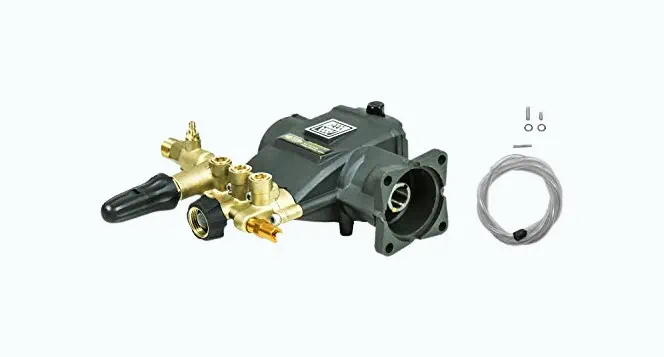
AAA Pumps Triplex Plunger Pump
Best Durable Pump
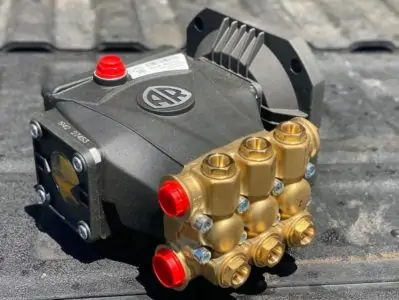
If durability is your top priority, I have to recommend a triplex pump. This is the best pump for long-term use with up to 90 percent efficiency and super long lifespans. With that in mind, my top recommendation is the AAA Pumps triplex plunger pump.
One thing that makes it so durable is the construction. It has precision polished stainless steel pistons, which improve the seal life. It also has a dual oversized radial ball bearing, which reduces wear and tear, as well as friction. Last but not least, it has an integrated unloader that allows for easy start-ups.
What We Like
PowerBoost Technology
This uses patent-pending technology called PowerBoost. This is a unique innovation that enhances real cleaning performance. It helps to deliver high-pressure water at the nozzle so you can experience the most efficient cleaning results.
No Overheating
This pump is made with unique technology to prevent overheating, a problem that can occur with pressure washer pumps. All the AAA pumps come pre-filled with oil as well as thermal relief protection. This works together to prevent overheating. You can use the pump for hours at a time without worry.
Anodized Die-Cast Aluminum
The crankcase is made with fully anodized die-cast aluminum. This protects the pump against corrosion. It’s also sealed to prevent contamination along with lube failure.
Adjustable Power Knob
This includes a hand-turning knob that lets you adjust the power. When you need less power for more delicate jobs, making changes is easier than ever.
What We Don't Like
Expensive Price Point
Triplex pumps are typically more expensive than other pump types. But this one is exceptionally expensive. You could buy a new pressure washer for this price, so remember, it’s a bit of an investment.
Some Leaking Issues
A few customers reported leaking issues. The company should repair or replace the pump, but this is still a bit of a problem. Some were leaking at the manifold, while others were actually leaking oil.
Product Specs
| Size | 3/4″ shaft, 3/8 inch quick connect pump outlet |
| PSI | 3700 |
| GPM | 2.5 |
| Versatility | Gas pressure washers with horizontal engines |
| Price | High |
Our Ratings
User Experience
| Product | Best | Size | PSI | GPM | Versatility |
|---|---|---|---|---|---|
| AgiiMan Pressure Washer Pump | Budget Pick | 7/8″ shaft | 2600-2800 | 2.4 | Works with vertical gas pressure washers |
| OEM Technologies Axial Pump | Axial Cam Pump | 3/4″ shaft, threaded M22 connection | 3400 | 2.5 | Fits most gas pressure washers |
| Yamatic Max Pressure Pump | Versatile | 3/4″ shaft, 22mm x 1.5-14mm hose connections | 3000 | 2.5 | Works with horizontal engine pressure washers |
| Himore Universal 2800PSI Pump | Easiest To Install | 7/8″ shaft, with 22mm x 14mm hose connections | 2,800 | 2.3 | Works with vertical engines |
| AAA Pumps Triplex Plunger Pump | Durable Pump | 3/4″ shaft, 3/8 inch quick connect pump outlet | 3,700 | 2.5 | Gas pressure washers with horizontal engines |
Types of Pressure Washer Pumps
There are three types of pressure washer pumps: wobble pumps, axial cam pumps, and triplex pumps. Let’s look at each one in detail.
Wobble
Wobble pumps are an entry-level option that is around 70 percent efficient. They use a wobble plate connected to a drive shaft to push pistons back and forth to create suction. This pushes the water out.
Pros
- They can run dry.
- They push water out with a lot of force.
- They use high pressure.
- They are self-priming.
Cons
- They are only around 70 percent efficient.
- They are hard or impossible to repair.
- They have a lower water flow.
Axial Cam
Axial cam pumps, sometimes known as a swashplate pump, are better than a wobble pump but not as good as the triplex pump.
An axial cam pump is positioned at an angle to allow the pistons inside to stroke as they move from one side to pull up water and then to the other to push out the water. This allows the pump to have a longer lifespan than the wobble pump.
Pros
- Self-priming.
- More efficient than wobble pumps.
- You can manually adjust the water flow.
- Lightweight and compact.
- They have a longer lifespan than wobble pumps.
Cons
- They get quite hot and take a long time to cool down.
- They have excess vibration.
Triplex
Triplex pumps work similarly to a car engine in that they have a crankshaft and connecting rods to drive position action pistons which suck in and push out water with every stroke.
They are made for professional-level pressure washers since they put out high pressure. You’ll appreciate that they also last for thousands of hours before needing maintenance or repair.
Pros
- They have a very long lifespan of about 10 years.
- They use very high water pressure.
- You’re less likely to get leaks.
- Nearly 90 percent efficient.
Cons
- These pumps are typically more expensive.
What Is the Difference Between Axial and Triplex Pumps?
Axial cam pumps have a direct drive meaning that they spin at the same speed as the engine. This causes them to wear down faster than a triplex pump.
Overall, triplex pumps are the most durable and highest-quality pumps you can get. They have a long lifespan of about 10 years and, overall, just perform better. However, they are more expensive by at least $100, so they’re not for everybody.
If you’re only going to use your pressure washer occasionally, you probably won’t need to invest in a triplex pump.
How To Choose the Best Pressure Washer Pump
When choosing your pressure washer pump, you should consider a few things to find the best one for you.

Size
There are two elements to consider when it comes to size. Firstly, how big is the pump, and do you have space for it? Pressure washer pumps are usually around seven inches on all sides, give or take, but some can span up to 11 inches long.
Secondly, will it fit your pressure washer? Look at the connection point and make sure that it is suitable for your pressure washer.
Water Pressure
Check the pump’s water pressure, measured in PSI (pound per square inch) and GPM (gallon per minute). Be sure that these numbers match your pressure washer.
If, for example, your pump has a maximum PSI of 2500, but your pressure washer has a maximum PSI of 3500, you will never be able to enjoy your pressure washer’s full maximum potential.

Durability
Of course, you want something that will last a long time. The triplex pump is the most durable and can last thousands of hours or up to 10 years.
Your next best option is the axial cam pump, which lasts five to eight years, before looking at the wobble pump, which lasts about two to three years.
Also, consider the pump’s material. Strong metals, like aluminum and steel, are your best bet.

Budget
Pressure washer pumps come in a range of prices, ranging from $75 to $400, so be sure to stick to your budget. As a heads up, triplex pumps are the most expensive, and wobble pumps are the cheapest.

Versatility
How compatible is it with various pressure washers? This could include the type — whether it’s for gas or electric — but it also covers the brand. Some pumps are only compatible with certain brands.
The more versatile, the more use you may get out of the pump, as you may get a new pressure washer at some point.
Pressure Washer Pump FAQs

Why Do Pressure Washer Pumps Fail?
There are many reasons that pumps fail. Just like other elements used repeatedly, they can wear down over time. There are two very common problems that cause pumps to fail, though.
First, pump cavitation. This is when there is not enough water supplied to the pump. Your pressure washer should be the same or more gallons per minute than the rating on the pump to supply enough water otherwise, it will wear down.
The second is overheating. Overheating is common, especially for inadequately made pumps. Like any product, if overheating happens repeatedly, the pump can break down.

How Long Should a Pressure Washer Pump Last?
It depends on what type of pump you choose. A wobble pump should last around three years; an axial cam pump should last five to eight years, and a triplex pump should last up to 10 years.

How Do I Know if My Pressure Washer Pump Is Bad?
If you’re suspicious that your pump is bad, there are a few ways you can tell for sure.
-
- Check with a pressure gauge: Use a pressure gauge to check if the pressure is maintained. The line should remain stable. If it doesn’t move, is low, or flicks back and forward, your pump is bad.
- Check PSI and GPM: If your pressure washer doesn’t reach the advertised PSI or GPM, the pump could be bad.
- Dirt and build-up: This is a visual one. If you notice dirt and build-up in the pump, connections, or pressure washer, your pump needs to be deeply cleaned.
- Trapped air: You may also experience mini air explosions, which suggest that air is stuck in the pump.
- Poor performance: General performance problems like poor power, inconsistent results, and low pressure can indicate that your pump isn’t right for your pressure washer.
- Leaks: Another problem is leaks. This can suggest an issue with the pump.
- Physical damage: Lastly, physical flaws can indicate something wrong or damaged with the pump.
If you notice any of these issues, it’s time to repair or replace the pump.

How Do You Maintain a Pressure Washer Pump?
Here are our top tips for maintaining your pressure washer pump:
-
-
- Keep it clean: Firstly, keep your pump clean. Don’t let dirt build up in or on the pump.
- Change the oil: If yours requires oil to work, change it regularly. Check with the manufacturer to know how often to do this.
- Empty out the water: Don’t let water sit in the pump. You should always empty the remaining water.
- Store it well: Keep the pump in a dry area to prevent cold temperatures and other weather elements from trying out the pump seals.
- Winterize it: You should winterize your pressure washer, but also your pump. This protects it against mineral deposits and freezing.
-

Can You Upgrade the Pump on a Pressure Washer?
You can upgrade the pump on a pressure washer, provided it is a gas variety. You will need to get the work done professionally to keep your warranty intact; however, some modifications will invalidate the warranty.

How Do You Unclog a Pressure Washer Pump?
The best way to unclog a pressure washer pump is to remove it from its housing and pull out debris. Before reinserting the pump, give it a top-up of oil and ensure there are no hidden blockages.