Anyone can create a beautiful and functional mudroom. You don’t need a lot of space for one and it’s an easy way to add extra storage space to your home. No more tripping over dirty shoes when you enter the house.
If you’re struggling with a messy entryway, then you’ll love these mudroom ideas that will help you keep your entryway beautiful in a practical way. There are many mudroom designs to consider, so have a look and see what will work best for your family.
Key Takeaways
- Create organized spaces for coats using lockers, hooks, cabinets, or Shaker peg rails.
- Keep shoes tidy with drawers, shoe pegs, cubby cabinets, or shoe shelves.
- Add a functional mudroom bench with storage options like open bottoms, drawers, or shelves.
- Set up a control center with calendars, chalkboards, pegboards, or bulletin boards for easy communication.
Ideas for Storing Coats
An organized mudroom needs easy spots for people to hang their coats, so here are some great ideas on how to store your coats.
Lockers
Build open lockers for your children to store their coats, backpacks, and shoes. Each child can easily find their school supplies, and you won’t start the morning searching the house for missing items. This also makes leaving the house in the morning much easier.Use Hooks
Install hooks on the walls of your mudroom to hold hats, coats, and purses. Kids can also hang their backpacks on the hooks as a safe place. Guests can also use the hooks to leave their coats while they visit.Low Hooks
If you have children in your household, install low hooks in the mudroom as well as high hooks for the adults. This will allow the children to hang up their own coats and outdoor wear without needing an adult or chair to help them reach the higher hooks. This way they can take responsibility for their own belongings.Cabinets
Use a cabinet to store your outdoor wear when you don’t need it. The cabinet can be closed leaving a neat appearance in your entryway, yet you’ll still be able to access the items when you need them.Shelf with Hooks
Install a shelf with hooks underneath. The shelf is perfect for keeping keys, purses, and wallets in one place while the hooks give you a spot to hang your jackets. You’ll be able to leave the house easily without searching for your belongings.Old Hammers for Hooks
Instead of using regular hooks to hang items in your mudroom, try using old hammerheads instead. The heads will add a unique look while still giving you the same ability to hang coats and handbags.Use Shaker Peg Rails
Another idea is to hang a Shaker peg rail in your entryway instead of hooks. The pegs will allow you to hang coats, towels, and bags in your mudroom while giving you a uniformed look, especially if you paint the peg rails the same color as your walls.Create a Grid of Pegs
Try installing a grid of pegs for hanging coats, bags, and other items you need when you leave the house. You’ll be able to hang items all over the wall. Kids will be able to use the lower pegs and you can hang long coats on the upper pegs.Coat Rack
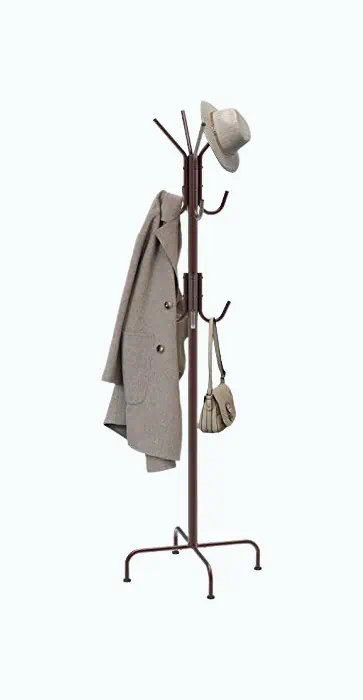 A coat rack is a handy place for a small household to store coats, bags, and other items. It’s small and will fit in corners as well. So pick up a coat rack to keep in the corner of your mudroom. It will neatly hold your outerwear and bags.
Coat Closet
Build yourself a coat closet in your mudroom. You can include a rod to hang coats inside the closet. Install an upper shelf to hold baskets of gloves, mittens, and hats. Add a lower shelf for shoes, backpacks, and bags. This way you’ll have a neat and organized closet in your mudroom.Mudroom Shoe Storage
Shoes are always a problem in a mudroom. Kids kick their shoes off and leave them all over the floor. So here are some mudroom ideas to keep your shoes organized.
Use Drawers
Install drawers in your mudroom to hold shoes. You can use drawers to hold different types of shoes or assign a drawer to each member of the family. Either way, you’ll find your shoes are now neatly organized and out of the way.Shoe Pegs
Pegs in your mudroom can be used to hold more than just coats. Install some pegs to hold your family’s shoes. This is handy if you’re in an area that gets a lot of rain as the shoes can drain and dry while they hang on the walls.Shoe Cubby Cabinet
Put a small shoe storage cabinet in a cubby in your mudroom. The shoe storage cabinet will be able to hold your family’s shoes. Plus, if you use a sliding tray, you can slide it out to find the shoes you’d like to wear and then slide it back out of the way so you don’t have to look at muddy shoes all day.Large Shoe Cabinet
Install a large shoe cabinet in your mudroom. You’ll be able to keep all your family’s shoes in one spot where you can easily find the shoes you need. Be sure to add doors to your cabinet so you can shut the door and have a neat and organized mudroom to admire.Shoe Shelf
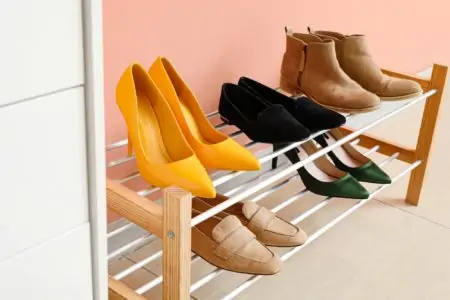
Instead of a bookshelf, try a shoe shelf instead. Put a small shelving unit in your entryway to hold the shoes your family wears. The shelves provide an easy solution to packing shoes away and also to grab the pair of shoes you’d like to wear.Shoe Cubby Organizer
Another idea is to install a shoe organizer in your entry closet. The shoe cubby will keep your shoes organized by pair and look amazing as you enter and leave your house.Door Shoe Organizer
 If you have a door between your mudroom and the rest of the house, hang a shoe organizer on the door. Your family’s shoes can be neatly stored out of the way and you won’t take up precious space for shoe storage.
Boot Tray
If you have muddy shoes coming into your house, place a boot tray next to your entryway mat. It’s a simple tray to hold wet shoes so water doesn’t spread all over the room. You can even fill it with stones so your shoes are lifted out of the water. The boot tray is both decorative and functional.DIY Boot Tray
Another idea is to make yourself a boot tray from scrap wood instead of purchasing one. You can add a mat, tiles, or stones to the tray so your shoes dry without making your entryway wet (1).Shoe Shelf
Add a shoe shelf underneath a bench. This will give you more room for shoes while keeping the shoes out from underfoot so you don’t trip over the shoes your kids leave in the mudroom.Mudroom Benches
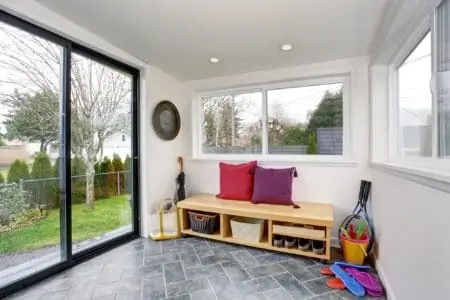
Benches are handy in the mudroom giving you a place to sit down and put on your shoes. In addition, benches often include shelves or built-in storage space that you can use to hold shoes, bags, and baskets.
Open Bottom Mudroom Bench
Use an open bottom mudroom bench in your entryway. The open bottom allows you to add baskets underneath the bench, toss shoes there, or leave the space empty for an airy look to your room. It gives you the flexibility that other benches don’t offer.Baskets Under the Bench
Add baskets under your open bottom mudroom bench. The baskets will give you a place to toss mittens, gloves, and hats. You can also keep bags, handbags, and umbrellas in the baskets as well.Corner Bench
Install a corner bench in your entryway. The corner bench will make the most of the lost corner space of your room while giving you extra space for people to sit.Bench with Drawers and Shelf
Add a bench that has a shelf for shoes and drawers underneath. You can keep needed items in the drawers such as hats, umbrellas, and gloves. Also, the shelves are the perfect place to store your shoes.Bench with Cushions
It’s nice to have something soft to sit on while you’re waiting for everyone to get ready to leave or simply put on your shoes. So, add a long cushion to your mudroom furniture so you can have somewhere comfortable to lounge.DIY Storage Bench
Build yourself a DIY storage bench for your mudroom. You’ll have a comfortable place to sit and put on your shoes as well as the extra storage you need (2).Control Center
The mudroom is the perfect place to set up a control center for your household so you can leave messages for family members as they enter and leave your home.
Calendar
Add a calendar above your children’s coat hooks. This is a great place to keep track of what is scheduled for each day, in an easily accessible space for the whole family. Having this in your mudroom makes it easy to check on your way out or as your kids rush out the door for school.Baskets and a Chalkboard
Add baskets and a chalkboard to your mudroom decor. You’ll have a spot to put mail, leave notes for people, and keep messages from your children’s school.Pegboard
A pegboard gives you the flexibility you need to add baskets and hooks. It also works well in small spaces. You’ll have a place to keep your keys, water bottles, phones, and handbags neatly organized so you can find them as you leave the house. You can also leave mail and messages for other family members.Bulletin Boards
Another idea is to add a whiteboard and cork bulletin board to your mudroom. These will give you a place to leave messages and notes while keeping your mudroom streamlined as well.Mudroom Command Center
Add a clock, place to keep papers, hooks for keys, pegs for backpacks for coats, and you’ll have the perfect command center for your house. You’ll be able to keep everything you need in one spot for a speedy exit in the morning.Key and Chalkboard Frame
Install a key and chalkboard frame in your mudroom. It provides a safe space to keep your keys so you’ll be able to find your keys as you leave the house, and the chalkboard is the perfect place to leave messages for other family members.Mail Holder
You can hang a mail and key holder in your mudroom as well. This will give your family a place to put incoming and outgoing mail as well as a place to keep your keys.More Mudroom Storage Ideas
Folding Drying Rack
If you have combined your laundry room and mudroom, install a set of folding drying racks on the wall. You can pull them down when you need to layout items to dry and then fold the drying rack back up so it’s out of the way.Ironing Board Cabinet
Another quick idea if you have your washing and drying machine in the mudroom is to add an ironing board cabinet to the area. You’ll be able to keep lint rollers, detergents, and other supplies in the cabinet. The ironing board will be out of the way. Plus, you’ll be able to iron clothing as it comes out of the dryer.Quick Drop Zone
Another idea is to make a quick drop zone so you have a place to keep sunglasses and keys. It’s an easy place to drop your stuff as you enter the house so you can find it when you leave (3).DIY Mudroom Bins on Wheels
Make some mudroom bins on wheels to store your children’s stuff. You can drop bags, balls, mitts, and gloves in the bins so they’re easy to find when you’re ready to leave (4). Each box can be personalized so every family member has their own space.Umbrella Stand
If your family uses umbrellas often, then add an umbrella stand to your mudroom. It’s an easy place to keep umbrellas so they’re by the door for you to grab on your way out.Wall Organizer
Add a wall organizer to your mudroom closet to give you a place to hang coats, umbrellas, and hats. They’ll be able to hang neatly on your wall and be ready for you as you leave your house.Entryway Organizer
If you want to improve your mudroom organization, consider adding an entryway organizer to your house. It will give you a place to store umbrellas, handbags, and shoes as you enter and leave your home.FAQs

What is the Difference Between a Foyer and a Mudroom?
The difference between a foyer and a mudroom is that a foyer is a lobby, waiting room, or corridor, whereas a mudroom is a specific room that acts as a link between the indoors and outdoors.

Why is it Called a Mudroom?
It is called a mudroom because it is a specific space reserved for taking off muddy boots and clothes so that you don’t trail it inside the house.

What Do People Store In a Mudroom?
Most people store shoes in a mudroom, along with coats, wet weather gear, and pet accessories like leads and harnesses.

Should a Mudroom Have a Sink?
A mudroom doesn’t need to have a sink, but given it is a mudroom, a sink would be a great idea. You can wash your hands after taking off dirty boots.

How Far Apart Should Coat Hooks Be Placed?
The distance that coat hooks should be placed depends on the type of coat hook. Typically, most coat hooks are placed 10 to 12 inches apart to cater to different size coats.

How Do You Make a Mudroom Locker?
The easiest way to make a mudroom locker is to measure the space, cut the wood to size, and then assemble it with shoe cubbies as additional storage.