Looking to add perfect definition to the edge of your lawn, pathways, and flower beds? Then you need a lawn edger. Finding durable, ergonomic outdoor equipment can be quite the task — I know.
That’s why I’ve compiled a list of the seven best lawn edgers currently available. With the research done and dusted, you can sit back, relax, and read these in-depth reviews.
Soon enough, you’ll be able to find the right tool for you. Whether that’s gas, electric, manual, or something else entirely, we have plenty of recommendations.
- Durable brushless DC motor
- Adjustable speed and cutting depth
- Comfortable and non-slip handle
- Affordable price
- Arched saw-tooth blade
- Comfortable T-shaped handle
- Easy to switch between different modes
- Equipped with command feed spool
- 7-Position handle for comfortable grip
- Adjustable cutting length between 1 and 1.5 inches
- Includes cutting line indicator
- D-shaped handle for extra security
- 12-amp motor power
- Adjustable blade length
- Suitable for left- and right-handed folk
- Converts to trimmer, powerhead and more
- Quick starting system
- Easy-to-attach accessories
- Lightweight under four pounds
- Secure grip on handle
- 15-year warranty
Review Methodology: At Oh So Spotless, we strive to provide you with a thorough analysis and evaluation of the best lawn edgers on the market. Our team of professionals has hands-on experience with various lawn edgers, allowing us to compare and rank them based on performance, design, and user experience. We use data-driven research and real-world testing to identify key decision-making factors such as power source, blade type, cutting depth, and ease of use. With a focus on quantitative measurements and first-hand evidence, our assessment highlights the standout features and benefits of each product, making it easier for you to choose the perfect lawn edger for your needs. Trust our expert reviews to guide you in making an informed decision, as we always prioritize your satisfaction and the value you get from our recommendations.
The Best Lawn Edgers of 2024
I’ve spent hours researching lawn edgers, genuine customer reviews, and expert advice. After applying my own insight, I narrowed it down to the seven most worthwhile lawn edgers. Complete with in-depth reviews and accessible product specs, let this list guide you to the right edger for you.
Here are seven trustworthy lawn edgers for a neat and crisp lawn.
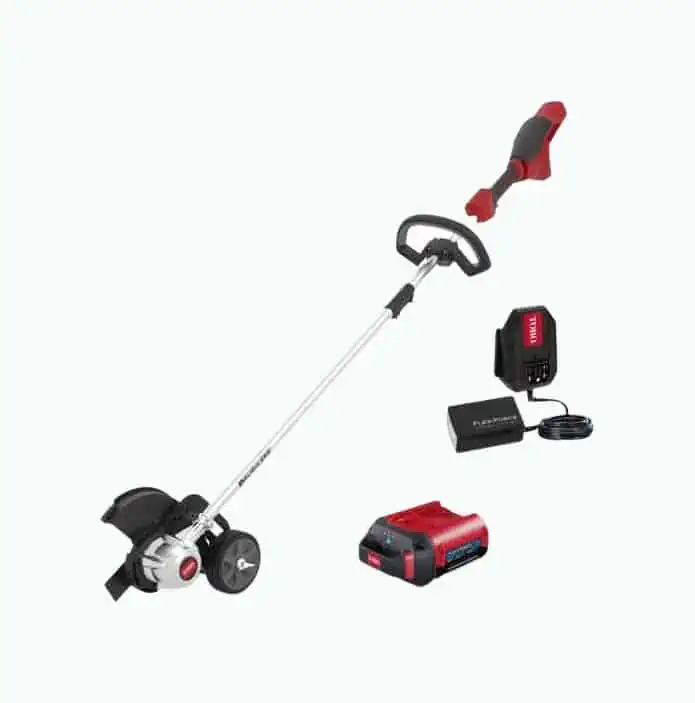
Toro Cordless Electric Lawn Edger
Best Cordless Lawn Edger
With a 60-volt battery, this cordless electric lawn edger provides power and convenience. It has a long life, a generous run time, and a super powerful brushless motor that’s suitable for tough and thick weeds.
The tool is built with cast aluminum housing and high-carbon steel, both intended to last a long time without breaking.
What We Like
Brushless DC Motor
You can wave goodbye to mixing oil and fuel as you need to do with many gas options. This comes with a durable and powerful brushless DC motor, which gets the job done time and time again. It’s built to last and built to impress.
Adjustable Features
With this lawn edger, you’re in complete control. Most of the main features are fully customizable.
For starters, there is a variable speed trigger, so you can adjust the speed as desired. You can also adjust the cutting depth depending on the height of your grass and weeds. Lastly, you can adjust the guide wheel for more precise edging on your lawn.
Stay Clean and Comfy
This is built with a blade guard and debris blocker, so you don’t get covered in debris as you edge your lawn. This may seem like a small detail, but if anything can shorten the length of garden chores, it’s a winner. It also has a comfortable and non-slip handle so you can feel in control and super comfortable as you work.
High-Carbon Steel Blade
This features a quality, high-carbon steel blade. High-carbon steel is super durable and often used in cutting tools due to its strength and sharpness.
What We Don't Like
Heavy and Imbalanced
At 15 pounds — not including the battery — this is a heavy cordless option. Many customers found it awkward to use, especially considering it’s bottom-heavy where the motor is. That made it quite difficult to maneuver.
Expensive
This is one of the more expensive options on the market, coming in at a similar price to gas options. For a cordless electric option, it’s about double the average price.
Product Specs
| Type | Cordless electric |
| Weight | 15 pounds |
| Handle Length | 35.6 inches |
| Blade | 8-inch high-carbon steel |
| Budget | $$$ |
Our Ratings
User Experience
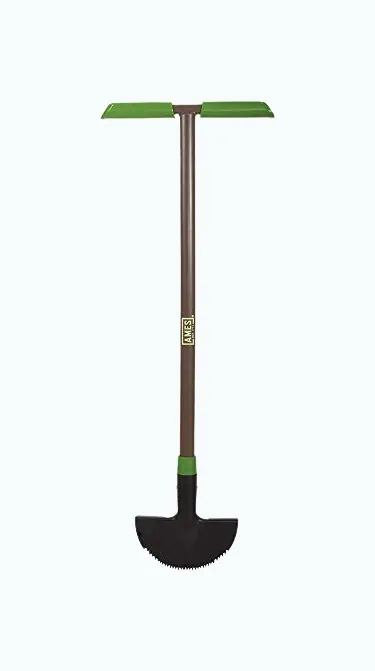
AMES Saw-Tooth Border Edger
Best Manual Lawn Edger
Manual lawn edgers can save you money and allow more flexibility over the edges of your garden. If you have a small yard with oddly shaped corners and edges, check out the Ames saw-tooth border edger.
Customers love how much use they get out of this tool. Whether you’re edging sidewalks, flower beds, or grass — this is a versatile and fantastic tool. In fact, it’s well suited to men and women of various ages and strengths.
What We Like
Affordable Price
One of the most attractive things about manual lawn edgers is the price, and this product is no different. Costing about half the average lawn edger price, this is one of the cheapest on the market — by price, not quality.
Arched Saw-Tooth Blade
Customers love the arched blade on this tool. It allows you to cut straight or curved trenches.
So, if you have uniquely shaped garden beds or grass edging, this is a great option. The blade is also super sharp so that you can achieve your desired results without much effort.
Comfortable T-Shaped Handle
The handle was designed with your comfort in mind. It has a T-shaped grip at the top for ultimate security.
The handle is made from steel, so it’s durable and long-lasting. It’s then wrapped with a grip cover so you can hold it for long periods without slipping or fatigue.
Convenient Footplate Included
This edger has a convenient footplate added above the blade, making it easier to create gauges in one simple step. The footplate adds more control for the user, giving them a more comfortable experience over longer periods.
What We Don't Like
Not Sharp Enough
Some customers found this wasn’t sharp enough for their thick, stubborn grass. It struggled to cut the grass and instead embedded it into the dirt. This was particularly true for Bermuda grass.
Take note of your type of grass and how easy or difficult it is to cut.
Not Fully Made in America
Ames claims the product is made in America, but customers saw that parts of the product were actually made in China when the product arrived. This lack of transparency is something to note with the brand.
Product Specs
| Type | Manual |
| Weight | 3 pounds |
| Handle Length | 39 inches |
| Blade | Arched saw-tooth blade |
| Budget | $ |
Our Ratings
Personal Perspective
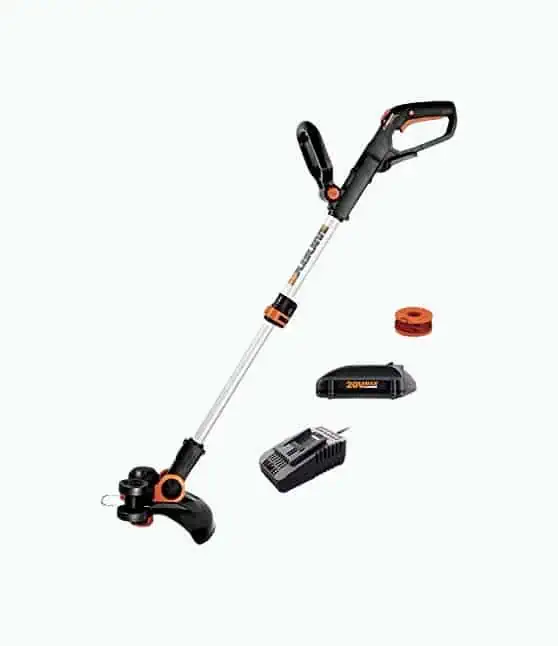
WORX PowerShare String Trimmer & Edger
Best Combination Tool
Looking to save a bit of money by choosing a combo tool? This 2-in-1 lawn edger and string trimmer can create manicured edges and trim around obstacles. It does both in the space of one handy tool, which saves you time, storage space, and money.
What We Like
Quick Conversion To Different Modes
With any 2-in-1 product, you may worry about how easy it will be to switch between the different modes. But with this tool, it only takes a couple of seconds. Simply pull the head from the shaft, twist it, and it will switch between trimmer and edger.
Command Feed Spool
When using the trimmer, you control the spool feeding through. When you need more, there’s a handy button to press so you can smoothly give yourself more spool as necessary. No bumping, no guessing, no faffing around.
7-Position Handle
The handle is ingenious, comfortable, and effective. Not only is it curved at the top for your comfort, but there’s an extra D-shaped grip with seven position options.
This allows you to get the most comfortable grip possible for you. It also provides extra leverage for when you need it.
90-Degree Pivoting Head
The pivoting head rotates at a 90-degree angle so you can get underneath landscaping, such as shrubs. It also allows you to trim on slopes or angled grass easily.
What We Don't Like
Poor Quality Spool
While the command feed for the spool is handy, the spool itself is of poor quality. It’s not the strongest stuff, and you’ll go through quite a lot every time you use the machine.
Thankfully, though, you can buy spools from other brands. Still, it’s a bit of a faff, especially when the company offers fresh spools for the life of the product.
Short Battery Life
Some customers found the battery lasted at least 40 minutes, if not longer. However, others said the battery lasted as little as 15 minutes. So keep in mind that the battery life can be temperamental and unreliable.
Product Specs
| Type | Cordless electric |
| Weight | 5.3 pounds |
| Handle Length | 36.3 inches |
| Blade | No blade, only string |
| Budget | $$ |
Our Ratings
Community Feedback
WORX 12 Amp Lawn Edger & Trencher
Best Electric Edger
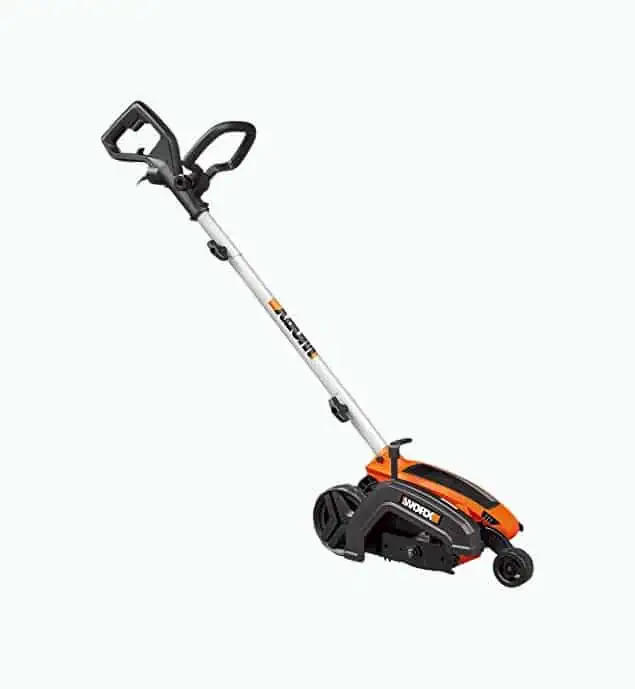
In the world of electric lawn edgers, this is one of the best. First, it’s a pretty affordable option backed by a 3-year warranty, so you can rest assured you’re getting your money’s worth.
Secondly, it doubles as a trencher, making it a super versatile tool.
It’s also a super powerful option with a 12-amp motor with a blade that spins at 4700 RPM. Even if you’re a newbie using this for residential purposes only, this will help you achieve a professional finish that will impress the neighbors.
What We Like
Adjustable Cutting Depth
With an adjustable cutting length, you gain more control over how you want your garden to look and how easy edging the lawn is. You can change the cutting depth to one inch, 1.25 inches, or 1.5 inches.
Cutting Line Indicator
This tool makes it easy to achieve beautiful and neat edges. With the cutting line indicator, you can follow a straight line guide so that your garden is neater than ever before.
Quality Handle
This handle is one of the best on the market, in my opinion. It’s adjustable, so you can extend the length to suit you. But it also has a comfortable grip so you can work for long periods of time without tiring.
Last but not least, it has a secondary D-shaped handle for extra security.
Powerful and Fast
This 12-amp power tool is mighty fine! The blade spins at 4700 RPM, giving you quick yet professional results. Get through your yard jobs quicker so you can relax longer with the family.
What We Don't Like
Hard the First Time You Use It
If your yard has thick, overgrown grass, it will be tricky the first time you use it. It struggles and slows in thick grass. It’s much more suited to lawn maintenance than tidying up. But once you’ve got through the thick of it, it should work totally fine.
Blade Needs To Be More Durable
The blade on this machine is a little disappointing. Customers found that it stopped working pretty soon, whether by stopping spinning altogether or just dulling down. The warranty should cover it, but it’s still a hassle to order and wait for a new blade.
Product Specs
| Type | Corded electric |
| Weight | 14 pounds |
| Handle Length | 39 inches, but it extends (not specified length) |
| Blade | 7.5-inch steel blade |
| Budget | $ |
Our Ratings
First-Hand Impression
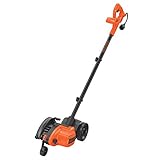
Black+Decker Edger & Trencher
Best Edger Trencher Combo
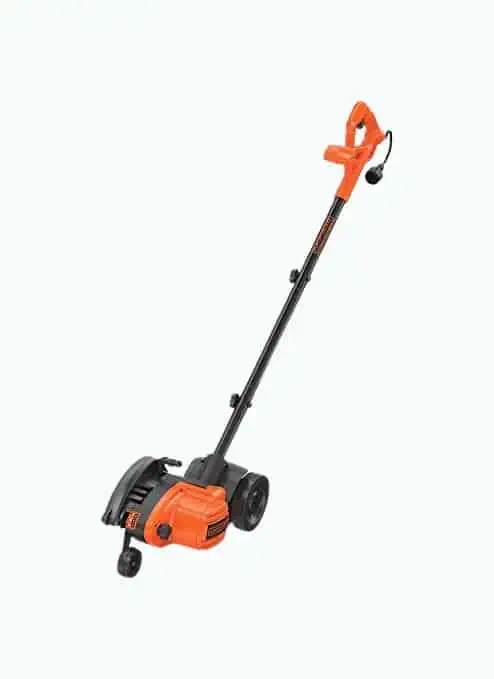
If you’re looking for an edger and trencher combo, this is a top choice. Loved by thousands of customers, this is a great tool for manicuring and mowing edges without any damage.
The price of this one is also very attractive. Costing about three-quarters of the average edger cost, you’re getting a good bang for your buck, especially when considering you’re also getting an edger.
What We Like
12-Amp Motor
Say hello to awesome power with this tool. The 12-amp motor lets you get all the desired power and cut through tough and thick grass.
Adjustable Blade Length
Stay in control with this power tool. The Black and Decker edger has a three-position blade adjustment versatility so you can control the cuts you’re making.
Suitable for Left- and Right-Handed Folk
With many edgers, you have to be right-handed for a comfortable experience. But this tool is suitable for both left- and right-handed people, thanks to the flexible and comfortable handle.
2-In-1 Power Tool
This unit converts from edger to trencher and back again. It’s easy to convert between the two tools simply by pulling up the edge guide and lowering it back down again.
What We Don't Like
Sticking and Clogging Issues
Some customers found that the wheels were prone to sticking and clogging. The plastic casing could be more durable and resistant to these issues for a smoother cutting experience.
Flimsy Design
Durability isn’t the strong point of this product. Some customers found the product didn’t last as long as expected and the design was flimsy.
Product Specs
| Type | Corded electric |
| Weight | 13.1 pounds |
| Handle Length | Not specified, but it is adjustable by two inches |
| Blade | Three-position blade |
| Budget | $ |
Our Ratings
User Experience
ECHO Gas PAS Trimmer and Edger Kit
Best Gas Lawn Edger
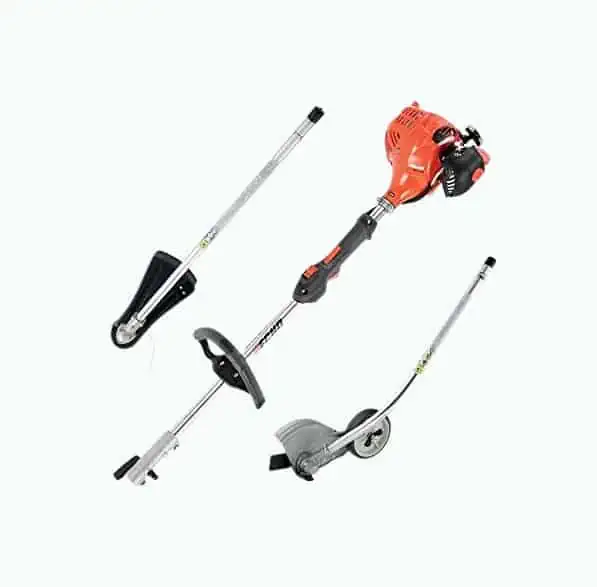
This lawn edger kit is a gas-powered and versatile option that is well-loved by keen gardeners. It works with up to 12 Echo attachments, excluding the shaft edger, ProSweep, ProPaddle, and Bed Redefiner. However, it does come with a handy trimmer and edger attachments (1).
This is ideal for manicured edges and an aesthetic finish. Even if you have tough grass and weeds, this tool can cut right through.
What We Like
Versatile Kit With Three Main Tools
This isn’t just a lawn edger. Nope, it comes with other handy attachments. In the box, you’ll get a straight shaft trimmer, an edger, a powerhead, and other various attachments.
All parts come with a 5-year consumer warranty and a 2-year commercial warranty if you want to use this for work.
Quick Starting System
Compared to other gas-powered tools, this one is easier to start. It has an i-30 system, which reduces the effort by 30 percent, giving you an overall better user experience.
Easy-To-Attach Accessories
With all the compatible attachments, you’re probably wondering how much hassle connecting and disconnecting them will be. The answer is — it’s easy! This comes with a tool-less coupler so you can quickly and easily make changes.
Cushioned Handle and Grip
Take comfort to the next level with this impressively designed unit. Its cushioned throttle makes the user experience more comfortable and reduces vibrations. It also has a left-handle grip, so you have more control over the unit. Just note that this translates as not being as suitable for left-handed users.
What We Don't Like
Quite Hard To Use
If you’re new to the world of lawn edgers, this may not be the best starting point. Customers reported that this was quite a difficult product to use.
Getting perfect edges was a challenge. Feeding the string into the trimmer was also a bit of a hassle.
Lacks Power
You may be slightly disappointed in the tool’s power as an edger. While it’s powerful as a string trimmer, it could be a bit more powerful as an edger.
Product Specs
| Type | Gas |
| Weight | 11.8 pounds |
| Handle Length | 59 inches |
| Blade | Not Specified |
| Budget | $$$ |
Our Ratings
Personal Perspective
AMES 2 Wheel Lawn Edger
Best for Curves
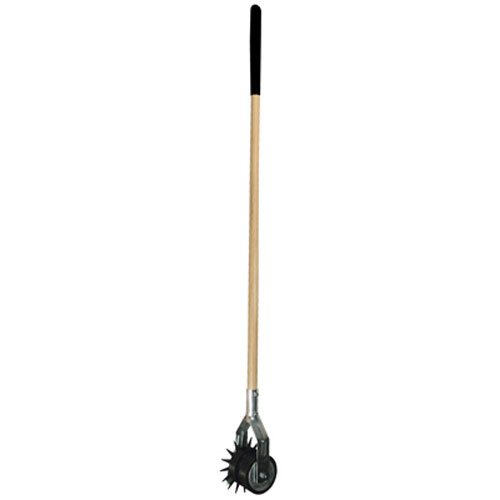
You may struggle with a standard electric or gas option if you have a curved yard or flower beds. Instead, you should opt for a wheeled manual edger, like this one from Ames.
The wheels hold up the cutting blades so you can easily glide it along your curved edges, ensuring a crisp and beautiful finish. No matter the shape.
What We Like
Lightweight Under Four Pounds
Weighing less than four pounds, this is a lightweight option suitable for people of all sizes and strengths to transport. You can maneuver around your yard without additional stress when using this tool.
Secure Grip on Handle
The long wooden handle is finished with a smooth and textured grip so that you can hold it confidently and securely. Fewer fumbles, less slipping, and less fatigue with this handle design.
15-Year Warranty
You can’t ask for much more than a 15-year warranty for a product at this affordable price point. This incredible length of time gives you peace of mind in case anything goes wrong.
Delivers Neat Results
This old-school manual-style lawn edger isn’t super expensive or trendy. But it’s a classic construction that many customers prefer, mainly because it gives crisp, neat edges.
What We Don't Like
Wheels Get Stuck
The self-sharpening design of this product sounds cool. However, the reality is that this often prevents the wheels from turning effectively, which can slow down your progress in the garden.
Strength Required
Customers recommend that you be in good physical condition to use this tool. You need to put in some tough muscle to use this properly and get the best results. If you’re not confident in your strength, you may want to skip this option.
Product Specs
| Type | Manual |
| Weight | 3.94 pounds |
| Handle Length | 55 inches |
| Blade | Self-sharpening serrated blades |
| Budget | $ |
Our Ratings
| Product | Best | Type | Weight | Handle Length | Blade | Budget |
|---|---|---|---|---|---|---|
| Toro Cordless Electric Lawn Edger | Cordless Lawn Edger | Cordless electric | 15 pounds | 35.6 inches | 8-inch high-carbon steel | $$$ |
| AMES Saw-Tooth Border Edger | Manual Lawn Edger | Manual | 3 pounds | 39 inches | Arched saw-tooth blade | $ |
| WORX PowerShare String Trimmer & Edger | Combination Tool | Cordless electric | 5.3 pounds | 36.3 inches | No blade, only string | $$ |
| WORX 12 Amp Lawn Edger & Trencher | Electric Edger | Corded electric | 14 pounds | 39 inches, but extends | 7.5-inch steel blade | $ |
| Black+Decker Edger & Trencher | Edger Trencher Combo | Corded electric | 13.1 pounds | Not specified, but adjustable by two inches | Three-position blade | $ |
| ECHO Gas PAS Trimmer and Edger Kit | Gas Lawn Edger | Gas | 11.8 pounds | 59 inches | Not specified | $$$ |
| Ames 2 Wheel Lawn Edger | For Curves | Manual | 3.94 pounds | 55 inches | Self-sharpening serrated blades | $ |
Why Should I Edge My Lawn?
Here are some reasons you may want to use a lawn edger:
- Great definition: You get great definition at the edges of your lawn, whether that’s the grass, the flower beds, the walkways, and more.
- Tidier finish: It cuts away overhanging grass and weeds for a tidier finish.
- Separate terrains: You can easily separate different terrains in your yard.
- Great addition to a lawnmower: A lawnmower can’t get into the edges, so a lawn edger can help where a lawnmower fails.
- Impress guests: You achieve a crisp and tidy finish to your yard, which can help impress potential buyers or just guests that come to your house.
- Less weeds: It minimizes weed invasion.
Types of Lawn Edgers
There are three main types of lawn edgers: gas, electric, and manual. Let’s look at the pros and cons for each so you can decide which is right for you.
Manual
If you’re looking to save money, you may want to opt for a manual lawn edger that operates without the use of gas or electric power. These are more affordable, but they do require a bit extra effort when using.
These are great for small lawns. Plus, they will last for ages if you take care of them properly.
Pros
- They cost about half the price of the average powered lawn edger.
- They will last for decades if you maintain and clean them properly.
- These are easy to control.
- They won’t cause as much damage if misused.
- Good for using in oddly shaped or hard-to-reach places.
Cons
- They require a bit extra effort to use since you’re responsible for the power behind them.
- Not a great option if you have mobility challenges.
- They take longer to use.
- Not ideal for medium or large yards.
Electric
An electric lawn edger is a popular option if you want a powered tool. They are lightweight, more eco-friendly, and more affordable than gas. They also come in both corded and cordless designs to suit your specific needs.
If you’ve got a medium or large yard, this is a good option, as it will be much quicker to use than a manual.
Pros
- Affordable options available, many under $100.
- More eco-friendly than gas since they don’t emit hazardous fumes.
- Little maintenance required to keep it running well.
- Cordless options available if you have a larger yard.
- Lightweight and easy to maneuver.
Cons
- Battery-powered options may have frustratingly limited battery life.
- Blades need to be sharpened occasionally.
- Not as powerful as gas options.
Gas
Like any gas power tool, gas lawn edgers are the most powerful. If you have a large yard and need to get through jobs quickly, you may consider a gas option.
These don’t require a cord since they run on gas. Therefore, you don’t need to worry about tripping hazards or being near an outlet.
Pros
- Naturally cordless since they run on gas.
- More robust and durable than electric options.
- Great for thick and stubborn build-up, such as matted roots.
- More powerful than electric models.
Cons
- Significantly more expensive than electric, sometimes costing three times the price.
- Not as lightweight as electric options, therefore being quite hard to maneuver.
- They emit fumes that can harm the environment.
Why Should I Edge My Lawn?
Here are the top details to consider before making your final purchase.

Type
The best way to initially narrow down your search is to decide what kind of edger you want. The three main options are manual, electric, and gas.
Consider your lawn size. If it’s super big, you may want a gas option. For medium yards, check out electric options. For small yards, you may only need a manual option.
If choosing electric, decide whether you’d like corded or cordless.
Top Tip

Run Time
If choosing a manual or electric corded option, you don’t need to think about run time. But if choosing cordless electric or gas, you should consider the run time.
Gas options can typically run for a couple of hours between refuels. But always consider the tank capacity, to be sure.
On the other hand, electric cordless options have varying battery life lengths. Some last as little as 20 minutes, while others extend to an hour.

Weight
The weight is significant as this determines how easy it will be for you to maneuver.
Manual options are the lightest, usually weighing less than four pounds.
Electric options are still fairly lightweight, averaging around 10 pounds, with some going up to 16 pounds.
Gas options are the heaviest, starting at around 16 pounds and going up to 70 pounds, depending on the model.

Handle Length
Make sure the tool will be comfortable and easy for you to use. That’s why the handle length is so important. You don’t want to be hunched over.
I’ll let you know the handle length for each product, so all you need to do is consider if the handle will be a good height for you.

Versatility
Many lawn edgers double up as other tools, so you can use them for various tasks. For example, you’ll find lawn edger and trimmer combos so you can trim around obstacles and tidy up edges.
You’ll also find lawn edger and trencher combos. Trenchers let you mow along the edges of walkways and pathways without damaging rocks or bricks — and without damaging the power tool.
If you’d like a combination tool, look out for that. I do have a couple of awesome recommendations as well.

Blade
Lawn edgers use blades to cut, so it’s important to consider what kind of blade you get and what it can do.
For instance, is it serrated? Does it stay sharp? How big is it? How quickly does it spin? These are all important questions to ask.

Budget
Lastly, consider your budget. Lawn edgers start around $40 for a manual option and can go all the way up to $600 for gas options. On average, a lawn edger costs between $100 and $200, but you can definitely find something to suit a tighter budget.
FAQs

Should You Edge Before or After You Mow?
After. When you mow first, you can see the exact spots you need to edge, and you can match the height.

How Can I Edge My Lawn Without an Edger?
If you don’t have an edger, you can still achieve manicured edges. Try any of these options:
- Shears: Hold to the grass and start snipping. This will do a great job if you’re careful, although it will take longer.
- Shovel: Dig your shovel into the ground and shovel the grass and weeds. It might not give you a super perfect edge, but it does the job for cheap.
- String trimmer: If you have a string trimmer, you can actually use it as an edger by holding it at a 90-degree angle so the spinning line is top to bottom instead of side to side.

How Do I Manually Edge My Lawn?
The best way to manually edge your lawn is by mowing and following it up with shears. You can get angled shears, which makes edging a lot easier. This is a good way to get perfectly manicured edges, although it can take longer.

Is It Worth Buying an Edger?
It is worth buying a lawn edger if you want to maintain your lawn and keep it looking its best.

What Is a Half Moon Edger?
A half-moon edger is a manual tool for edging lawns. It has a semi-circle cutting blade, a long handle, and a T-bar grip.

Can You Edge Wet Grass?
You can edge wet grass. The best tool to use is a half-moon edger because it is a manual cutter and easier to control on wet grass.