Walking down the laundry aisle of the local grocery store can be shocking. Commercial laundry detergent, especially HE laundry detergent, is expensive. It’s enough to make you think about making homemade laundry detergent.
You’ll need to know if homemade laundry detergent will clean your clothing as well as store-bought detergents and whether it’s safe for HE washing machines.
Key Takeaways
- Homemade laundry detergent is HE washer-safe and doesn’t contain sudsing agents that can damage your machine.
- DIY laundry detergent is around 10 times cheaper than commercial laundry detergent but may require an additional rinse cycle.
- Homemade detergent can be less convenient and messier to make, but it’s free from harsh chemicals and toxins.
- If homemade detergent doesn’t dissolve well, dissolve it in 1 cup of very warm water before adding it to the washing machine.
Homemade Laundry Detergent Vs Store Bought
The main difference between homemade laundry detergent and store-bought laundry detergent is that homemade laundry detergent isn’t actually detergent. It’s soap.
Soap is made using a neutralizing alkali (lye) along with fats and oils. Detergent, on the other hand, doesn’t include any fats and oils unless it’s manufactured in a chemical plant. Ultimately, it means that detergents are more water-soluble than soaps.
Homemade laundry soap uses water softeners such as baking soda, washing soda, and borax to soften the water. Washing soda and borax may also be called laundry boosters as they help the cleaning agent work better. There are also recipes for homemade laundry detergent without Borax that work as well.
The soap is used to clean your clothing. You may also add a stain remover and fragrance to your homemade laundry detergent.
Store-bought laundry detergent uses alkalis which are soluble salts and bases to remove dirt and stains without scrubbing. Baking soda is a mild alkali, Borax is a moderate alkali, and washing soda is a strong alkali.
Homemade laundry detergent is around 10 times cheaper than commercial laundry detergent. However, you may need to add a second rinse to your wash cycle in order to ensure that all of the residues is removed from your clothing.
You will need to make sure that your homemade detergent doesn’t have any clumps and flows well. If you’re using a homemade liquid detergent that’s not smooth, mix it with 2 tablespoons of hot water before adding the liquid to the washing machine’s automatic dispenser.
A homemade liquid will work better than a powder in front loading washing machines as front load washers use less water.
You can also make single-dose tables that you place directly in the drum of your machine before adding dirty clothes. If you have an issue with residue from the detergent, you can dissolve them in warm water first.
Pros and Cons of Homemade Laundry Detergent
While there are many advantages to making your own detergent, there are also several disadvantages to it. For instance, homemade natural laundry detergent is cheaper than store-bought detergent but can be rather messy to make.
Here’s a list of the pros and cons of DIY laundry detergent.
Pros:
- Homemade laundry detergent is cheaper than store-bought detergent.
- It works as well as or better than store-bought detergent.
- Homemade detergent is easy to make.
- There are no toxins or harsh chemicals included in homemade detergent.
- Homemade detergent will last a long time as you only use 1-2 tablespoons per load.
Cons:
- Homemade laundry detergent is less convenient than store-bought detergent as you will need to find a container to store it in, find the ingredients, and make the detergent.
- Your clothing may not feel as soft as there are no additives to make the clothing softer.
- Stains may not come off your clothing as quickly and easily as it does using store-bought detergent.
- Homemade detergent takes time to make as you must spend time processing the ingredients.
- Making detergent is a messy job.
- Homemade detergent may not react well if you have hard water.
Is Homemade Detergent HE Washer-Safe?
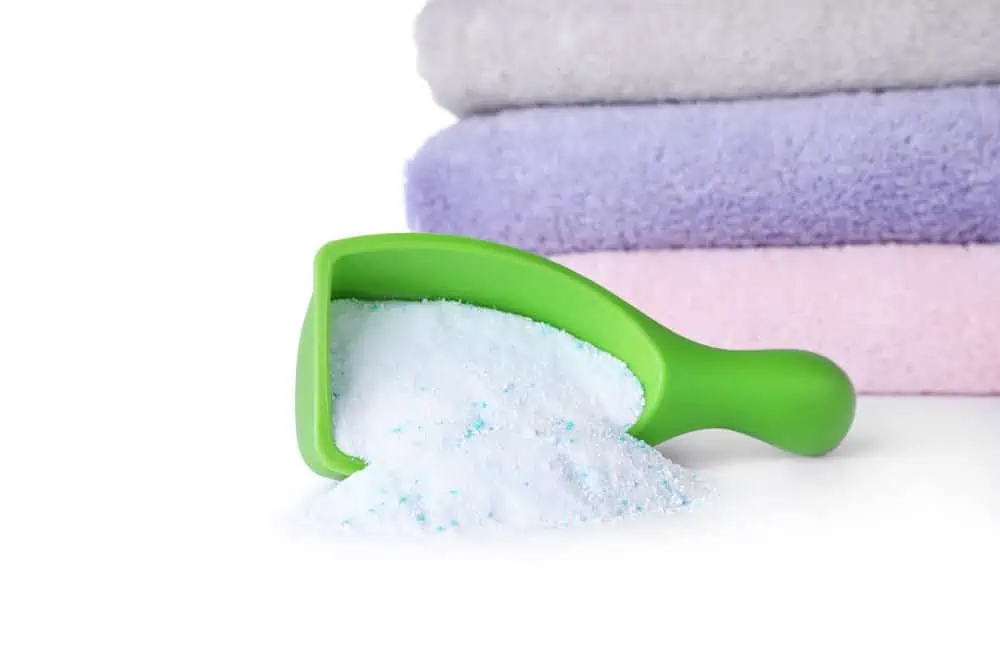
You may be wondering whether homemade laundry detergent is HE washer-safe. The answer is yes, it should be HE washer safe as the homemade laundry detergent recipes don’t contain a sudsing agent as an ingredient. The sudsing agent is what causes suds to overflow and damage your washing machine.
However, do be aware that as homemade detergent is not a commercial HE laundry detergent using it in your machine may make your warranty invalid.
In addition, HE washing machines do not use as much water as a standard washing machine to clean your clothing. This may interfere with the homemade laundry detergent’s ability to dissolve in your machine.
If you discover that residue is being left on your clothing, you can dissolve the homemade detergent in 1 cup of water before adding it to the drum of your washing machine.
Best Homemade Laundry Detergent
If you’re looking for a basic homemade powdered laundry detergent recipe, here’s an amazing eco-friendly recipe for you to try.
What You’ll Need
- 1 5 oz bar of Fels-Naptha soap, Castile soap, Zote soap, or Ivory soap
- 2 cups of Borax
- 2 cups of washing soda
- 2 cups baking soda
- 10-30 drops of an essential oil such as lavender (optional)
- 2 plastic bags or a large container
- Airtight storage container
1. Grate the Soap
You will need to begin by grating the bars of soap as finely as possible so that they will dissolve in the washing machine. Another option is to break down the bars into fine pellets.
2. Mix Ingredients
Pour all of the ingredients into one plastic bag and seal it shut. Then place the bag inside a second plastic bag. Now, push, tumble, and roll the bags for several minutes.
Keep mixing until all of the ingredients are properly mixed together.
3. Store
Place the mixed ingredients into a large container for storage. You’ll need to make sure that it’s an airtight container, especially if you live in a humid environment.
To Use
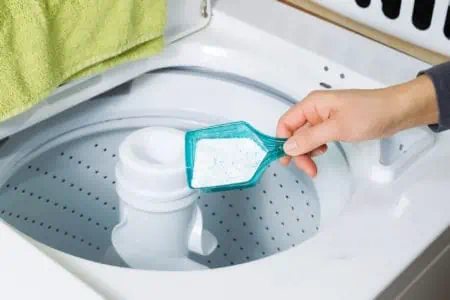
Add 2 tablespoons of the detergent for a large load of laundry and 1 ½ tablespoon for smaller loads. Add the detergent to the drum before adding your dirty laundry to the washing machine. Never place the homemade dry detergent powder into an automatic dispenser as it doesn’t dissolve and dispense properly.
For best results dissolve the detergent in 1 cup of very warm water before adding it to the drum of your machine.
FAQs

Will Regular Detergent Harm an HE Washer?
Yes, regular commercial detergent will harm an HE washing machine because it has a sudsing agent included in the recipe.

Is it Safe to Use Homemade Softener In a Washer?
Yes, it is safe to use a homemade softener in your washing machine.

How Much Does Homemade Laundry Detergent Cost?
The average cost of commercial laundry detergent is around 20 cents per load, but the first batch of homemade laundry detergent should cost you around 5 cents per load.

Can Homemade Detergent Be Used In a Septic System?
Yes, homemade detergents can be used with a septic system as they don’t contain soil-clogging fillers.

Does Homemade Detergent Dissolve Properly In a Washer?
Sometimes homemade detergent will not dissolve properly in a washing machine. The solution is to add the detergent to 1 cup of very warm or hot water to dissolve the detergent before adding it to your washing machine.

Does Homemade Laundry Soap Work in Cold Water?
Homemade laundry soap does work in cold water but not as well as in hot water. The ingredients struggle to dissolve, reducing the effectiveness of the formula.
Is DIY Laundry Detergent HE Washer-Safe?
Yes, homemade detergent is HE washing machine-safe. It doesn’t contain the sudsing agents that will damage your expensive washing machine. In addition, DIY laundry detergent is natural and eco-friendly to use to clean your clothing.
While it is messy to make, homemade laundry detergent is inexpensive, lasts a long time, and will do an excellent job of cleaning your clothing.