Rugs are beautiful additions to any home, but they are subject to a lot of foot traffic. Kids, pets, outdoor shoes, you name it.
When your rug becomes filthy, there are a few ways you can wash it. That’s where we come in.
We’re here to show you how to wash a rug in the washing machine. If your rug is too big or not machine-washable, we’ll also share instructions for washing rugs by hand.
Key Takeaways
- Check the care label to see if your rug is machine-washable and follow appropriate washing instructions.
- Machine-washable rugs can be washed using a cold delicate cycle with gentle laundry detergent and air-dried flat afterward.
- Rugs should be washed every 12-18 months, vacuumed weekly, and spot-cleaned as needed.
- Hand-wash only rugs should be vacuumed and spot-cleaned with a gentle detergent, avoiding soaking the rug.
Can You Put Rugs In the Washer?
This is the first question you want to ask yourself before continuing. The best way to check whether your rug is machine washable is to check the care label. This is usually located underneath the rug, sewn into the stitching. It will state whether it’s machine-washable or hand-wash only.
If you aren’t sure, here is a list of types of rugs that are usually machine washable:
- Nylon
- Olefin
- Polyester
- Viscose
- Polypropylene
- Cotton
- Linen
- Faux fur
- Most other synthetic fibers
Rugs that usually aren’t machine-washable:
- Seagrass
- Sisal
- Jute
- Wool
- Animal fur and skins
- Most other natural fibers
Can You Put Rugs In the Dryer?
Unfortunately, our dryers can damage rugs. The heat and tumbling effect can cause damage and shrinkage.
We recommend air drying the rug flat. If you hang it up vertically, it can stretch and become warped. So lay it flat on a clothes horse or the clean ground outside or inside near a breezy spot.
How Often to Wash a Rug
You should aim to wash your rug every 12-18 months, depending on how dirty it gets. However, you should vacuum your rug weekly. Spot clean it whenever you notice stains. And finally, steam clean it every few weeks if it’s steam-clean friendly. This will kill germs and bacteria, keeping your rug super fresh.
How to Wash a Rug In the Washing Machine
Now that you’ve established your rug is machine-washable, we’ll walk you through the 5 step method for how to machine wash rugs.
- Time: 1.5-2 hours
- Difficulty: Intermediate
Handy Advice
If your rug is machine-washable but doesn’t fit in your washing machine, take it to a laundromat. The industrial-sized machines might just be suitable for your rug size.
What You’ll Need:
- Cloth or cotton swab
- Carpet beater (optional)
- Vacuum cleaner
- Upholstery nozzle for vacuum (optional)
- Stain remover (commercial cleaner or dish soap)
- Soft-bristled brush
- Gentle laundry detergent
- Four towels
- Somewhere to dry the rug flat (i.e., drying rack or tarpaulin for outside)
1. Test for Colorfastness
Before you get cleaning, you must test the rug for colorfastness. If you’ll be washing the rug with other garments and it isn’t colorfast, the color will bleed and dye your other clothes.
We recommend you throw a few towels in the machine with the rug for balance. That’s why you should always check the rug for colorfastness. Unless, of course, you don’t mind the towels getting dyed.
To check colorfastness, dampen a cloth or cotton swab with warm water. Blot the rug. If there is color transfer, the rug isn’t colorfast and may dye your other garments. You may want to wash the rug by hand if this is the case.
2. Shake and Vacuum the Rug
Take the rug outside and shake it vigorously. If the rug is extra-large, you may want to get someone to help you. You can also hang the rug on the line and beat it with a carpet beater or wooden paddle.
Once you’ve shaken out the excess dirt and debris, lay the rug flat and vacuum it. If you have an upholstery nozzle, this may be most effective.
3. Spot Treat Any Stains
Following the instructions on your chosen stain remover, spot treat any stains on the rug. If using dish soap or another DIY cleaner, dampen the stain with a bit of water. Add your chosen stain remover and rub it in with your soft-bristled brush. Leave it for 15 minutes to work its magic.
4. Wash the Rug in the Machine
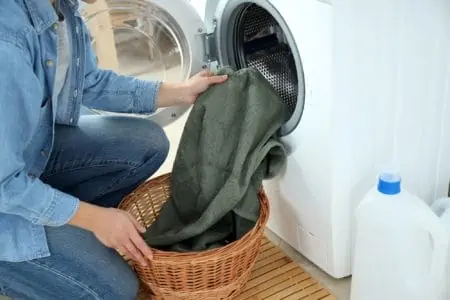
Let’s get the rug into the machine.
For front load machines, add two towels to balance the load. The towels will also help agitate the rug to remove dirt and stains.
For top load machines, position the rug around the central agitator. Add one towel to each side of the agitator for balance.
Add your gentle laundry detergent to the dispenser or drum. Choose a delicate cycle with cold water.
Start the cycle and let the machine clean your rug.
5. Air Dry the Rug
We mentioned that rugs shouldn’t go in the dryer. When the cycle is finished, blot the rug with some dry towels. Alternatively, you can lay the towels over the rug, roll the rug up like a burrito, and squeeze out excess water. This will cut down your air-drying time.
Find somewhere to lay the rug flat to dry. You may want to lay down the tarpaulin and dry the rug outside. If it’s small enough, you can lay the rug flat on a clothesline.
It might take a full 24 hours for the rug to dry thoroughly. So have patience and don’t be tempted to put it in your machine!
How to Wash a Rug By Hand
You may know how to wash a rug in the washer, but if your care label advises against it, it’s important to hand-wash it correctly. We’ll show you how to deep clean your rug without a machine so that your rug doesn’t undergo damage.
The most important thing to remember is that you will not and should not soak these kinds of rugs. They’re usually made from natural fibers, which get damaged if they become too wet. So we’ll only be vacuuming and spot-treating stains.
- Time: 30-60 minutes
- Difficulty: Easy
Remember
If the care label says to dry-clean only, we don’t recommend spot-cleaning them using this method. Vacuum regularly, but bring it to the dry-cleaners when you notice stains or feel the rug needs a deep clean.
What You’ll Need:
- Carpet beater (optional)
- Vacuum
- Upholstery nozzle for vacuum cleaner (optional)
- Gentle laundry detergent (that’s safe for the rug’s material)
- Distilled white vinegar
- Warm water
- Jug
- Spoon
- Cloth
- Two towels
- Somewhere to air dry the rug flat (i.e., tarpaulin or drying rack)
1. Shake and Vacuum the Rug
Shake the rug outside to remove dirt, debris, crumbs, and other nasties. For extra-large rugs (such as 5×7 rugs), hang it up and beat it with a carpet beater or wooden paddle.
Then lay the rug flat and vacuum it well. If you have an upholstery nozzle, use it to get out embedded dirt.
2. Raise the Stains
Since you shouldn’t get hand-wash-only rugs too wet, we want to raise the stains rather than soak them.
In a jug, mix one teaspoon of your gentle laundry detergent, one teaspoon of distilled white vinegar, and two quarts of warm water.
Dip a clean cloth into the mixture and blot the stain gently. Keep blotting until the stain has completely lifted. This may take a while — up to 15 minutes — but it’s essential to do it this way rather than soak the stain and leave it.
3. Dry the Rug
Thankfully the rug won’t be too wet since you didn’t submerge it. So blot the wet patches with towels. If it will be quicker, lay the towels flat on the rug and roll up the rug, squeezing the excess water into the towels.
Lay the rug flat somewhere to air dry. This might be best on a tarpaulin outside or a drying rack inside, depending on how big the rug is and what the weather is like.
How to Wash Different Types of Rugs
Although we’ve walked through how to clean synthetic fibers versus natural fibers, there are a few more rug types to consider. Can you put these rugs in the washer? Or do you need to hand wash them, too? Any special instructions to be aware of? We’ve got the answers.
With Rubber Backs
When washing rugs with rubber backs, you can maybe still put them through the machine. Simply read the care label to check.
The main thing to keep in mind is that you should never use bleach or heat to wash rubber-backed rugs. Bleach and heat can destroy the rubber by deteriorating it or causing it to flake off.
If you need to whiten a rug with a rubber back, use oxygen bleach instead of chlorine bleach. You can even soak it for a few hours in the oxygen bleach to get it extra white.
For disinfecting rubber-backed rugs, use Pine-Sol or a spray disinfectant like Lysol.
Last but not least, never iron a rug with rubber backing. The heat can deteriorate the rubber.
Shaggy Rugs
Since shaggy rugs have longer fibers, they hide a lot more dirt and debris. That’s why it’s essential to vacuum 1-2 times per week.
When deep cleaning, make sure to shake it or beat it vigorously to remove embedded dirt. Then leave it out in the sun for a few hours so that the natural heat and sun rays can kill some bacteria and dust mites.
When cleaning, we suggest using a carpet shampoo rather than putting it through the machine. This allows you to be a bit more thorough. Sprinkle carpet shampoo granules over the rug before going over it with a vacuum to distribute them (keep the vacuum turned off). Leave it for an hour before vacuuming the rug.
You can steam-clean the rug for a deeper clean as long as it’s not made from natural fibers.
For upkeep, make sure you spot clean stains as soon as you notice them.
Large Area Rugs
You can follow the above methods for machine-washing or hand-washing large rugs. However, you may need to make a few adjustments.
For starters, it might be hard to shake the rug, especially if you’re by yourself. Get some family members to help you shake the rug out. If you’re by yourself, hang the rug up and beat it with a carpet beater.
If machine-washing, you may need to take it to an industrial-sized machine at your local laundromat to fit it in the drum. Your home washing machine might be too small.
If your large area rug is too big for any washing machine, take it outside and soak it with your garden hose. Distribute laundry detergent all over the rug and scrub in with a soft-bristled brush. Continue doing this until all the dirt and stains have been removed. Rinse the rug and leave it out to dry. Because the rug is so big, this might take a few days!
For hand-washing a large area rug, you can do it at home. Simply leave the rug where it usually is and spot-clean it from there. You can also just leave it in place to air dry.
How to Spot Clean Rugs
You only need to deep-clean your rug every 12-18 months. However, you should clean up spills, dirt, and stains as soon as you notice them. Here’s how to do that by hand:
- Blot the stain: Use a clean white cloth to blot the stain. This will remove excess liquid or dirt without causing any color transfer from the cloth to the rug. Make sure to blot from the outside in so you don’t cause the stain to get bigger.
- Add water: Spritz some cold water onto the stained area.
- Blot again: Repeat step one. With the added water, you might be able to blot up even more dirt or liquid, making the next few steps easier.
- Apply stain remover: If water alone didn’t remove the stain, you will need to apply a stain remover. You can use a store-bought one, such as Tide Rescue, or you can use natural products. Baking soda or distilled white vinegar are great natural (and cheap) stain removers.
- Leave: For store-bought stain removers, leave it on the stain for the recommended amount of time. Usually, this will be between five and 30 minutes. For baking soda, you can leave it overnight if the stain is really tough. With vinegar, leave for about 15 minutes.
- Soak up stain remover: After the designated amount of time, use a damp clean white cloth to blot the stain. This will soak up the stain remover and reveal a hopefully removed stain! Just note if you used baking soda, you will need to vacuum the area before following this step.
- Repeat if necessary: Repeat the above steps if the stain hasn’t disappeared. Sometimes it takes a few dries, especially for tough or old stains.
Top Tip
Try three percent hydrogen peroxide if the stain still isn’t budging. This is a strong, natural cleaner that can remove various tough stains.
Tips For Washing Rugs
Let’s leave you with some top hacks for washing rugs so that you don’t leave any stone unturned.
- Don’t ruin your machine: If you’re worried about the rug ruining your machine, take it to a laundromat. Alternatively, you should deep clean your machine after washing a rug. There’s up to two years of dirt in there since the last time you washed it, so that it can leave traces of dirt in your washing machine.
- Zap up messes right away: We mean it when we say clean stains as soon as possible. If you can get to the stain while it’s fresh and wet, you have a much better chance of removing it completely.
- Blot, don’t scrub: Blot at stains rather than scrubbing or rubbing. This is gentler on the rug but also prevents the stain from spreading.
- Water might be enough: Although we’ve walked through some handy recipes and products for removing tough stains, sometimes water is enough. Always start by trying to remove a stain with just water before throwing all kinds of products and stain treatments at your rug.
- Carpet cleaning machine: If you happen to have a carpet cleaning machine, you can use that for cleaning rugs, too. Vacuum first before using this machine. If you do it regularly (such as every three months), you can skip our deep-cleaning methods altogether!
- Clean rugs in summer: Because rugs need to be air-dried, it’s better to clean them in summer. The warm weather can dry them quicker.
- Vacuum weekly: Vacuuming your rug weekly will remove excess dirt and debris. This can lead to fewer stains and bacteria in your rugs.
FAQs

How Do You Hose Down a Rug?
Take the rug outside and lay it flat on an elevated surface like a plastic table. Aim your garden hose at the rug and spray the water evenly across the rug. Let it drip off the sides. Use some towels to blot excess water, then let the rug air dry. This can take a few days since you have soaked the rug.
You shouldn’t let the rug air dry vertically. The water weight can stretch the rug, causing permanent damage.

Can You Wash a Rug In the Bathtub?
If your rug is machine-washable, you can hand-wash it in the bathtub.
If your rug is hand-wash only, that’s usually because it shouldn’t be soaked in water.
That’s why we only recommend this method for machine-washable rugs. You can hand-wash them in the bathtub rather than the machine if you prefer. Some folk prefer this because they feel they can get a deeper and more deliberate clean than letting their washing machine do it for them.
Just note that this is best for small rugs as medium and large rugs might not fit in your tub.

Can a Doormat Go in the Washing Machine?
Knowing whether a doormat can go in the washing machine depends on the material. If it is a synthetic doormat, scrape off the excessive dust, add detergent, and pop it in the machine.

Can You Shampoo an Area Rug On a Hardwood Floor?
You can shampoo an area rug on a hardwood floor, provided you use a mild detergent that won’t damage the rug fibers and the floor.

What is the Best Homemade Carpet Cleaner?
One of the best homemade carpet cleaners is baking soda and vinegar. Mix it in a bottle with water and spray it onto the carpet. Wait for 15 minutes and gently dab at the stain.

Will an 8×10 Rug Fit in a Washing Machine?
An 8×10 rug will fit in a washing machine, provided it is a standard size.
Refine Your Rugs
Every 12-18 months, you should deep clean your rugs. Check the care label to see whether it’s machine-washable or not.
We’ve shown you how to machine wash rugs or clean them by hand. So no matter what type of rug you have, you’ll be able to spruce it up to perfection.
Remember never to apply heat or use your dryer, as this can damage your beautiful rug.