Eating in the car is inevitable, especially when you’re in a rush to work or cruising on a long road trip. But with all those yummy snacks comes some crazy messes.
When you go over a bump and spill your coffee or fast food, this can cause stains on your car seats. Because most car seats don’t have removable covers, you can’t just toss the fabric in the washing machine — you have to clean them by hand.
We’ll show you how to remove stains from car seats, eradicating unsightly marks, making the seat look as good as new!
Key Takeaways
- Clean car seats with a homemade solution of water, distilled white vinegar, and dish soap, or use a commercial cleaner like Chemical Guys Fabric Clean Shampoo or CAR GUYS Super Cleaner for leather seats.
- Vacuum the car seats before cleaning to prevent embedding dirt and debris into the fabric, and blot or gently scrub stains to remove them.
- Specific stains may require different approaches, such as using rubbing alcohol for ink stains or a baking soda paste for tough stains.
- For leather car seats, use specific leather cleaning products, vacuum before cleaning, and condition the leather regularly to protect and maintain it.
Do Stains Come Out of Car Seats?
Thankfully, car seats are usually easy to clean. Depending on the stain type and seat material, there’s usually a way to get rid of the mess yourself.
There are plenty of types of stain removers you can try. Some are better for certain stains — we’ll walk you through various methods.
Some stains are more complicated to remove than others. While it’s totally possible, you might want to hire a professional when dealing with stains from:
- Chocolate.
- Coffee.
- Makeup.
- Poop (we’re looking at our furry friends or tiny tots here).
- Blood.
- Paint.
- Red wine.
- Permanent pen.
- Mud or grass stains.
How To Get Stains Out of Car Seats
Let’s start with how to remove generic tough or dark stains from your car seats. It’s important to have an easy go-to method that works on a range of stains.
For this method, we’ll make our own cleaner. It’s non-toxic, cheap, and multi-purpose. But if you’d rather buy a commercial product, we recommend Chemical Guys Fabric Clean Shampoo. If you have leather seats, the CAR GUYS Super Cleaner is a fantastic option.
- Time: 30 minutes.
- Difficulty: Easy.
What You’ll Need
- Spray bottle.
- Distilled white vinegar.
- Water.
- Dish soap.
- Essential oils (optional).
- Microfiber cloths.
- Commercial car seat cleaner (optional).
1. Prepare the Cleaner
If you’re making your own cleaner, mix a 2:1 solution of water and distilled white vinegar in a spray bottle. Add one tablespoon of dish soap and shake to combine. If the smell of vinegar makes you cringe, add 10 drops of essential oil to mask it.
2. Vacuum the Seats
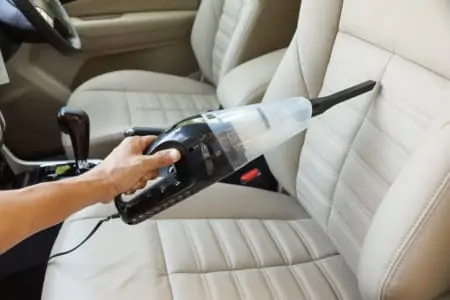
Before removing stains, it’s absolutely essential that you vacuum the car seats. If you start cleaning before vacuuming, you’ll embed dirt and debris into the seats, creating new stains! We don’t need that right now.
Grab a vacuum with an upholstery attachment and get hoovering.
3. Spritz Stains
Using your car seat cleaner, spray the stains. Don’t oversaturate the area, but be generous with the amount you apply. Three to five squirts is good.
4. Scrub or Blot
Start by blotting the stain with a cloth until it lifts. This might take a few minutes.
If this isn’t working, you can scrub the stain gently. Just be sure that you aren’t spreading it around.
5. Rinse
Once the stain is gone, dampen a microfiber cloth in plain water and wipe the area to remove residue.
6. Dry the Seat
Blot the area with a separate cloth to absorb excess moisture. Then leave the car doors or windows open for the seats to air dry.
How to Remove Stains From Car Seats
While the above method is great for cleaning generic car seat stains, you might face something that requires a different approach. We’ll walk you through how to remove some pesky stains, including grease, ink, tea, and more.
Grease or Oil Stains
Grease and oil might seem impossible to remove, but with our super methods recommended by mechanics, it’s no problem.
- Vacuum: Start by vacuuming the area.
- Remove excess: Blot the stain with a dry towel or paper towel to remove excess oil.
- Apply baking soda: Sprinkle baking soda or cornstarch evenly over the stain. This works exceptionally well on a fresh oil stain.
- Wait: Leave the powder to sit for eight hours.
- Vacuum: Vacuum the powder up. If the stain is gone, you can rinse and dry the area. If it persists, move on to the next step.
- Apply WD-40: Apply WD-40 onto a cloth and dab it over the stain until the area is damp.
- Apply dish soap: Apply some dish soap to a cloth and wipe it evenly over the WD-40. Continue wiping to remove the grease and oil stain.
- Scrub: Use a soft-bristled brush or old toothbrush to work the stain out. Move in gentle circular motions to avoid damage.
- Blot: Grab a paper towel or cloth and blot the stain to remove the extra discoloration.
- Rinse: Spray the area with plain water and wipe with a cloth.
- Dry: Wipe the area with a dry cloth and leave the car windows or doors open to air dry the seat.
Caution
When using WD-40 for cleaning stains on fabric, use a little to start with. WD-40 is a strong cleaner and too much can cause damage to the fabric. Never apply it directly to the seat — always apply with a cloth, dabbing the area instead of scrubbing.
Dirt or Mud Stains
When your kids jump in the car after a muddy soccer game without removing their sports clothes, you can end up with a disastrous interior. Trust us; we’d be freaking out too! Mud and dirt are some of the hardest stains to remove.
However, you can take a good stab at it with this method:
- Wait: We know this seems counterintuitive but trust us; you don’t want to be cleaning fresh mud. You’ll dilute it and spread it even further. So wait until the mud has completely dried.
- Scrape: Scrape off the excess mud with a plastic scraper or an old credit card.
- Vacuum: Vacuum as much of the mud as possible. You might need to switch between steps two and three to remove all the excess mud.
- Make a cleaning solution: Mix one cup of warm water per teaspoon of dish soap. Increase the quantities as necessary.
- Apply cleaner: Dampen a cloth in the solution and blot the stain. Do not scrub or rub, as this will embed the mud further into the car seats.
- Rinse: Once the stain seems to have lifted, dampen a sponge in plain water and rinse the car seat.
- Repeat if necessary: Examine the car seats and check if the stain remains. If so, repeat the process.
- Apply stronger cleaner: If the above method isn’t working, you’ll have to use a store-bought cleaner. We can recommend oxygen bleach or Car Guys Super Cleaner.
- Dry: Once the stains are gone, dry the area with a towel. Leave the car doors and windows open until the seats are 100 percent dry.
Cleaning Tip
Next time you notice muddy shoes, tell your kids to remove them before getting into the car. Always keep old towels to dry down your dog. Keep a storage box in the trunk of your car for storing muddy items — when you get home, toss them in the wash!
Ink Marks
Did your kids pass the time on a road trip by drawing on the seats? Maybe you didn’t notice until you reached your destination.
Try not to worry. Ink stains are straightforward to clean when you use a suitable method like this one:
- Blot: Using a white cloth (to avoid color transfer), blot the stain to remove excess ink.
- Spray: Spray the stain with rubbing alcohol. This will do its job of erasing the stain. You can also apply rubbing alcohol to a cotton ball and gently blot the stain instead.
- Wait: Leave the alcohol to sit for 10 minutes.
- Blot: Using a white, dry cloth, blot the stain to lift it away. Repeat if necessary.
Extra Tip
If you don’t have rubbing alcohol on you, try hairspray. As long as alcohol is listed as one of the main ingredients, it should work to erase the stains. We use this hack often in our home, and it works a treat!
Coffee or Tea Stains
Coffee and tea stains are some of the most common. It’s hard to survive a morning commute without some caffeine. But when you hit a speed bump, and your drink goes flying, you’re left with a new problem (besides sleep deprivation).
Here’s how you can get these stains out of car seats:
- Blot: As soon as possible, blot at the stain to absorb the excess liquid. This is why we recommend keeping some old towels or rags in your car!
- Prepare cleaner: You can use a commercial car seat cleaner, or you can make your own. A great combination is a 1:3 solution of distilled white vinegar and water, plus a few drops of dish soap.
- Apply: Apply the cleaner to the stain.
- Rub: Gently rub at the stain with a white cloth (to avoid color transfer). Keep rubbing and reapplying your cleaner until the stain has lifted.
- Rinse: Dampen a cloth in plain water and blot at the area to rinse away soapy residue.
- Dry: Wipe the area with a dry towel and leave the car windows or doors open to air dry thoroughly.
How to Remove Tough Stains on Car Seats
So you’ve tried everything we’ve mentioned, and the stains just aren’t budging. What next?
Here are some extra tips for how to remove stains from car upholstery:
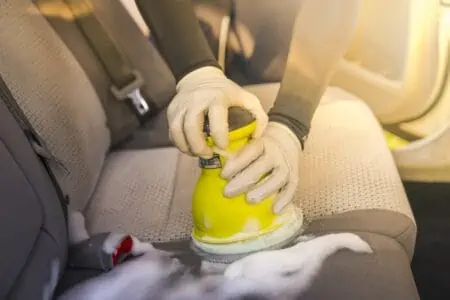
- Shaving cream: For general stains and odors, especially over large areas, try spraying shaving foam all over your car seats. Rub it into the fabric well before scrubbing it with a damp sponge. Rinse well before air drying.
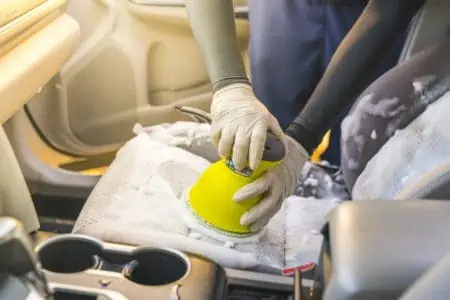
- Use an upholstery cleaning machine: We have one of these handy gadgets and don’t know where we’d be without it! It works wonderfully at removing all kinds of stains, even super stubborn ones. While an expensive purchase, it’s cheaper than hiring a professional time and time again.
- Steam the seats: Handheld steamers can work well at removing stains and dirt from the car seat surface. Use this in combination with a car seat cleaner, and the results will wow you.
- Try baking soda: Applying a baking soda paste to tough stains might sound simple, but it might impress you. Combine ¼ cup of baking soda and some warm water in a bowl to create a paste. Apply it to the stain and scrub it in well with an old toothbrush. The bristles will work hard to lift the stain out.
- Laundry detergent: Car seats are made from the same materials as some of your clothes. Liquid or powdered laundry detergent can work to remove stubborn stains, especially high-quality brands like Tide or Persil.
- Hire a professional: When nothing else works, hire a professional. This is super important if you’re planning to sell the car. No one wants to buy a vehicle with mysterious stains!
Tips For Cleaning Leather Car Seats
Most of our tips so far are only applicable to fabric car seats. If you have leather car seats, you will need to take a different approach, especially as leather can’t handle too much moisture.
Here are our top tips for cleaning stains from car seats made of leather:
- Vacuum first: Before cleaning leather, always vacuum first to remove excess dust and debris.
- Use the right products: We recommend using specific leather cleaning products. This is the safest thing to do to protect your seats.
- Use a cloth or soft brush: For stubborn stains, a soft brush can help to remove stains. Otherwise, you should be able to remove stains with a soft microfiber cloth.
- Dry well: After you clean the leather seats, dry them well. Too much moisture can damage leather.
- Condition the leather: We recommend conditioning leather seats regularly to protect them from stains, moisturize the leather and give it a nice shine. Chemical Guys make a fantastic leather conditioner. This works on all kinds and colors of leather, including tan, black, brown, and more.
- Apply cornstarch: For oil-based stains, sprinkle cornstarch on the stain. Leave it for a couple of hours before vacuuming. Since cornstarch is dry, you can leave it on the stain for a long time without worrying about damage.
- Make a DIY stain remover: A generic stain remover for leather is easy to make. Simply combine ½ cup of olive oil, ¼ cup of distilled white vinegar, and ¼ cup of water. Mix really well before spraying onto a cloth and wiping down the leather seats.
FAQs

What Is the Best Stain Remover for Car Seats?
If you want to make your own cleaner, water, vinegar, and soap combo is best. It’s excellent at removing all kinds of stains.
However, we recommend Chemical Guys Foaming Citrus Fabric Clean if you want something a little more powerful and made specifically for the task. Another popular choice is Car Guys Super Cleaner.

What Do Car Detailers Use To Remove Stains?
When investigating how to get stains out of car seats, you’re probably wondering: what do the professionals know that I don’t? If you want to know what car detailers do differently than us to remove stains, you’ve come to the right place.
Firstly, they use a special soap, specifically extractor soap. This kind of soap penetrates deep into the car seat fabric and dissolves tough stains, including grease, coffee, and basically any others! Ask your local car detailers about the stain removal service they offer.
They also use the power of steam cleaning or hot water extraction. This can break down stains while disinfecting the seats.
They will also use products specifically for cars. Instead of dish soap, they’ll use seat shampoo or extractor soap. Instead of sponges and cloths, they’ll use microfiber car mitts.

Will Baking Soda Damage Car Seats?
Good news: no! Baking soda is non-toxic and gentle. It’s safe to use on both fabric and leather car seats.

Can WD-40 Remove Car Stains?
WD-40 is super useful for cleaning the exterior of your car, but remember to only use it in small amounts when cleaning the car interior.
It is effective for crayon, grease, oil, or gum stains. Spray WD-40 onto a cloth and gently rub at the stains. Rinse well to remove all WD-40 residue.
Steering Towards Cleanliness
We hate having a dirty car, but with kids and pets, it’s inevitable. However, devoting time every week or month to removing stains can keep your car’s interior in good condition.
We’ve shown you how to get stains out of car seats using various methods and products. Now all you have to do is get yourself to work! Before you know it, your car will feel as clean as it did the day you bought it.