Suede shoes are beautiful shoes to wear around town, to work, or to a fancy event. However, suede shoes get dirty so easily. How can you clean your shoes so you can maintain the suede, especially without a suede cleaner?
Today, we’re discussing how to clean and protect your suede shoes so you can wear them proudly for many years.
Key Takeaways
- Clean suede shoes using a suede brush or toothbrush, a suede rubber or clean pencil eraser, and white vinegar or rubbing alcohol.
- Do not wash suede shoes, as excessive water or moisture can damage the material.
- To remove various stains like water, oil, grease, salt, and ink, use specific cleaning methods and household products.
- Maintain suede shoes by applying a protective spray, avoiding inclement weather, and using mink oil to keep them moisturized.
Why Does Suede Get Dirty Easily?
Suede gets dirty easily because of the lovely velvety nap. It makes suede prone to stains from moisture, dirt, and oils. Suede shoes will also collect dirt, scuffs, grime, and water spots as well.
Best Way to Clean Suede Shoes
The best way to clean suede shoes is to first check the label on your shoes for any care instructions on how to clean your suede shoes and whether they’re made with real or faux suede.
Otherwise, wait until the shoes are completely dry, and then use a suede brush to remove the excess dirt from your shoes. Afterward, use a suede rubber to remove any remaining scuff marks or stains.
Tough stains may be removed with white vinegar. When you’ve finished cleaning your shoes, protect them using a suede protector.
Can You Wash Suede Shoes?
No, do not wash your suede shoes. Excessive water or moisture will damage the suede. However, some suedes are protected and able to be washed. The care tag label on your shoes will verify this.
How to Clean Suede Shoes
Before beginning to clean your suede shoes, make sure they are completely dry. This will allow you to remove the dirt without pushing it deeper into the suede’s nap.
- Time: 20 minutes
- Difficulty: Beginner
What You’ll Need
- Suede brush or toothbrush
- Suede rubber or clean pencil eraser
- Emery nail file
- White vinegar or rubbing alcohol
- White microfiber cloth
- Suede protector
1. Remove Excess Dirt
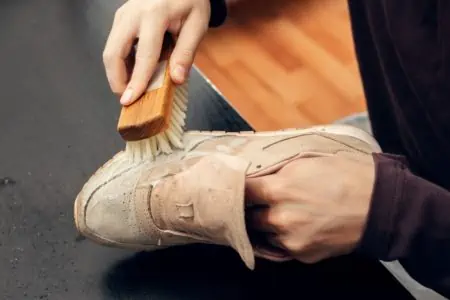
Using light strokes in the direction of the grain, brush your shoes using the suede brush or a toothbrush to remove as much of the dirt and loose particles as you can from the surface of your shoes. You may need to use more pressure to remove scuff marks.
If needed, move the brush back and forth swiftly to raise the flattened suede fibers. This will help you clean your shoes.
A clean toothbrush can be used to clean small areas on your shoes.
2. Use Suede Rubber to Remove Marks
Use a suede rubber or clean pencil eraser to remove as many scuff marks and stains as possible. Rub the suede using constant back and forth pressure. Be careful not to push too hard as that may damage the suede.
You can use an emery board nail file to help you lift the nap and buff out the stains. Use light pressure to keep from scratching the material.
If you find that the suede rubber, eraser, or emery board isn’t working you will need to stop before you damage the suede.
3. Use White Vinegar or Rubbing Alcohol
You can remove tough stains with household products like white vinegar and rubbing alcohol. The acidic liquids help to break down the clumps causing the stains and scuffs. Make sure you don’t dilute either one with water, as this may cause water damage to your suede shoes.
Pour the white vinegar or rubbing alcohol into a small bowl. Dip a corner of the white microfiber cloth into the bowl of vinegar or alcohol. You will need to use a white cloth to make sure you don’t accidentally transfer any dye from the cloth to your shoes.
Your goal is to gently dampen the shoes with the liquid, not to soak your shoes. So gently apply the liquid to the stain in a back and forth motion. Keep working and reapply the liquid as necessary to remove the stain.
The shoes may change color when damp, but when the vinegar or alcohol evaporates you’ll find that the fabric will return to its original color.
Allow your shoes to dry before checking the stain. You may need to repeat applications of vinegar or alcohol to fully remove the stain.
The odor will fade eventually.
4. Suede Protector
When your shoes are clean, you can apply a suede protector to them. The suede protector will help protect your shoes from water, stains, and scuffs.
It’s still best to avoid wearing your shoes in wet weather and to avoid spills and splatters to maintain your shoes for years.
How to Clean Dirt Off Suede Shoes
Nothing is worse than discovering your favorite suede boots are covered with dirt and mud. Here’s how to clean suede boots and restore their beauty.
- Time: 20 minutes + drying time
- Difficulty: Beginner
What You’ll Need
- Suede brush or toothbrush
- Suede rubber or clean pencil eraser
- White vinegar or rubbing alcohol
- White microfiber cloth
- Suede protector
1. Carefully Remove Mud
If your suede shoes are covered with mud, gently use a paper towel or cloth to remove as much mud as possible. You do not want to push the mud deeper into the nap which will make your shoes harder to clean. Do remove as much of the excess mud as you can.
2. Allow Shoes to Dry
Allow your shoes to fully dry before beginning to clean them.
3. Knock Off Dirt
You may wish to complete this step outside. Hit the soles of your shoes against each other to get as much of the dirt off your shoes as possible. Keep beating the soles of the shoes until you’ve removed the loose particles.
4. Brush Shoes
Use a suede brush to brush the outside of your shoes to remove all the dirt. Remember to brush in the direction of the nap. You can use a suede rubber to help remove scuffs and dirt from your suede shoes.
5. Clean With Vinegar or Rubbing Alcohol
White vinegar is an excellent suede shoe cleaner. You can also use rubbing alcohol to clean your shoes at home.
Dab your microfiber cloth into white vinegar or rubbing alcohol to remove any scuff marks or difficult to remove stains from your shoes. Allow the shoes to dry. It may take a few repetitions to remove all of the dirt stains from your shoes.
How to Remove Stains From Suede Shoes
Sometimes scuffs and stains get on your leather shoes or heels that will need special treatment to remove. Cleaning suede shoes doesn’t need to be difficult though. Here’s how to clean different stains on your suede sneakers and shoes with household products.
Water Stains
As strange as it sounds, you will need to use water to remove the water stains. Use a spray bottle to lightly spray a small amount of water onto the surface of your shoes. Then brush the shoes with the suede brush.
Blot up any excess water with a clean cloth or paper towel. Allow your shoes to dry completely. Once your shoes are dry, apply a waterproofing spray to help prevent future water spots from forming.
Oil or Grease Stains
Oil and grease stains can be removed from your Jordan or vans sneakers along with other suede shoes by using either cornstarch or leather degreaser. Cornstarch is a great home remedy to use.
First, apply the cornstarch to the stain. Leave it on the stain for a few hours to allow it to soak up the excess oil. Then using a brush carefully scrape off the cornstarch. Repeat these steps until the spot is gone.
If the grease or oil stain has dried, you will need to clean the area using a small amount of undiluted dish soap. Let the soap sit on the stain for 10 minutes.
Rinse off the soapy residue by blotting the stain with a damp cloth. Be careful not to rub and drive the stain deeper into your shoes.
A leather degreaser can also be used to remove oil and grease stains. Read the instructions for directions on how to use the leather degreaser correctly.
Salt Stains
Salt stains can occur on your suede boots or shoes in the winter when they’re exposed to salt from snow and ice melt.
First, brush the salt off of your shoes. Then dip a clean microfiber cloth in cold water that has a small amount of dish soap in it. Blot the salt stain but be careful not to rub.
Repeat until the salt stain has been removed. Allow your shoes to dry completely.
Ink Stains
To remove ink stains from your suede shoes, moisten a cotton swab or white microfiber cloth with rubbing alcohol. Rub the moistened swab or cloth over the ink stain on your shoe.
The stain will disappear. Allow your shoes to dry.
How to Rejuvenate Suede Shoes
Nothing is worse than seeing your favorite black or tan suede shoes looking faded and weathered. This happens when suede dries out. You can rejuvenate your suede shoes with mink oil.
Pour a small amount of mink oil onto a clean, white microfiber cloth. Then rub the cloth all over your shoes. The mink oil will moisturize, condition, and protect your shoes.
The color and vibrancy will be enhanced while the shoes are also protected from water damage.
Tips For Maintaining Suede
Here are a few extra tips to help you protect your suede shoes so they will look fabulous for many years.
- Apply a protective spray to your shoes to protect them from damage.
- Avoid wearing suede shoes in inclement weather such as rain, snow, and ice.
- Keep a shoe tree inside your shoe when you’re not wearing it to help your shoe maintain its shape.
- Use a small amount of mink oil to keep your suede shoes moisturized.
FAQs

Can You Fix Dye Running On Suede?
Yes, you can fix dye running on suede. First, apply a suede protector as that will help prevent the dye from running. Also, apply a light coat of vaseline on the inside of your shoes to prevent the dye from staining your socks.

How Do You Keep the Inside of Suede Shoes From Smelling?
You can keep the inside of your suede shoes from smelling with baking soda. Lightly apply a layer of baking soda inside your suede shoes. Allow the baking soda to remain overnight.
In the morning, shake the baking soda out of your shoes outside. You can also use a vacuum brush to remove any remaining baking soda.

How Do You Clean Suede Shoes Without Damaging Them?
The first step is to allow the shoes to dry completely before attempting to clean them. Then brush off all the dirt and loose particles.
Use white vinegar to gently remove any stains and scuffs. When the shoes are clean, use a suede protector to prevent water damage and stains.

Can You Clean Suede With Wet Wipe?
Yes, you can use a baby wipe to clean your suede shoes.

How Do You Clean Dirty Faux Suede Shoes?
The best way to clean dirty faux suede shoes is to brush them with a suede brush, dampen the surface and apply a tiny amount of dish soap. Wipe the dish soap into the shoes and leave them to dry.

What is a Good Suede Cleaner?
A good suede cleaner is a mixture of white vinegar and water. Mix them in bottles and spray the suede liberally. Then use a suede brush to remove stubborn stains, and wipe the entire surface with a microfiber cloth.

What Happens to Suede When it Gets Wet?
When suede gets wet it starts to degrade. You should never leave your suede shoes in damp conditions because they don’t repel water like leather.