Do you have a suede couch and need to know how to clean it correctly? After all, suede couches are made of either natural suede or microfiber suede fabrics which can be damaged if not cleaned correctly.
We will share how to clean your suede couch so you can keep it looking beautiful for years to come.
Key Takeaways
- Determine the type of suede (natural or microfiber) and check the cleaning label (S, W, S-W, or X) on your couch before cleaning.
- For natural suede couches, vacuum regularly, treat stains with white vinegar, and call a professional for deep cleaning.
- Microfiber suede couches can be cleaned with water-based solution, rubbing alcohol, cornstarch, baking soda, or Windex, depending on the type of stain and cleaning label.
- Protect your suede couch by avoiding greasy surfaces, using a suede protector, and keeping it away from moisture.
Cleaning Natural Suede vs Microfiber Suede
Before you begin cleaning your suede couch at home, you’ll need to know what type of suede your couch is made from. The type of suede determines what type of cleaners you can use on your couch. What is suede?
- Natural suede is made from the underside of the animal hide and is thin and porous. It also has a napped or fuzzy finish with a varied grain.
- Microfiber suede has polyester and nylon threads tightly woven together and is cut to imitate the texture of natural suede.
There are four different labels for microfiber suede. These will determine what method of cleaning to follow. The labels are S, W, S-W, and X. The S stands for solvent-only. W means water-based cleaner. S-W means you can use both solvent-only and water-based cleaners. An X label means that you can use neither. Only brush and vacuum your couch.
See the table below to learn more.
| The Label on Your Sofa | Type of Care | What to Use |
|---|---|---|
| S | Only clean the couch with a special solvent. | Fill your spray bottle with rubbing alcohol |
| W | Clean with a water-based cleaning solution. | Fill your spray bottle with water. Add a few drops of dish soap. |
| S-W | Clean with either a solvent or water-based solution. | Follow instructions for either S or W. |
| X | Only vacuum and brush your couch. | If deep cleaning is needed, call an upholstery cleaner. |
How to Clean Your Natural Suede Couch
- Time: 1 Hour
- Difficulty: Intermediate
1. Gather Cleaning Materials
Gather the cleaning materials before you begin to clean your natural suede couch. You’ll need:
- Vacuum with crevice and upholstery attachments
- Soft-Bristle Brush
- Sponge or white towel
- Spray bottle
- White vinegar
2. Vacuum Away Loose Soil
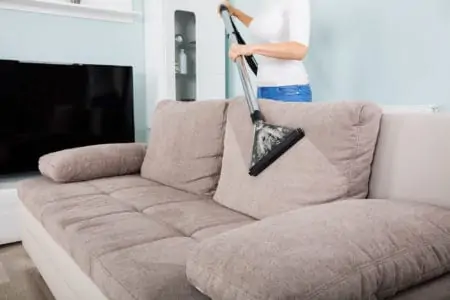
Vacuuming your couch should be part of your weekly cleaning routine. You should also vacuum your sofa to remove all loose soil before you begin cleaning it. You’l prevent any loose dirt from turning into mud and staining your couch while you’re trying to clean it.
Be sure to use the crevice tool and the upholstery attachment to reach all the deep crevices before you proceed.
3. Treat Stains
Spills and stains should be treated immediately after they happen. Blot any spills with a towel and allow them to dry slowly.
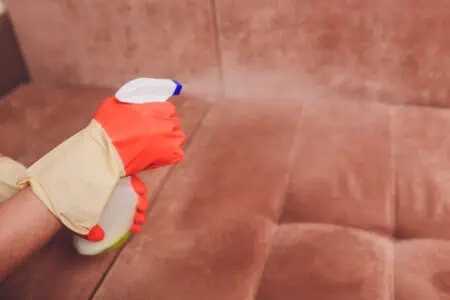
If you find a stain on your natural suede couch, first fill a spray bottle with vinegar before lightly spraying the stain. Do not spray too heavily because you don’t want to saturate your couch. You just want enough spray to loosen the dirt.
Even if you want to clean the entire couch, work in small sections.
Once the stain is damp, remove the stain by gently rubbing it in a circular motion. Use a white sponge or towel as it will not stain your couch with dye.
After the area has dried, gently brush the suede with your soft-bristle brush to re-fluff the pile.
4. Call a Professional
When your couch needs a deep cleaning, it’s time to call a professional upholstery cleaner. They know how to properly clean your suede couch to prevent both water damage and shrinkage from happening.
How to Clean a Microfiber Suede Couch
- Time: 1 Hour
- Difficulty: Intermediate
Before cleaning your microfiber suede couch, check the attached care tag of your sofa. You need to use the correct suede couch cleaner to prevent any damage to your couch. Some couches will be stained by a water-based cleaning solution while other couches require it.
Water
Only use a water-based solution with a W-labeled or W-S-labeled couch. Make your water-based solution by filling a spray bottle with water before adding a few drops of dish soap. Use this solution to dampen the stain before gently rubbing it with a white cloth.
When you’re finished, brush the stain with a soft-bristled brush to fluff up the fabric.
Isopropyl Alcohol or Rubbing Alcohol
Use rubbing alcohol on S-labeled and W-S labeled couches. First, fill the spray bottle with rubbing alcohol before spraying the stain. Again, you’ll blot and rub at the stain with a white cloth.
When it’s dry, use a soft-bristled brush and fluff up the fabric.
Cornstarch
Cornstarch is used for oil-based stains such as salad dressing. Use a white cloth to soak up any liquid on the couch before covering the stain with cornstarch.
Leave the cornstarch on the couch for 10 minutes so that it can absorb the oil. Then wipe the stain with a vinegar dampened cloth.
Brush the cornstarch to loosen it before vacuuming it up.
Baking Soda
If your sofa has a strong odor, add a teaspoon of baking soda to a water-based solution. You can also sprinkle baking soda over your couch. Gently brush the baking soda into the fabric. Let it sit for one hour before vacuuming the baking soda up.
Vinegar
Vinegar can also be used to remove oil stains naturally. Wet a white cloth with vinegar and rub at the stain until it’s gone. Afterward, wash the area with a solvent or water-based solution to remove the odor on your couch.
Windex
You can also use Windex to remove ink stains. Spray the surface lightly as you don’t want to soak the fibers. Then brush gently with a soft-bristled brush.
Cleaning Tips for All Types Of Suede Sofas
Blot Wet Stains Immediately
The best way to keep your sofa from being stained is to blot wet stains with a white cloth immediately. This will keep the stains from setting.
Use a Suede Eraser
A suede eraser is used just like a pencil eraser for tough stains like wine. Rub gently at the stain with increasing pressure until it’s gone.
Suede Couch FAQs

How Often to Clean a Suede Couch?
You should vacuum and brush your couch weekly to keep stains from setting into the fabric. Clean stains immediately when you discover them. Also, give your couch a deep clean once or twice a year.

Are Suede Sofas Hard to Clean?
Suede sofas are easy to clean. Vacuum and brush your sofa weekly to maintain the surface and treat stains immediately before they set.

What Should You NOT Use to Clean a Suede Sofa?
Never use bleach, acetone (or nail polish remover), carpet cleaner, hydrogen peroxide, or an upholstery cleaner on your suede sofa. They will damage the fabric.
The best way to care for a suede couch is to vacuum and brush it weekly. Check the attached care label to see any special instructions on what type of suede couch cleaner to use. Also, treat any stains immediately.
This way you’ll be able to keep your suede sofa looking beautiful for many years.

How Do I Protect My Suede Couch?
The best way to protect your suede couch is to avoid greasy surfaces, only touch it with clean hands, use a suede protector like this M and B Spray, and keep it away from moisture.

How Do You Fix Discolored Suede?
You can fix discolored suede by brushing the surface with a suede brush like this Shacke Suede and Leather Cleaner Brush. It refreshes the suede fibers and brushes out any stains.

Can Magic Eraser Clean Suede?
Magic Eraser does clean suede effectively. The foam sponge contains millions of cleansing bubbles that release when rubbed on the suede to break down dirt without damaging the nap.