A greasy, grimy stove top is a chore to cook on. Not only do you risk a fire every time you cook, but it’s dreadful to look at. Plus it makes your clean kitchen look filthy.
Today we’re chatting about how to clean a stove top. You’ll not only have a safe cooking environment, but you’ll also be able to enjoy the look of your pristine kitchen.
Key Takeaways
- Clean stove tops regularly to prevent grease, grime, and bacteria buildup; deep clean at least once a week for frequent cooking.
- Use household products like baking soda and vinegar or specialized stove top cleaners for cleaning various stove types.
- For electric stove tops, clean the coils, drip pans, underside, and the stove top itself with baking soda, vinegar, and dish soap.
- For gas stove tops, clean the grates, burner caps, burner rings, and the stove top with a cleaning paste made of baking soda, vinegar, and dish soap.
How Often to Clean a Stove Top
A stove top gets a large amount of use and is prone to grease, food, grime, and bacteria buildup. Not only does the area become filthy, but it can spread bacteria and germs around the kitchen. Cleaning a stove top not only reduces the chance of someone becoming sick, but it also reduces the risk of leftover bits bursting into flames and causing a fire.
Most stove tops should be deep cleaned at least once a week, especially if you cook a lot. However, if you rarely cook or only cook once a week then you may only need to deep clean the stove top once a month.
You should wipe down the stove top after each use with a damp cloth or soapy sponge to keep it tidy.
What to Clean a Stove Top With
You can use a variety of products to clean a stove top. Some are household products such as baking soda and vinegar. Magic Eraser can be used for stains.
A stove top cleaner such as Weiman Cooktop Cleaner Max, Affresh Cooktop Cleaner, or Cerama Bryte can be used to clean glass, ceramic, and induction stove tops. Weiman Gas Range Cleaner is an excellent option for gas stoves. Zep Heavy-Duty Citrus Degreaser will clean enamel stove tops.
How to Clean an Electric Stove Top

A glass or ceramic stove top requires careful cleaning to make sure that you don’t scratch or damage the surface.
- Time: 20-30 minutes
- Difficulty: Beginner
What You’ll Need
- Dry cloth
- Baking soda
- Distilled white vinegar
- Dish soap
- 2 thick towels
1. Wipe the Stove
Wipe the stove with a dry cloth to remove all the food bits and crumbs scattered on the surface.
2. Apply Baking Soda and Vinegar
Sprinkle a generous amount of baking soda on your stove top. Next, spray white vinegar all over it. Let the baking soda and vinegar fizz while you prepare the towel.
3. Soak a Towel
Fill your sink with hot soapy water. Immerse one towel in the soapy water until it’s soaked. Then wring it out so the towel is wet, but not dripping.
4. Lay Towel on Stove
Lay the towel on top of the stove. The soapy heat will activate the baking soda and do the hard work of cleaning your stove top for you. Wait 15 minutes.
5. Scrub the Stove
After the 15 minutes is over, use the towel to scrub at the stains on your stove top. When they’re removed, wipe the baking soda. Spray the stove one last time with vinegar and use the towel to wipe your stove top clean.
6. Dry the Stove
Use a clean towel to dry the stove.
How to Clean a Gas Stove Top
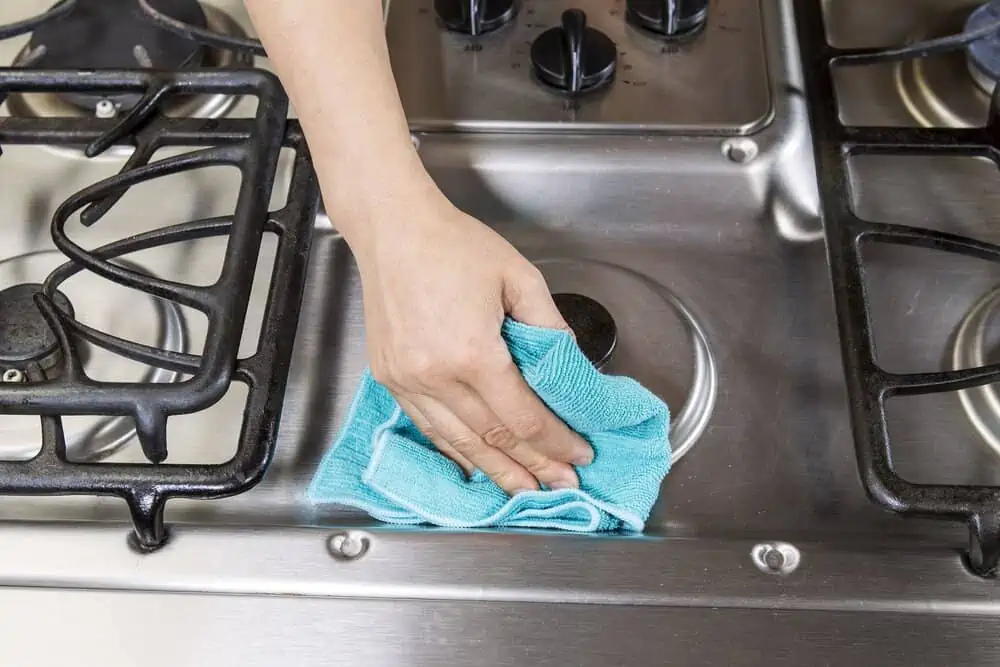
Gas stove tops have three components that need to be cleaned. The first is the grates and burner caps. The second is the burner rings, and the third is the stove top itself.
- Time: 45 minutes – 1 hour
- Difficulty: Beginner
What You’ll Need
- Dish soap
- 2 microfiber cloths
- Non-abrasive sponge
- Distilled white vinegar
- Baking soda
- Paper clip or safety pin
- Bowl
- Spoon
- Dishtowel
Cleaning the Grate
Cleaning the grate includes not only the grates but the burner caps as well.
1. Remove Grates and Burner Caps
Remove the grates and burner caps and place them in your sink. You may only be able to put one or two grates in your sink at a time. The burner caps may be cleaned in your sink or in a bowl filled with hot soapy water.
2. Wash Grates and Burner Caps
Thoroughly wash the grates and burner caps with dish soapy and hot water using a non-abrasive sponge.
3. Make a Cleaning Paste
Put 2 parts of baking soda into a bowl. Add 1 part vinegar and a few drops of dish soap. Mix the ingredients into a paste.
4. Apply to Grates and Caps
Liberally cake the mixture onto your grates and burner caps and let them sit for 20 minutes. Wash the paste off with a soapy sponge. You may need to scrub to remove all the grime.
When you have finished scrubbing, the grates and caps should not be greasy or tacky to the touch.
5. Rinse
Rinse the grates and caps and use a dish towel to dry them. Put them aside for now.
Cleaning Burner Rings
The burner rings can become dirty or clogged.
1. Wipe Rings
Remove crumbs from the burner rings by wiping them with a damp cloth.
2. Clean Notches
Carefully use the pointy end of a paper clip or safety pin to scrape the narrow notches. Also carefully poke the end into the ignition port or burner holes if they’re clogged.
3. Scrub Rings
Wipe the rings clean with a damp cloth. If needed, you can scrub the rings with vinegar.
Cleaning Stove Top
Now it’s time to clean the stove top.
1. Wipe the Stove Top
Wipe your stove top with a damp cloth to remove any bits of food left on the stove top.
2. Wash the Stove Top
Wash the cooktop with a soapy sponge to remove any greasy spots.
3. Apply Cleaning Paste
Make more cleaning paste by mixing 1 part vinegar, 2 parts baking soda, and a few drops of dish soap or use leftover paste from cleaning the grates and caps. Liberally spread the paste on all the burnt and greasy stains. Let the paste sit on your stove top for 10-15 minutes.
4. Scrub
Use a soapy sponge to scrub the paste and remove the greasy stains. After the stains are gone, rinse the sponge and remove the paste and grime from your stove top.
5. Dry
Dry the stove top with a clean cloth. Replace the burner caps and grates.
How to Clean Electric Burner Rings
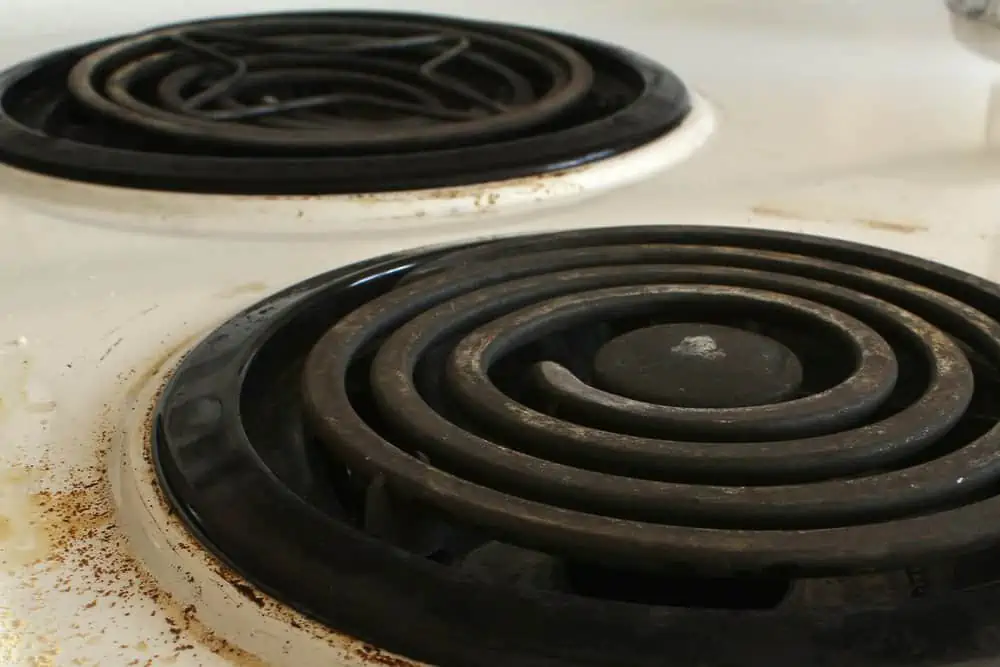
Here’s a quick guide on how to clean the stove burners as an electric cooktop includes the coils, drip pans, underside, and the stove top itself.
- Time: 45 minutes – 1 hour
- Difficulty: Beginner
What You’ll Need
- 2 microfiber cloths
- Dish soap
- Vinegar
- Baking soda
- Bowl
- Spoon
- Toothbrush
- Newspaper or scrap paper
- Non-abrasive sponge
Clean Coils
1. Heat Coils
Open the windows or turn on the vent if the coils are extremely dirty to release any smoke.
If the coils are slightly dirty, give them a quick wipe down with a damp cloth. Then turn the burners on high for 3 minutes. Any grime on the burners will burn off.
Turn the burners off and let them cool down. Wipe them one last time.
If the coils are filthy, turn the coils on high for several minutes to burn off the residue.
2. Wash Drip Pans
After they’ve completely cooled down, pull the coils out of the stove with a gentle lift. They should pop out easily.
Remove the drip pans and place them in the sink. Wash them with hot soapy water.
3. Cleaning Paste
Make a cleaning paste by putting 2 parts of baking soda into a bowl. Add 1 part vinegar and a few drops of dish soap. Mix the ingredients until you have a paste.
Cover the drip pans with the cleaning paste and let them sit for 10-15 minutes.
4. Clean Coils
Put the coils onto a newspaper and scrub with a dry toothbrush. The crusted food on the coils should flake off.
After you’ve removed the crusted food, wipe the coils with a damp cloth. Finish by drying the coils.
5. Wash and Dry Drip Pans
Wash the drip pans in warm soapy water and use a non-abrasive sponge to remove any stains. Once they’re clean, rinse and dry the drip pans.
Clean Underside of Stove Top
1. Lift Stove Top
Lift the front of your stove like you would lift a car hood. Prop the stove top open.
2. Clean Underside
Use a damp sponge to wipe the underside of the stove top and remove all bits of food. If needed, dip the sponge into soapy water before using the soapy sponge to scrub the underside.
3. Rinse and Dry
Once the underside of your stove is clean, rinse and dry it.
Clean Stove Top
1. Wipe Stove Top
Wipe the stove top with a damp cloth to remove all bits of food.
2. Wash
Remove any grease on the stove top with a soapy sponge. Apply the cleaning paste to any tough grease stains. Let it sit for 10-15 minutes.
Scrub the cleaning paste off the stove top with a soapy sponge.
3. Dry
Dry the stove top with a clean cloth. Replace the metal coils and drip pans.
How to Clean Grease Off Of a Gas Stove Top
In a spray bottle mix 1 part of lemon juice with 1 part of vinegar. Spray this solution on the baked-on grease. Let it sit for 30 minutes before using a sponge to scrub it off the stove.
If the greasy spot is still there, run a wet rag over the grease and then sprinkle the spot with baking soda. Wait 5 minutes before scrubbing it off.
Stove Top Cleaning Hacks
There are a few cleaning hacks you can use to make keeping your stove top clean easier.
- Use a plastic blade or credit card to slide under the gunk on a ceramic or glass stove top. Hold the blade or credit card at a 45-degree angle.
- Wipe your stove top daily to remove any crumbs.
- Wipe up messes immediately before they have a chance to congeal.
FAQs

How Do You Keep a Black Stove Top Shiny?
Keep your black stove top shiny by sprinkling it with baking soda. Rub the baking soda into the stove top with a sponge. Then spray vinegar on the stove top.
Let it sit for a few minutes before wiping your stove top clean with a damp sponge.

What Should Not Be Used to Clean a Stove Top?
Do not use large amounts of chemical products as you are cooking food on your stovetop. Also, avoid using abrasive sponges and steel wool. They will scratch your stove top.

How Do You Clean Burned Plastic Off a Stove?
Pour boiling water on the plastic with a ladle. Then use a rubber scraper to scrape away the plastic, and dry your stove top with an old rag. You may need to repeat this process a few times before the plastic is completely removed.
If it’s a large piece of plastic, put ice on the plastic. This will make the plastic brittle so you can remove it from the stove.

How Do You Clean Burned Sugar Off a Stove?
Clean burned sugar off the stove by making a vinegar solution of 1 part vinegar and 2 parts water. Heat it until it’s hot, but not boiling. Pour this solution onto the burned sugar and let it sit for several hours or even overnight.
After letting the vinegar sit for several hours, sprinkle baking soda onto it. Use a dishwashing brush or sponge to scrub the stain until the burned sugar has been removed.

What is the Difference Between Ceramic and Glass Stove Tops?
The main difference between ceramic and glass stove tops is the cost. Ceramic cooktops are less expensive and yet they conduct heat more efficiently.

How Do You Prevent Kitchen Grease Build-Up?
The best way to prevent kitchen grease build-up is to ensure good ventilation, regular surface cleaning, hand washing to reduce greasy fingerprints, and don’t dispose of grease down the sink.