Stainless steel appliances give a stunning and modern look to a kitchen. Unfortunately, they’re challenging to keep clean. The stainless steel shows every fingerprint, speck of dust, and smudge on the appliance.
Thankfully, using these simple methods for cleaning stainless steel appliances will bring the shine back to yours.
Key Takeaways
- Avoid abrasives, oven cleaner, bleach, and ammonia when cleaning stainless steel appliances to prevent scratches and damage.
- Use vinegar and olive oil, dish soap, club soda, WD-40, baking soda, or steam to clean stainless steel appliances effectively.
- Remove stains and fingerprints from stainless steel using isopropyl alcohol, or rubbing alcohol, and a soft cloth.
- Prevent streaks and rust by wiping in the direction of the grain, buffing dry with a microfiber cloth, and applying a protective coating like olive oil or baby oil.
What to Avoid When Cleaning Stainless Steel
When cleaning stainless steel appliances, you will need to avoid any products that are made specifically for stainless steel sinks and cookware. These products include abrasives that may scratch your stainless steel appliances.
Also avoid using abrasive products like scouring powders or steel wool on a stainless steel refrigerator, stove, or dishwasher. The products may scratch the finish of your appliances
Do not use an oven cleaner, bleach, or ammonia either. These products may damage the finish.
How to Clean Stainless Steel Appliances
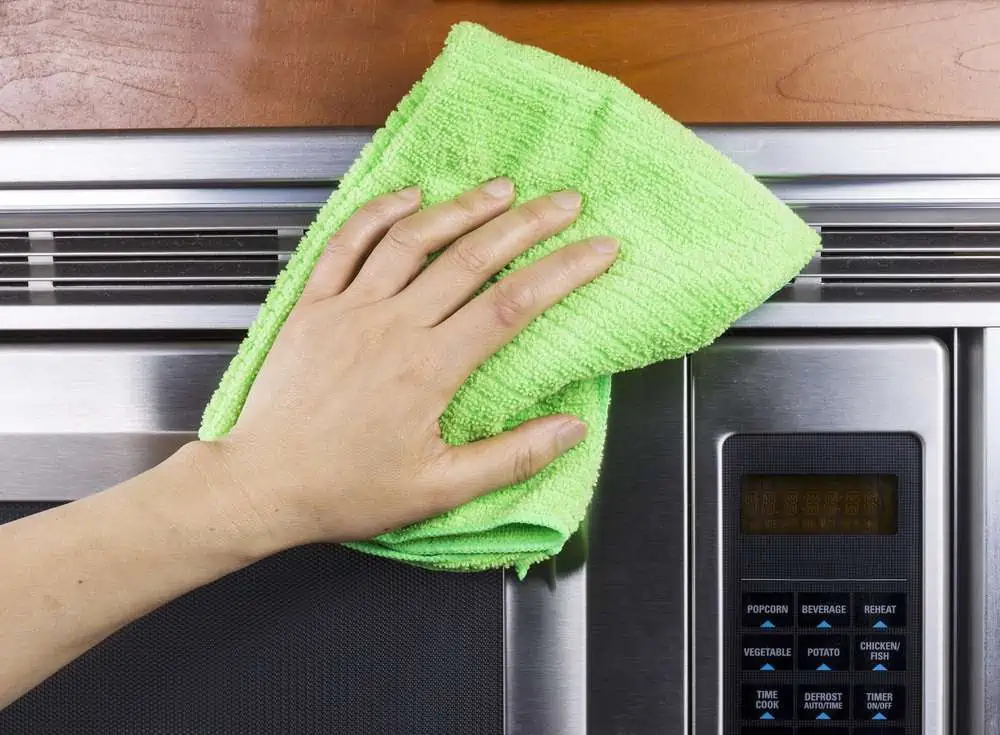
When you’re cleaning your oven, fridge doors, stove, or other appliances, you will need to be careful to always wipe in the direction of the stainless steel’s grain.
With Vinegar and Olive Oil
1. Spray Vinegar
Pour white distilled vinegar into a spray bottle. Spray the vinegar onto the surface of your appliance.
2. Wipe Appliance
Wipe the appliance clean with a microfiber cloth making sure you wipe in the direction of the grain.
3. Apply Olive Oil
Dip the microfiber cloth into olive oil, and wipe the appliance again making sure that it’s completely covered with the oil. Carefully buff the appliance in the direction of the grain. The olive oil will naturally restore the shine and remove any marks.
With Dish Soap
1. Mix Soapy Water
Mix 1 quart of hot water and 1 teaspoon of dish soap in a mixing bowl to make soapy water.
2. Wash the Stainless Steel
Dip your washing cloth into the soapy water, swish it around, and wring it out. Wash your appliance with soapy water.
3. Dry the Stainless Steel
Use a second microfiber cloth to dry the stainless steel making sure to wipe in the direction of the grain.
Tip: You can use baby oil to shine and polish your appliance after it’s clean. Put a small amount of baby oil on a soft cloth and buff in the direction of the grain. It will polish your appliance without streaks.
With Club Soda
1. Spray Appliance
Add the club soda to a spray bottle. Use the spray bottle to spray down your appliance.
2. Clean Appliance
Wipe the appliance clean using a microfiber cloth. Then buff the stainless steel until it shines.
With WD-40
1. Spray Cloth
Spray a microfiber cloth with the WD-40.
2. Buff Appliance
Using the cloth, buff the WD-40 into the surface of your stainless steel appliance until it shines.
With Baking Soda
1. Make Paste
Mix 2-3 parts of baking soda with 1 part water. You will want your paste to be more on the solid side and not too soupy.
2. Scrub
Scrub the paste into any marks, spots, and grime that’s on your appliance. The baking soda is a gentle abrasive that will clean your appliance without scratching it.
Allow the paste to sit for 20 minutes.
3. Wipe
Use a clean microfiber cloth to wipe the baking soda off of your appliance.
With Steam
1. Prepare Steam Cleaner
Prepare your steam cleaner to clean your stainless steel appliance. Use a nozzle attachment rather than a brush as the brush may scratch the finish of the stainless steel.
2. Steam Appliance
Steam small sections of your appliance using the steamer. You will need to immediately wipe the area with a dry microfiber cloth in the direction of the grain.
Continue steaming your appliance in small sections until you’ve cleaned the entire appliance.
How to Remove Stains From Stainless Steel
You can use isopropyl alcohol, or rubbing alcohol, to remove fingerprints and oily stains from your stainless steel. Pour a small amount on a soft cloth. Use the cloth to rub the alcohol on the stains until the stains are gone.
You can also use white distilled vinegar and baking soda to remove tough stains as well.
First, bring the white distilled vinegar to a boil. Soak a towel in the hot vinegar. Lay the towel on the stain and let it soak for 30 minutes.
Then remove the towel and sprinkle the spot with baking soda. Gently scrub the stain until it’s removed. Rinse the area with fresh water and dry with a microfiber cloth.
What is the Best Cleaner for Stainless Steel Appliances?
Here are some excellent cleansers you can use to clean your stainless steel appliances.
- Bar Keepers Friend
- Weiman Stainless Steel Cleaning Wipes
- Hope’s Perfect Stainless Steel Cleaner
- Magic Stainless Steel Cleaner
Tips For Cleaning Stainless Steel Without Streaks
The best way to clean stainless steel appliances without streaks is to follow these tips.
- Always wipe with the grain as wiping your appliance against the grain will leave streaks.
- Don’t allow the stainless steel to air dry. Instead, buff it dry with a microfiber cloth to prevent streaks and spots.
- Keep a spray bottle so you can clean your stainless steel after each use.
- Make sure you wipe your appliance down daily with a microfiber cloth.
FAQs

How Do You Make Stainless Steel Look New Again?
To make your stainless steel look new again, you will first need to remove all the gunk, fingerprints, and grime. You can use dish soap or vinegar to clean your appliance.
Once it’s clean, put a small amount of olive oil on a microfiber cloth and spread the olive oil all over the appliance. Then buff the oil into your appliance making sure you use a moderate amount of pressure and small circular motions going with the grain.
When you’ve finished buffing the oil into the appliance, buff it again with a clean, dry microfiber cloth.
Afterward, sprinkle flour all over your stainless steel appliance. Make sure it’s fully covered. Then use a soft cloth to buff the appliance until it shines.

How Do You Get Water Spots Off Stainless Steel Appliances?
Spray vinegar on the water spots and let the vinegar sit for 5 minutes. Then, using a microfiber cloth, wipe the vinegar off in the direction of the grain. Repeat if needed to remove the water spots.
You can also use rubbing alcohol to remove the water spots. First, pour a sizable amount onto a microfiber cloth. Then scrub at the water stain in the direction of the grain until the water stain is removed.

Can I Use Furniture Polish on Stainless Steel Appliances?
Yes, lemon oil furniture polish can be used on stainless steel appliances. Pour some of the polish onto a clean cloth and then rub the cloth evenly all over your appliance. Finish by buffing the polish into the appliance with a clean, soft cloth.

How Do You Stop Stainless Steel From Rusting?
You can keep your stainless steel from rusting by making sure you wipe it down regularly to keep it clean. Also, make sure that water and other liquids are not left sitting on your stainless steel as the moisture will accelerate the rusting process.
You can also add a protective coating of olive oil, baby oil, or furniture polish to protect your stainless steel.

Can I Use Windex On My Stainless Steel Appliances?
You can use Windex on stainless steel appliances, provided you use it infrequently. Overuse will eventually damage the luster of the stainless steel.

Can You Get Scratches Out of Stainless Steel Appliances?
You can get scratches out of stainless steel appliances, provided they are small. You can use car wax to restore the shine on your stainless steel appliances.
Best Way to Clean Stainless Steel Appliances
The best way to clean stainless steel appliances is to spray vinegar onto your appliance and wipe it off using a clean microfiber cloth. Then add some olive oil to your cloth. Use the cloth to make sure the entire appliance is covered with the oil before buffing the stainless steel in the direction of the grain until it shines.