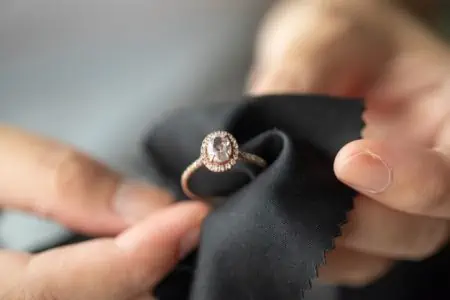
They say: Nothing gold can stay. You might think the same if your beloved gold pieces are looking dull and dirty.
However, we’re here to prove you wrong. Gold can stay — with the right cleaning tips.
We’ll show you how to clean gold jewelry at home. This includes tarnished gold, gold that’s turned black, and more. Ready for some unforgettable cleaning hacks? Keep reading.
Key Takeaways
- Clean gold jewelry without gemstones using a solution of warm water, dish soap, and ammonia. Soak for one minute, wipe with a soft cloth, and gently scrub with a soft-bristled brush before rinsing and drying.
- For gold jewelry with gemstones, use a solution of warm water and dish soap. Soak for 15 minutes, gently scrub with a soft-bristled brush, and rinse before drying.
- Avoid using harsh chemicals, abrasives, or toothpaste when cleaning gold jewelry, and always be gentle to prevent scratches.
- Take gold jewelry to a professional cleaner 1-2 times per year for a deeper clean and polishing.
How Often to Clean Gold?
A good rule of thumb is to clean your real gold jewelry monthly if you wear it regularly. When in doubt, clean your gold when it’s looking dull and dirty.
As for professional cleaning, we recommend taking it to a jewelers 1-2 times per year.
How to Clean Gold Jewelry
While there are many ways to clean gold jewelry, this is our main method. It involves dish soap and ammonia.
It works for real gold jewelry (without stones) and is suitable for a monthly clean — for those who wear their gold jewelry often. This works for earrings, rings, bracelets, necklaces, chains, and more.
However, if you notice the ammonia starts to dull down your gold’s surface, stop this method immediately and try a different method, one without ammonia.
- Time: 10 minutes
- Difficulty: Easy
What You’ll Need
- Dish soap
- Ammonia
- Soft jewelry cloth
- Soft-bristled brush
- Microfiber cloth
- Water
- Bowl
- Spoon
- Gloves
1. Make Solution
In a bowl, mix ¼ cup of warm water, two teaspoons of dish soap, and one teaspoon of ammonia. Make sure to mix it well with your spoon.
2. Soak Gold
Immerse the gold jewelry into the mixture for about one minute. If you leave it in for too long, the ammonia can corrode the jewelry, so be careful! After a minute, remove the jewelry. Wear gloves to protect your hands from the ammonia.
3. Wipe and Brush
While the gold is still damp, wipe it with a soft cloth. Use a soft-bristled brush to get into hard-to-reach spots and nooks. Clean it very gently to remove tarnish and restore its shine. Don’t scrub too hard in case you scratch it.
4. Rinse and Dry
Rinse the jewelry under lukewarm water. Blot it dry with a soft cloth.
How to Clean Gold Rings With Stones
If your gold jewelry has gemstones, diamonds, or other precious stones, you’ll need to change your cleaning routine slightly. When in doubt, bring it to a professional to avoid damage.
- Time: 25 minutes
- Difficulty: Easy
What You’ll Need
- Dish soap
- Water
- Bowl
- Spoon
- Soft-bristled brush
- Lint-free cloth
1. Make Your Solution
For this cleaning routine, all you need to do is mix warm water and a drop of dish soap.
2. Soak Jewelry
Put your gold jewelry in the bowl and soak it for 15 minutes.
3. Brush Clean
Using your soft-bristled brush, gently scrub the jewelry to clean it. Make sure to get into the nooks, crannies, along the clasp, in links, and don’t forget the chain. Continue until the jewelry looks visibly clean. Rinse well.
4. Dry Jewelry
Blot dry with a lint-free cloth, then lay the piece flat to air dry thoroughly.
Other Ways to Clean Gold
While the above methods are some of the best ways for cleaning gold jewelry, you’re probably wondering how else to clean gold jewelry at home. Here are six home remedies you can try.
With Salt and Baking Soda
This is a good method if your gold jewelry is tarnished since combining salt and baking soda can eliminate these stains.
Mix equal parts of salt and baking soda. Add it to a bowl of hot water. Soak your jewelry for 10 minutes. Scrub with a soft-bristled brush to clean. Rinse well. Blot dry with a lint-free cloth, then let the piece fully air dry.
Top Tip
If you want extra cleaning power, you can add a drop of dish soap to your cleaning solution.
With Sparkling Water
If you’ve got sparkling water in the fridge, you can put it to good use to clean your gold! The carbon dioxide can break down dirt and tarnish. Fill a bowl with sparkling water and soak the gold for 10 minutes. Scrub gently with a soft-bristled brush, rinse and dry.
With Gold Cleaner
Maybe DIY cleaners aren’t your cup of tea. That’s okay! Instead, you can use a gold jewelry cleaner. You can find professional gold cleaners online or in general stores. For instance, a popular option is Connoisseurs Fine Jewelry Cleaner. Whatever product you use, make sure you read the instructions for the best cleaning method.
In general, you will usually dip the jewelry in the cleaning solution, clean with a soft-bristled brush, rinse well, and dry.
With Vinegar
If you buy distilled white vinegar in bulk, as we do, then you’re always looking for new ways to use it. Well, you can use vinegar to clean your gold. The acidic quality of the vinegar can help eliminate tarnish and get your gold sparkling again.
Fill a small bowl or jar with vinegar and soak the gold for 10 minutes, stirring occasionally. Remove the jewelry and scrub it gently with a soft-bristled brush. Rinse the jewelry, then blot it dry. Air dry fully.
With Boiling Water
Boiling water is a great way to clean and sanitize gold. But beware: don’t use this method if your gold jewelry contains gemstones other than diamonds. This can cause damage.
To use this method, put your jewelry into a bowl. Pour boiling water over it until it’s submerged. Leave it in there until the water has cooled down. Remove the gold and scrub with a soft-bristled brush to remove loosened dirt. Rinse the jewelry, blot dry, then let it air dry.
With Turmeric
Place your gold jewelry in a bowl. Mix together ½ cup of warm water and one tablespoon of turmeric. Add a drop of dish soap if you want extra cleaning power. Soak the jewelry in the solution for 30 minutes. Scrub clean with a soft-bristled brush. Rinse well. Blot dry, then let it fully air dry.
What to Avoid When Cleaning Gold
We’ve shown you how to clean tarnished gold — but what should you definitely avoid? Nobody wants to damage their gorgeous gold, so here are some things you should keep in mind.
- No harsh chemicals: Don’t clean your gold with chlorine, acids, or sulfur compound cleaners. Don’t use makeup removers or creams to clean either.
- Submerging treated gemstones: If you have treated gemstones on your gold, especially with a non-permanent coating, do not submerge the jewelry in any cleaning solution. Instead, dampen a cloth and blot it clean.
- Avoid abrasives: Don’t use abrasive cloths and scrubbers. Always use a soft-bristled brush or soft cloth. This will help you to avoid scratching your gold.
- Cleaning multiple pieces: Don’t soak multiple pieces of jewelry at once. They can rub up against each other and become scratched. Clean one piece at a time.
- Don’t scrub hard: Always be gentle when cleaning your gold. Don’t use elbow grease or force. You don’t want to cause scratches.
- No toothpaste: Toothpaste is a handy cleaner in certain situations, but don’t use it for cleaning your gold. Cleaning with toothpaste can damage your gold, and included gemstones.
How to Clean Gold-Plated Jewelry
If your jewelry is gold-plated or lower karat, such as 14k, the best way to clean it is by using our “How to Clean Gold Rings With Stones” method.
To recap, you’re simply mixing a cleaning solution of warm water and a drop of dish soap. Soak the gold for 15 minutes before gently cleaning it with a soft-bristled brush.
To be even more gentle, you can use a cotton swab. Rinse the gold well, then dry.
How to Polish Gold Jewelry
Of course, you want your gold jewelry to look at its best. That means nice and shiny. You’ll be happy to know that our above cleaning methods are great for polishing up gold while simultaneously cleaning them.
If you think your gold could do with extra polishing, try cleaning it with baking soda and salt! The slight texture of the baking soda can remove tarnish.
Finally, finish the job with a jeweler’s cloth which is made for polishing gold.
If you’re wondering how to get professional-level results, then the best thing to do is bring it to a professional. There, they will clean your jewelry with an ultrasonic jewelry cleaner that removes stubborn dirt.
They will then polish the gold with a high-speed spinning wheel that removes scratches and abrasions.
Finally, they steam clean the jewelry to remove any residual grime and dirt. You will get pristine results from a professional versus cleaning your gold at home. That’s why we recommend taking your jewelry to a professional 1-2 times per year.
FAQs

How Do You Clean Pure Gold?
You can use the ammonia and dish soap hack for pure gold. If the pure gold comes with diamonds, remove the ammonia and use the dish soap and water hack. Make sure that the water isn’t too hot. Lukewarm will do just fine.

How Do You Clean Gold Jewelry That Turned Black?
You can use our ammonia hack or the plain dish soap and water hack. The cleaning solution will loosen the black tarnish, and then you can scrub it off gently with your soft-bristled brush. You may have to spend a little longer cleaning black gold, but eventually, it should get clean. If not, bring it to a professional.

Does Coke Clean Gold?
Yes! Cleaning with Coke works due to the caustic quality of the Coke. Boil some Coke in a pan. When it’s hot, place the gold jewelry in the pan for about five minutes. Remove and scrub well with a soft-bristled brush. Rinse and dry.

Does Vodka Clean Gold?
Vodka can clean gold by breaking down the dirt and grime, but we don’t recommend it. Advice about this is not super reassuring, and we don’t see professionals recommending it. So we say — avoid it if you can.

Can You Clean Gold With Hydrogen Peroxide?
Yes. Hydrogen peroxide can remove dirt and disinfect your gold jewelry.
Put some hydrogen peroxide on a cotton pad and gently scrub the gold clean. Another option is to fill a bowl with a bit of hydrogen peroxide and soak the gold for a couple of minutes. Scrub gently with a soft-bristled brush. Rinse well for one minute, then blot dry.

How Do You Know if Something is Real Gold?
There are several ways to know if something is real gold, including using the weight and magnetization test, a hallmark, the nitric acid test, liquid foundation test, and professional appraisal.

Does Gold Lose Value?
Gold does not lose value over time because it remains scarce and the more they mine, the rarer it gets.
Go for Gold
Your gold jewelry is precious to you, but it can be disheartening to wear when it starts to dull down. You don’t need to take your gold to a professional every single time it looks dull or tarnished. You can clean it at home using our favorite methods.
Use our ammonia and dish soap method for pure gold without extra gemstones. If your gold has gemstones or is plated, skip the ammonia and just use our dish soap and water method.
You can use these methods every month, but take it to a professional 1-2 times per year if you need a deeper clean.