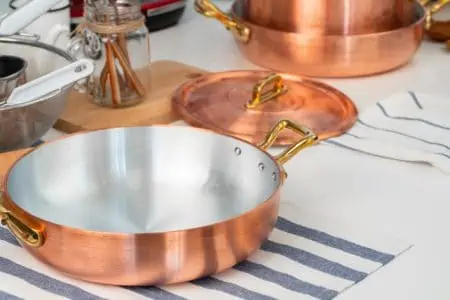
Copper is a beautiful metal that’s used for jewelry, pots, pans, and pipes. However, copper tarnishes easily. Sometimes this patina (the tarnished coating) is beautiful, but sometimes you’d like to maintain the beautiful shine of copper jewelry.
So today we’re discussing the best way to clean copper so you can restore a badly tarnished antique to its original shine.
Key Takeaways
- Clean non-lacquered copper using lemon and salt, or other household items like baking soda or ketchup.
- Check if your copper item is lacquered, sealed, or copper-plated before cleaning to avoid damaging it.
- To clean lacquered copper, use a gentle solution of mild dish soap and water, and dry with a microfiber cloth.
- Prevent copper tarnish by applying a thin protective oil or wax coating and storing items properly.
Before Cleaning Copper
Before beginning to clean your copper items, you’ll need to know whether it’s lacquered, sealed, or copper-plated.
Copper items are sometimes lacquered or sealed to prevent them from tarnishing. These items need to be cleaned in a manner that won’t cause the lacquer or seal to come off of your copper item. You’ll find directions on how to clean lacquered or sealed copper items below.
To find out if the item you’re cleaning is sealed or lacquered, dip the corner of a rag into vinegar and then dip it into baking soda. Find a concealed spot on the copper and rub it with the rag. If you see the tarnish coming off, then you know that your copper item isn’t lacquered or sealed and you can use the natural cleaners to scrub your copper clean.
Copper-plated items should also not be cleaned using these methods as the copper-plating may be scratched. To discover whether your item is copper-plated, use a magnet. If the magnet sticks to the item, it’s copper-plated. If the magnet doesn’t, then it’s not.
Clean your copper-plated items using water and dish soap. Dry with a dry cloth. Then buff it with a copper polish such as Howard Pine-Ola Copper and Brass Polish.
How to Clean Copper
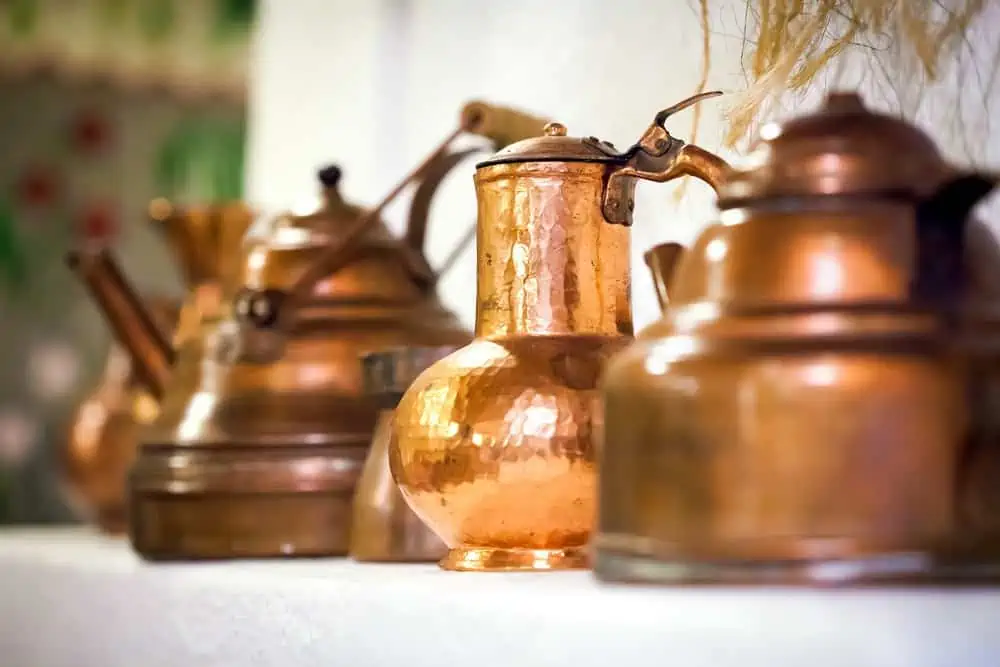
While copper doesn’t rust, it does develop a green film that’s referred to as a patina. This is the result of the copper oxidizing. Here’s how to clean oxidized copper naturally using products that you have around the house.
These methods are excellent if your copper isn’t lacquered, sealed, or copper-plated.
With Lemon Juice
Cut a lemon in half and spring salt on the fleshy sides of the cut lemon. Gently rub the copper piece with the lemon until the tarnish is removed. Wash your piece with dish soap and then buff it dry with a soft cloth.
With Baking Soda
Baking soda is excellent for removing stains from your copper pieces.
Start by mixing 2 teaspoons of baking soda with 2 teaspoons of water on a plate to make a paste. Dip a microfiber cloth into the paste and cover the copper with the paste.
Wait about one minute.
Gently scrub your piece with the cloth. Rinse it thoroughly before using a clean and dry microfiber cloth to gently buff your copper dry.
With Ketchup
Ketchup is made using two acidic ingredients: vinegar and tomatoes. So it can be used to remove tarnish and grime from old copper pieces.
Pour some ketchup into a bowl. Then dip a microfiber cloth into the ketchup and spread it all over your copper piece. Wait 10-20 minutes before gently scrubbing your copper piece with the ketchup until the tarnish is removed.
Rinse it thoroughly and buff it dry with a clean and dry microfiber cloth.
With Salt and Vinegar
Dissolve 1 tablespoon of salt in 1 cup of vinegar. Use a soft cloth to rub your copper piece with the solution. Then rinse and dry the copper using a dry cloth.
If that doesn’t seem to be working, you can combine the 1 tablespoon of salt with vinegar. Again, you’ll need 1 cup of vinegar. Add the salt and vinegar along with 3-4 cups of water to a large pot. Bring the mixture to a boil before dropping your copper piece into the pot. Allow it to boil until the tarnish and the grime come off your piece.
Allow it to cool, and inspect your piece. It may still need some scrubbing when it’s removed from the pot. Afterward, wash your piece with dish soap and water before drying it with a soft cloth.
With Coke
Coca-cola can be used to clean your copper pieces as well. Pour a can of coke into a bowl. Immerse your piece in the coke and allow it to soak for an hour.
After the hour is up, you don’t need to scrub the copper. Simply rinse and wipe your piece dry with a clean and dry microfiber cloth.
With Bar Keepers Friend
Bar Keepers Friend is an excellent product to use to clean your copper pieces. Sprinkle Bar Keepers Friend all over the copper. Then use a damp sponge or cloth to scrub your copper clean from the dirt, grime, and tarnish.
With Flour Paste
Another option is to make a flour paste to clean your copper pieces. Mix ½ cup of white vinegar and 1 tablespoon of salt in a bowl. Then add enough flour to make a thin paste.
Use a soft cloth or scrubbing sponge to apply the paste to your copper piece. Rub until the copper is clean before rinsing the piece under running water.
Buff dry with a dry microfiber cloth until it gleams.
How to Seal Copper With Oil
Put some baby oil on a clean microfiber cloth. Then wipe your copper piece all over with the cloth until your piece is covered with a thin protective coating. Then buff the oil into your copper using the cloth.
You can also apply a wax such as Renaissance Wax to your copper. Put a small amount on a clean microfiber cloth, rub it onto your piece, and then buff.
The oil or wax will protect your copper from being exposed to oxygen that will cause your piece to tarnish.
How to Clean Lacquered Copper
Lacquered copper needs to be cleaned gently so that you don’t remove or damage the protective coating.
- Time: 10 minutes
- Difficulty: Beginner
What You’ll Need
- Mild dish soap
- Water
- Bowl
- Funnel
- Spray bottle
- 2 microfiber cloths
1. Make a Solution
Mix 2 cups of warm water with 2 tablespoons of dish soap in a bowl. Then use the funnel to pour the mixture into the spray bottle.
2. Spray the Copper
Spray the copper all over with soapy water. If the copper is covered with grime and dirt, allow it to sit for a few minutes before moving on to the next step.
3. Gently Scrub
Use a microfiber cloth to gently scrub your copper piece to remove the grime.
4. Rinse
When you have removed all the dirt from your piece, rinse it under running water.
5. Dry
Finish by drying your copper piece with a clean and dry microfiber cloth.
Tips For Keeping Copper Clean
Maintaining and caring for your copper pans and jewelry properly is the best way to keep your copper clean. So here are some tips on how to store your copper pieces and also what to avoid so your copper will remain shiny for years.
Do:
- Clean your copper pieces every 6 months.
- Apply a thin protective oil or wax coating to prevent tarnishing.
- Always dry your copper pots and pans and do not allow them to air dry.
- Store small copper pieces in a plastic bag with a silica gel package.
- Store large copper pieces in clear plastic containers with acid-free paper.
Don’t:
- Do not put copper pots and pans in the dishwasher.
- Do not use harsh chemicals, polishes, or bleach to clean the copper pieces.
- Do not use abrasive cleaners, steel wool, or harsh scrubbing pads on your copper.
FAQs

How Do You Make a DIY Copper Cleaner?
You can make a homemade copper cleaner by mixing ¼ cup of flour with ¼ cup of salt. Then add enough white vinegar to make a paste. Rub this mixture on your copper pieces to remove the tarnish and grime that’s built up until your copper shines.
Rinse the copper clean and dry with a microfiber cloth.

Does WD-40 Clean Copper?
WD-40 isn’t used to clean copper, but it’s excellent for applying a protective coat to your copper pieces. Spray the WD-40 onto a cloth, and apply the WD-40 to your piece before buffing it.

Can You Use Toothpaste to Clean Copper?
Yes, you can use toothpaste to clean copper. Rub the toothpaste onto the tarnished area and let it sit for a few minutes. Wipe the toothpaste away before rinsing the piece under running water. Dry the copper with a clean and dry microfiber cloth.

Can You Clean Copper With Windex?
No, do not clean copper with Windex as the alcohol content may discolor the patina of your copper piece.

What Cleans Copper the Fastest?
There are several things that clean copper the fastest, including acetic acid, citric acid, acetone, and hydrochloric acid.

Can You Stop Copper From Turning Green?
You can stop copper from turning green with a healthy coating of wax. You will need to apply it every month to protect it from oxidizing.
How to Polish Copper
Combine ¼ cup of flour, ¼ cup of salt, and enough vinegar to make a paste. Rub the paste all over your copper pieces. Then buff the paste off of your copper pieces until they shine.
Finish by washing and drying your copper items. You’ll never need to experience the angst of badly tarnished copper pieces again.