When you spend hours commuting or weekends traveling, it’s normal for your car’s interior to get dirty. But it’s also crucial to keep it clean, so it’s fresh for drivers and passengers.
We’ve researched and tested the best way to deep clean your car’s interior. We’ll share what to use, a step-by-step guide, and top tips for cleaning vinyl and leather.
Keep reading to learn all the cleaning tips you need to know for how to clean your car interior until it’s as good as new.
Key Takeaways
- Use a handheld vacuum, microfiber towels, and all-purpose cleaner to clean various parts of your car’s interior.
- For touchscreens, use distilled water and distilled white vinegar with a microfiber cloth for gentle cleaning.
- Clean fabric and leather seats with a commercial automotive cleaner or shampoo, and use a leather or vinyl protectant to maintain their condition.
- To maintain cleanliness, minimize food and drink, avoid car sickness, keep a trash can and cleaning supplies in the car.
What to Use to Clean a Car Interior
You’ll find various products for cleaning the inside of your car. Here are some that we recommend:
- Commercial automotive cleaners.
- A handheld vacuum cleaner.
- Microfiber towels.
- Baking soda.
- Lemon juice.
- Distilled white vinegar.
- Scrubbing brushes.
- All-purpose cleaner.
Here’s what you should avoid when cleaning your car’s interior:
- Bleach.
- Ammonia.
- Hydrogen peroxide.
- Silicone-based cleaners.
How to Clean a Car Interior
We’ll break down our step-by-step guide for how to clean the inside of your car. To make this easier for you, we have six different topics. You can do them all in one day or focus on one or two at a time if you already have a busy weekend ahead.
Cleaning the Roof
Our top tip is to do this first because dirty water will drip onto your seats.
- Time: 30 minutes.
- Difficulty: Intermediate.
What You’ll Need
- All-purpose or upholstery cleaner.
- Stiff-bristled brush.
- Water.
- Wet vacuum or upholstery cleaning machine.
1. Apply your Cleaning Solution
Spray your all-purpose or upholstery cleaner onto a stiff-bristled brush.
2. Scrub
Scrub the ceiling with the brush in long strokes. Add a little more water as you go, as this will help the solution sud up.
3. Tackle the Stains
Spend extra time scrubbing stains in a circular motion.
4. Wet Vacuum
Use a wet vacuum or upholstery cleaning machine like this Stanley Wet/Dry Vacuum to remove excess moisture and dirt from the ceiling. Work from the front of the vehicle to the back. If you can’t access a machine like this, you can scrub the cleaning residue off with a damp microfiber cloth.
5. Dry
Leave the car doors open for a few hours to let the ceiling fully air dry.
Cleaning the Dashboard
Cleaning the dashboard can make your car feel brand new. We also love this method for cleaning the plastic trim outside your car, too.
- Time: 15 minutes.
- Difficulty: Easy.
What You’ll Need
- Microfiber cloths.
- Water.
- All-purpose cleaner.
- Vent and dash brush.
- Dashboard polish (optional).
1. Dust the Dashboard
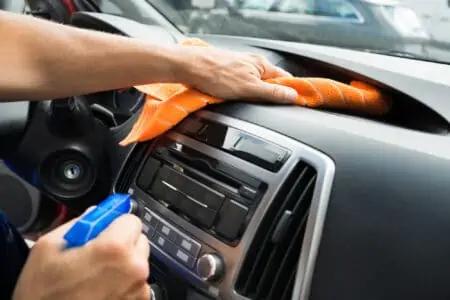
Dampen a microfiber cloth in water and wring it out really well. Wipe the dashboard down to remove dust, dirt, and grime.
2. Apply the Cleaner
Spray a little bit of all-purpose cleaner onto a clean microfiber cloth. Wipe the dashboard again to remove even more dirt and grime.
3. Clean the Dashboard Details
Use a vent and dash brush to clean smaller nooks and crannies, vents, radio buttons, your gearstick, and other small corners.
4. Polish the Dashboard
Pour a little bit of dashboard polish, like this Shine Armor Interior Cleaner, onto a microfiber cloth and run it over your dashboard evenly.
5. Air Dry
Leave the doors or windows open to let the dashboard fully air dry.
Cleaning Touch Screens
- Time: Five minutes.
- Difficulty: Easy.
What You’ll Need
- Microfiber cloths.
- Distilled water.
- Distilled white vinegar (optional).
1. Wipe the Screen
With a dry cloth, wipe the screen side to side to remove dust.
2. Dampen the Cloth
Dampen the cloth in distilled water.
3. Wipe
Wipe the screen side to side with your dampened cloth.
4. Use Vinegar
If your screen has sticky residue or marks, mix a 1:2 ratio of distilled white vinegar and water in a bowl or spray bottle. Dampen the cloth and gently wipe the screen to remove marks.
Cleaning the Seats
The advice here varies if you have fabric or leather car seats, so keep that in mind when carefully reading our instructions. But if you have stains and odors in your seats, we’re about to show you how to deep clean them to perfection.
- Time: One hour.
- Difficulty: Intermediate.
What You’ll Need
- Commercial automotive cleaner or shampoo (check it’s suitable for your fabric type).
- Spray bottle (for fabric seats).
- Water.
- Stiff cleaning brush.
- Handheld vacuum cleaner.
- Microfiber towels.
- Leather cleaning brush (for leather seats).
1. Vacuum
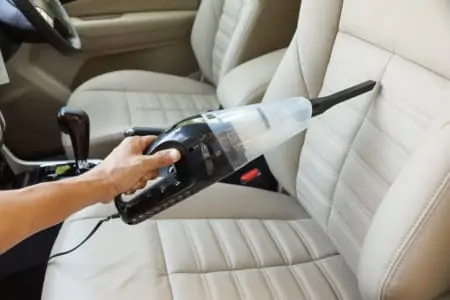
Use a handheld vacuum cleaner like this Bissell Cordless Hand Vacuum with an upholstery attachment to vacuum your seats. The crevice tool can get into nooks and crannies, so that’s handy, too.
2. Prepare the Cleaner
Check if your chosen cleaner needs to be diluted. Do so in a spray bottle or bucket of water.
3. Apply the Cleaner
Follow the packaging instructions for your cleaner. Normally, you will simply spritz the cleaner over your seats.
4. Work the Cleaner In
For fabric seats, use a stiff cleaning brush to scrub the cleaner into the seats. Continue until the formula has foamed up over all your seats. With leather seats, dampen a microfiber cloth in water, wring it out well and scrub the cleaner into the seats using this cloth.
On soiled areas, use a leather cleaning brush instead. It will help remove stains. Continue until the seats are clean.
5. Blot
Use a dry microfiber towel to blot up excess cleaning residue and water.
6. Dry
Use a separate dry microfiber cloth to dry the seats fully. Then leave the vehicle doors open to let the interior fully air dry.
Cleaning the Door Panels
- Time: 10 minutes.
- Difficulty: Easy.
What You’ll Need
- All-purpose cleaner.
- Microfiber cloths.
1. Spray the Cloth
Spritz your all-purpose cleaner onto a dampened microfiber cloth.
2. Wipe the Door Panels
Wipe the cloth over the door panels, scrubbing gently. Work harder on stains or sticky residue.
3. Dry
With a separate microfiber cloth, dry the door panels.
Cleaning the Carpets and Floor Mats
- Time: One hour.
- Difficulty: Intermediate.
What You’ll Need
- A vacuum cleaner with an upholstery attachment.
- Carpet cleaning solution (or dish soap and warm water in a spray bottle).
- Scrubbing brush.
- Microfiber cloths.
- Spray bottle with water.
- Carpet cleaning machine or steam cleaner (optional).
1. Remove the Floor Mats
Start by taking the floor mats out of the car. This allows you to clean the floor underneath the mats.
2. Vacuum
Thoroughly vacuum the carpets, floors, and floor mats to remove dirt and debris.
3. Prepare the Cleaning Solution
If you’re not using a commercial product, you can mix warm water and a few drops of dish soap in a spray bottle.
4. Apply the Cleaner to Brush
Apply a layer of your cleaner to a scrubbing brush.
5. Scrub the Carpets and Floor Mats
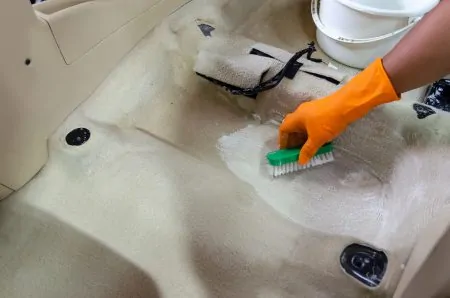
Scrub the brush thoroughly along the carpets and floor mats to lift stains and dirt. Continue this until all carpets and floor mats are covered. It might take a while, so be patient and take breaks if necessary!
6. Use a Machine (Optional)
If you have a carpet cleaning machine or car steam cleaner, you can use that instead of washing by hand. It will be easier, but these machines are pricey.
If you’re interested, a great carpet cleaning machine is the Bissell SpotClean Pro. We use it at home and think it’s wonderful. A renowned steam cleaner is the Wagner Spraytech On-Demand. With all those attachments, your car seats will be spotless.
7. Spray with Water
Once the solution has been sitting on the carpets for 10 minutes or so, spray the carpets and floor mats with water to dilute the cleaning solution.
8. Wipe Clean
Wipe the carpets with a microfiber cloth. Repeat with a dampened microfiber cloth to rinse the carpets and floor mats. Continue until the soapy solution has been removed.
9. Leave to Dry
Open the car doors and let the carpets and floor mats air dry. This is most successful on a breezy, sunny day.
DIY Car Interior Cleaning Spray
If you want to make your own all-purpose cleaner for cleaning the car carpet, roof, and upholstery of your vehicle, here’s a great recipe to mix in a spray bottle:
- Two tablespoons of Borax.
- Three tablespoons of grated soap.
- Two cups of boiling water.
Try this recipe with household products for cleaning your dashboard or door panels:
- One tablespoon of white vinegar.
- One cup of warm water.
- One teaspoon of dish soap.
- One teaspoon of mineral oil.
Best Way to Clean Vinyl and Leather Car Interiors
We’ll show you how to clean and polish vinyl and leather car seats like a pro.
- Time: One to two hours.
- Difficulty: Intermediate.
What You’ll Need
- Commercial car cleaning solution (suitable for vinyl or leather).
- Spray bottle (optional).
- Leather or vinyl cleaning brush.
- Non-scratch cleaning pad.
- Microfiber cloths.
- Leather or vinyl protectant.
- Vacuum cleaner with an upholstery attachment.
1. Vacuum
Start by vacuuming the leather and vinyl to remove dust and debris.
2. Apply the Cleaner
Dilute your cleaner in a spray bottle if necessary. Apply your cleaning solution to the cleaning brush. You can spray directly to the seat, but this is a more thorough option.
Brush the seats in circular motions, working in small sections. Go over each section three times.
Avoid Streaking
Work out of direct sunlight and don’t let the cleaner dry on the seats. When you spray the seat directly, it can dry before you have time to scrub it in, which is why you should apply the cleaner to the brush rather than the seat.
3. Wipe the Seats
Use a microfiber cloth to wipe the cleaning solution off the seats. After each wipe, fold the cloth to a clean section, then wipe again. You might need to use a few microfiber cloths for each seat to ensure you don’t spread dirt around the seats.
4. Remove Stains
If your brush and cloth method hasn’t removed stains, you can use a non-scratch cleaning pad. Remember that this is a little more aggressive, so you must be gentle to prevent damage to your seats.
Simply brush the pad over the stained areas, working gently but patiently to remove grime, stains, and debris.
5. Wipe the Seats
Use a dry microfiber cloth to wipe the seat one more time to remove any excess residue.
6. Polish and Protect Your Seats
Apply your leather or vinyl protectant following the packaging instructions. Normally this will consist of applying to a cloth, then spreading across the seat before waiting a few hours until it’s fully dry.
7. Dry the Seats
Leave the car doors open for a few hours to let the seats completely air dry.
How to Clean Stains in Car Interiors
What about stains? While the above methods are great for general cleaning, stains often require a different approach.
- Time: 25 minutes.
- Difficulty: Easy.
What You’ll Need
- Car upholstery cleaner or shampoo.
- Spray bottle with water.
- Scrubbing brush.
- Microfiber cloths.
- Rubbing alcohol and cotton balls (for leather seats).
- Dish soap (for leather seats).
1. Dilute Your Cleaner
When you choose your car upholstery cleaner or shampoo, there might be a different diluting ratio for tackling stains. Dilute it according to the packaging instructions in a spray bottle with water.
2. Apply to Stains
Apply the car shampoo to the stained area for fabric seats and scrub it well with your stiff-bristled scrubbing brush. Leave it for 15 minutes.
For leather seats, pour a little bit of rubbing alcohol onto a cotton ball. Blot the stained area until the stain is gone.
3. Wipe the Seats
For fabric seats, blot the cleaning residue with a microfiber towel. Dampen it if necessary, as this can make this step easier. Wipe until the residue is gone.
For leather seats, wipe the area with a microfiber cloth dampened in warm soapy water. Wring it out well, so you don’t soak the leather seats.
Tips For Keeping Car Interiors Clean
Cleaning your entire car interior takes hours. If you stay on top of things as you go, it’s less overwhelming. Here are our favorite methods for keeping your car clean:
- Minimize food and drink: Keep food and drink in bottles, closed cups, and meal trays to avoid mess. Minimize eating and drinking in the car where possible. Always dispose of food waste as soon as you’re parked.
- Avoid car sickness: Avoid vomit all over your car by stocking up on car sickness tablets or wearable devices. You should also stop frequently. Try to avoid books and movies if that perpetuates car sickness.
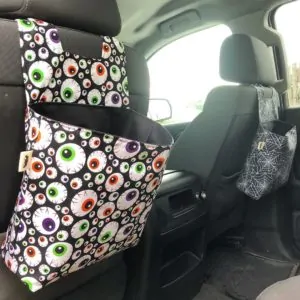
- Keep a trash can in the car: You can get mini trash cans for your car. Or you can just use a plastic bag that you toss out every time you arrive at your destination.
- Keep towels in the car: When someone does spill something, make sure you have old towels on standby to clean it up and prevent staining.
- Keep wipes in the car: Keeping baby wipes and disinfectant wipes in the car can help you tackle messes as soon as possible and prevent staining. You can make up a little car cleaning kit, so you’re prepared for every disaster.
FAQs

Can I Use Windex on My Car Interior?
You can use Windex on your car windows for a streak-free finish. Some people use Windex on their dashboard, panels, and upholstery, but we advise against it since we haven’t tested it, and it is a glass cleaner.

How Do You Get Rid of Haze on the Inside of Windshield?
Use a high-quality glass cleaner, like Windex, and a microfiber towel. Wipe in straight lines. Let it fully air dry.