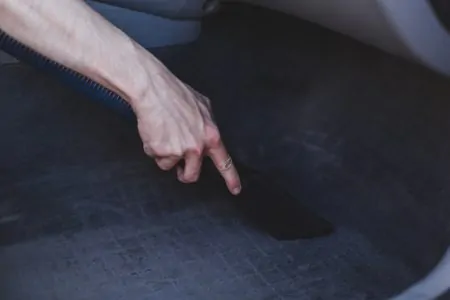
How often do you deep clean your car? When was the last time you cleaned the carpet? Unfortunately, many car owners overlook the carpet for way too long — leaving stains, mud, and sticky substances unchecked.
A dirty car carpet can stink, especially on a hot summer day. Luckily, cleaning it isn’t as difficult as one might think. The best thing is that deep cleaning doesn’t have to be done regularly as long as spills are removed as they happen.
We’ll show you how to clean your car’s carpet in just seven steps. Plus, we’ll share how to tackle eight common stains, so your car is nearly spotless again.
Key Takeaways
- Regularly clean your car’s carpet to remove dirt, stains, and odors.
- Use a vacuum, carpet shampoo or laundry detergent, stiff brush, and microfiber cloth for cleaning.
- After cleaning, rinse the carpet with a damp cloth and air dry to prevent mold or mildew.
- Tackle specific stains like dirt, mud, beverages, and grease with targeted methods and household products.
How to Clean Filthy Car Carpet
Every time we step into our car, we bring in dirt and bacteria. The carpets can become filthy. It’s important to get into the habit of regular cleaning, and this is the best method for that.
- Time: 1-2 hours
- Difficulty: Intermediate
What You’ll Need
- Cordless handheld vacuum
- Car shampoo or laundry detergent
- Stiff cleaning brush
- Steam cleaner or portable carpet cleaner (optional)
- Microfiber cloth
- Water
1. Organize the Mess
Cleaning a cluttered space can be tricky, especially when it’s a small space such as a car. So start by removing possible trash from the floor and cup holders. Also, removing small items like coins, toys, and the like, will make cleaning easier.
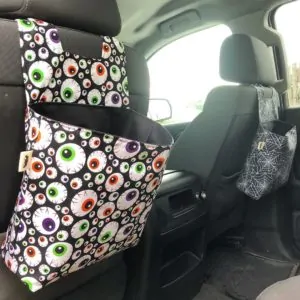
An excellent way to keep your car well-organized is by using a car organizer. There are many to choose from depending on what size you need. Some can be hung around the seats and have multiple pockets in various sizes.
Newer car models might have specialized compartments made for organizing. These are typically found in family cars.
2. Remove the Mats
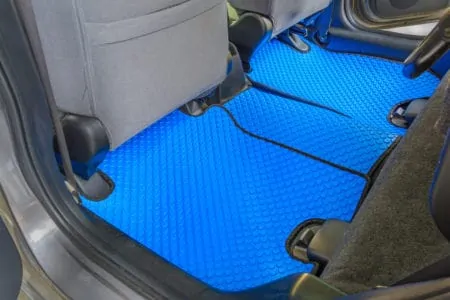
If you have floor mats in your car, remove and put them aside. We’ll be cleaning these later. You can, however, prepare the mats by giving them a rough shake to loosen dirt and dust.
3. Vacuum the Interior
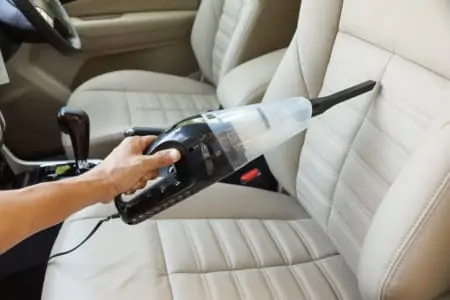
After decluttering the car, use a strong handheld vacuum, such as the Black + Decker Dustbuster. A cordless vacuum is the best choice to clean a car. This will give you more freedom to move around.
If you don’t have a handheld or cordless vac, try to park the car near an outlet or use an extension cord. Make use of the various attachments, such as the crevice tool to easily vacuum the carpet and get under the seats.
Pay close attention to corners and edges and reach under the pedals for a thorough clean.
4. Choose a Shampoo
Choose a good car carpet shampoo or cleaner to clean the carpet effectively. We highly recommend using a specialized cleaner such as this one from Chemical Guys.
If you can’t get your hands on a commercial product, laundry detergent can also do a thorough job.
5. Clean the Carpet
Start by reading the instructions provided by the carpet cleaner manufacturer. If it’s a spray, spritz the area directly. Concentrations should be diluted as required — do this in a spray bottle for easy application.
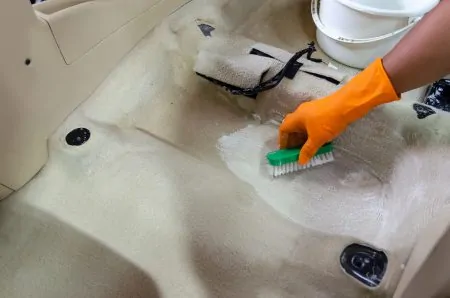
Allow the product to sit for as long as directed. Then use a stiff brush to work the cleaner into the carpet. Circular motions are best to bring out stains, dirt, and grease.
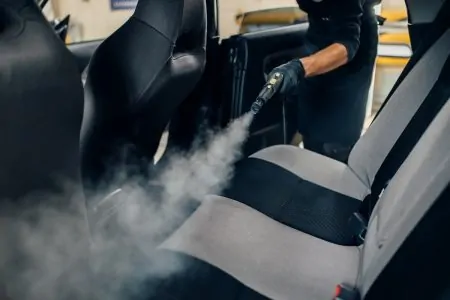
If your carpet is particularly dirty, you can use a steam cleaner or carpet cleaning machine to get an extra deep clean. Alternatively, use a portable carpet cleaner, such as the Bissell SpotClean, with a small attachment to fit inside the car.
These will apply water and shampoo deep into the fibers of the carpet. They will then use a strong suction to remove excess water and leave you with a nearly dry finish.
6. Rinse
After cleaning the carpet, use a damp cloth to wipe off excess water and cleaner. Try to get out as much of the shampoo as you can.
Keep It Light
7. Air Dry the Car
It’s essential to allow the carpet to dry fully to avoid mold or mildew growth. After drawing most of the water out using a cloth, open all doors and allow the car to dry in the breeze. If the car can stay in a sunny spot, this would help to speed up the process.
Leave the car for an hour, then come back and check on it. Feel in multiple places — if it’s still damp, let it dry for another hour or so.
Cleaning Stains from Car Carpets
A general clean using the above steps might remove stains. But if you have set-in specific stains like dirt, mud, drinks, or grease, you might have to use a particular method.
Keep reading for our favorite methods for tackling stains in car carpets.
Removing Set Dirt and Mud
Removing set dirt and mud is generally relatively easy and won’t require any special products. Fill a bucket with a gallon of hot water. Then add one cup of white vinegar and a few drops of dish soap. The acid in vinegar is excellent at cutting through dirt and grease.
Mix until well-combined, then dip a cloth or sponge in the solution and soak the stain. Use a stiff brush to scrub using circular motions. Finally, blot the area dry with a clean cloth or paper towels.
Removing Beverage Spills
Unseen bumps, sharp turns, and sudden stops can cause a few unfortunate spills. Luckily, stains such as coffee and soda are easily removed using cold water and paper towels.
Saturate the stain slightly with cold water, then blot the area dry using paper towels or a cloth. Allow the area to dry. Avoid using hot water as this will set the stain, making it even more difficult to remove.
Removing Grease Stains
Greasy stains on a carpet can be yucky, but you can easily remove them. Apply a small amount of paint thinner to a cotton cloth and scrub the stain using circular motions. Take a paper towel and blot out excess paint thinner.
Avoid Damage
Removing Ink
No one likes to discover ink stains on the car carpet, but this might be a regular occurrence if you have children. Don’t add one more worry to your plate; this one’s easy to remove.
Start by spraying the area with hair spray and sprinkle a small amount of table salt directly onto the stain. Use a damp cloth to rub it in circular motions before drying off the area with a towel.
Removing Vomit
Vomit can be a real struggle in a car. Someone might be feeling sick from a late night or simply car sick. Either way, vomit needs to be cleaned as quickly as possible since it can cause an unpleasant odor and damage the carpet.
For this, we recommend using a can or bottle of regular club soda. Pour it onto the area and scrub in circular motions using a damp cloth. The soda bubbles will help lift the stain, enabling you to remove it without fuss (2).
Dry the area with a towel or cloth when you’re finished.
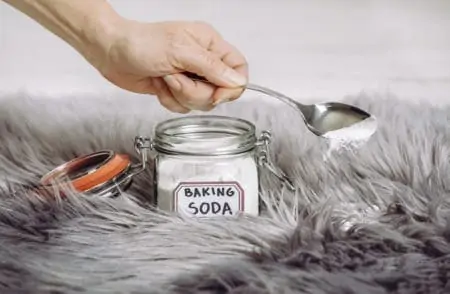
If you’re worried about the odor, you can also make a paste using equal parts of water and baking soda. Apply it to the area and leave it to sit for up to 12 hours. Baking soda is highly effective at absorbing odors.
Scrub it lightly with a cloth or brush, then remove it with a damp towel.
Removing Tough Stains
Some stains can be extremely persistent and difficult to remove — this calls for a stronger method. Combine equal parts of three percent hydrogen peroxide and non-gel toothpaste.
Hydrogen peroxide is a mild bleach that works effectively at breaking down color molecules in a stain (3). Mix both ingredients well until paste forms, then smear it onto the stain and leave it for five minutes.
Use a rag or an old cloth to rub the paste further into the stain. In the end, dab with a paper towel or cloth to remove excess paste.
Removing Blood Stains
If you’ve had an accident and a bit of blood has been spilled on the car carpet, you can use laundry starch to remove it.
Laundry starch is usually used to add body to fabrics and helps to protect them against soil. However, it’s also very effective at removing stains from a carpet.
Combine equal parts starch and cold water in a small container or bowl and mix until a firm paste is formed. Then cover the stain with the paste and allow it 30 minutes to work. End by scrubbing the area with a damp cloth and wiping away the excess.
Removing Pet Odors
Borax is commonly used around the house for various purposes such as stain removal and as a pesticide. As a salt of boric acid, borax is a powder and is actually alkaline (4).
To remove pet odors, simply sprinkle the entire carpet with a thin layer of borax. Leave it to sit for up to an hour, and the borax will absorb and neutralize any pungent smells (5).
Then vacuum the entire area to get rid of the powder. You can wipe with a damp cloth to remove excess powder.
If you don’t have borax, you can easily use baking soda the same way. Baking soda is also very effective at absorbing and neutralizing foul odors.
The white powder is alkaline. However, when in contact with acidic and alkaline molecules, it brings them together in a neutral state (6).
Quick Tip
How to Clean Floor Mats in a Car
Remember we told you that we’d be cleaning these later? It’s time! These require a different method from the car carpets, but you’re an expert by now. So it shouldn’t be a problem.
- Time: 45 minutes (plus drying time)
- Difficulty: Easy/Intermediate
1. Remove the Mats
After taking the mats out of the car, shake them vigorously to loosen dirt and dust. Then lay the mats out on a flat surface and vacuum them thoroughly to remove any hidden debris. Vacuum both sides of the mats to ensure a thorough clean.
2. Start at the Underside
Turn the mats over and use a garden hose to rinse them. If you don’t have a garden hose, you can use buckets of water or even take the mats inside to the bathroom. However, this will give you the extra task of cleaning the area off afterward.
To clean the underside thoroughly, apply a few drops of dish soap and scrub with a sponge or brush. Rinse the mats again to remove the soap.
3. Clean the Fabric
Once the underside is clean, turn it over and focus on the fabric side. If you have rubber or plastic mats, you can also use dish soap for this side.
To give this side a thorough clean, you can use the same carpet shampoo as you did in the car. However, make sure it’s safe for the upholstery to avoid residue or damage.
Saturate the mat with cold water from a hose or bucket and apply an appropriate amount of shampoo. Use a brush to work the product into the fibers using circular motions.
You might need to apply more shampoo to stubborn dirt or stains. To make the scrubbing easier, pour more water onto the mat in between scrubs. Rinse the mat well once it’s done.
4. Dry
To dry the mats, simply hang them outside in the fresh air. To speed up the process, you can use a wet/dry vacuum to extract excess water. You may also dry them with a towel before hanging them outside.
Be Patient
Quick Tips
Cleaning a car carpet isn’t as difficult as some people might think. You can get the job done without stress by following a few easy steps and using the right products and tools. Here are a few additional tips to ensure top results:
- Circular motions when scrubbing: As you scrub, the most effective method is to use circular motions. This will help get the cleaning product into the fibers and dissolve stains and dirt. By using back and forth scrubbing, you could be missing dirt.
- Take your time: If you’re in a rush, leave the car carpet for another time. Depending on how dirty it is, this task can take a few hours, so make sure you have the time. Before rinsing and drying the carpet, consider giving the stained areas an extra scrub. Set stains can be tricky to remove, especially if they’ve already been cleaned and dried but not fully removed.
- Test: Before applying any product or home remedy, give it a little spot test in an inconspicuous area. Apply it, give it a little rub and leave it for a few minutes — if there are any signs of damage or discoloration, avoid using it.
- Stay protected: If you’re using chemicals such as hydrogen peroxide, you must protect yourself. Hydrogen peroxide isn’t as harmful as other bleaches, but it can irritate and burn sensitive skin (8). So wear gloves and keep the car well-ventilated as you work.
FAQs

What Household Products Can I Use to Clean My Car Carpet?
You can use several household products to clean your car carpet. White vinegar and water is the most effective solution. For added cleaning power, add baking soda or dish soap.

How Do I Clean the Interior of My Car Without a Vacuum?
The best way to clean the interior of your car without a vacuum is to use a detergent-soaked sponge for the plastic trim and a dustpan and brush for the carpets.
For stubborn spots like oil and grease, use a toothbrush soaked in paint thinner or mineral spirits and work in circular motions. Take care because these chemicals can fade your carpet.

What Do Professional Car Detailers Use to Clean an Interior?
Professional car detailers use industrial steam cleaners to clean the interior. They use hot steam to lift dirt and stains, and come with an array of attachments for tricky-to-reach places.
Getting to the Bottom of the Car
Some people might say that a clean car is overrated, but we’d like to disagree. When you have a clean car, you have a clean mind. However, it can be difficult to keep it that way, especially with children and pets making a mess.
But a regular deep clean is often enough.
Keeping the car organized is another excellent way to keep the carpet free of stains. Limit food and beverages while driving and utilize floor mats to protect the carpet. When you notice a spill or stain, clean it immediately using one of the methods above. This will prevent it from setting.