A good, well-fitting bra is expensive and hard to find. You don’t want to accidentally destroy your bra by washing it incorrectly, but hand washing bras seems like such a chore. So today we’re discussing how to clean bras properly without spending an entire day on the chore.
Key Takeaways
- Hand wash bras using gentle laundry detergent and cool or lukewarm water, soaking for 15-20 minutes.
- Rinse bras under cool running water and gently squeeze to remove excess water.
- Dry bras by sandwiching them between two towels and pressing down, then hang them on hangers to air dry.
- Wash bras every 2-3 times they’re worn, and sports bras after every workout.
How Often Should You Wash Your Bra?
Bras need to be washed after you have worn them 2 to 3 times. Your body transfers its natural oils to the bra, plus your sweat gets absorbed by the bra’s fabric. Bacteria love these conditions and thrive. This can cause breakouts, rashes and infections. Washing your bra regularly will help prevent this from happening.
Sports bras need to be washed after every workout as you sweat during the exercise. Sweat penetrates the fibers and encourages the growth of bacteria.
How to Wash Bras Without Ruining Them
The safest and best way to wash your bras is to hand wash them using a gentle laundry detergent. This will protect the delicate fabric of your bra and extend its lifespan. Here’s how to hand wash a bra properly with detergent.
- Time: 30 minutes + 1 day to dry
- Difficulty: Beginner
What You’ll Need
- Gentle laundry detergent such as The Laundress: Delicate Wash
- 2 Towels
- Hangers
1. Make Soapy Water
Start by filling your sink with cool or lukewarm water. Don’t use hot water because the heat will break down the elastics in your fabric.
You will need to add a tablespoon of laundry detergent for every gallon of water in your sink. The goal is to have just enough soap to create a light lather as too much soap leaves a soapy residue on your bras that will attract dirt.
Swish the water until the detergent has dissolved into the water.
Quick Tip
You can mix the water with shampoo instead of a gentle laundry detergent to wash your bras.
2. Soak the Bras
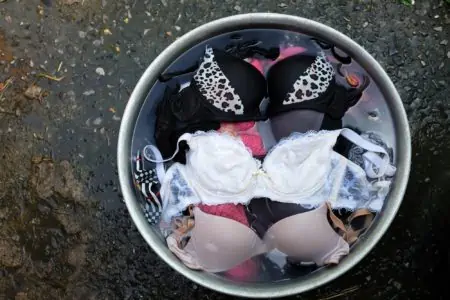
Immerse your bras in soapy water and let them soak for about 15-20 minutes.
3. Clean the Bras
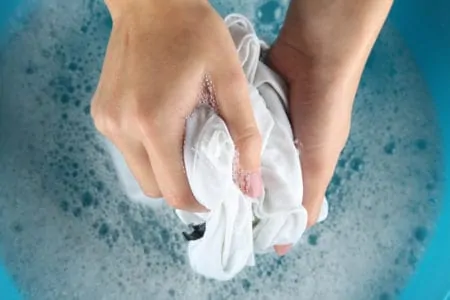
After your bras have soaked for 15-20 minutes, gently rub them between your hands. You are working the soap into the fabric to remove the sweat, dirt, and bacteria.
4. Rinse the Bras
After washing your bras, rinse them under cool, running water until all the soap has been removed and the water runs clear. Then gently squeeze but don’t wring or twist your bras to remove the excess water. Wringing and twisting the bras will stretch out the fabric.
5. Dry the Bras
After removing the excess water, lay one towel flat on a table. Lay the bras on the towel and place a second towel on top of them. Gently press down on the towels to remove as much of the remaining water in the bras as you can.
Hang your bras on a hanger to air dry. Be sure to allow them one or two days to dry.
How to Hand Wash Bras With Vinegar
If you’d like to avoid using a laundry detergent to hand wash your bras, vinegar is an excellent alternative. Not only will vinegar clean your bras, but it will also disinfect and brighten them as well.
Follow the same instructions for hand washing your bras, but you will need 1 cup of vinegar for 4 cups of water. Also, allow your bras to soak for 30 minutes instead of 15-20.
Make sure you rinse your bras thoroughly to remove the vinegar from them.
How to Wash a Bra In the Washing Machine
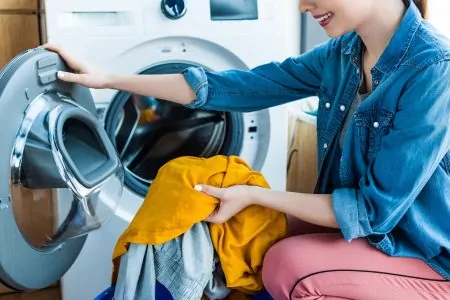
While hand washing may be the best way to wash a bra, you may not have the time to do more than toss your bra in the washing machine. You will need a washing bag to wash your machine-washable bras. The bag will protect your bras in the machine and help them keep their shape.
What You’ll Need
- Gentle laundry detergent such as The Laundress: Delicate Wash
- Mesh or lingerie bag
- 2 towels
- Hangers
1. Set the Wash Cycle
Ensure that you use cold water and the delicate cycle on your machine. This will allow your machine to gently wash your bras without damaging them.
Add the appropriate amount of laundry detergent as specified by the manufacturer, to your machine.
Quick Tip
Don’t use fabric softner when washing your bras as it tends to leave a residue behind.
2. Place Bras in Bag
Hook the back of your bras together to prevent the hooks from snagging or hooking onto something while your bras are being washed.
Put your bras in your mesh washing bag. Close the bag and make sure that it’s properly closed so it won’t open while your bras are being washed.
Place the bag in the washing machine and start the wash cycle.
3. Dry the Bras
After your bras are washed, it is time for drying them.
You may be tempted to throw it in the dryer but the intense heat will damage the fabric, so don’t do it. Instead air dry them.
To air dry your bras start by laying one towel on a flat surface near your washing machine. Pull your bras out of the washing machine and remove them from the bag. Gently squeeze the bras to remove any excess water. Do not twist or wring your bras as this may warp and damage the fabric.
Lay the bras on the towel. Place the second towel on top of the bras so that you have a sandwich with the towels on the outside and the bras in the middle. Push down on the layers to remove as much of the excess water as possible. The towels will absorb the excess water from your bras.
After you’ve removed the excess water, hang the bras on hangers to dry.
Quick Tip
Molded cups can loose their shape in the wash. To fix this simply reshape the cups with your hands before hanging them up to dry.
How to Wash a Bra Without a Mesh Bag
There are times when you don’t have a mesh laundry bag available. There is a simple solution, use a pillowcase instead. To keep the bag closed during the wash cycle use some safety pins.
Can You Put Bras In a Dryer?
You should never put a bra in the dryer because it produces intense heat that will damage your bra’s elastics and delicate fabric. The heat may also affect the fit of your bras.
How to Dry Bras
After washing the bras, gently squeeze them to remove any excess water lingering in them. Do not wring or twist the bras which may cause them to stretch.
Place a towel on a flat surface, lay your bras on the towel, and stack a second towel on top of the other layers. Gently press down on the top towel to squeeze the excess water out of your bras and into the bottom towel.
Finish by hanging your bras on hangers or a clothesline in a well-ventilated area to dry over the next 1-2 days.
Tips For Caring For Bras
These washing hacks for correctly storing and caring for your bras will help to increase the lifespan of your bras.
- Don’t shove and force your bras into a drawer.
- To help your bras keep their shape avoid folding one cup into the other unless it’s an all-lace bra. Instead, lay your bras flat or stand them up so they can retain their shape.
- Always use a delicate wash cycle or hand wash your bras. You can also try using a salad spinner to wash your bras. Place your bras, a tiny amount of soap, and just enough water to cover the bras in the salad spinner. Spin it slowly. When done washing, replace the soapy water with fresh water to rinse your bras. Spin again. Repeat the rinsing step to ensure that all of the soap has been removed. Finish by spinning your bras in the salad spinner (without any water) to remove the excess water. Hang the bras up to dry.
- Rinsing your bra, especially your sports bra, in the shower. This will remove sweat from the bra. Hang your bra up to dry after it’s rinsed.
- Rotate your bras daily instead of wearing the same one a few days in a row.
When to Replace a Bra
Bras typically last about 8 months before they need to be replaced. You’ll know it’s time to replace your bra when the bra doesn’t fit as well as it originally did. Also, replace your bra when it has loose bands or damaged hooks.
FAQs

How Do You Remove Sweat Stains From Bras?
Mix equal parts of hydrogen peroxide and baking soda to make a paste. Spread the paste over the sweat stains on your bras and let it sit for an hour. Then remove the paste and hand wash your bras as you normally would.

How Do You Remove Deodorant Build Up From a Sports Bra?
You can remove deodorant build-up from a sports bra by grabbing an old, used dryer sheet and rubbing it against the deodorant build-up until it’s removed. Then let your bra soak in vinegar water for 30 minutes to an hour before washing your bra.

How Do You Whiten Yellowed Bras?
Soak your yellowed bras in vinegar water for 20-30 minutes. Hand wash the bras as you normally would, and then hang them in direct sunlight. The UV rays from the sun will whiten your bras as they dry.

How Do You Wash a Padded Bra?
Padded bras need to be washed by hand so that you don’t damage the padding and wires in the bra.