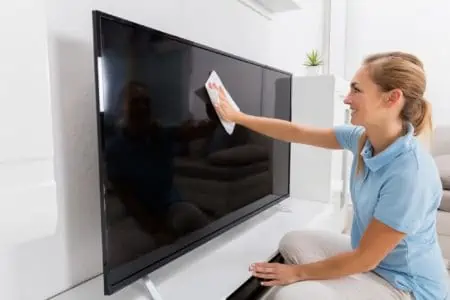
Nothing is worse than trying to watch your favorite television show on a screen that’s covered in fingerprints. However, you can’t grab a bottle of Windex to clean a big flat-screen television without damaging it. So today we’re discussing how to clean a TV screen safely so you can enjoy streak-free television viewing.
Key Takeaways
- Clean TV screens with a microfiber cloth and a solution of equal parts white vinegar and distilled water, or a specialized screen cleaner.
- Avoid using isopropyl alcohol with more than 50% alcohol or Clorox wipes, as they can damage the screen or strip the anti-reflective coating.
- For stubborn spots, use a diluted mixture of distilled water and mild dish soap with a microfiber cloth, being careful not to press too hard.
- Keep your TV screen clean by cleaning it weekly, using a microfiber cloth to remove dust, and avoiding ammonia, alcohol, or acetone-based products.
What to Use to Clean TV Screen
You will need to be careful about what you use to clean your TV screen. Modern TVs are made with a soft plastic screen that can be easily damaged. Using the wrong substance on your screen could fog, discolor, or scratch it.
Microfiber Cloth
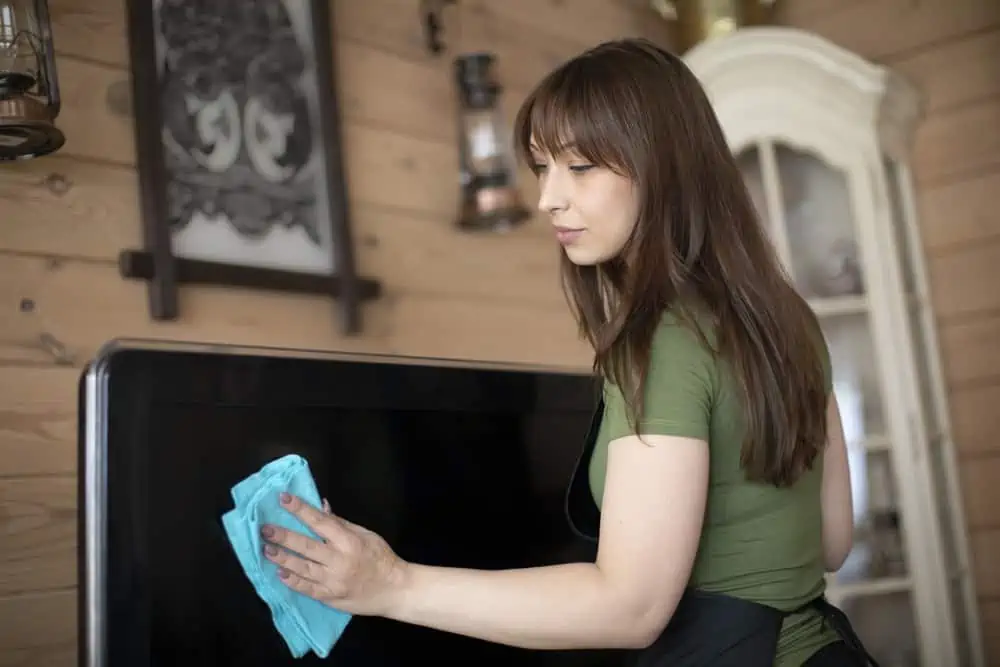
A microfiber cloth is an excellent material to use to clean TV screens. The cloth is woven with small fibers which makes the pressure more even. This reduces the chance of accidentally scratching or damaging your screen.
Vinegar and Water
You can make a solution of equal parts of white vinegar and distilled water. The distilled water will prevent your screen from looking dirty as a result of residue from hard water.
Dip your microfiber cloth into the solution and wring it out. Use the cloth to gently clean your TV screen. Make sure you don’t push too hard as that will damage the screen. Wipe it dry with a dry rag.
Isopropyl Alcohol
Avoid using an isopropyl alcohol solution that’s more than 50% alcohol, as it may damage your screen by causing the screen to become fogged or discolored, or even stripping the anti-reflective coating. Instead, dilute the isopropyl alcohol with distilled water before you clean your TV screen with it.
Dish Soap
You can use a very small amount of dish soap dissolved into water to clean your TV screen as well. Make sure the ratio is no more than 1 part of dish soap to 100 parts water.
Dip the microfiber cloth into the soapy water and wring it out well. You don’t want any excess water dripping on your TV.
Use the cloth to gently clean your TV screen. Use a clean and dry cloth to dry the screen when you’ve finished cleaning it.
Cleaner Kits
Cleaner kits such as WHOOSH! Screen Cleaner Kits are made for cleaning TV screens. They come with a cleaner that’s been specially formulated for use on electronic screens along with microfiber cloths. You can safely clean your television screens with these kits.
Electronic Wipes
Electronic wipes such as EVEO Electronic Wipes are designed to clean all your electronic equipment without damaging the screens or circuitry. They’re easy to use as you simply pull a wipe, wring it to make sure it won’t drip fluid and clean your screen.
Best Way to Clean Different TV Screens
The modern soft plastic screens need to be cleaned differently from the older glass screens that were used on tube televisions in the past. Here are the specific instructions for the best way to clean a TV screen even if it’s a 4K screen.
LCD, LED, or OLED Screens
These screens will be damaged if you attempt to use traditional wet cleaning on them. Instead, you will need to use a microfiber cloth or electrostatic duster to remove the dust, lint, and pet hair.
If you have stubborn spots or smudges, spot clean them with the premoistened electronic wipes. Then use a microfiber cloth or duster to go over the buttons and the back of the television. Your goal is to remove all of the dust in the vents.
Plasma TV Screens
Plasma TV screens need you to use the same dry cleaning methods that you use for the LCD, LED, or OLED screens. That’s because they have anti-glare coatings that may be damaged by traditional cleaning products.
Tube TVs
Tube TVs are made with a thick glass screen that will not be damaged if you clean it with a standard glass cleaner.
To clean the screen of a tube TV at home, spray a microfiber cloth with your favorite glass cleaner. Never spray the screen directly as the liquid may damage the set or the surrounding cabinetry. Make sure the cloth is lightly dampened rather than dripping wet.
Then wipe the screen with a damp cloth. You can use a fingernail or toothpick to gently scrape any spots or stuck-on bits that you can’t wipe clean with the cloth.
When the screen is clean, wipe it dry using a dry microfiber cloth.
How to Clean a TV Screen Without Streaks
Nothing is worse than a TV screen that’s covered with streaks. Here’s how to clean your TV without leaving annoying streaks behind.
- Time: 5 minutes
- Difficulty: Beginner
What You’ll Need
- 2 Clean and dry microfiber cloths
1. Turn Off the TV
Turn your television off as it’s easier to see any streaks or smudges on a black screen.
2. Wipe Screen Horizontally
Use the first clean and dry microfiber cloth to wipe your screen horizontally, doing your best to clean the entire screen. Make sure you turn your cloth often as it will pick up dust from your screen.
3. Wipe Screen Vertically
Now, wipe the screen vertically using the second microfiber cloth. Again, do your best to thoroughly clean the screen. Turn your cloth often so that you’re cleaning your TV screen with a clean cloth.
Your TV should be smudge and streak-free now.
How to Clean TV Remotes
TV remotes get quite a bit of use over the course of each day as family members change channels. They can get quite dirty and should be cleaned.
- Time: 10 minutes
- Difficulty: Beginner
What You’ll Need
- Disinfecting wipes
- Toothpicks
1. Remove Batteries
Open the cover on the battery compartment to remove the batteries. Replace the cover once the batteries are removed.
2. Tap Remote
Turn the remote over so the button side is facing the ground. Tap the remote gently on a table to dislodge any loose crumbs or debris that may be stuck in the various crevices or between the buttons.
3. Wipe Remote
Use a pre-moistened disinfecting wipe to clean both sides of the remote. Make sure to wring the wipe before using it, to be sure that it’s not dripping wet.
4. Clean Buttons
Use a toothpick to gently clean the crevices between the buttons and any narrow spaces. You can also use toothpicks to remove any stuck-on goo.
5. Dry Remote
Allow the remote to completely dry before you replace the batteries.
How to Clean TV Speakers
In addition to cleaning a TV screen, you will also need to clean the speakers as well. This will protect the sound quality of your television.
- Time: 5-10 minutes
- Difficulty: Beginner
What You’ll Need
- Lint roller
- Vacuum
1. Remove Fabric Covers
Some speakers come with removable fabric covers. If your speakers include removable fabric covers, remove them at this time.
2. Vacuum Speakers
Vacuum the covers with your upholstery tool to remove any lint, dust, or pet hair that’s stuck. You can also roll the lint roller over the speaker covers to remove any dirt on the covers.
If the covers are unable to be removed, use the lint roller to remove particles and then use the vacuum to remove any dust from the front of the speakers.
3. Replace Speaker Covers
When you’ve removed the dust, lint, and pet hair from the speaker covers, replace them on your speakers.
Pro Tip
Some speakers do not include speaker covers but are rigid and screenlike. Clean these speakers by wiping them with a damp and well-wrung microfiber cloth. Allow the speakers to dry.
How to Clean Stubborn Spots Off TV Screen
TV screens can develop hard-to-remove stains on them. You will need to avoid using acetone, toluene, and ammonia on the screens as the chemicals may permanently discolor or fog the screens. The only exception is a tube TV which has screens made from glass.
Make a diluted mixture of distilled water and mild dish soap. You only need a drop or two of dish soap in the water. Dip a microfiber cloth into the soapy water and gently clean the screen.
Don’t press too hard as you may scratch or damage the screen. After you’ve removed the stubborn spots, go over your screen with a dry cloth to remove any streaks that may be left.
Tips For Keeping TV Screens Clean
If you’d like to enjoy smudge and streak-free TV viewing, then here are a few tips you should follow to keep your television screen clean.
- Clean your TV screen weekly to help keep smudges and fingerprints from building up on the screen.
- Keep a microfiber cloth next to your TV so you can easily remove any dust or grime when you discover it.
- Never spray anything directly on your television as this can damage the internal workings of the TV.
- You can use your vacuum’s soft brush to remove dust from the vents, ports, and cables.
- Avoid using products that contain ammonia, alcohol, or acetone. These chemicals may damage your screen.
FAQs

What is the Best TV Screen Cleaner?
The best TV screen cleaner is vinegar and distilled water or a dedicated screen cleaner like this WOOSH! Screen Shine. It is formulated for TV screens thanks to its gentle cleaning action.

Can I Use Glass Cleaner On My TV?
You can use glass cleaner on your TV screen, provided you use a microfiber cloth and only rub gently. If you press too hard, you risk damaging the screen.

Can You Use Clorox Wipes On a TV?
You can’t use Clorox Wipes on a TV because they contain high levels of isopropyl alcohol, which can fog or discolor the screen. It could also strip the anti-reflective coating.

Can You Use a Coffee Filter to Clean a TV?
You can use a coffee filter to clean a TV. The paper filters are excellent for trapping dust and microscopic debris and they last a long time before they need to be replaced.

How Do You Fix a Scratched TV Screen?
The best way to fix a scratched TV screen is to use petroleum jelly. Dampen the screen with water, wait for it to dry, and apply the petroleum jelly to the scratch. Wipe it clean and leave it to dry.
How to Clean a Flat Screen TV
If you have a Smart television, no matter if it’s a Samsung or LG TV, you need to know how to safely clean your flat-screen TV, as normal glass cleaners will damage the screen. You will need to use a couple of dry microfiber cloths to remove all the dust and streaks from your screen. Wipe the television horizontally and then wipe it a second time, vertically.
Now, you should be able to enjoy streak-free television viewing again.