Shag rugs have a long and luxurious pile that feels marvelous under your feet. They’re a beautiful and fuzzy accessory to have in your home. The problem is that the pile makes it difficult to clean and vacuum shag rugs.
So today let’s chat about how to clean a shag rug.
Key Takeaways
- Clean a shag area rug by taking it outside, shaking or beating it to remove dust, and leaving it in the sun for a few hours.
- Vacuum shag rugs weekly without a beater bar or powerhead, and clean the underside monthly using a beater bar.
- Use dry shampoo or steam cleaning for deeper cleaning, and attend to stains quickly using dish soap, white vinegar, or baking soda.
- Hiring a professional to clean your shag rug can save time and help maintain the rug, with costs typically between $4 and $10 per square foot.
Is a Shag Rug Hard to Keep Clean?
Shag rugs are slightly more complicated than a regular rug to keep clean. However, once you’ve settled into a cleaning routine you’ll find that a thick shag rug is easy to maintain.
If a shag rug has only light use, you may get away with only vacuuming it once a month. Most shag rugs will need to be vacuumed weekly. However, a shag rug that sees heavy use by kids and pets may need to be vacuumed daily.
You should also plan on deep cleaning your rug once or twice a year.
Types of Shag Rugs
There are several different types of materials used to make a shag rug. Each of the materials requires a different method to maintain and clean the rug.
Acrylic
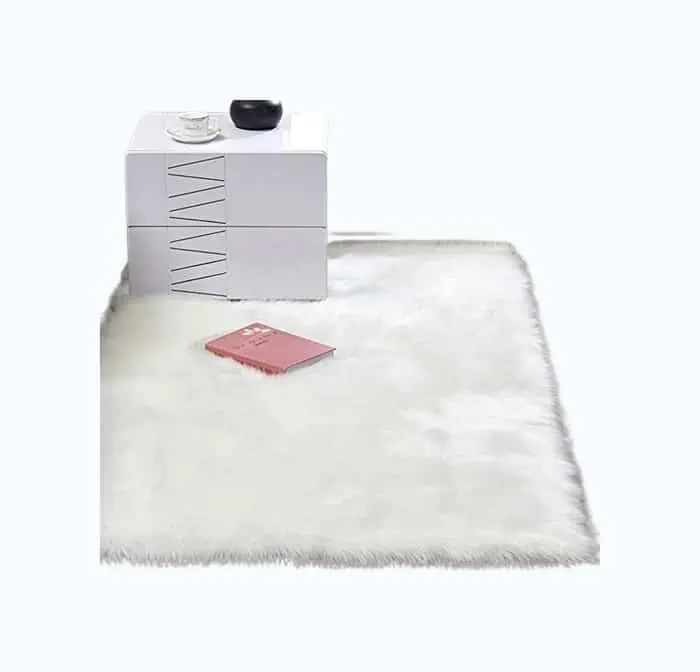 Acrylic is a man-made fiber similar to polyester. However, it gives the appearance and feel of wool. It dyes well, so you’ll find it used in rugs with striking colors. It also has good stain resistance.
However, this soft and luxurious rug has poor fire resistance. Although acrylic rugs are usually treated to improve fire resistance, it’s a good idea to place them well away from the kitchen and fireplaces.
Wool
Wool rugs are expensive, warm, and have an attractive appearance. They’re also strong, soft, and durable. Wool rugs absorb moisture so they’re a natural air filter.Flokati
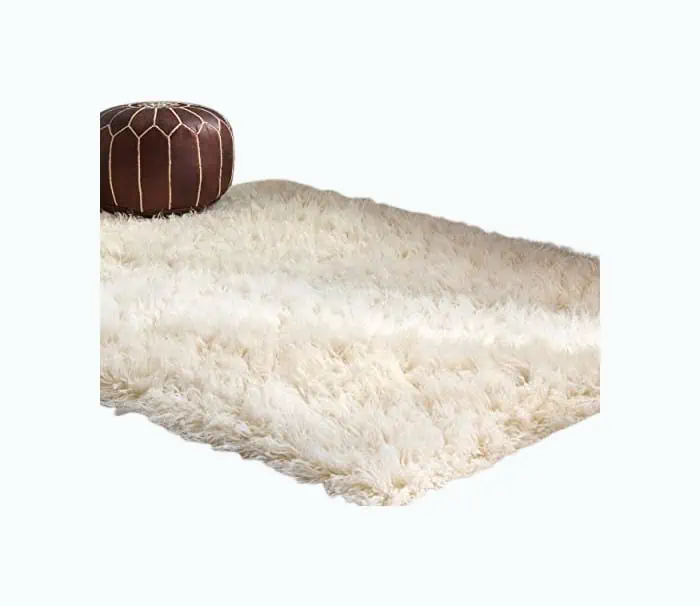 Flokati rugs are 100% wool rugs that are usually cream or white, although occasionally you may find one that’s been dyed. Flokati rugs have a unique look to them that’s different from other wool rugs. Traditionally the flokati rug was placed under a waterfall which caused the wool to tighten until it became fluffy.
The look is different from a wool rug that has been woven or knotted into shape. To maintain your beautiful flokati rug, you’ll need to clean it on a regular basis.
Leather
Leather rugs are easier to clean than the other types of rugs. You just need to use leather cleaner on them. Be sure to place them in an area with low to medium traffic.Also keep their contact with food, liquids, and animals to a minimum.
How to Clean a Shag Area Rug
Shag area rugs can be cleaned at home. You’ll need to check the rug care first to be sure you’re using the proper care techniques for your rug.
- Time: 30 minutes – 1 hour
- Difficulty: Beginner
What You’ll Need
- Rail or sawhorse
- Broom
- Vacuum without beater bar or powerhead
- Vacuum with a beater bar
- Dry shampoo
- Dish soap
- White vinegar
Dust Removal
You can clean a small rug without a vacuum and remove the dust by shaking or beating it outside.
1. Take Rug Outside
First, take your area rug outside to clean it. You’ll want to choose a sunny day as the sun rays will kill bacteria and dust mites. You also won’t run the risk of rain soaking your area rug.
2. Beat or Shake Rug
A small area rug can be shaken until the dust stops flying out of the rug. A larger rug will need to be hung on a rail or sawhorse. Then beat the rug with the side of a broom until there is no more dust coming out of the rug.
3. Leave Rug Outside
Leave your rug outside in the sun for several hours. The sun will help to disinfect the rug and kill any dust mites hiding in it.
4. Clean the Floor Under the Rug
While the rug is outside in the sun, clean the floor underneath the rug. Sweep and mop the area. Wait until the floor is dry before returning the rug to its original position.
Also, shake the rug pad outside to remove any dirt and dust on it.
With a Vacuum
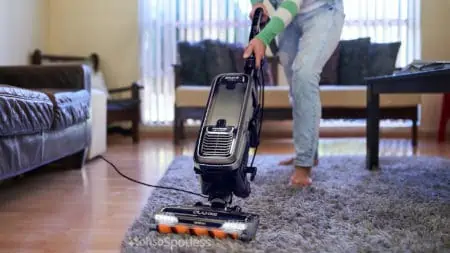
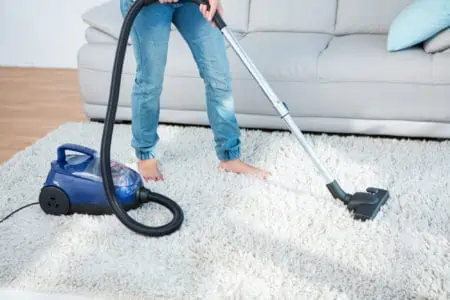
Most people will need to vacuum their rug weekly. However, a rug that receives heavy use will need to be vacuumed daily. If the rug is rarely walked on, you can wait and only vacuum the rug once a month.
1. Prepare the Vacuum
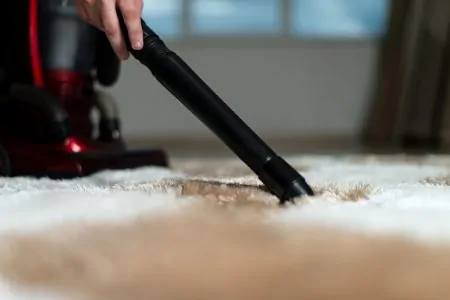
The first step is to set your vacuum head for a high pile if that’s an option. A shag rug needs extra room between the vacuum and rug.
Also, remove the vacuum beater bar or powerhead. The whirling action will damage the shag by pulling out or tearing strands.
2. Vacuum Top
Vacuum the top of your shag rug doing your best to suction out dirt. You may need to vacuum an area 2 or 3 times to remove all the dirt.
3. Flip Rug Over
Vacuum the underside of the rug every month or as needed. To vacuum the underside, you will use the beater bar on your vacuum. This will allow you to remove more dirt.
You may need to stand on the edge of a small rug and push the vacuum towards the center to keep the rug from being sucked up. If the suction is too strong, remove the powerhead.
4. Flip Rug Over to Top
Flip the rug back over so the top is on top again. You’ll need to vacuum the top one more time without the beater bar or powerhead to remove any dirt that was loosened when you vacuumed the underside of the rug.
With Dry Shampoo
If you’d like to do a deeper clean on your rug or remove any odd odors it’s picked up, consider cleaning your rug with dry shampoo.
1. Sprinkle Rug
After you’ve vacuumed the rug to remove the dirt, sprinkle your rug evenly with dry shampoo.
2. Brush Granules into Rug
Work the dry shampoo granules gently into the rug. You can use your vacuum’s cleaning head bristles to do this, but don’t turn on the vacuum. Let the rug sit for an hour.
3. Vacuum
After you’ve waited an hour, vacuum up the dry shampoo. Go over the rug several times so you can be sure you did a thorough job and vacuumed up all of the granules.
Steam Cleaning
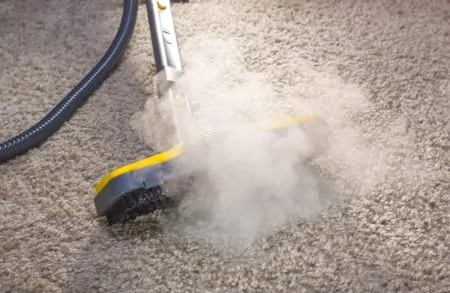
Another option is to steam clean your shag rug. You’ll only need to steam clean your rug once or twice a year.
Be extra cautious when steam cleaning your shag rug. If you steam too close or for too long the fibers can become soaked and not dry properly. This could cause damage to your rug.
1. Rent Steam Cleaner
First,if you do not have a steam cleaner, rent one from a local rental shop or grocery store.
2. Steam Clean Shag Rug
Follow the directions on your steam cleaner and your rug’s care tag to steam clean the long hair of your shag rug. You’ll want to make sure that your rug does not become too wet.
In general, you should hold the steam cleaner about 6 inches above the rug as you don’t want the fibers to become soaked. Use long motions and be careful not to hold the steam clean above any specific area for more than 5 seconds.
3. Dry Rug
Dry your furry rug. Use a fan to blow air across it as the plush of the shag rug will soak up quite a bit of water and can stay wet a long time. Using a fan will help cut down on drying time.
Stain Removal
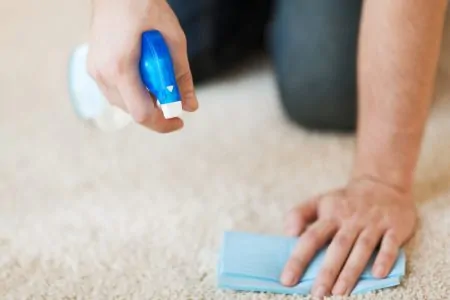
If your rug becomes stained, you’ll need to clean it as soon as possible to prevent the stain from soaking into the fibers. Make sure that you use a white microfiber cloth when removing a stain as a colored microfiber cloth may dye your rug. You can use a paper towel instead too.
1. Blot Area
Use a paper towel or white cloth to blot up as much of the stain as possible. Don’t scrub as this will only work the stain into the fibers. If you can, use a spoon or spatula to lift the stain from your rug.
The exception is mud. If you have mud on your rug, wait until the mud has dried, and then brush it off your rug.
2. Clean Stain
Add a squirt of dish soap to a bowl of water, then use this solution and a cloth to blot up the stain. Another option is to use a 1:1 ratio of vinegar and water. Again, use the solution and a cloth to carefully blot up the stain.
Allow the area to air dry.
3. Baking Soda
Sprinkle baking soda over the stain and allow it to sit for 30 minutes. Then brush the baking soda off your rug.
Tips to Make a Shag Rug Fluffy Again
If your rug is losing its fluff, there are a couple of steps you can take to make it fluffy again.
Steam Rug
To revive your rug, you can steam your rug by taking a slightly damp towel and laying it on your rug. Then run a warm but not hot iron over the towel. This will steam, but not clean, your rug and help to revive the shag.
Rake Rug
Another option is to rake your rug. You can use a carpet comb or a fork to go over your rug and rake the fibers up again. It will help to loosen debris and improve the look of the fibers.
How to Care For a Shaggy Rug
There are a few do’s and don’ts you should follow when caring for a shag rug. These will help you maintain your rug for years.
Do’s:
- Vacuum your rug slowly, row by row.
- Spot clean immediately with vinegar.
- Keep the floor under your rug dust-free.
- Place your rug in low-traffic areas.
- Remove your shoes before walking on your rug.
Don’ts:
- Don’t eat or drink on your rug
- Don’t use a hot air dryer on your rug
Is it Worth Hiring a Professional?
It’s often worth the added expense of bringing in a professional to clean your shag rug. Excessive vacuuming and stain treatment may damage a shag rug. A professional will know how to treat your rug without damaging it as they’re cleaning it and removing difficult stains.
In addition, a professional will save you time and will also help maintain your rug so it will last longer.
The cost is usually between $4 and $10 a square foot.
FAQs

Can You Use Carpet Cleaner on a Shag Rug?
Yes, you can use dry carpet shampoo on most shag rugs. The various dry shampoos use different formulas. Make sure that your specific dry shampoo is safe for your carpet as some are best for wool and others best for acrylic.

Can You Wash a Shaggy Rug In the Bath?
Yes, you can wash a small shaggy rug by hand. If it fits in your tub you can use it.
Fill a tub with warm water and a detergent that’s safe for your rug. Place your rug in the tub and let it sit for 10 minutes.
After the 10 minutes are finished, scrub your rug to remove the stains with a clean, white microfiber cloth. Then rinse the rug and remove as much moisture as you can. Hang the rug outside in the sun to dry.
How Do You Get the Smell Out of a Shag Carpet?
Baking soda is a great way to get a smell out of a shag carpet. Simply sprinkle the baking soda evenly over the entire rug. Wait at least 4 hours, or you can even leave it overnight before you vacuum up the baking soda.

How Do You Dry a Wet Shaggy Rug?
If you have a small rug, hang it over a clothesline in the sun after removing as much moisture as possible from your rug.
You can also use a fan and a dehumidifier to dry your wet shag rug. Use a dehumidifier to help remove the moisture. Then turn on ceiling fans, set up floor fans pointed at the rug, and even pull out your hairdryer to help dry your fan.
When done, check your rug pad and the floor underneath the rug to make sure that they’re dry as well.
Another option is to use baking soda to help dry your rug, as baking soda will attract moisture. Just sprinkle a generous amount of baking soda over your entire rug and then wait 30 minutes before vacuuming it up.

Can You Put Baking Soda on a Shag Rug?
Yes, baking soda is safe to use on your shag rug. It will brighten and deodorize your rug, keeping it smelling fresh.

What is the Best Homemade Carpet Cleaning Solution?
One of the best homemade carpet cleaning solutions includes white vinegar, dry shampoo, and dish soap.