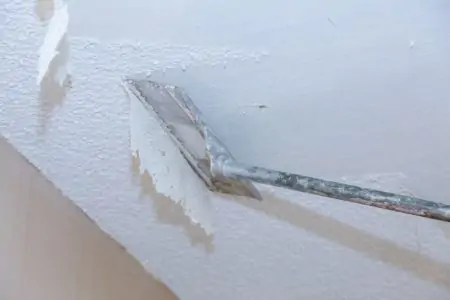
Popcorn ceilings were popular between the early 1940s and the late 1970s, as the finish was easy to spray onto the ceiling, hid mistakes, and dampened sounds. These ceilings are also known as stucco, acoustic, or cottage cheese ceilings.
The problem is that a textured ceiling is not easy to clean. So let’s explore how to clean a popcorn ceiling without damaging the texture.
Key Takeaways
- Test popcorn ceiling for asbestos before cleaning, as it can cause health problems.
- Use a vacuum with a brush attachment or a lint roller to gently remove dust from the ceiling.
- Address stains by identifying the type and using appropriate cleaning solutions.
- Consider repainting or removing the popcorn ceiling if cleaning doesn’t sufficiently remove stains.
Preparing to Clean a Popcorn Ceiling
When you’re ready to clean your popcorn ceiling, first find out if your ceiling contains asbestos as many popcorn ceilings contain between 1% and 10% asbestos. Asbestos can cause serious health problems. Also, cleaning the popcorn ceiling may release asbestos into the air, so it’s wise to test your ceiling for asbestos before you begin.
Plan to cover your furniture with a plastic tarp or drop cloths. It’s a good idea to wear a dust mask and goggles. Popcorn ceilings are delicate and the textured bumps break off easily, so you’ll want to protect yourself and your furniture against the falling pieces.
How to Get Dust Off Popcorn Ceiling
There are several ways to clean a dirty popcorn ceiling. Be careful as you work. Popcorn ceilings are delicate and pieces break off easily.
- Time: 30 minutes
- Difficulty: Beginner
What You’ll Need
- Plastic tarp or dust cloth
- Vacuum cleaner + attachments
- Lint roller or duct tape
- Long-handled paint roller
- Step ladder
1. Prepare Room
The first step when you’re cleaning a popcorn ceiling is to prepare the room. Gather your tools, cover furniture with drop cloths or plastic tarps, and put on a dust mask and goggles. Dust will be falling which is unpleasant to breathe and even worse to get in your eyes.
2. Remove Dust
To remove the dust from the ceiling, use an extension tool or step ladder. The extension tool will allow you to reach the dusty ceiling from where you stand on the floor. A step ladder will also work, but be careful not to overextend yourself and fall.
There are three common methods used to remove the dust from a popcorn ceiling.
Vacuum
Use a vacuum and the attachment which has the widest brush and no hard plastic parts. The hard plastic parts may damage paint or knock-off pieces of the popcorn ceiling.
Then, gently run the vacuum across the ceiling. Make sure that you don’t press too hard so you don’t damage the delicately textured ceiling.
Broom
A broom can also be used to clean a popcorn ceiling. Turn the broom around and then sweep the ceiling with the brush. Again, you’ll need to be careful not to damage the ceiling.
Lint Roller or Duct Tape
Another option is to use a sticky lint roller to remove the dust from the ceiling. Use a lint roller with a 3 extendable pole, so you won’t need to use a stepstool.
Roll it gently across the ceiling. The lint roller will pick up the dirt as it rolls. Pull off the lint roller sheets as they lose their stickiness.
Duct tape can also be applied to a paint roller with an extendable pole. Make sure that the sticky side is facing out as that’s what will be picking up the dust. Then roll it across the ceiling to pick up the dirt and dust.
3. Remove Cobwebs
If you have cobwebs on your ceiling or in the corners, you can use a feather duster or broom to remove them. Another option is to place a tube extension on your vacuum to vacuum the cobwebs away.
How to Clean Popcorn Ceiling Stains
After you’ve dusted your ceiling, you may notice some staining or that the popcorn ceiling looks dirty. As there are several types of stains that often appear on popcorn ceilings, you can’t apply a one-fits-all type of solution. Instead, determine the type of staining you have so you know what type of treatment to use.
- Time: 3 hours – overnight
- Difficulty: Beginner
What You’ll Need
- Dish soap
- White vinegar
- 3% hydrogen peroxide
- Bleach
- Water
- Bowl
- 1 microfiber cloth
- Step ladder
- Spray bottle
A few points to keep in mind before you treat your entire ceiling for staining.
- Test the treatment in a hidden area to make sure that it doesn’t stain or damage your ceiling.
- Don’t put too much moisture on your ceiling as it will damage the popcorn and might cause it to fall.
- Make sure that you allow your ceiling enough time to dry thoroughly before each treatment.
- If you have a ceiling fan, turn it on after each treatment to help with the airflow as the ceiling dries.
Dirty Looking Popcorn Ceiling
If your popcorn ceiling looks a little dingy after you’ve dusted, you can brighten it up by using an all-purpose cleaner for popcorn ceilings. Mix 1 cup of white vinegar with 1 cup of cold water.
You have two options for applying the mixture, the first is to place the mixture into a spray bottle. Use the spray bottle to mist the ceiling and allow it to air dry. Once it’s dry, repeat as needed.
The second option is to put the mixture in a bowl. Then use a microfiber cloth to dab it on the ceiling and remove the dirt.
Kitchen Grease
If you have kitchen grease on your ceiling, mix 1 cup of water and 1 teaspoon of dish soap in a bowl. Then use a microfiber cloth to carefully apply the mixture to your ceiling to lift the stains, by dipping your microfiber cloth into the mixture, wringing out your cloth, and dabbing it on the ceiling.
Avoid scrubbing the ceiling as this will damage the popcorn finish.
Water Stains
To remove water stains, you’ll mix 1 cup of warm water with 3 tablespoons of bleach in a spray bottle. Then carefully mist the area with the stain and allow it to dry by waiting several hours.
If needed, add more bleach and allow it to dry overnight. Again, be careful not to soak your ceiling.
Cigarette Smoke
Try using soap and water to remove the cigarette smoke following the directions to remove kitchen grease. If this doesn’t work, you can try using hydrogen peroxide.
First, put 3% hydrogen peroxide in a spray bottle. Then mist the ceiling with hydrogen peroxide. Allow the ceiling to air dry.
Black Mold
Before you remove black mold, you will first need to find out why the black spots are there. It will come back if you don’t fix what caused the black mold to appear in the first place.
If the mold is extensive, call a professional to remove it. Otherwise, put a fungicidal cleaner in a spray bottle and make sure that your room is well ventilated. Wear a mask or respirator.
Mist the black mold with the fungicidal cleaner. Allow it to dry and then repeat as needed.
Repainting or Removing a Popcorn Ceiling
Sometimes cleaning the ceiling doesn’t do an adequate job of cleaning up the stains. It might be time to consider repainting or removing your popcorn ceiling.
- Time: Weekend
- Difficulty: Intermediate
What You’ll Need
- Plastic tarp or dust cloth
- Paint sprayer or thick-nap paint roller (¾ inches thick)
- Stain-blocking oil primer
- Flat ceiling paint that matches ceiling color
- Step ladder
- Spray bottle with water
- Scraper
Repainting the Popcorn Ceiling
Since you’ve removed the surface dust, you’re ready to paint. Use a soft thick-nap paint roller that’s at least ¾ inches. You can also use a paint sprayer to paint your ceiling.
Be aware that the popcorn texture adds surface area so you will need more paint than you think.
First, apply a stain-blocking oil primer to your ceiling. After that, paint 2 coats of flat ceiling paint over the primer. Make sure that the flat ceiling paint you’re using matches the ceiling color.
Also, give your ceiling plenty of time to dry between each layer of paint.
Remove the Popcorn Ceiling
Don’t try to remove all the popcorn from the ceiling at one time, instead work in 4-foot by 4-foot squares.
First, you will need to spray the area with water to moisten the popcorn. Don’t soak it all the way through as you’ll damage the drywall. Wait 15 minutes and then begin scraping the ceiling to remove the popcorn finish.
When the popcorn finish is gone, you will need to sand and prime your ceiling before painting it.
Tips For Cleaning a Popcorn Ceiling Without Making a Mess
Use Tarps and Cloths
Cover all your furniture with tarps or drop cloths before you begin. This will prevent small pieces of your popcorn ceiling from showering your furniture or embedding themselves into the crevices of your sofa.
Use Extenders
Use extenders if possible so you won’t need to use a step ladder. It will save you time every time you need to step off the ladder and move the ladder to a new location. Also, the extenders are safer than climbing up and down the ladder with the risk of overextending yourself and falling.
You can also put a feather duster on a painter’s pole for better reach. This will make it easier to reach into the corners and edges to remove any cobwebs and dust.
Work in Small Areas
Don’t attempt to clean the entire ceiling at one time. Work in small areas and make sure that the ceiling is clean there before moving on to the next section.
FAQs

What Is So Bad About Popcorn Ceilings?
The biggest issue with popcorn ceilings is that they often contain asbestos, which was used as an insulator from the early 1940s through the late 1970s. Unfortunately, exposure to asbestos can cause cancer or other health issues.
Another issue with popcorn ceilings is that they create harsh light, as light bounces off the uneven surface creating unpleasant shadows.

How Much Does It Cost to Remove a Popcorn Ceiling?
If your ceiling does not contain asbestos, then you should expect to pay between $1-$3 a square foot to remove a popcorn ceiling. A popcorn ceiling with asbestos will cost around $3-$7 a square foot to remove.

When Did They Stop Using Asbestos In Popcorn Ceilings?
The U.S. government banned asbestos in the 1970s, but contractors were allowed to use existing inventories of materials containing asbestos. Houses built before 1995 may contain asbestos in the popcorn ceilings.

How Do You Clean Around Air Vents On Popcorn Ceilings?
If you have a lot of dust on the popcorn ceiling near the air vent, first carefully dust the popcorn around the air vents. If more treatment is necessary, try spraying the area with a bleach solution to remove the dirt and mildew. If this doesn’t work, you may need to consider repainting

Can You Paint Over Asbestos Popcorn Ceiling?
You can paint over a popcorn ceiling. It is a great alternative if you cannot afford to remove the popcorn ceiling.

What Color Should I Paint My Popcorn Ceiling?
You can paint your popcorn ceiling any color you want, but the most obvious color is white because it makes the room feel bigger and it reflects natural light.