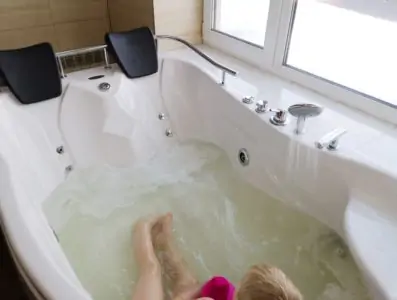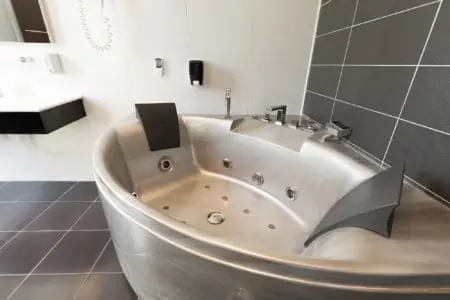
Jetted tubs are wonderful for relaxing from the stresses of daily life. However, they also accumulate soap scum and biological materials. You may find black gunk shooting out of the jets during a relaxing bath.
So today we’re discussing how to clean bathtub jets. You’ll be able to avoid a professional cleaning while still being able to relax in your sanitary spa.
Key Takeaways
- Fill the tub with hot water, add dish soap and vinegar, and run jets for 15 minutes to clean them.
- Drain and refill with cold water, run jets for another 15 minutes, then clean the jets with a soft cloth and toothbrush.
- Clean a jetted tub every 1-3 months if used frequently, or every 6 months if used less often.
- Avoid using bath bombs, bubble baths, and oils that can clog jets and drains in a jetted tub.
How Often Should You Clean a Jetted Tub?
Cleaning a jetted tub regularly is important since germs, bacteria, and mold can build up in the tub. The gunk can get inside your body and damage your health, so you need to make sure that your tub is sanitary when you use it.
If you use your spa tub every day or even several times a week, then you’ll need to deep clean it every 1-3 months. However, if you only use your tub a couple of times a month, you may be able to get away with cleaning it every 6 months.
How to Clean a Jetted Tub
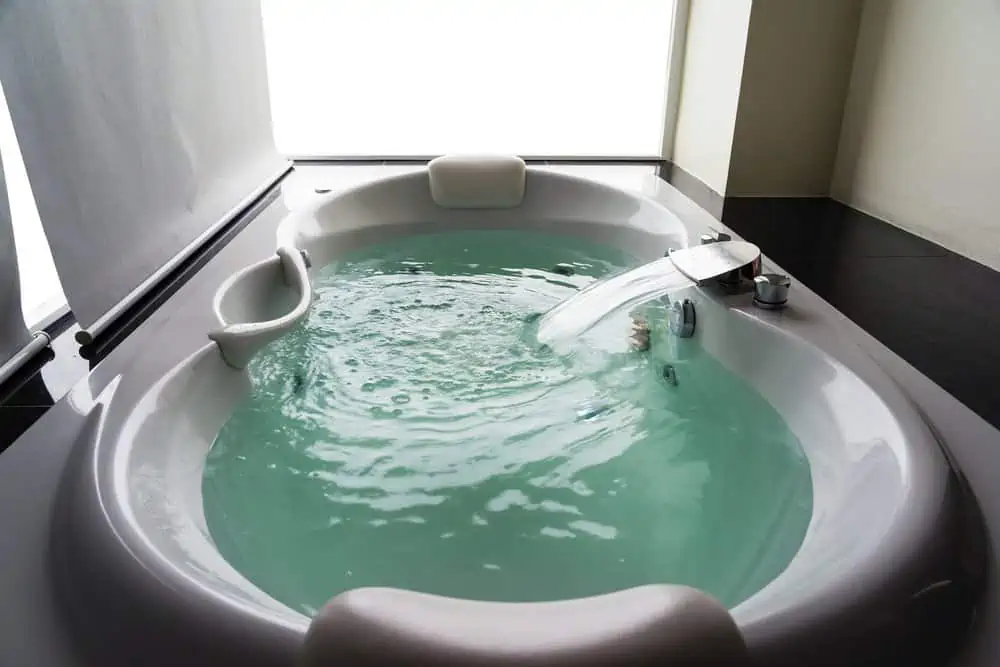
Jetted tubs are easy to clean using only household products such as distilled white vinegar, dish soap, and bleach.
- Time: 45 – 60 minutes
- Difficulty: Beginner
What You’ll Need
- Microfiber cloths
- Toothbrush
- Low-foaming liquid dish soap like Dawn Dish Soap or powdered dishwasher detergent like Cascade Complete
- Distilled white vinegar or bleach
1. Clean Tub
Use a damp microfiber cloth to give your tub a quick wipe down and remove any hair or debris on the rim or basin of your jetted tub.
2. Fill Tub and Add Dish Soap
Fill your tub with hot water until the water level is 2-3 inches above the highest jets.
Add 2 tablespoons of liquid dish soap to the water. If you don’t have liquid dish soap, you can clean the tub with dishwasher detergent. Simply add 4 tablespoons of the detergent to the water.
The soap will loosen and remove the greasy residue left in the jets from the soap or bubble bath.
Quick Tip
You can clean the jetted tub with dishwasher tablets. Just make sure that the tablets are completely dissolved before turning on the jets.
3. Add Vinegar or Bleach
Pour ½ cup of white vinegar or bleach into the tub. Bleach is the better choice if mold is present in the jets, otherwise use vinegar. Both vinegar and bleach will disinfect your tub during the cleaning process.
Warning
Do not mix vinegar and bleach. This may produce deadly chlorine gas.
4. Turn On the Jets
Turn the air induction valves fully clockwise to turn them off. This will force the water to circulate only inside the internal plumbing of the tub which will concentrate the flow giving you a deeper clean. However, check your owner’s manual first and follow the recommendations for your specific model of the jetted tub.
Turn the jets onto the highest pressure and turn them on. Allow them to run at full capacity for 10-15 minutes or until you no longer see any gunk or grime coming out of the jets.
5. Drain and Refill the Tub
Drain the tub then refill it with cold water.
Again, you will need the tub filled 2-3 inches above the jets. As you’re rinsing the tub, do not add any cleaning products to the water.
6. Run the Jets
Run the jets on high for another 10 minutes. This gives the jets a chance to remove all of the residues that you loosened with the cleaning solution and hot water. Keep the jets running for 5 minutes after you stop seeing gunk leaving them.
7. Drain and Clean the Tub
Drain the tub. Use a clean microfiber cloth to remove any residue that’s left on the tub. Scrub at the crevices of the jets with an old toothbrush.
Make sure that you clean around and behind the jets. After you’ve cleaned the jets, rinse away all the debris that was removed during the cleaning process.
How to Clean a Jetted Tub Without Bleach
You can clean your jetted tub naturally with vinegar instead of bleach if you’d prefer. It’s recommended that you not use bleach since it’s harsh and can dry out the gaskets in your tub.
How to Get Rid Of Stains In a Jetted Tub
Remove stubborn stains in your jetted tub with baking soda. Sprinkle a generous amount of baking soda all over the surface of your tub. Let it sit for several minutes.
Use a soft damp cloth to scrub the baking soda until the stains are removed. Rinse your tub afterward.
How to Clean Mold Out of Bathtub Jets
Sometimes you will see black stuff coming out of the jets of your tub. This black gunk is likely a mixture of bacteria, mold, mildew, oil, soap, and other residues from your baths. You need to remove it from your jets.
Here’s the best way to clean bathtub jets.
- Time: 1 hour
- Difficulty: Beginner
What You’ll Need
- Distilled white vinegar
- Microfiber cloth
- Toothbrush
1. Fill Tub and Add Vinegar
Fill your jetted tub with hot water until the level is 2-3 inches above the highest jet. Then add 2 cups of vinegar to your tub. If you have quite a bit of black gunk in your tub, then you can add up to ½ gallon of vinegar to it.
2. Soak the Tub
Allow the vinegar solution to sit in the tub for 15-20 minutes.
3. Turn on the Jets
Turn off the air-induction valves and turn on the jets. Let the jets run on high for about 15 minutes or until there’s no more black grime being ejected from the jets.
4. Drain and Refill the Tub
Drain the tub. Refill it again with warm water until it’s 2-3 inches above the highest jet. Turn the jets on high and let them run for 15 minutes to flush out any mold or bacteria that is still in the jets.
Wait 5 minutes after you last see black residue being ejected from the jets before turning them off.
5. Clean Tub
Use a clean microfiber cloth and a toothbrush to scrub the jets and remove any residue remaining in the tub. Rinse the tub clean when you have finished.
What is the Best Cleaner for Jetted Tubs?
There are a few good options that we would recommend. You can clean a jetted tub with Oxiclean by filling up the tub and then adding 1 cup of Oxiclean to the water as the cleaning solution.
Another jetted tub cleaner you can use is Ahh-Some Hot Tub/Jetted Bath Plumbing and Jet Cleaner for Jetted Tub. You can also consider using Oh Yuk, Jetted Tub Cleaner.
How to Keep a Jetted Tub Clean
Keep your jetted tub clean for easy maintenance by following these tips.
- Refill the tub with hot water after each use. Let the water sit in the tub for 15-20 minutes. This will ensure that all of the grease and soap residues are softened and will drain away with the water.
- Avoid using bath oils and other products such as bath bombs that leave a greasy residue behind after the tub is drained.
- After you get out of your tub, add vinegar to the warm water. Turn on the jets for 10-15 minutes to make sure your bathtub is clean. This lets you maintain the jet tub without wasting extra water or working too hard.
FAQs

Do You Need to Clean Jets If You Don’t Use Them?
Yes, even if you don’t use the jets you will need to clean them. This is because a small amount of water is left in the jets’ pipes after you drain the tub. As the water evaporates it leaves deposits that allow mold to grow.
Can You Run Bleach Through a Jetted Tub?
Cleaning your jetted tub with bleach is not recommended because it’s a harsh chemical. Eventually, it may cause the gaskets in your tub to dry out.

Can You Use a Bath Bomb In a Jetted Tub?
Bath bombs are not recommended for use in a jetted tub. The salt doesn’t always dissolve or drain easily. The bath bomb may contain oils that solidify and clog drains.
Also, non-salt ingredients in the bath bomb don’t always drain. Instead, they may get into the jets and damage them.

What Can You Not Put In a Jetted Tub?
Do not add bubbles, shampoos, or soaps to your jetted tub. Also, avoid using carrier oils. While essential oils evaporate and are safe to use, carrier oils leave behind a film that may clog your pipes, jets, and drains.

How Do You Clean the Filter On a Jetted Tub?
The filter on a jetted tub will need to be cleaned if it’s causing a decrease in the water pressure or if it looks dirty or clogged. Clean it by first removing the filter. Rinse the filter under running water. If you’d like, you can soak it overnight in a cleaning solution. Replace the filter after you’ve cleaned it.
In Summary
If you have a Whirlpool jacuzzi tub, then you’ll want to know how to keep your tub pristine. Our easy steps above should tell you all that you need to know. Remember to turn off the air-induction valves and turn the jets on high.
- Clean the tub and remove all the left over hair and residue on the surface.
- Fill the tub with hot water until it’s 2-3 inches above the highest jet.
- Add 2 tablespoons of dish soap and ½ cup of vinegar to the water.
- Turn off the valves for air induction and turn the jets on high.
- Let the jets run for 15 minutes or until there is no more gunk being removed from the jets.
- Drain the tub and refill it with cold water until the level is 2-3 inches above the highest jet. Do not add any cleaning products to the water.
- Run the jets for 15 minutes or until you have not seen any gunk being removed from the jets for 5 minutes.
- Clean the jets with a soft cloth and an old toothbrush, then rinse the tub to make sure all the residue has been removed.